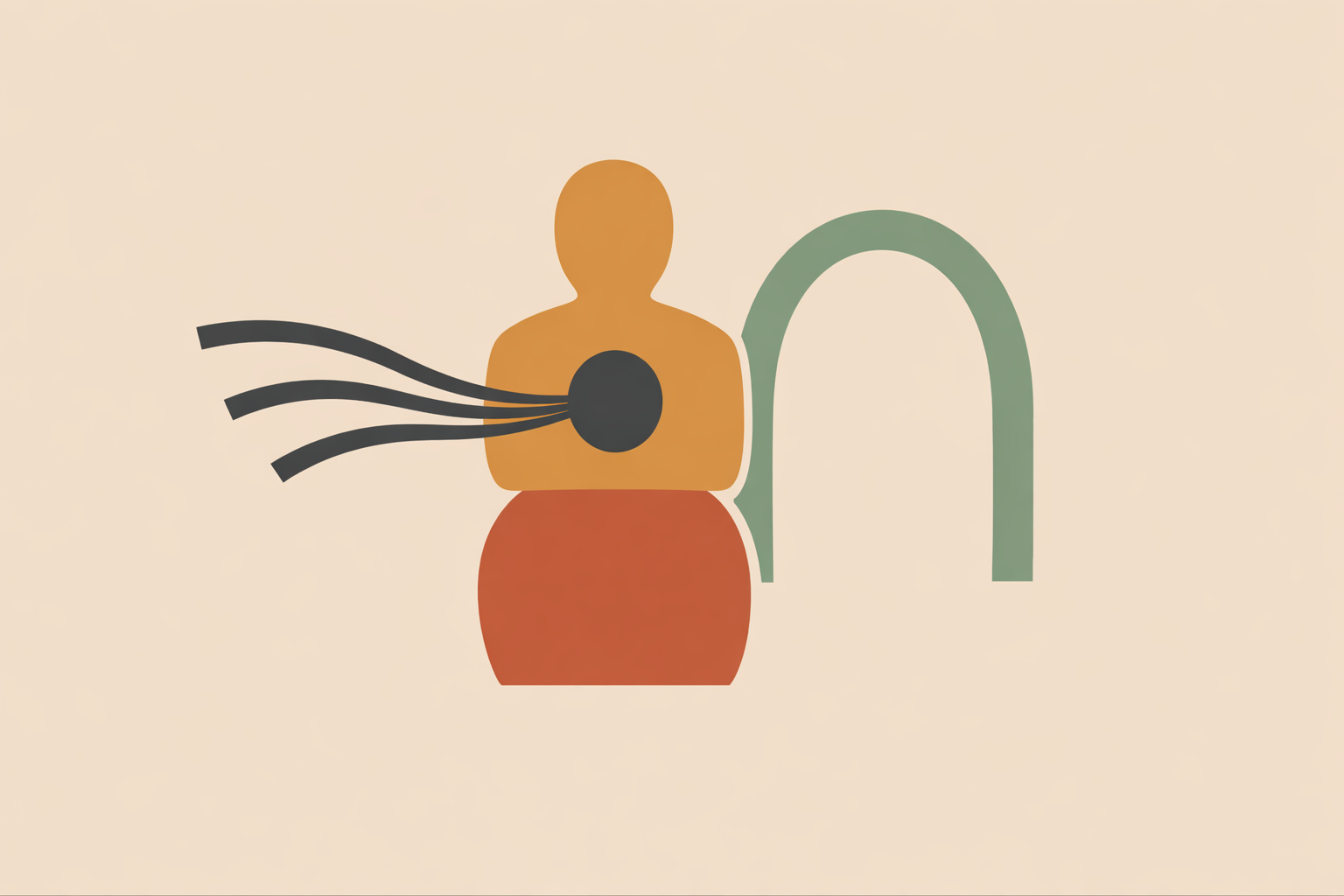
Experienced coaches recognize the pattern: a client agrees to a thoughtful plan, then struggles to follow through. The tracker is tidy, the goals are clear, and still the week unravels. You simplify the steps, add reminders, refine accountability—and the same hesitation returns.
Usually, the issue is not effort or intelligence. It is the meaning underneath the behavior.
When a plan repeatedly fails to land, there is often a deeper belief shaping what feels possible, safe, deserved, or appropriate. Once that layer comes into view, the tools you already use tend to work much better.
Key Takeaway: When clients repeatedly “know what to do” but still stall, the barrier is often a core belief about safety, worth, or capability. Name the story driving the pattern, reality-check it with compassion, then design small experiments that create new evidence and make behavior-change tools stick.
Why coaching tools stall when limiting beliefs stay hidden
Behavioral tools matter. Plans, trackers, habit-stacking, and check-ins can be highly effective—but they do not always take root on their own.
When psychological determinants are left untouched, even well-designed plans can wobble. That is why a client may sound committed in session yet keep pulling back between sessions.
Many familiar coaching challenges sit downstream from deeper assumptions. Procrastination, perfectionism, chronic indecision, and over-giving often reflect beliefs about capability, safety, belonging, or worth. Cognitive models have long described how core beliefs shape recurring patterns in thought and behavior.
In practice, when the underlying story softens, energy often returns. Clients become more willing to act, set boundaries, tolerate visibility, and speak clearly once a rigid inner rule loosens.
Cognitive restructuring can support this shift, and research suggests that improved functioning often follows when people actively examine and revise unhelpful beliefs.
“Transformational coaching enables people to become aware of what stops them from getting going and what gets them going.”
That is the practical heart of belief work: bring the hidden assumption into the room, and behavior change starts to rest on firmer ground.
How to tell beliefs from values and real-world limits
Not every obstacle is a limiting belief. Strong coaching depends on telling apart interpretation, value, and reality.
A belief is the meaning a person assigns to events. “I got two rejections” is an event. “I will never find meaningful work” is a conclusion. The aim is not to argue with facts, but to explore the meaning layered onto them.
Values are different. They express what matters deeply—integrity, generosity, steadiness, freedom, devotion, beauty, contribution. Values can give clients real strength and direction. Trouble often begins when a value hardens into a rule.
For example:
- “I value generosity” becomes “I must always say yes.”
- “I value excellence” becomes “Anything imperfect is failure.”
- “I value harmony” becomes “I cannot disappoint anyone.”
Real-world limits also deserve respect. Lack of time, skill gaps, financial pressure, discrimination, family demands, and structural barriers are not mindset errors. They are part of context.
The coaching opportunity appears when a practical limit fuses with identity. “I do not yet have this skill” becomes “I am not capable.” “This environment is not welcoming” becomes “I do not belong anywhere.” That is where belief work becomes useful.
Common belief clusters often sound like this:
- Capability: “I’m not good enough.”
- Worth: “I have to earn rest, love, or success.”
- Safety: “If I try, I’ll be exposed.”
- Identity: “This is just who I am.”
These patterns often reflect family conditioning, school experiences, workplace culture, inherited survival strategies, or social messaging. Naming that context can make the work both more compassionate and more precise.
“...gets to the heart of what matters.”
Signs a client is inside a core belief
When a core belief is active, it usually leaves clues in language, emotion, the body, and repetition across time.
Start with the client’s words. Absolutes such as “always,” “never,” “everyone,” “no one,” and “I can’t” often point to a rigid conclusion rather than a nuanced assessment.
Identity statements are another strong signal:
- “I’m just not the kind of person who does that.”
- “That’s just how I am.”
- “People like me don’t get chosen.”
These statements often reflect a stable underlying belief rather than a passing mood. Cognitive theory describes how recurring negative thoughts across situations can signal an underlying schema.
Emotion matters too. When beliefs are activated, people may react with an intensity that does not fully match the present situation; cognitive frameworks describe how beliefs can drive disproportionate reactions to ordinary triggers.
The body often speaks just as clearly. A client may shrink in posture, tighten through the chest or throat, lose breath, fidget, go still, or seem to collapse inward. Research in embodiment links negative self-evaluation and social threat with slumped posture and bodily tension.
Across sessions, notice repeated stories with the same emotional shape. Different relationships, different workplaces, different goals—yet the same conclusion appears again and again. That kind of recurrence usually means the issue runs deeper than the surface situation.
Also watch what happens when positive evidence appears. A client held tightly by a limiting belief may dismiss praise, minimize progress, or explain away success—often described in cognitive therapy as discounting positives.
“AI can read your pulse, but it can’t feel your hesitation… you’ll always need a human mirror.”
A practical coaching flow for shifting limiting beliefs
Belief work does not need to be dramatic. Most of the time, a steady, respectful structure works best—think of it like turning down the volume on an old inner rule, not fighting it.
1. Help the client name the belief.
Invite clear language. Ask:
- What does this situation seem to say about you?
- When this happens, what do you start believing?
- If this belief had a sentence, what would it be?
Putting it into words helps separate the person from the pattern.
2. Explore where it came from.
Ask about family messages, school experiences, role expectations, cultural narratives, workplace norms, and defining moments. Often the belief once served a protective purpose; seeing that reduces shame and builds respect for the strategy, even if it no longer fits.
3. Gently reality-check it.
Ask:
- What supports this belief?
- What complicates it?
- Where does it feel true, and where does it not?
- What would you say to a friend carrying this story?
What this means is: you create flexibility without pushing a client into forced positivity.
4. Reframe toward something believable.
The new thought should feel kinder and truer, not inflated. For example:
- “I’m terrible at visibility” becomes “I’m learning to be seen in ways that feel safe.”
- “I always ruin opportunities” becomes “I’m building steadier ways to meet pressure.”
- “I don’t belong” becomes “I belong better in some spaces than others, and I can learn where I’m nourished.”
5. Translate insight into action.
Belief work becomes real when it changes behavior. Choose one small experiment that lets the client test a new stance in ordinary life. Insight opens the door; lived experience helps the new belief settle in.
“...helping them to learn rather than teaching them...”
Bringing in the whole person: body, ancestry, and culture
Belief work deepens when it includes more than thought alone. Traditional lineages have long understood that meaning, body awareness, and emotional regulation work best together.
Stay in relationship with the body. Beliefs do not only appear as sentences in the mind; they can arrive as constriction, collapse, agitation, numbness, heat, shakiness, or pressure. Pacing the conversation around these signals often makes the session steadier and more respectful.
Beliefs also live inside broader stories. Some protective assumptions began in very real conditions of scarcity, exclusion, or danger, and research on intergenerational trauma shows how historical trauma can shape protective expectations across generations.
This is why belief work should never flatten context into a purely personal issue. What looks “limiting” in one setting may once have been wise, necessary, or culturally coherent in another.
It also helps to name internalized social messages. Studies suggest that internalized oppression can shape self-beliefs and distress, which is a reminder to avoid simplistic “it’s all mindset” stories.
Useful questions here include:
- Who taught you this, directly or indirectly?
- What might this belief have protected?
- Whose voice does it sound like?
- What value or survival strategy is wrapped inside it?
Mindful noticing, breath, grounding, journaling, and reflective pauses can all support this work—especially when they help a client feel safe enough to stay present with what is true.
“...holistic view...”
From insight to action: experiments that help beliefs loosen
Once a belief has been named and softened, the next step is simple practice. Essentially, you help the client gather new evidence.
Design low-risk experiments that create fresh experience. If the emerging belief is “My ideas have value,” an experiment might be:
- sharing one idea in a meeting,
- posting a short reflection online,
- making a small request,
- stating a preference without over-explaining.
Treat the result as data, not a verdict on identity.
Pair action with reflection. A brief between-session tracking system can work well:
- situation,
- belief that appeared,
- emotion,
- action taken,
- what happened next.
Digital self-monitoring tools can help make patterns visible over time, especially for clients who benefit from seeing repetition between sessions.
A language audit can also be surprisingly powerful. Invite clients to notice every “always,” “never,” “I can’t,” or “that’s just me,” then try softer alternatives like:
- “right now,”
- “I’m learning to,”
- “this is hard, and I’m practicing,”
- “in some situations, not all.”
For deeply rooted identity beliefs, think repetition rather than breakthrough. Some beliefs around performance and action loosen quickly once paired with real-world experiments; others—especially those tied to money, visibility, belonging, or long-standing self-worth—often shift through slower, iterative cycles that fit a growth mindset.
“When you connect with what you really want and why—and take action—magical things can happen.”
Staying ethical and grounded
Belief-focused coaching is powerful, so it needs strong ethical roots.
Do not rush to “fix” a client’s belief. Stay curious about what function it serves, what dignity it protects, and what future the client actually wants.
Psychological safety matters here. People are more willing to explore deeply when they feel trust, openness, and room for honesty. Research has linked psychological safety with learning and interpersonal risk-taking—both central to this kind of work.
Keep the conversation anchored in observable choices and impacts. Motivational interviewing research emphasizes autonomy, nonjudgment, and focus on behavior in ways that can support engagement while preserving dignity.
A few grounding principles help:
- Challenge gently, never aggressively.
- Respect structural realities and lived context.
- Do not confuse values with limiting beliefs.
- Stay future-oriented and practical.
- Move at the client’s pace.
When a belief is tightly entwined with overwhelming life experience, work slowly, stay within coaching scope, and remember that presence, pacing, and sound judgment matter more than intensity.
“...assume strength...”
Making belief work part of your coaching practice
Belief work is not separate from good coaching. It is often the layer that makes everything else more effective.
Listen for absolutes and identity statements. Track repeated stories, and watch what the body does when a sensitive topic appears. Ask what the belief protects, where it came from, and what a truer alternative might be—then turn that into one small experiment the client can actually live.
Over time, this becomes a grounded rhythm: awareness, inquiry, reframing, action, reflection, and refinement.
This is living work. The more honestly you explore your own beliefs, the steadier you become in helping others explore theirs.
“To help others develop, start with yourself.”
At Naturalistico, this kind of coaching is approached as a whole-person transformational coaching craft: practical, reflective, culturally aware, and always evolving.
Train Belief-Aware Coaching Skills
Transformational Coach helps you guide clients from stuck beliefs to practical, grounded experiments for lasting change.
Explore Transformational Coach →