Longevity clients rarely arrive blank anymore. They bring sleep scores, recovery rings, supplement stacks, biological-age screenshots, and an inbox full of advice—then ask you to make it all make sense. Sessions can drift toward whichever metric screamed loudest that week, while your admin layer quietly becomes a second job: bookings in one place, notes in another, check-ins somewhere else, payments elsewhere still.
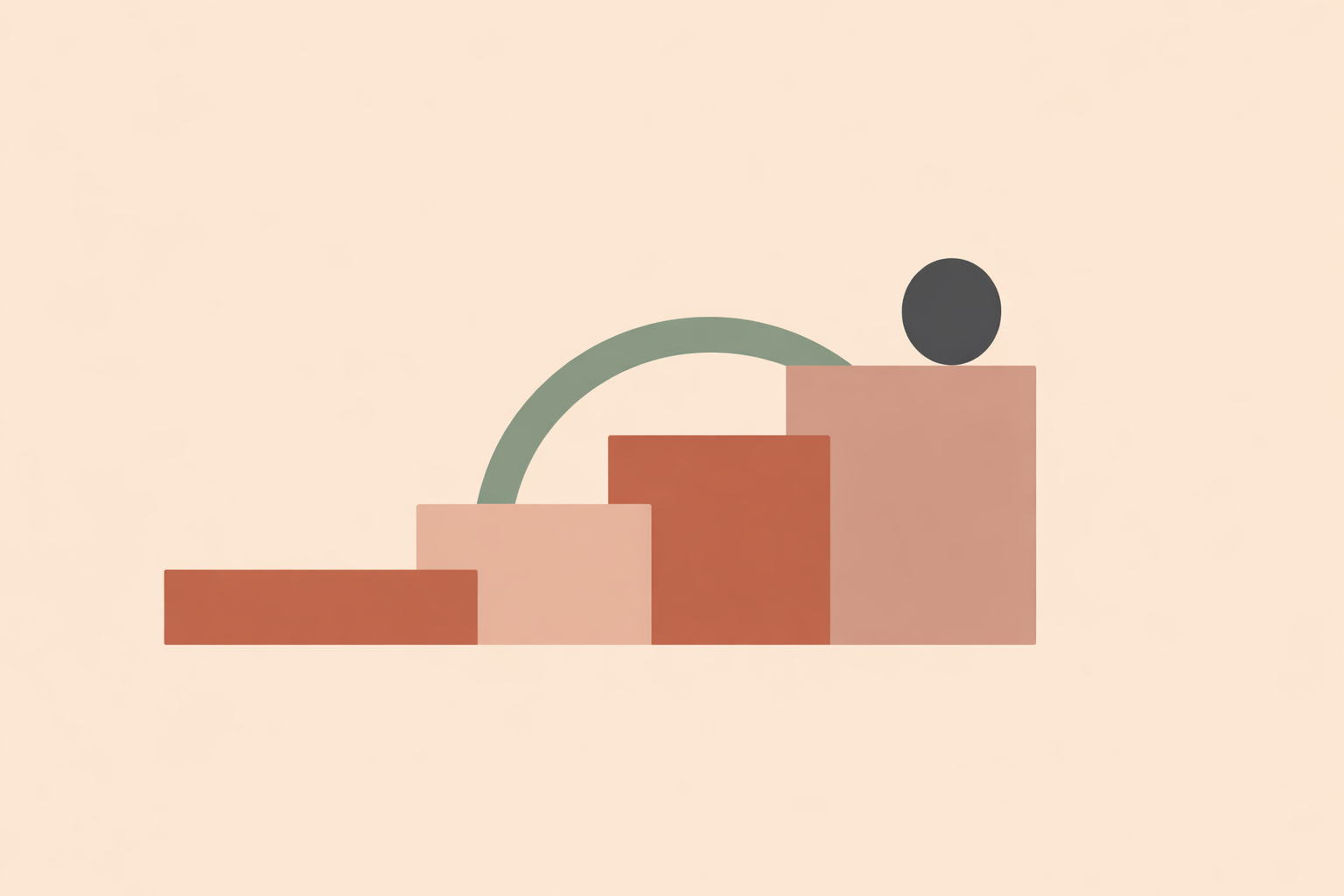
The answer isn’t more tools—it’s a coherent, layered stack that keeps decisions (and the relationship) ahead of dashboards. In practice, that means a stable platform to hold the journey, humane tracking tied to ancestral rhythms, a short list of wearable and functional signals interpreted calmly, advanced testing used sparingly for longer arcs, and light AI that trims busywork without touching discernment. Longitudinal programs with regular contact are exactly the kind of ongoing rhythm that helps people keep changing between sessions.
Key Takeaway: Build a layered stack that keeps the coaching relationship ahead of dashboards: one core platform, humane habit tracking, a few calm wearable and functional signals, occasional deep testing for long arcs, and AI for admin. When each layer supports the next, data becomes grounded action instead of weekly distraction.
Foundation: a core practice platform that holds the journey
Your core practice platform is the hearth of your work. When scheduling, sessions, notes, messaging, and payments live in one place, you spend less time stitching logistics together and more time offering steady support. Administrative load can feel like a second job for many professionals; consolidation protects your energy for client-facing work.
This layer isn’t glamorous, but it shapes everything: how clients book, where goals live, how check-ins happen, and how progress is reviewed over time. When essentials are scattered, the relationship gets fragmented too—plans get lost in email threads, reminders come from three different systems, and continuity frays.
By contrast, systems with integrated reminders, simple scheduling, and recurring payments can reduce confusion and missed appointments, which supports engagement over the long haul.
Good platforms also make your process repeatable. Consistent workflows—intake, agreements, baseline reflections, weekly check-ins, monthly reviews—help clients feel held by a steady container rather than a different approach every time.
Light automation belongs here too. If the system can prepare forms, send reminders, or draft summaries, you protect your attention for what only a practitioner can do: listen for what matters beneath the data. AI-assisted documentation tools can free more time for presence during conversations when used thoughtfully.
Margaret Moore’s reminder about making change feel possible belongs here too. The platform is not the relationship, but it can either support the relationship or quietly drain it.
With a calm foundation, you can track what actually builds longevity in real life—not just what produces the prettiest charts.
Behavior layer: tracking habits and meaning in ancestral rhythms
The most useful tracking is simple, humane, and rooted in real life. It follows pillars that have supported human vitality for generations—movement, nourishment, rest, connection, and purpose—rather than turning people into full-time self-measurement projects. Public health guidance continues to link these basics to healthier aging across populations, which neatly echoes what traditional living has long taught: rhythm first, then refinement.
Here’s why that matters: habits last when they feel like a return to something human, not a punishment. Motivation research shows behaviors tend to hold when they’re values-driven rather than guilt-driven over time. So instead of “optimize everything,” you help a client rebuild a morning walk, a regular evening meal, a weekly community touchpoint, or a wind-down ritual that restores steadiness.
Digital tools can support this—gently. Engagement features can help when used supportively rather than punitive. Think of it like a walking stick: useful for the journey, but not something the traveler should worship.
Short weekly reflections often do more than another dashboard. Simple check-ins on energy, stress, wins, obstacles, and one next step support insight and sustained change in coaching settings.
Just as importantly, tracking should include meaning. Naturalistico’s idea of wins in the wild keeps progress grounded: climbing stairs with ease, gardening longer, playing with grandchildren, walking hills with confidence. Functional ability measures strongly relate to real-world capability for vitality, which is exactly what clients care about.
Connection belongs beside movement and sleep. Social isolation is linked to a 29% increase in mortality risk, so tracking belonging, conversation, and community is not “extra”—it’s foundational.
Dan Buettner captures the spirit well: “We are not just adding years to life; in the Blue Zones we are adding life to years through design of daily habits,” a point echoed in his daily habits quote.
- Movement: walking, strength practice, mobility, time outdoors
- Nourishment: meal regularity, food quality, hydration, cultural food practices
- Rest: sleep timing, evening wind-down, morning energy
- Connection: family meals, friendships, community time, shared rituals
- Meaning: contribution, creativity, service, spiritual or reflective practice
Once these behaviors are visible, wearables stop being random numbers. They become signals that either confirm what daily life already shows—or gently highlight what needs support.
Insight layer: wearables and simple tests that actually help
The best wearable data is actionable and calm. Focus on a few clear signals—sleep duration, resting heart rate, HRV, activity levels—plus simple functional checks. Reviews of consumer wearables consistently point to a short list of metrics as most useful for behavior change in everyday life.
Put simply, trends beat drama. If resting heart rate climbs while sleep drops and stress rises, that supports a practical conversation about easing intensity and protecting recovery. Patterns like these can act as real-world signals when combined. When HRV improves over weeks alongside steadier routines, it can reassure clients that consistency is working; higher HRV is often linked with better stress resilience in many people.
Longer patterns matter more than single-day spikes. Long-term wearable trends can be more informative than day-to-day fluctuations on their own, which is exactly why a monthly or quarterly review often beats constant reacting.
Sleep is where calm interpretation is essential. Many devices estimate total sleep time reasonably well, but stage estimates are still limited for this purpose. If a client becomes fixated on “deep sleep” scores, tracking can backfire into “orthosomnia” over time—where the pursuit of perfect sleep data undermines sleep itself.
So keep it human: Are you sleeping long enough? Do you wake restored? Are you recovering better week to week? Are your routines building capacity or draining it?
Pairing wearables with basic physical benchmarks keeps everything grounded. Markers like grip strength, sit-to-stand counts, and walking speed translate directly into independence and confidence. These tests predict important outcomes across populations rather than abstractions, which makes them excellent coaching anchors.
Matthew Walker’s note that sleep is an early-warning biomarker is helpful when framed as a gentle signal, not a threat. Over time, persistent sleep issues can precede later challenges over years. Likewise, Walter Willett’s emphasis on staying physically active brings the focus back to what works across decades: regular movement.
A simple rhythm usually works best:
- Daily or automatic: sleep duration, activity, resting heart rate
- Weekly review: HRV trends, energy, recovery, consistency
- Monthly: sit-to-stand, walking pace, mobility check, grip strength if available
- Quarterly: review of what metrics actually changed behavior
Used this way, wearables become modest feedback tools in service of wiser habits. And once that’s steady, it’s much easier to decide whether advanced testing adds value—or just noise.
Deep-dive layer: biological age and multi‑omics, used sparingly
Advanced longevity testing can be meaningful, but it should stay in proportion. Biological age and multi-omics are best as occasional markers in a longer journey—not monthly scorecards that distract from daily practice.
These tests carry emotional weight. A biological-age number can motivate, unsettle, or hijack the conversation, so it needs careful framing: helpful context, not a verdict. The basics—sleep rhythm, nourishing food, movement, community, and patience—still do most of the work.
Epigenetic age tests can estimate biological age and pace of aging, but meaningful shifts typically unfold over months of consistent change rather than days.
Some blood-based scores show more short-term variability, but that sensitivity can complicate interpretation when repeated too often in practice. A six- to twelve-month rhythm is usually more realistic than chasing tiny month-to-month changes.
Multi-omics can, in principle, integrate multiple layers of biology at once, but interpretation is still evolving, with ongoing debates and uneven datasets for different groups. This is where an experienced practitioner’s discernment—and respect for cultural context—matters as much as the report.
This is also why traditional practice remains central in modern longevity work. Patterns observed in long-lived communities—seasonal, plant-forward eating, natural movement woven into the day, social meals, and regular rest—are associated with exceptional longevity across communities. High-tech tools can add perspective, but ancestral consistency often moves both felt well-being and measurable markers over time.
Naturalistico’s approach of using before/after anchors sparingly fits this well: use a snapshot at the start and later in a longer engagement, then keep the space between focused on habits, function, and lived life.
David Sinclair’s observation that aging is highly modifiable can be empowering when held wisely. James Vaupel’s point that genes explain only a modest portion of lifespan over decades reinforces the same message: numbers are context, not destiny.
- Use daily and weekly tools to guide behavior
- Use functional measures to show lived progress
- Use advanced testing occasionally to mark longer arcs of change
Once advanced testing is in proportion, the final layer is straightforward: AI—helpful around the edges, never the source of wisdom.
Support layer: AI co‑pilots that save time, not replace you
AI is most helpful when it reduces busywork. Let it assist with notes, summaries, reminders, and pattern spotting, while you keep hold of interpretation, empathy, ethics, and cultural sensitivity.
When you have a core platform, humane tracking, and a few meaningful metrics, admin drag becomes the next bottleneck: notes pile up, follow-ups get inconsistent, weekly summaries take too long. Used with restraint, AI can restore breathing room.
Ambient AI tools have been linked to 20–30% less documentation time in early reports, which is often enough to meaningfully improve consistency and presence.
In practice, AI can draft weekly digests from trends, propose prompts, or organize notes into themes before a review call. The value comes when you edit the output into warm, human language—not when you forward machine text as-is.
Major organizations emphasize the limits clearly: AI lacks contextual understanding and needs human oversight in practice. The World Health Organization similarly cautions against replacing human judgment because of bias and context gaps in interpretation.
So the boundary stays clean: AI supports systems; humans hold discernment.
In practical terms, AI is well suited to:
- drafting session summaries
- organizing client notes into themes
- sending reminder sequences and check-in prompts
- preparing progress snapshots for review calls
- highlighting trends you may want to discuss
It is poorly suited to:
- making high-stakes interpretations for clients
- handling culturally sensitive guidance without review
- responding to emotionally complex moments on its own
- pretending to be the relationship
Margaret Moore’s line about making change feel possible belongs here one last time. AI can make a practice more efficient, but efficiency is not the outcome clients are really seeking.
They’re seeking steadiness, capacity, and meaning. If AI helps you offer that more consistently, it earns its place. If it distances you from the person in front of you, it doesn’t.
Bringing the layers together
A strong longevity coach tech stack in 2026 isn’t built by adding more tools. It’s built by choosing fewer, better layers that reinforce each other: a stable platform, humane habit tracking, a handful of clear metrics, occasional advanced testing, and light AI support around the edges.
Seen this way, technology stops competing with ancestral wisdom and starts serving it. Wearables can confirm what daily rhythm already shows. Trackers can protect practices elders have long valued. Advanced tools can add perspective without displacing the basics. And AI can clear space for the one thing no software can replace: a steady, thoughtful relationship.
Longevity, in the end, isn’t about chasing perfect numbers. It’s about helping people build lives with enough strength, rest, connection, purpose, and adaptability to keep participating fully in what matters to them.
So when you refine your stack, use one guiding question: Does this tool help turn information into grounded action without losing the human thread? If yes, keep it. If not, let it go.
The future of holistic longevity coaching will belong to practitioners who can do both things well: respect lived tradition and use modern tools with discernment. Commentaries on integrative and lifestyle approaches note that weaving traditional wisdom with evidence-informed tools can be a strong way to support healthy aging over time. Not louder. Not more complicated. Just more coherent and more supportive.
Explore Longevity Coach Certification
Apply these stack layers in practice with Naturalistico’s Longevity Coach Certification.
Explore Longevity Coach →