Low-desire concerns come up often in coaching and well-being work. In one survey, 69% of practitioners reported sexual concerns appearing at least weekly. A client may say their libido has vanished; a partner may arrive worried; and suddenly the room feels tight with pressure and uncertainty.
When there isn’t a clear frame, it’s easy to treat a normal, contextual shift as a personal flaw—or to reach for relational “fixes” when someone’s whole system is simply maxed out. A more supportive lens is to see low desire as a signal rather than a defect. That shift is linked with less distress and tends to create more room for agency, reflection, and practical change.
Key Takeaway: Low sexual desire is often a context-dependent signal, not a personal failing. A consent-centered, supportive approach looks first at stress and sleep, relational safety, body changes, comfort, and cultural pressures to restore agency and reduce distress.
Stress, fatigue, and sleep loss can quietly shut desire down
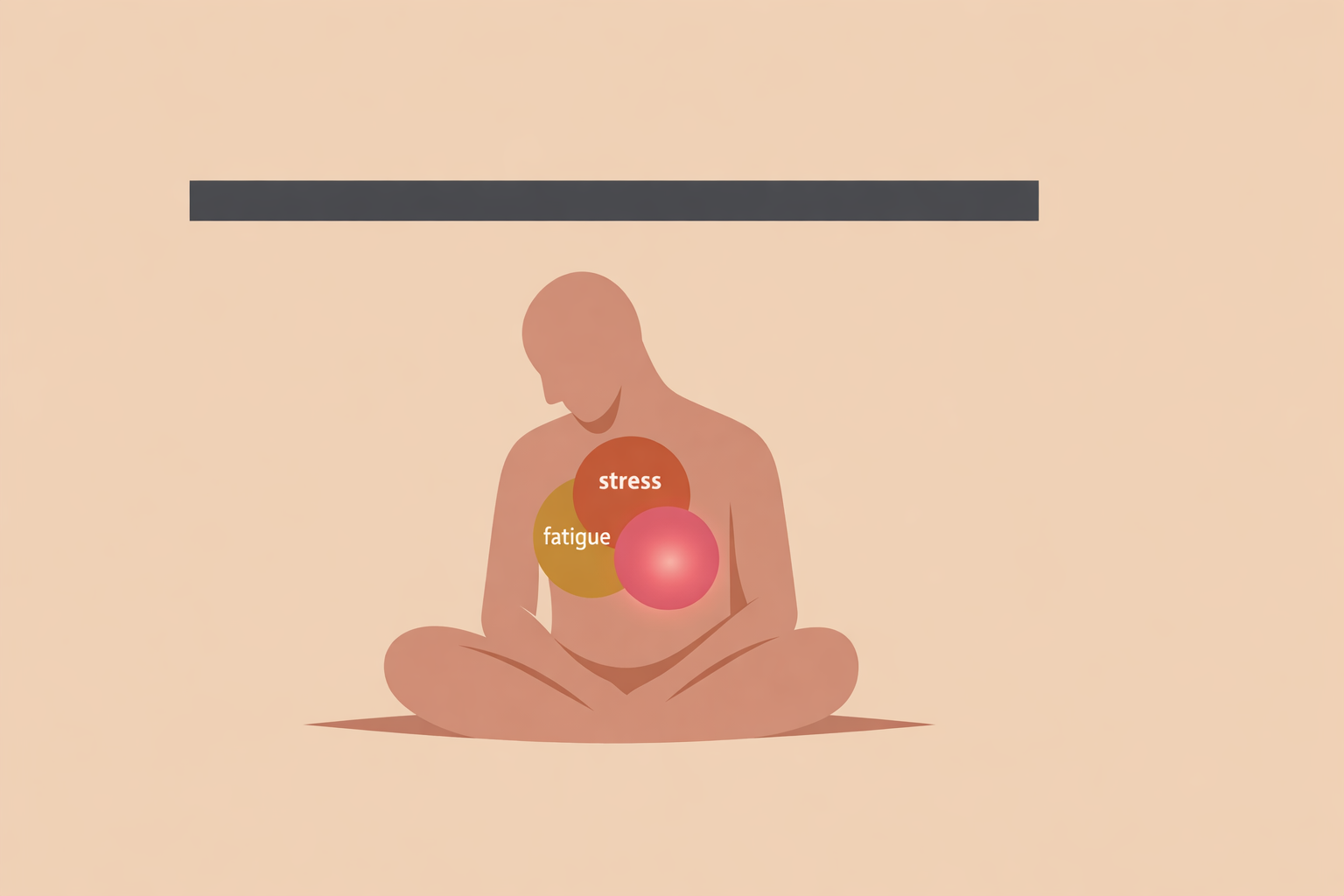
Chronic stress, exhaustion, and poor sleep are some of the most reliable brakes on desire. Often it’s not a “libido problem”—it’s an overloaded system with very little bandwidth left for pleasure.
Research links poor sleep quality and stress with lower desire and greater sexual difficulty. In real life, this shows up when someone is carrying work pressure, caregiving, money stress, decision fatigue, or emotional depletion: erotic energy is frequently the first thing to go quiet.
This is where the language of an “overworked nervous system” can be deeply normalizing. Stress-response models describe low desire as commonly tied to fatigue and allostatic load—the wear-and-tear that builds when the body stays in high-alert for too long.
When the body is in survival mode, it prioritizes protection. Prolonged stress activation can suppress reproductive function and reduce sexual interest. Traditional systems have described this for generations in their own language: vitality becomes guarded or depleted, and desire naturally dims until the person feels resourced again.
The hopeful part is that small shifts can matter. Better sleep is associated with improved sexual satisfaction, and programs using gentle movement, breath, and relaxation can support sexual well-being in a relatively short time.
- Quick levers: a predictable wind-down, morning light, fewer late messages, and 10 to 15 minutes of restorative movement.
- Coaching prompt: What helps your body know the day is over?
- Reframe: Sometimes desire is not gone. It is waiting for enough rest and safety to return.
Sometimes low desire is protective
For some people, low desire is protective rather than dysfunctional. It can arise with relational strain, unresolved fear, touch that hasn’t felt fully welcome, identity conflict, shame, or past overwhelm. Put simply: the body isn’t failing—it’s communicating.
Contextual models describe low interest, in some cases, as an adaptive response to threat, distress, or disconnection. For clients who’ve spent years feeling “broken,” that framing can be profoundly relieving.
In practice, “I have no libido” may actually mean caution, numbness, resentment, grief, or a need for more safety. A respectful practitioner doesn’t rush past that intelligence; they help name it, so it can be worked with rather than fought.
It also helps to clearly distinguish low desire from asexuality. Some people experience little or no sexual attraction and don’t experience that as a problem. The goal isn’t to force change—it’s to support clarity, self-trust, and honest communication.
As Alexandra Roxo frames it, “Honoring pleasure, reducing shame, and improving sexual communication have measurable impacts on relationship stability.”
- Exploratory prompts: What messages did you absorb about sex or your body? When does erotic energy feel safest? What would bring 2% more ease to touch?
- Practice principle: Respect the body’s no as much as its yes.
Relationship climate shapes desire more than many couples realize
Low desire often reflects the emotional climate of a relationship. Desire tends to narrow with criticism, pressure, resentment, or distance—and it often opens with appreciation, curiosity, consent, and repair.
Couples research shows hostile and critical interactions predict declines in sexual satisfaction, while supportive communication is linked with stronger connection. Here’s why that matters: desire rarely unfolds in a vacuum; it responds to tone, safety, and the felt quality of contact.
One common trap is the pursue-withdraw cycle. Studies describe a demand–withdraw pattern where one partner pushes for closeness and the other retreats—and around sex, that dynamic can escalate quickly.
Desire discrepancy can then become a loop: pressure reduces safety, reduced safety lowers desire, and lower desire invites more pressure. Partner pressure and negative responses are linked with increased distress and further decreases in desire over time.
A systems lens keeps the work humane. The aim isn’t to decide who is “the problem,” but to interrupt the pattern and rebuild conditions where both people feel respected.
- Micro-resets: schedule non-sexual affection, create touch menus, and share two appreciations daily.
- Good-faith script: I want closeness without pressure. What would help this feel safer today?
- Core reframe: Differences in desire are common. The work is building agreements that protect dignity on both sides.
Body cycles, comfort, and life stages matter
Life stages and body changes can influence desire in quiet but powerful ways. Naming this often brings immediate relief—especially for people who’ve been interpreting a temporary shift as a character flaw.
Around menopause, desire changes often travel alongside sleep disturbances and mood changes, which can amplify the stress-desire connection. Postpartum, decreased desire is also extremely common as hormonal shifts, broken sleep, recovery, and role overload converge; for many families, desire gradually improves as rest and routines return.
For men, performance concerns can trigger shame and withdrawal, which can then weaken intimacy. Qualitative research describes how erectile concerns may lead to avoidance of intimacy and increased relational strain.
Discomfort—pain, dryness, numbness, or irritation—can also shut desire down fast. A comfort-first approach is often the turning point: slow down, widen the definition of intimacy, and make space for pressure-free pleasure. What this means is you prioritize safety and ease first, and arousal tends to follow more naturally.
- Supportive moves: track patterns across the month or life stage, normalize changing seasons, and encourage collaborative conversations when medications seem relevant.
- Comfort-first ideas: longer warm-up, pressure-free touch, more pacing, generous lubrication, and clear yes/no/maybe communication.
Culture, community, and digital life also shape erotic energy
Desire doesn’t exist outside culture. It’s shaped by family messages, faith background, body norms, community narratives, privacy, technology habits, and the environment a person lives inside every day.
Narratives that center body sovereignty, communication, and pleasure literacy can support sexual self-esteem and more satisfying intimate experiences. Many practitioners witness this directly: when people feel permitted to want, refuse, explore, and speak honestly, desire often has more space to breathe.
Digital life plays a role too. Bedtime screens and constant notifications can drain presence, privacy, and sleep; bedtime technology use is linked with poorer sleep and lower relationship and sexual satisfaction.
Intentional digital boundaries can be surprisingly effective: a phone-free bedroom, a device curfew, or even 20 minutes of undistracted evening presence can shift the atmosphere without needing a dramatic overhaul.
From a traditional perspective, sexuality is relational and cultural as much as it is personal. It’s shaped by the stories a community tells about the body, closeness, consent, and vitality. Respecting those roots—without imposing a single worldview—helps practitioners support change in a way that’s inclusive and grounded.
- Culture-aware questions: What scripts did you inherit? Which still fit? Which no longer belong to you?
- Digital hygiene: reduce late-night scrolling, keep devices out of bed, and protect small rituals of privacy and connection.
Supporting low sexual desire without forcing change
When low sexual desire is treated as a signal, more possibilities open. Sometimes the message is “I need rest.” Sometimes it’s “I don’t feel safe,” or “I need less pressure and more honesty,” or simply “this is who I am right now.”
Good practice is listening before fixing: map stress and sleep, honor identity and history, tend to relational safety, and notice body cycles. Then help clients build language for touch, boundaries, and desire—without pushing toward a predetermined outcome.
Staying clear about scope matters, too. When medication effects, persistent pain, or deeper personal history are central, collaborative support can be the most ethical next step. A practitioner’s contribution remains deeply valuable: steady reflection, practical tools, consent-centered communication, and a wider, kinder frame.
Desire is often less about forcing more and more about creating the conditions in which aliveness can return.
Train in Sex Therapy Practice
Build consent-centered tools for desire, communication, and intimacy in the Sex Therapy Practitioner Certification.
Explore Sex Therapy Certification →