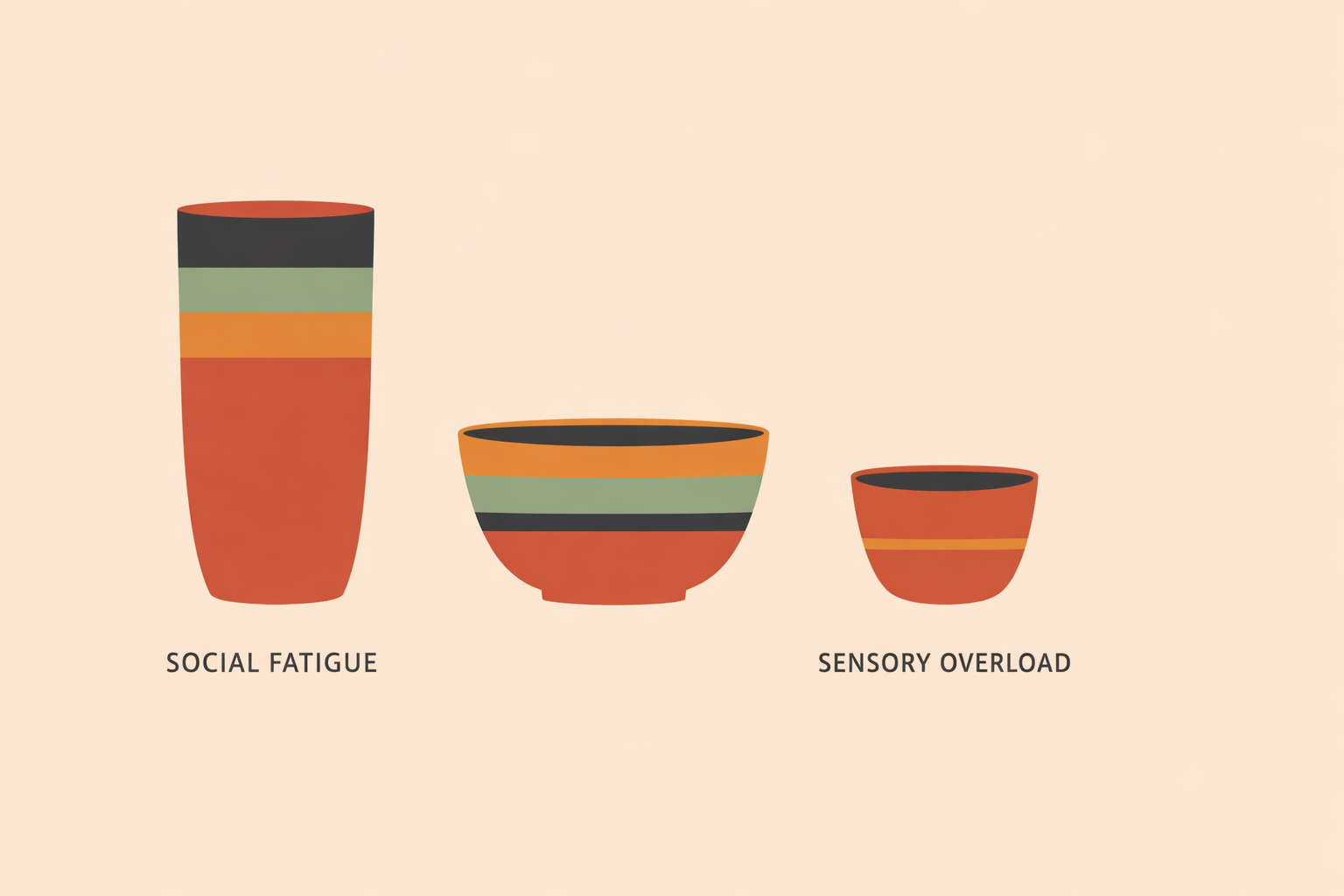
If you work with highly sensitive clients, you’ve probably seen a session shift from clear to flooded in seconds. Someone arrives steady; a notification, a scent, or a sharp tone lands; and suddenly your plan is competing with a nervous system turned up to high gain. In those moments, long forms can add load, and open-ended check-ins can open a story you don’t have time to sort.
What helps most is a brief, dignified signal—something fast enough to protect capacity, yet consistent enough to track across sessions. The three micro check-ins below do exactly that: a quick snapshot of intensity, a one-minute map that links triggers to needs, and a short daily audit that shows whether steadiness holds over time.
Used consistently, they become a lightweight rhythm you and your client can rely on. You’ll notice movement in real time, while also building patterns you can coach.
Key Takeaway: Fast, repeatable check-ins help HSP clients turn emotional intensity into usable information without adding stimulus. Pair a 10-second “weather + number” with a one-minute trigger-and-need scan and a daily energy-and-boundary audit to track regulation in the moment, reveal patterns, and support steadiness over time.
Check-In 1: 10-Second Internal Weather Check for HSP Regulation
This micro check-in turns a complex inner state into two simple cues: one word and one number. It takes seconds, but it gives you a reliable baseline you can compare across sessions.
The core move is straightforward: pause, choose a one-word “internal weather report” (sunny, cloudy, stormy, foggy), then rate intensity from 1–10. The metaphor makes room for nuance without demanding explanation, and the number becomes a repeatable metric. For many HSPs, the “weather” frame is disarming—sharing feels safer when it isn’t framed as “what’s wrong,” but as “what’s here.”
Many people appear to process sensory and emotional input more deeply—often described as about 15–20% of the population. That deeper processing can be a real gift, and it also means small supports can make a noticeable difference. As one writer put it, “Imagine if you felt every emotion five times longer and five times louder.” For a system like that, a 10-second pause can act like ballast.
From a practitioner’s lens, naming transforms intensity into information. When clients label how they feel and rate it, they’re practicing directed awareness—one of the quickest routes back to choice. Emotional education resources also note that naming feelings can reduce intensity, creating just enough space to respond rather than react.
Use this simple script:
- Weather word: “If your mood were weather, what is it?”
- Intensity (1–10): “How strong is it right now?” using a clear 1–10 scale.
- One body cue: “Where do you feel it in your body?” (jaw tight, chest light, shoulders soft)
- One breath: “Take one slow exhale and re-rate.”
Keep it rhythmic. Many practitioners use it to open and close a session: “Cloudy-6” at the start, “Partly sunny-3” at the end. Over a few weeks, you get a practical read on recovery time—how quickly someone returns toward center after stressors.
Two things tend to matter for HSPs: brevity (so the check-in doesn’t become another stimulus), and dignity (so sharing doesn’t feel like a performance). That’s a big reason facilitation circles often use the weather report format: it reduces social risk while increasing honesty.
Tracking is easy:
- In-session: Note “Cloudy-6 → Partly sunny-3 at close.”
- Daily: Log morning/evening weather and numbers; highlight any day that shifts 3+ points.
- Weekly: Circle the most common weather word. Let that guide next week’s support focus.
To honor traditional practice, pair the check-in with a single breath cue your lineage trusts—hand over heart, a soft belly exhale, or a brief gaze toward the horizon. Many ancestral systems valued micro-pauses at thresholds (doorways, meals, dawn/dusk) as a way to reset attention. This is the same principle in modern clothing: a tiny ritual that restores orientation without analysis.
Once you can see intensity clearly, the natural next step is learning what moves the number—and how to downshift more gently. That’s where the trigger-and-need scan shines.
Name it and rate it: from intensity to information
When clients “weather-word” and rate, they move from being inside the storm to watching the sky. The number gives structure; the word keeps it human. Together, they offer a kind, data-light way to track regulation without overwhelm.
Check-In 2: Trigger-and-Need Scan to Map HSP Regulation Patterns
Once a client can name intensity, the next move is pattern. This three-question scan turns isolated spikes into a cause-and-effect loop you can coach—without pulling the client into a long narrative.
Teach it as a swift call-and-response, especially after the weather check when intensity is 5 or higher: What shifted? What sparked it? What’s needed now? Done well, it takes about a minute and returns a sense of choice.
What shifted? The client names the change (“steady to tight,” “focused to scattered,” “fine to raw”). What sparked it? They pinpoint the spark (“Slack ping,” “perfume,” “critical tone”). Quick-practice resources highlight how trigger-focused naming can bring clarity—when the spark is known, the wave feels less mysterious.
What’s needed now? Keep it immediate and practical: quiet, water, a boundary, fresh air, a short walk, one clarifying message, 90 seconds of movement. Guides often recommend asking “What do I need” specifically because it interrupts autopilot—crucial for HSPs who can overload quickly.
For many sensitives, there’s a powerful optional prompt: “Whose emotion is this?” HSPs often describe absorbing other people’s moods. A breath with hand-to-heart and a sincere “Is this mine?” can change the plan entirely. Practitioners in this space commonly encourage a short pause to sit with emotions and notice what passes through; the question “Whose emotion” can be liberating.
As you collect these quick loops, your map gets clearer: “noise + deadlines” spikes intensity; “fresh air + stretching” settles it. Consider a simple two-column log for each client: Sparks and Stabilizers. Over time, the client builds a portable regulation map—personal, respectful, and genuinely usable.
Modern research also supports this direction. A 2024 study on sensory processing sensitivity noted that stronger regulation tended to align with cognitive reappraisal and active coping, while lower regulation aligned more with suppression and rumination. These three questions gently train that reappraisal muscle—clear, not heady.
Daily prompts like “How have my feelings shifted today?” and “What caused it?” are also shared widely in HSP communities (daily check-in). Over days, they reveal how environments, relationships, and pacing shape sensitivity.
From an ancestral lens, this scan echoes old wisdom: notice the wind change, read the sign, choose the right response. Many traditions meet emotion with attention and breath—allowing it to move rather than wrestling it. That’s the spirit here: clarity without a fight.
As Jenna Avery reminds us, “being highly sensitive is both a gift and responsibility.”
The scan honors both: the gift of noticing subtle shifts, and the responsibility of responding with care.
With sparks and stabilizers in view, you’re ready to zoom out further. Regulation isn’t only moment-to-moment; it rises and falls with capacity, limits, and daily rhythm. That’s where the energy-and-boundary audit closes the loop.
Three fast questions: what shifted, what sparked it, what’s needed now?
Keep it 60–90 seconds: name the change, spot the spark, choose one need. Repeat after a breath. Over time, these small loops sketch a regulation map your client can actually use.
Check-In 3: Daily Energy-and-Boundary Audit for HSP Stability Over Time
This end-of-day audit shows whether steadiness holds across time, not just in isolated moments. In a few lines, you track heart, head, body, and boundaries—four levers that strongly shape day-to-day capacity for sensitives.
Think of it as a closing ritual: respectful, brief, and surprisingly informative. Many HSPs do best when they protect intentional recharge time as non-negotiable. This audit makes that visible: did it happen, and did it help?
Here’s the structure you can use with clients:
- Heart (emotional): One word for the day’s mood + 1–10 steadiness.
- Head (mental): Clarity or clutter? One sentence on focus level.
- Body (physical): Energy 1–10, one sensation (tense calves, open chest), and whether you moved.
- Boundaries: One moment you honored a limit; one moment you wish you had—and how you’ll repair it tomorrow.
This echoes a leadership-style check-in—“How’s your heart?” and “How’s your head?”—but tuned to HSP reality. It gives you four “dials” to adjust. If heart and head look fine but body energy is low, you may not need deep processing; you may need water, rest, and a clean boundary around evening screens.
Boundary work deserves special attention because it protects energy at the source. Reflecting on boundaries in a practical way—what worked, what didn’t, what gets repaired—aligns well with guidance on emotional boundaries. The key is keeping boundaries living and responsive, not rigid.
To support the body dial, track a few simple anchors: hydration, colorful whole foods, gentle movement, time outdoors. HSP-focused guidance often recommends steady supports like gentle movement and nature time to smooth emotional energy. In the audit, note what you did—then notice what changed.
Energetic boundaries count too. Some sensitives find it helpful to imagine a protective bubble before entering charged environments. If it suits the client’s worldview, add a simple checkbox: “Bubble on?” Ritualized imagery can reduce emotional blending for some people.
Weekly, roll up the notes:
- Average energy and steadiness scores.
- Top two boundary wins; one boundary to rework.
- Two supports that worked; one new experiment for next week.
As Shahida Arabi writes, HSPs equipped with tools to navigate conflict and self-care “can become empowered superheroes.”
You’re not chasing perfection. You’re building capacity through rhythm, honesty, and respect.
Now you have three lenses: momentary intensity, cause-and-effect patterns, and capacity across time. The real strength is in weaving them into a cadence that’s simple enough to sustain.
Heart, head, and body: a daily snapshot of capacity, not just emotion
When you scan all three—plus boundaries—you can often see why the number moved and what will keep tomorrow steadier. It’s measurable progress without losing the soul of the work.
Conclusion: Measuring HSP Emotional Regulation With 3 Quick Check-Ins
Woven together, these practices become a framework you can trust. Open with the 10-second weather + number, use the trigger-and-need scan whenever intensity rises, and close with the energy-and-boundary audit. In just a few minutes a day, you gather clear signals—in the moment, in patterns, and across time.
Consistency tends to outperform intensity. Regular micro check-ins are linked with growing self-compassion, stronger emotional awareness, and gentler reactivity. In groups and one-to-one support alike, simply sharing a word or number can improve communication and attunement—often the very conditions an HSP nervous system needs to soften.
To keep it practical, aim for a light daily rhythm:
- Morning: Weather + number. If 6+, run the three-question scan and choose one need.
- Midday: One breath, re-rate. If unchanged, adjust environment (quiet, light, posture).
- Evening: Heart–Head–Body–Boundaries audit; write one repair plan for tomorrow.
Over weeks, the notes tell a clear story: what reliably downshifts intensity, what most overtaxes capacity, and how recovery time is changing. Boundary work in particular is an ongoing practice, built one small choice at a time.
If a client enjoys gratitude or spiritual nourishment, add a two-line close: “How am I feeling now?” and “One thing I’m grateful for.” HSP communities often recommend these daily questions as a gentle way to steady perspective and end the day well.
As Jenn Granneman reminds us, intense feeling is not weakness—it’s the mark of the “truly alive.”
These three check-ins honor that aliveness while offering clean, trackable cues—without adding overwhelm. Keep them simple. Keep them culturally respectful. Let the data support the relationship, not replace it.
Train as an HSP Coach
Build ethical, repeatable regulation support with the Highly Sensitive Person (HSP) Coach course.
Explore the HSP Coach →