Specialization is how mindful practitioners cut through the noise, serve more deeply, and build a sustainable practice. The coaches who thrive tend to pair contemplative tools with clear outcomes inside a specific context.
In a busy coaching landscape within a growing well-being economy, people are less interested in generic support. They’re looking for guides who understand their world and can meet them with care that’s tailored to their values and challenges.
Mindfulness sits naturally at the center of this shift. It’s ancient, practical, and trainable—skills for attention, awareness, and presence that carry into daily life. Contemporary summaries describe mindfulness as cognitive training, which helps explain why it blends so smoothly with outcome-focused coaching.
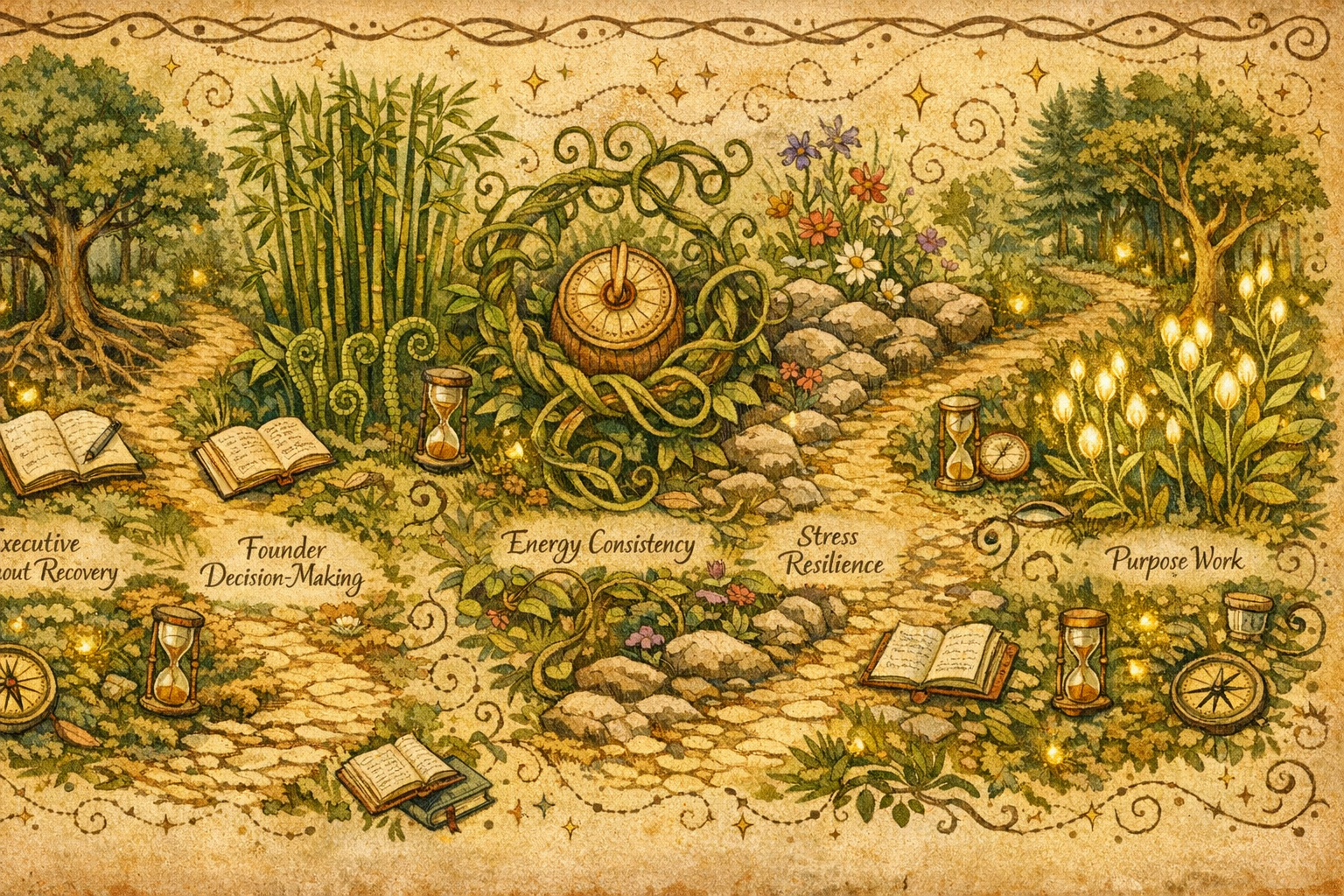
Key Takeaway: Mindfulness coaches build stronger, more sustainable practices by specializing in a clear audience and outcome—like executive recovery, founder decision-making, energy consistency, stress resilience, or purpose work. When mindfulness is framed as practical, trainable skills with simple metrics, clients can feel real change and keep using the tools independently.
1. Executive Burnout & Performance Recovery Coaching
Executives often invest in private, performance-focused partnerships that help them steady the mind, make clearer decisions, and sustain energy. A mindful approach supports all of that—without asking them to slow their world down to a crawl.
In high-stakes roles, leaders tend to engage when you protect their time, speak the language of outcomes, and honor discretion. This niche blends leadership skill-building with simple practices: attention training, boundary-setting, calendar architecture, and brief resets between meetings. In professional settings, higher mindfulness is linked with lower stress and small improvements in engagement—exactly the direction most leaders want.
And many leaders are increasingly open about what this kind of practice changes for them. “Mindfulness has helped me succeed in almost every dimension of my life,” notes Dustin Moskovitz. It’s a familiar pattern: consistent attention to inner state changes how someone shows up under pressure.
- Offer design: 3–6 month retainer, weekly 50-minute sessions, optional 10-minute “reset” calls on high-stress days, and a simple practice kit (1-minute breath reset, 3-minute body scan, 5-minute reflection prompt).
- Core tools: Trigger mapping, mindful scheduling, boundaries-as-rituals, and brief stress reduction protocols between meetings.
- Metrics to track: Decision latency, meeting recovery time, meaningful work hours per week, and self-rated clarity.
Leaders value discretion, pace, and directness. Meet them there—and you can support steadiness that reaches beyond the individual into teams, culture, and strategy.
2. Founder & Entrepreneur Performance Coaching
Founders live with volatility, isolation, and constant choice-making. A mindfulness-oriented coach can offer rare space for emotional regulation and “decision hygiene,” so momentum stays aligned with values instead of reactivity.
Startups move fast, which makes reflective practice feel like a luxury—yet it’s often the missing stabilizer. Rather than adding more tactics, the work centers on discernment: noticing when fear or urgency is steering the wheel, separating signals from noise, and grounding in a strategy that can flex with reality.
“The key to creating the mental space before responding is mindfulness.” — Elizabeth Thornton
Think of it like putting a tiny pause between impulse and action—just long enough to choose well, not long enough to lose momentum. Practical supports like async check-ins, short prompts, and lightweight tracking help founders notice what actually shifts their focus, energy, and follow-through.
- Decision hygiene flow: Name the decision → map facts vs. stories → name emotions → return to values and current constraints → choose next reversible step → schedule a review.
- Weekly cadence: 60-minute session + two async check-ins (voice or text) + a 5-minute end-of-week reflection on lessons and micro-wins.
- Depth levers: Emotional regulation skills, values alignment, and mindful boundary-setting with investors, co-founders, and teams.
Founders don’t need more noise—they need steadier eyes. When you frame your work around decision quality, emotional steadiness, and values-led pace, you become the ally who helps them build the right thing, not just the loudest thing.
3. Health, Metabolic & Energy Optimization Coaching
Many clients want predictable energy and daily rhythms that work—less vague “wellness,” more real-life consistency. A mindful, body-aware approach naturally pairs traditional rhythm-based wisdom with modern self-tracking so people can feel the difference day to day.
Clients may arrive with wearable data and insights from their existing support network, but they often need help turning information into habits. Mindfulness strengthens the translation because it builds sensitivity to subtle cues—breath, tension, restlessness, sleepiness—so adjustments land in lived experience, not just a dashboard. Psychological overviews note mindfulness relates to brain systems involved in attention regulation, which can make behavior change feel more doable.
This niche works best when it stays simple and repeatable. A common thread is focus: when attention steadies, follow-through becomes easier. Coaching writers often describe mindfulness coaching as helping sharpen focus, supporting consistency with chosen routines.
“Concentration is a cornerstone of mindfulness practice.” — Jon Kabat-Zinn
- Offer design: 12-week program focusing on sleep regularity, movement rhythm, mindful meals, and stress resets, supported by wearable-guided experiments.
- Core practices: Body scans before meals, breath-led transitions between work blocks, daylight and darkness rituals, and weekly “energy debriefs.”
- Data integration: Translate HRV, resting heart rate, and sleep indicators into one micro-adjustment per week (e.g., shift meal timing, add a 10-minute morning walk, reduce late caffeine).
What many clients pay for isn’t motivation—it’s reliability. They want to know how to set themselves up for a strong Tuesday, not just a perfect Sunday. Position this niche around grounded attention, sustainable rhythm, and predictable energy.
4. Stress Resilience & Emotional Well-Being Coaching
There’s a wide, important space between self-help and clinical services where many people want ethical, skills-based support with stress and big feelings. Mindfulness coaching can serve this “grey zone” with clear agreements and strong boundaries.
As life speeds up, demand for emotionally grounded support appears to be growing. Commentaries on mindfulness coaching describe it as supporting stress resilience and well-being for many people, especially when it stays practical and collaborative.
Mindfulness-based approaches fit well here because they strengthen agency: clients learn skills they can practice on their own. Reviews of mindfulness programs for non-clinical populations report benefits for psychological functioning and overall well-being in many healthy adults, particularly with consistent practice.
Traditional contemplative lineages have long used breath, grounding, and mindful movement to meet agitation and fear—wisdom that modern coaches can draw from respectfully. There’s also a strong relational upside: mindfulness training is often associated with gains in empathy and emotional intelligence, which supports healthier communication at home and at work.
“Meditation practice isn’t about trying to throw ourselves away and become something better. It’s about befriending who we are already.” — Sylvia Boorstein
That framing matters: mindfulness doesn’t erase life’s storms; it increases capacity to meet them. Or as Kabat-Zinn puts it, you can’t stop the waves, but you can learn to surf.
- Offer design: 8–12 week program teaching breath and body-based settling, cognitive reframing with mindful inquiry, and values-aligned action in small steps.
- Safety and scope: Stay client-led, avoid diagnosing or promising cures, and keep a referral list for specialized support when needed.
- Client wins: More ease in the body, faster recovery after stress spikes, kinder self-talk, and steadier responses in real-life moments.
Working in this middle space asks for humility and steadiness: you’re teaching practical skills, honoring traditional wisdom, and supporting people to navigate life with more clarity—without stepping into roles you don’t hold.
5. Spiritual Purpose & Self-Actualization Coaching
When stress settles, questions of meaning often rise. This niche holds grounded, culturally respectful space for clients exploring purpose, values, and spiritual growth—using mindfulness as a daily anchor, not a pedestal.
Many coaching frameworks describe purpose-oriented work as guiding people from their current self toward an ideal self through introspection and values alignment. Mindfulness keeps it practical: present-moment awareness, reflective inquiry, and small rituals that help insight become lived choice.
Across continents and lineages, practitioners have used mindful attention, prayer, chanting, and ritual to cultivate clarity and compassion. Modern mindfulness educators often honor these roots while emphasizing cultural context. Sharon Salzberg, for instance, describes mindfulness as supporting discernment and an empowered choice. Thich Nhat Hanh offers a complementary view, describing every feeling as a field of energy that can be met with care.
- Offer design: 12-week journey: values clarification, vision and narrative work, daily mindfulness, and a living personal ritual (five minutes a day).
- Respect in practice: Cite lineages, use original names where appropriate, invite clients to honor their own traditions, and seek mentors from within cultures when teaching specific practices.
- Integration: Translate insight into action with weekly micro-commitments (conversations, creative work, service) and reflective closure rituals.
Done well, this niche is quietly powerful: not grand gestures, but small, consistent choices that align a life around what matters most.
Mindfulness Life Coach Niches: Choosing Your Path
Choosing a niche is ultimately about fit and integrity: your story, your skills, and the community you want to serve. When you name a specific group and outcome, the right clients can recognize themselves in your work.
A simple path to clarity:
- Choose the arena that feels most alive for you: executive steadiness, founder decision-making, energy rhythms, stress resilience, or spiritual clarity.
- Define the key outcome in plain language (e.g., “predictable afternoon energy” rather than “better wellness”).
- Map the 3–5 practices you’ll teach every client, and the 3–5 metrics you’ll track together.
- Shape an offer that respects their context—pace, privacy, and cultural roots—and commit to a 90-day prototype to learn quickly.
Clients increasingly choose guides who understand their specific world and can support them toward defined outcomes. Mindfulness coaching fits this well because it’s skills-based: descriptions emphasize it helps people build practical skills they can keep using independently.
If you want a structured path into this work, dedicated training can help you weave contemplative practice, coaching frameworks, ethics, and scope into one coherent approach.
As Sharon Salzberg notes, meditation is a “microcosm” of the skills we need in daily life. Choose your niche, anchor it in steady practice, and let your work become a dependable support in a fast-changing world.
Ready to Go Deeper?
Take the next step with a Naturalistico certification — designed for practitioners ready to deepen their expertise.
Explore the Course →