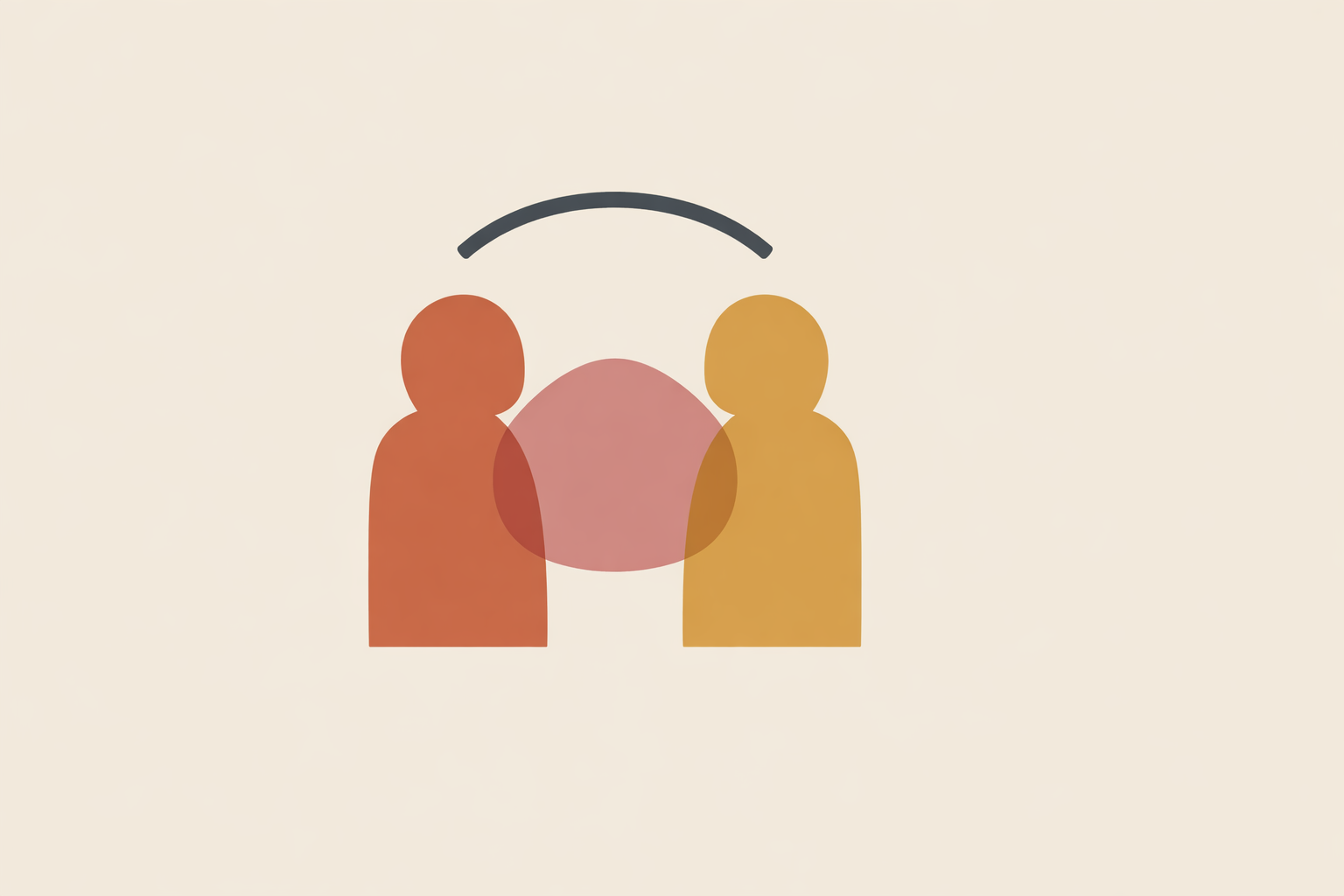
When discovery calls feel unpredictable—no-shows after booking, tense openings, thin answers—you’re rarely seeing a motivation problem. You’re seeing cues. Video-by-default, dense forms, and rapid-fire questions can make the next 30 minutes feel like a test. For neurodivergent clients especially, that first contact often echoes a longer history of being evaluated, corrected, or rushed. When the call feels performative or scrutinizing, it can invite masking or shutdown instead of honest ease.
The practical answer is simple: make the first call feel collaborative from the start. A consent-based, option-rich intake supports calmer conversations, clearer fit decisions, and a steadier foundation for what comes next.
Key Takeaway: ND-affirming intake helps clients arrive more regulated by reducing pre-call friction and making consent, structure, and choices explicit. When the first call is framed as mutual fit—not evaluation—people are more likely to share honestly, ask for what they need, and make steadier yes-or-no decisions.
Reframe the first call as mutual fit, not evaluation
A better first call starts with a better frame. Rather than assessing whether someone is “a good client,” treat the conversation as shared clarity, consent, and mutual fit.
When the call is explicitly two-way, people usually share more honestly. Collaborative, culturally responsive relationships tend to support greater trust and disclosure. In practice, that can sound like:
- “I’ll share how I work, and you can see what fits and what doesn’t.”
- “This is a space for both of us to get a feel for the match.”
- “You don’t need to perform here. We’re just exploring whether this feels supportive.”
This frame also makes consent visible. Informed decision-making research highlights the value of discussing preferences and options to support autonomy and participation.
Put simply: name your scope in plain language, welcome questions, and make it easy for someone to say yes, no, not now, or “I need time to think.” Let them know they can guide pace and depth.
Small wording shifts can change the whole tone:
- From “I need to ask you a few questions” to “Let’s trade notes and see what feels useful.”
- From “Tell me what’s wrong” to “What matters most right now?”
- From “Here’s my process” to “Here are a few ways we could do this—what feels easiest for you?”
Lower friction before the call begins
Intake starts before hello. Booking flow, emails, reminders, and forms all signal pressure (or ease), flexibility (or rigidity), and care (or hurry).
Many discovery-call issues begin right here. Scheduling friction, time-zone confusion, and complex booking systems drain energy before a conversation even starts. Dense forms do the same. When someone is already carrying high executive load, a simpler process can be the difference between “I’ll make it” and “I can’t do this today.”
Keep pre-call forms short and easy to complete. A handful of questions is usually enough to orient the conversation. Checkboxes help; a few spacious prompts help; a wall of text rarely does.
It also helps to break information into smaller pieces. If someone needs key details, send them in brief messages rather than one dense block. Learning research suggests multiple modalities can support comprehension and memory, especially when live processing is demanding.
Format flexibility matters, too. Offering video, audio-only, or a text-first start can reduce performance pressure. For many autistic and ADHD clients, camera-off isn’t avoidance; it’s a practical way to reduce social and sensory load.
A helpful pre-call setup often includes:
- a clear time zone in the booking confirmation
- a short “what to expect” note
- camera-off permission stated upfront
- optional captions
- a 24-hour reminder, with an optional same-day nudge
- a no-fault rescheduling link
That last point matters. When people know they can reschedule without embarrassment or explanation, they’re more likely to stay in contact rather than disappear.
How to open the call so clients can settle
The first few minutes set the tone. When the opening is calm, clear, and spacious, the rest of the conversation usually follows.
Start by helping the person arrive. A brief pause, stretch, sip of water, or exhale makes the transition feel more human. Trauma-informed frameworks emphasize the importance of practices that support a stronger sense of safety at the start of a conversation.
Then make the structure visible. Many neurodivergent clients feel steadier with predictability, and structure can reduce anticipatory strain. A simple time map is enough:
- “We’ve got 30 minutes.”
- “I’ll spend a few minutes orienting us.”
- “Then we’ll talk about what you want support with.”
- “At the end, we can decide together about next steps.”
Consent language belongs here, too. Let the person know they can pause, skip, clarify, or redirect. Permission to express preferences supports a stronger sense of control and participation.
From there, use story-first questions rather than interrogation:
- “What brought you here now?”
- “What’s been feeling heavy lately?”
- “What already helps, even a little?”
- “What would make this conversation easier today?”
As The Neurodivergent Coach frames it, “True strengths-based practice is about developing honest, compassionate self-awareness that honors both what’s powerful about the way our brain might work AND what’s sometimes hard about that.” strengths-based
Turn support needs into visible options
Many clients do better when comfort isn’t left vague. Instead of “Let me know what you need,” offer a clear menu.
Making options standard—rather than exceptional—reduces pressure to mask and makes it easier to name preferences. Inclusive, culturally responsive practice tends to increase comfort in expressing needs.
You might offer choices around:
- Format: video, audio-only, or chat-first start
- Pacing: slower pace, pauses, or extra processing time
- Sensory load: camera off, dimmer light, headphones, movement breaks
- Communication: direct questions, less small talk, written follow-up
- Memory support: shared notes, summaries, reminders
- Access tools: captions, transcripts, audio replay
Some supports are backed by strong general evidence. Real-time captions can improve comprehension and reduce listening effort for many people. Cognitive offloading through external tools and reminders can reduce load on working memory. And sharing key information in more than one format helps many people retain and revisit what matters.
Most importantly, build these options into your usual workflow so people don’t have to ask from a place of strain.
Adjust for neurotype without stereotyping
Patterns can guide preparation, but they should never replace curiosity. Use them lightly, then let the person in front of you confirm, reject, or refine what helps.
For autistic clients, direct and concrete communication is often easier to trust. Many autistic adults prefer direct communication and find ambiguous social expectations tiring. Clear agendas, optional small talk, and explicit transitions often help.
For people with ADHD traits, momentum often matters more than elegance. Shorter calls, time-boxing, and a few concrete next steps can be easier to follow through on, much like the action-focused structure used in ADHD coaching. Adults with ADHD commonly benefit from simplified tasks and reduced planning demands.
For dyslexic clients, layout and language matter. Dense text can become discouraging fast. Dyslexia guidance recommends clear layouts, lower text density, and multimodal formats such as audio.
For late-identified neurodivergent people, one of the most supportive messages is that they don’t need to be less themselves here. Autistic adults often describe the relief of spaces where they can be authentic without camouflaging traits.
Essentially, the principle is simple: offer structure, then ask. “What would make this easier today?” often tells you more than any label can.
Make identity, culture, and community part of the conversation
Neurodivergence never exists in isolation. Race, gender, class, language, culture, spirituality, and community all shape how safe it feels to ask for support—and how someone has been read by systems up to this point.
That’s why identity-aware intake matters. Reviews note that marginalized groups often face added stigma and barriers around recognition and support, including underdiagnosis, misdiagnosis, and additional stigma. Naming that reality (without making assumptions) can soften shame and help people feel less alone.
Simple, respectful questions open the door:
- “What name and pronouns feel right here?”
- “Are there any cultural or family norms you want me to respect in how we work?”
- “Have past support spaces taught you anything about what helps or doesn’t help?”
It can also help to acknowledge structural barriers directly. People from marginalized groups often feel more trust when practitioners recognize wider context rather than locating every struggle inside the individual. Collaborative approaches that name those realities can support more trust and safety.
Traditional and community-based forms of grounding belong here too, when the client wants them. Across cultures, rhythmic movement, craft, song, and time outdoors have long helped people steady overwhelmed minds and bodies. Think of it like returning to a familiar rhythm when the world gets too loud: not a performance, just something the nervous system recognizes. The role here is to make respectful space for what already supports the person—without romanticizing or borrowing from cultures that aren’t yours to claim.
“Reframing neurodivergence as a source of potential – not just deficit – can be a key factor in career resilience and mental health,” writes The Neurodivergent Coach. potential
And back up your welcome with visible practice. Clear conduct expectations, multiple feedback channels, and explicit anti-harassment and anti-discrimination language can increase safety for marginalized clients.
Small changes, meaningful shift
When intake cues change, the whole conversation changes. A calmer booking flow, a mutual-fit frame, a simple time map, and a visible menu of options can turn a high-pressure call into a grounded exchange.
You don’t need to redesign everything at once. Start with one pre-call improvement, one settling opening, and one follow-up support. Then listen closely for what changes: fuller answers, steadier decisions, and that subtle sense of ease that tells you the space is working.
A final note: keep your options real and sustainable. It’s better to offer three supports you can reliably deliver than ten that fall away when things get busy. And when something isn’t possible, name it kindly and offer the closest alternative—clients can work with clarity about your scope of practice.
Train in ND-affirming coaching
Apply these intake principles with deeper skill through the Neurodiversity Coach Certification.
Explore Neurodiversity Coach Certification →