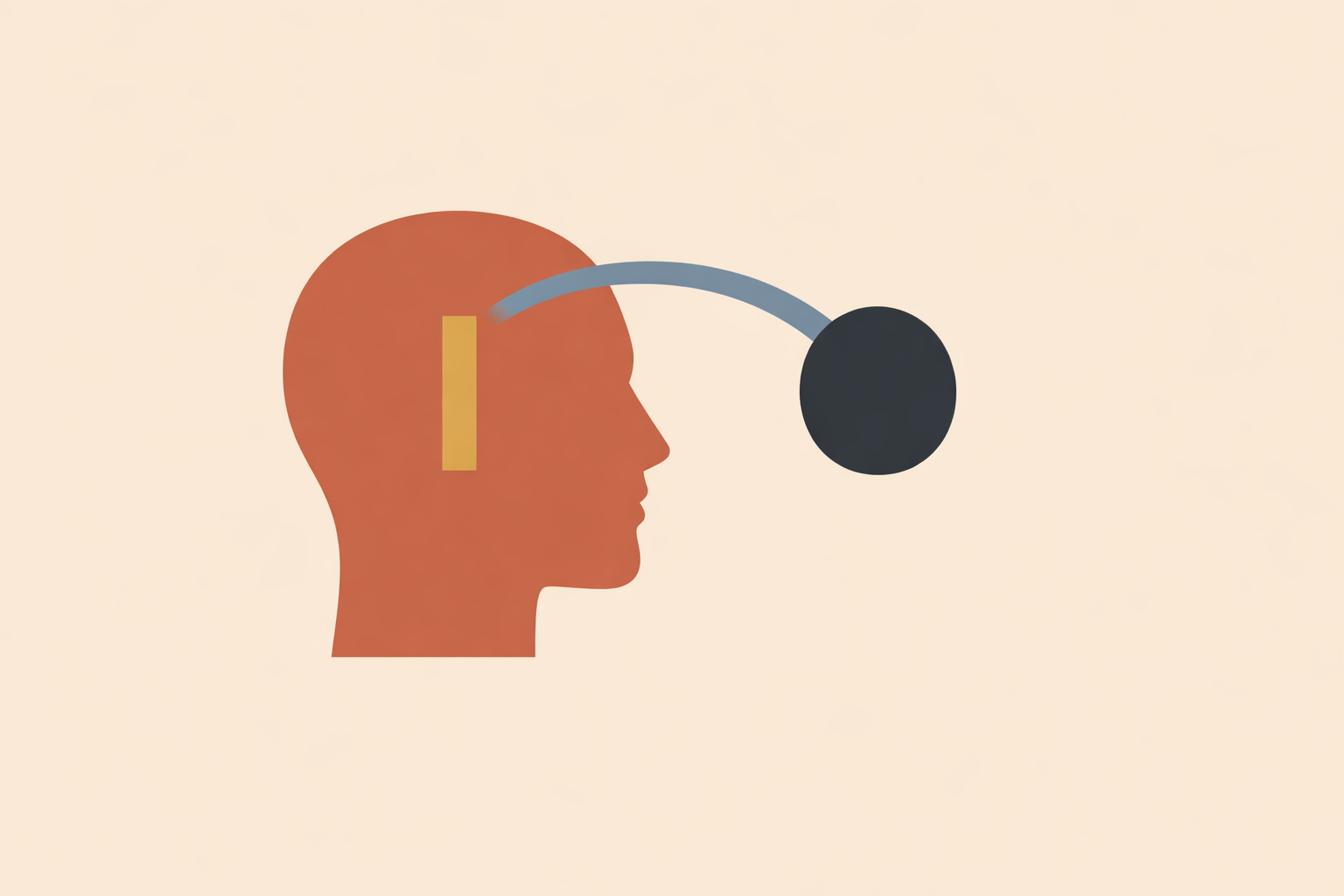
You know the client who can deliver a sharp presentation at noon and still stall on a two-line email by four. You’ve tightened goals, swapped apps, and raised accountability—yet the week keeps dissolving into missed starts, forgotten steps, and last-minute pivots. The more you push structure, the more the session fills with apologies and self-critique.
A more useful frame is simple: executive dysfunction isn’t a willpower problem. It’s inconsistent access to initiation, planning, sequencing, time sense, and follow-through—especially under pressure. Major reviews describe executive functions as the mental processes that enable goal-directed behaviour, distinct from motivation.
From a neurodiversity-informed stance, those breakdowns become patterns you can observe and design around—not character flaws to correct. Shame gives way to curiosity, and “inconsistency” turns into specific friction points you can work with. The aim is practical and humane: make follow-through easier because it fits the brain and the day it has to live in.
Key Takeaway: Executive dysfunction is a context-sensitive access issue—not a motivation deficit—so support works best when it targets specific friction points like initiation, sequencing, time sense, and follow-through. Neurodiversity-informed coaching helps by reducing shame and designing practical systems that match the person’s environment, energy, and sensory reality.
Seeing Executive Dysfunction Clearly
Executive dysfunction is not a character flaw. It’s a recurring difficulty with starting, organising, remembering, shifting, and finishing—especially when life is demanding. Seeing it clearly is the first step toward support that actually helps.
Everyday guidance describes executive dysfunction in grounded terms: trouble initiating tasks, sustaining focus, planning, managing time, and completing what you started. The issue isn’t intelligence. It’s access to those “management skills” in real time.
That’s why the “contradictory” client begins to make sense. Someone can be brilliant in one context and stuck in another because executive functioning is sensitive to conditions. Reviews note that stress and fatigue can impair planning, working memory, and cognitive flexibility. Harvard’s Center on the Developing Child also highlights context‑dependent demands: the situation itself can overwhelm executive capacity, even when someone functions well elsewhere.
The impact is often painfully ordinary: missed deadlines, clutter that quietly builds, forgotten renewals, half-finished projects, and routines that never “stick.” These are familiar expressions of executive-function struggles. Because they show up in visible parts of daily life, they’re easily misread as carelessness. Autistic and ADHD adults often report their difficulties being interpreted as laziness, feeding shame and internalised stigma.
A neurodiversity-informed lens changes the tone—and the outcomes. A neurodiversity‑affirming stance helps prevent environmental mismatch from being framed as personal failure. In practice, the conversation shifts from “What’s wrong with you?” to “What’s getting in the way?” That small change creates room for better experimentation and kinder persistence.
It also helps to remember that executive dysfunction rarely travels alone. Public guidance notes links with ADHD, autism, stress, lack of sleep, and overload. So when a client says, “I know what to do, I just can’t do it,” the most skilful response is usually less pressure—and more precise, compassionate observation.
When shame softens, patterns become visible. And once the pattern is visible, you can work with it instead of against it.
Why Modern Life Overloads Executive Functioning
Modern life asks for constant self-management, and that alone can overload executive functioning. For many neurodivergent clients, it’s not a lack of capability—it’s the sheer volume of switching, filtering, estimating, and recovering required each day.
Adult life is packed with invisible coordination: calendars, inboxes, passwords, forms, errands, meals, and shifting priorities. Researchers note that these pressures can strain executive mental functioning, especially when those processes already take effort.
Digital life can intensify the load. Experimental work links frequent task-switching and media multitasking with poorer executive control and increased distractibility. Essentially, the brain gets drafted into being project manager, timekeeper, archivist, and motivator—across dozens of micro-contexts.
For many neurodivergent adults, time itself may feel unreliable. ADHD-focused discussions describe time blindness as impaired time perception and estimation. Think of it like having a faulty internal clock: a task that “should” take ten minutes can swallow an hour, and a distant deadline can suddenly feel immediate.
Transitions carry their own cost. Shifting between tasks draws on working memory and cognitive flexibility; EF guides highlight how task shifting depends on these capacities. So when a client says they can work once they’re “in it,” but can’t begin—or they lose momentum with every interruption—that’s a recognizable executive pattern, not a moral failure.
Add sensory overload, unclear expectations, too many steps, or perfectionism, and a task can tip into paralysis. Harvard notes that overwhelming demands can exceed executive capacity, making initiation feel impossible. In real life, that can look like circling a simple email for weeks or staring at a form for days.
Burnout amplifies everything. Reviews link burnout with impaired attention, working memory, and cognitive flexibility, and they highlight cognitive fatigue as a common effect of chronic strain. Many clients aren’t failing to use their systems; they’re operating beyond their current capacity.
Seen this way, executive dysfunction doesn’t happen in a vacuum. It unfolds in homes full of visual noise, workplaces full of interruptions, phones full of prompts, and cultures full of unrealistic urgency. Coaching becomes far more effective when it matches the conditions clients are actually living in.
How Neurodiversity Coaching Supports Executive Dysfunction
Neurodiversity coaching helps clients build systems that fit their actual brain and actual life. That means trading generic productivity advice for strengths-based observation, personalised experiments, and a more respectful story about how follow-through works.
The first shift is relational. Many clients arrive convinced they are the problem because they’ve spent years forcing themselves into systems never designed for them. A neurodiversity-informed coach slows things down and looks for friction points. Instead of “Why can’t you just do it?” the question becomes, “Where does this break down?” Self-criticism turns into useful data.
From there, you get specific. One client struggles with initiation; another can start but can’t sequence steps; another loses the thread halfway through when working memory drops. Educational guidance emphasizes that identifying the main barrier—initiation, prioritisation, sequencing, memory, maintenance, or switching—matters because each needs different targeted supports.
Useful coaching questions include:
- What makes this task hard to start?
- Which part feels vague or fuzzy?
- What support would make the first step smaller?
- What usually interrupts momentum?
- What helps momentum return?
These questions help clients move from “I’m bad at life” to “I get stuck when the task has too many undefined steps.” Put simply: the problem becomes workable.
The stance behind the work matters as much as the tools. Practitioner descriptions often frame neurodiversity coaching as strengths‑based, future-focused, and support-oriented. This isn’t about ignoring difficulty; it’s about building scaffolding that respects how someone naturally thinks and functions. Research on person–environment fit suggests that alignment improves performance and satisfaction, echoing what many practitioners see in sessions.
“Strengths‑based approach” is not a nice extra but a powerful strategy for wellbeing, growth, and long-term success.
Strengths-based interventions in neurodivergent populations are associated with improved self‑efficacy, wellbeing, and goal attainment. Research on autistic masking also suggests that building around strengths can support less exhaustion and better day-to-day functioning.
Identity work weaves through this naturally. Studies link a more positive neurodivergent identity with higher self‑esteem and less internalised stigma, and disability-identity research connects it to greater accommodation use and resilience after setbacks. When people stop seeing themselves as broken, they’re more willing to test supports, ask for adjustments, and restart without spiralling.
In real sessions, the coach is doing two things at once: helping the client build external structure, and loosening the old story that struggle equals failure. Together, those shifts make change more realistic—and far more sustainable.
Core Supports That Make Follow-Through Easier
Follow-through gets easier when tasks are made visible, smaller, and less lonely. The most reliable supports tend to be simple: reduce activation energy, externalise what the brain is trying to hold, and add gentle structure around action.
Body doubling is a clear example. Many neurodivergent adults find that working alongside another person—whether in the same room or on a quiet video call—makes it easier to start and persist. ADHD coaching reports and small studies note that body doubling can support initiation and persistence through presence and light accountability, without harsh pressure.
Because many struggles happen at the “first hump,” it helps to make the first move almost absurdly doable. That’s the role of micro-steps. Instead of “sort out the finances,” the first step becomes “open banking app.” Instead of “clean the kitchen,” it becomes “clear one surface.” Intervention guidance recommends breaking tasks into smaller steps to support initiation and completion—so the brain isn’t trying to hold the whole mountain at once.
The same principle applies to memory. If a task only lives in working memory, it’s far more likely to vanish. Public resources highlight planners, reminders, and calendars as external memory aids. Used well—alarms, whiteboards, shared planners, sticky notes, visual schedules, or task apps—these tools let the system remember, so the person doesn’t have to carry everything alone.
Time supports belong in the same toolkit. Resources recommend visual timers, analog clocks, and schedules to support time management and transitions, especially with time blindness. Here’s why that matters: when time feels abstract, making it visible often improves pacing far more than repeated lectures about “managing time better.”
Once those foundations are in place, light behavioural anchors can make action more repeatable:
- Short work sprints with planned breaks
- If–then plans that connect action to a cue (“If it’s after coffee, then I open my task list”)
- Gentle check-ins that add accountability without shame
- Reset rituals after interruptions or low-energy periods
The real strength of these supports is collaboration. If a timer creates stress, you pivot to music-based pacing. If a daily checklist feels too rigid, you shift to a “today / next / later” board. The goal isn’t perfect compliance—it’s better fit.
That fit is what gives strategies their staying power. Evaluations of ADHD and autism coaching report consistent improvements in self-rated performance, self-efficacy, and workplace functioning. In everyday terms, it often looks like fewer stalled tasks, gentler restarts, and a growing sense that follow-through is something a client can shape.
Designing Around the Whole Person: Sensory Needs, Environment, and Rhythm
Executive support works best when it includes the person’s environment, senses, rhythms, and cultural reality. Tools matter, but they become far more effective when they’re woven into a way of living that reduces unnecessary friction.
A plan can look perfect on paper and still collapse in a noisy, cluttered, unpredictable space. Research suggests sensory sensitivities can affect attention and daily functioning, and environmental psychology finds noise and visual clutter can impair task performance. For many neurodivergent people, sensory conditions and executive functioning are inseparable.
Environmental design becomes a quiet form of care. EF interventions emphasize organising spaces with clear storage and reduced clutter to support follow‑through. Practically, that might mean a “launch pad” by the door, visible storage, fewer piles, and predictable homes for frequently used items.
These details matter because every extra step adds friction. Guidance describes reducing “search costs”—the time and effort spent hunting for what you need. Lower the search cost, and you raise the odds a task will start and finish.
Routines also deserve a more humane frame. Many clients don’t need stricter discipline; they need something they can return to after disruption. Stress and coping literature suggests flexible routines tend to hold up better under pressure than rigid ones. Essentially, rhythm supports consistency without punishing real life.
This is where traditional and ancestral wisdom offers steady guidance. Communities have long used rhythm, repetition, communal labour, seasonal pacing, and ritual to structure daily activities and distribute effort. Morning tending, shared meals, evening reset practices, designated rest periods—these aren’t quaint habits. They’re time-tested ways of sharing cognitive load across people and across time.
Modern evidence also supports the value of social rhythm. Resources highlight that community and routine can support self‑regulation and executive functioning. Many clients are trying to do everything alone, under constant urgency; reintroducing cadence and relational support can be deeply stabilising.
In coaching, that can look simple and personal:
- Anchoring planning to a morning drink or a particular spot in the home
- Resetting a space at sunset or before bed
- Preparing tomorrow’s essentials after the evening meal
- Using a weekly household check-in instead of relying on memory alone
- Aligning focused work with natural light and adding movement between tasks
Research on routines and circadian alignment suggests regular rhythms can support self‑regulation and cognitive performance. The point isn’t to romanticise the past—it’s to remember that many humans function better when life has cadence.
Harvard EF resources also emphasise that modifying environments and reducing distractions enhances the effectiveness of executive-function strategies. When clients shape surroundings, honour sensory reality, and build rooted (not forced) routines, the tools from earlier sections become easier to sustain.
Conclusion
Overcoming executive dysfunction is rarely about trying harder. Change usually begins when a client is seen clearly, supported respectfully, and helped to build systems that match their neurotype, environment, and lived reality.
A neurodiversity-informed approach doesn’t shame people for struggling with initiation, time, organisation, or follow-through. It helps them name the pattern, reduce friction, lean into strengths, and create structure that can survive ordinary life.
For practitioners, the work asks for both skill and humility: look beyond surface behaviours, listen for where the process actually breaks down, and remember how strongly executive challenges are shaped by burnout, sensory load, space, expectations, and culture. When you do that, sessions become less about “fixing” someone and more about helping them live with greater coherence.
Many clients don’t need harsher discipline. They need kinder systems, clearer supports, and rhythms they can return to. When those pieces are in place, follow-through becomes less mysterious—and much more possible.
Coach Executive Function Better
Apply these strategies in practice through the Neurodiversity Coach Certification.
Explore the Certification →