


Many art life coaches hit the same ceiling: interest is high, but prospects try one session and drift away. The first offer asks for too much time, too many materials, or too much emotional openness; the next step is unclear; and “premium” quietly becomes unlimited, draining your energy. Boundaries blur, materials lists bloat, and follow-up lacks structure—so momentum stalls. What’s missing usually isn’t skill. It’s packaging and pacing, which can lead to uneven outcomes and leaky retention.
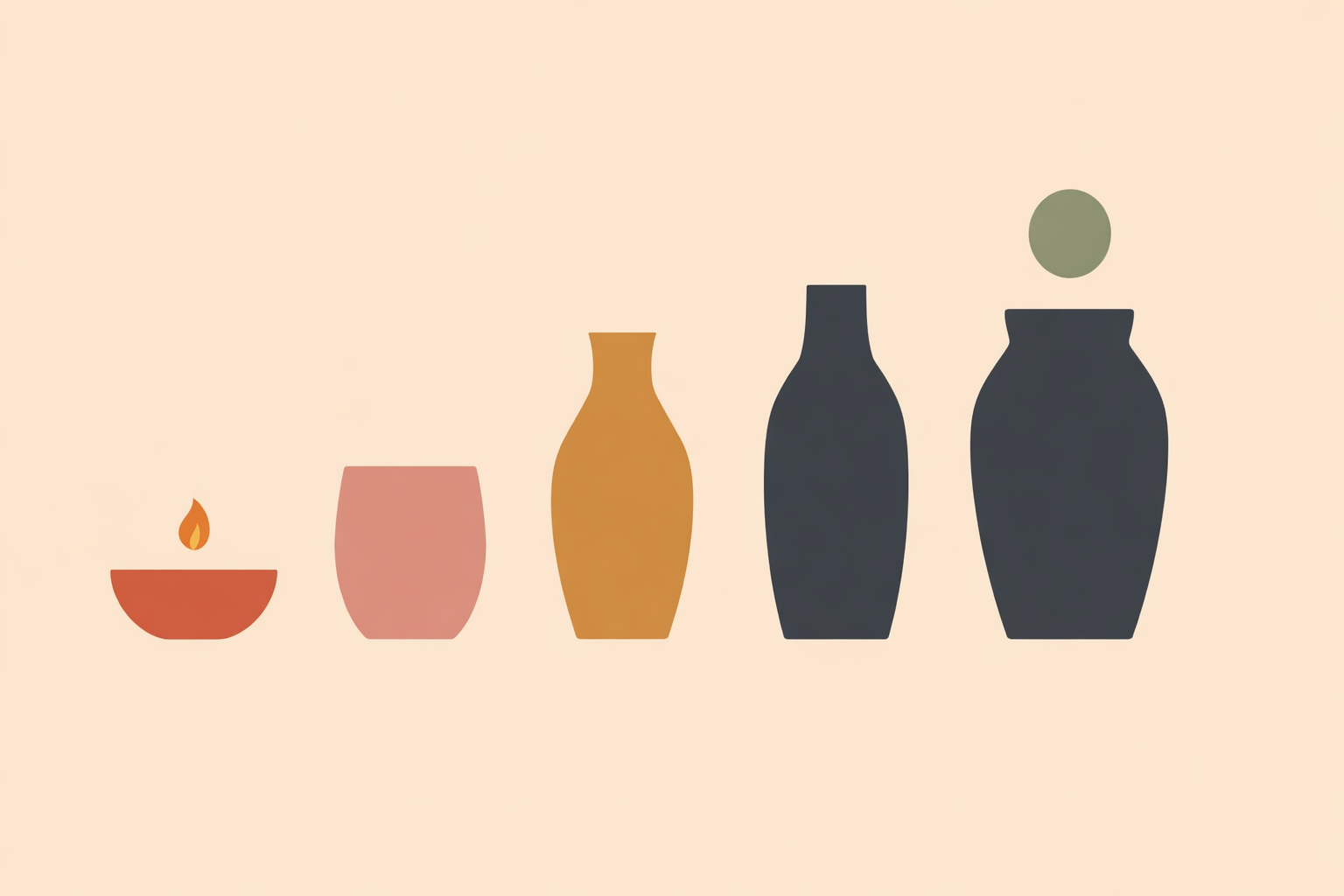
The most reliable fix is a tiered pathway that matches readiness to the right container. Think of it as five linked steps: a light Spark entry, a Foundation Series that builds rhythm, a multi-month Signature Path, a bounded VIP container, and a scalable Community tier. Each one reduces cognitive load, makes progress easy to repeat and review, and protects your capacity with clear scope, consent, and privacy norms.
Key Takeaway: A sustainable art life coaching practice is built on a tiered pathway that matches readiness to the right container, with clear scope and boundaries at every level. When offers are small, repeatable, and reviewable—then gradually deepen through structure, cadence, and consent—clients build momentum and you protect capacity.
Tier 1 – The Spark Offer: Entry Art Life Coaching Package
A strong Spark offer gives people an easy, low-pressure first experience of art life coaching. Its purpose isn’t to overhaul someone’s life in one go—it’s to create enough safety, clarity, and momentum that they genuinely want a next step.
In creative work, the earliest win is often clarity and self-awareness, not dramatic change. So the entry package should feel simple, contained, and immediately usable.
As the “non-verbal pathway” framing from the Paperbell team highlights, art-based coaching can surface insight faster than questioning alone. Creative work can also help people clarify emotions when words don’t land. In practice, that can mean a single short session—or a brief prompt series—helps someone finally name what’s been stuck for months.
But it only works if the container is easy to enter. When an offer is designed to lower cognitive load, follow-through improves—and you’ll see the same effect with creative prompts. Keep Tier 1 light: one 60-minute session, a 3-day prompt series, or a one-week mini container with clear instructions and ordinary materials.
The most welcoming formats are usually:
- collage from magazines or found images
- simple visual mapping on one page
- short journaling paired with color, symbols, or shapes
- photo-based reflection for clients who don’t want to draw
These options lower the threshold. A person doesn’t need to feel “creative” to cut, arrange, circle, or respond. Essentially, you’re offering permission—often the real beginning.
To build trust quickly, make the Spark offer small, repeated, and reviewable. A few short prompts across a week can create more momentum than a big assignment. Those small repetitions help insights settle—and that settling is what turns curiosity into commitment.
Once that trust is there, clients are ready for rhythm.
Tier 2 – The Foundation Series: From Spark to Steady Practice
The Foundation Series turns a good first experience into something dependable. Instead of one moment of insight, clients build consistency, emotional steadiness, and trust in their own creative process.
If Tier 1 says, “You can do this,” Tier 2 says, “You can keep doing this.” And that’s where real change tends to live, because lasting change rarely comes from a single breakthrough. It comes from steady repetition and self-regulation.
A clean, structured pathway works well here: four to six sessions over six to eight weeks, plus simple between-session practices. Clear structure supports client follow-through, and it also reduces the “What am I supposed to do now?” drop-off that kills momentum.
Keep the rhythm predictable: a brief grounding, a short visual exercise, and a few lines of reflection. That repetition becomes supportive because it removes uncertainty and performance pressure.
Low-complexity methods are especially valuable at this stage. Busy people stick with low-burden self-monitoring more easily than elaborate projects. Collage, short journaling, color tracking, and one-page maps ask for less setup and fewer decisions—so clients actually do them.
For many people carrying stress or burnout, movement plus mark-making can be more accessible than “talking it through.” Creative expression can support regulation, and when the body gets to move first, reflection often follows more naturally.
The Paperbell team also emphasizes process over product—useful when someone insists they’re “not artistic.” That shift alone can change engagement: people stop trying to impress and start noticing what’s true.
Your feedback in Tier 2 works best when it’s light but timely. Timely, specific feedback can support autonomy and motivation without making the client reliant on you.
Often the most effective feedback sounds like this:
- I noticed you used the same image twice this week.
- You may want to explore what that symbol keeps pointing toward.
- For next time, try reducing the prompt to ten minutes and see what changes.
By the end, clients don’t just have insight—they have a practice. And once someone has a practice, a deeper, more personalized journey becomes possible.
Tier 3 – The Signature Path: Your Core Art Life Coaching Journey
Your Signature Path is the heart of the practice: a 3- to 6-month journey with enough time, structure, and support for meaningful change. This is where your philosophy and your way of guiding become fully visible.
By this point, clients already know the work resonates. Now they’re ready for a fuller arc—one that honors their story while still giving them a clear path to walk.
Multi-month support helps clients build self-efficacy and translate insight into sustained action. Put simply: they’re not only seeing themselves differently; they’re starting to live differently.
The key is structure without rigidity. Traditional creative practices across cultures have long relied on form—ritual shape—to create freedom. A ritual container guides participation while leaving plenty of room for depth. Your Signature Path can work the same way: a steady shape that holds real expression.
A strong core journey often includes:
- a live kickoff session to establish intention and trust
- a repeating session rhythm, such as biweekly meetings
- short between-session creative practices
- voice, text, or photo check-ins for accountability
- a closing integration process that gathers the whole arc
This hybrid design matters because deeper change usually requires both real-time support and reinforcement between sessions. Blending formats can support ongoing participation more reliably than relying on one mode alone.
As the Paperbell team notes, insight can arrive quickly through art-based work. In a longer container, that’s a strength: there’s time to work with what emerges, rather than rushing past it.
Pacing still matters. Open-ended practices can be powerful, but for someone with perfectionist patterns, too much openness too soon can feel destabilizing. Your sequencing does the holding here—more than any single exercise.
Practically, that usually means favoring short, frequent practices over occasional big projects. Ten to twenty minutes several times a week is more doable than a grand task that gets postponed for a month.
This is also where a coherent framework matters. Naturalistico’s Art Life Coach Certification is designed to help practitioners shape creative methods into adaptable journeys rather than disconnected exercises. Clients don’t just need prompts—they need progression.
With your Signature Path established, premium support becomes easier to offer cleanly, because it grows from a method you already trust.
Tier 4 – The VIP Container: High-Touch Art Life Coaching for Crossroads
A VIP container is for clients who want close support during a significant crossroads and are ready for a more intensive, personalized experience. Done well, it offers depth without chaos, and responsiveness without overextension.
The common mistake is assuming premium means unlimited. Sustainable high-touch work depends on bounded caseloads and scope. The container should feel spacious to the client and protective to you.
This tier often suits major decisions, identity shifts, creative blocks, or periods of disconnection—times when clients want steady accompaniment and help integrating choices over time.
Because intensity is higher, sensory and movement-based practices can be especially supportive. Creative arts therapy reviews describe how sensory and movement-based methods can support regulation, agency, and expression. Gesture drawing, floor-based mapping, texture work, or multi-sensory mark-making can help clients reconnect with themselves in a way that feels grounded rather than performative.
And as the Paperbell team notes, non-verbal pathways can bring insight forward quickly. In VIP work, that’s a gift—but it also calls for stronger containment: the deeper the access, the clearer the structure.
That structure may include:
- a fixed number of sessions per month
- defined messaging hours and response windows
- predictable session flow
- clear agreements about what this support does and does not include
- a private, simple method for sharing images or reflections
Predictability supports access, especially for neurodivergent clients. predictable structure and clear instructions reduce friction—and in premium work, those details are part of what makes the container feel safe.
Privacy matters just as much. Trust grows when you name your standards clearly: informed consent and confidentiality, agreements around images, storage, and when (if ever) anything is shared.
Finally, keep VIP limited. Limiting high-intensity work helps protect quality and practitioner wellbeing. A small number of VIP clients is often enough—and it keeps the rest of your pathway strong.
Once one-to-one depth is available, the final tier offers a different kind of richness: belonging and continuity.
Tier 5 – The Community Tier: Your Ongoing Creative Ecosystem
The Community Tier gives clients a place to continue practicing after a formal container ends. Instead of expecting everyone to stay in one-to-one support indefinitely, it creates an ecosystem where creativity, reflection, and encouragement can continue in a scalable way.
This matters because progress continues after a package ends. Ongoing peer support can sustain gains over time. Many people benefit from a village around the work, not only private sessions.
This tier might be a monthly membership, a creative circle, a prompt library with live gatherings, or a seasonal practice space. One-to-many models can extend reach while still providing meaningful support—when the experience is well-designed.
Design is what keeps community from feeling vague. Clear themes, simple participation pathways, and predictable ways to engage help both the highly active and the quietly consistent feel included.
Low-materials practices scale beautifully. They’re widely used because they’re scalable and accessible: photo prompts, found-object reflection, journaling, color tracking, and simple collage work across time zones and living situations. A phone, a notebook, and twenty minutes can be enough.
Group containment looks different than one-to-one containment. Safety comes from good boundaries: a clear prompt, time expectations, and guidance on how to participate without pressure.
Privacy remains central. Clear consent practices support trust in groups, especially around sharing creative work. A strong default is private creation with optional sharing—opt-in rather than assumed—so people can choose visibility.
When community is structured, scale doesn’t have to mean dilution. Peer-group spaces can reduce isolation and increase perceived support, helping people feel less alone in what they’re practicing.
Retention also improves when participation is easy to follow. Clear, easy-to-follow experiences help people stay engaged. As one “easy to follow” Naturalistico graduate put it, simplicity supports completion—and in community work, simplicity is what allows depth to keep unfolding.
Across all five tiers, the pattern stays consistent: match the container to readiness, and progress becomes easier to sustain.
Conclusion – Packaging Your 5 Art Life Coaching Tiers
A five-tier art life coaching model works best when each level naturally leads to the next. The Spark offer opens the door, the Foundation Series builds rhythm, the Signature Path holds deeper transformation, the VIP container supports major crossroads, and the Community Tier keeps the practice alive over time.
When clients can clearly see where they are—and what the next step is—you’re not creating random offers. You’re building a pathway, which supports meaningful outcomes and a more sustainable practice.
This structure also supports strong ethics. Clear boundaries, informed consent, and respect for context are easier to uphold when each tier has a defined purpose and scope. And if you draw inspiration from ancestral or traditional creative wisdom, keep it rooted: honor cultural context, avoid extracting practices, and let living traditions be approached with care.
For practitioners who want support shaping a coherent, scalable pathway, Naturalistico’s Art Life Coach Certification sits within a broader ecosystem for continuing development, practical application, and evolving client support. The program has recognition from bodies such as IPHM, CMA, and CPD and can help you turn creative ideas into a grounded, adaptable art life coaching practice.
Start simple. Build one tier well. Then let the rest grow around it with intention.
Build Your Art Life Coaching Pathway
Turn these five tiers into a coherent client journey with the Art Life Coach Certification.
Explore Art Life Coach →










