Polyvagal‑informed coaching offers a grounded bridge between ancestral regulation practices and modern nervous system literacy. When a client’s system shifts toward steadier presence, clearer choices and warmer connection often follow.
At its core, Polyvagal Theory describes how the autonomic nervous system moves among three states: ventral vagal (safety and connection), sympathetic (mobilization), and dorsal vagal (shutdown). Stephen Porges called the nervous system’s constant background scanning of safety and danger neuroception—a quiet process that influences how someone arrives in a session, often before a single word is spoken. As Deb Dana reminds us, “The job of the autonomic nervous system is to ensure we survive in moments of danger and thrive in times of safety.”
This is why state awareness belongs near the center of effective coaching. When ventral vagal safety is supported, clients often think more flexibly, relate more openly, and act with better judgment. Deb Dana’s phrase—Story Follows State—puts it plainly: as the body settles, perception and self‑talk tend to reorganize too. It’s also why these skills are now taught across many coaching contexts.
From a traditional perspective, none of this is new. Breath, rhythm, chant, drumming, movement, and shared ritual are time‑tested ways humans have shifted state and strengthened belonging. Contemporary movement and dance fields also describe how rhythm supports regulation, echoing what communities have practiced for generations. The Polyvagal Institute likewise points to the role of safety cues and social engagement in everyday life.
Here are five thriving coaching niches where polyvagal‑informed work can meet real client needs with clarity, respect, and strong ethics.
Key Takeaway: Polyvagal‑informed coaching works best when you lead with state awareness—supporting safety cues and co‑regulation so clients can think, relate, and choose more effectively. Across niches, simple practices like breath, rhythm, movement, and relational cues help shift physiology first, so story and behavior can follow.
Niche 1: Somatic & Embodiment Coaching with Polyvagal Insight
Somatic and embodiment coaching is a natural home for polyvagal work because it begins where the nervous system speaks most clearly: the body. When clients can sense and shift state in real time, change is more likely to carry into daily life.
Body wisdom to nervous system literacy. Somatic work already emphasizes felt sense, breath, and movement—practices that align naturally with polyvagal attention to autonomic cues and state shifts. Polyvagal language often simply gives structure to what the body (and many cultural traditions) has long understood. This is increasingly visible in “neurowellness” spaces where people seek body‑based support for everyday growth.
In ventral vagal states, clients often access presence, perspective, and relational ease—the very conditions embodiment coaches cultivate through posture, gaze, breath, and micro‑movement. Polyvagal maps help explain why these basics work: they send cues of safety through the social engagement system, increasing capacity for reflection and contact. As Stephen Porges puts it, “We don’t solve problems when we’re frightened. We solve problems when we’re safe with others.”
Co‑regulation is often the quiet engine of these sessions. A coach’s pacing, tone, and steadiness can signal safety and support a client’s return to center—an emphasis shared across polyvagal‑informed coaching approaches.
Deb Dana’s sequence—Recognize, Respect, Regulate, Re‑story—fits naturally with somatic process: track what’s present, honor it, shift state, then let new meaning form. And because “Story Follows State,” physiology often leads the way to a kinder narrative.
- Micro‑practices that support state shifts: orienting (slowly look around and name three colors), lengthened exhales, humming or gentle vocalization, weight‑shifting, and micro‑pauses before responding.
- Sample session arc: open with co‑regulation (breath or orienting), track state together, apply one body‑based shift, and close with a brief re‑story in the client’s words.
Niche 2: Mental & Emotional Resilience Coaching with Polyvagal Tools
Resilience coaching translates polyvagal principles into everyday support: how to meet stress without shame, navigate anxiety spikes, and return to steady ground more quickly.
Using polyvagal cues to navigate stress and burnout. When neuroception registers safety, ventral vagal activation tends to support clearer thinking and more collaborative behavior—exactly what people need during demanding seasons. Porges notes that safety cues naturally promote social behavior, and that relational ease can soften stress responses. In coaching, that often means working “state‑first”—supporting the physiological channel thoughts are riding on, so mindset tools actually land.
Tools can stay simple and respectful: long exhales, eyes‑open grounding, brief movement, and paced check‑ins. Mobilization (fight/flight) can be normalized as adaptive energy, then guided into completion—through rhythm, breath, imagery, or gentle motion—so the system stops treating the moment as ongoing threat. These foundations are common in polyvagal‑informed coaching practice trainings and translate easily into daily routines.
Traditional practices mirror the same physiology. Rhythm, chant, and communal presence have long helped people settle and remember they belong. Rhythmic breathing is widely used to promote inner balance, and many song and drum lineages rely on similar principles. A practical resilience “regulation kit” might include two trusted breaths, one vocal practice (hum or mantra), one movement (shake or sway), and one quick relational reach‑out.
- Stress pivot script: “Let’s check which state is here. What’s one cue of safety we can add right now—breath, posture, or voice?”
- Burnout boundary: 90‑second reset between meetings (three rounds: orient, long exhale, name one support).
Niche 3: ADHD & Neurodiversity Coaching for Sensitive Systems
Neurodiversity coaching often becomes more compassionate and effective through a polyvagal lens. Instead of “try harder,” the conversation shifts to: “What does your system need to feel safe enough to engage?”
From “try harder” to “work with your wiring.” Many neurodivergent clients describe heightened sensory input and fast state shifts. Clinical discussion of sensory gating in ADHD highlights how tuning out repetitive stimuli (like background noise) can be difficult, increasing overload and inattention. Neuroscience research also describes distinct intrinsic connectivity patterns across ADHD, autism, and neurotypical groups—useful confirmation that many challenges reflect nervous system organization, not personal failure.
When someone’s sensory profile leans toward over‑responsivity or low registration, coping can tilt toward shutdown or frantic seeking. Work exploring sensory sensitivity links heightened sensitivity with more strained coping in some contexts, underscoring how perception shapes emotional load. Other research suggests sensation seeking tends to be higher in ADHD than in autism—one reason movement‑rich strategies can be especially supportive for many ADHD clients.
Polyvagal framing adds a missing kindness: an “ordinary” room may register as threat, pulling attention toward scanning and self‑protection. That’s where neuroception becomes essential—the body often decides before the mind. And when state shifts, meaning shifts too; Deb Dana’s “Story Follows State” can help clients loosen self‑judgment and return to workable options.
Coaching moves that help:
- Design the environment: adjust lighting, reduce overwhelming sound where possible, add predictable rhythm (timers, playlists), and carve “sensory sanctuaries” for quick resets.
- Match tools to sensory profile: for sensation seekers, add movement and novelty; for over‑responsive systems, use softer soundscapes, weighted support, and one‑thing‑at‑a‑time pacing.
- State‑first planning: plan the day after a ventral cue (breath, hum, short walk), then stack work in 20–40 minute pods with gentle transitions.
- Relational scaffolding: agree on co‑regulation check‑ins with a colleague or friend using brief voice notes.
Niche 4: Perimenopause & Menopause Coaching for Nervous System Transitions
Midlife often brings new sensitivities, shifting identity, and renegotiated boundaries. Polyvagal‑informed coaching can help clients experience this passage as a meaningful transition—one that can deepen clarity and self‑trust.
Midlife, identity, and autonomic rewiring. Interest in perimenopause and menopause support continues to grow in broader well‑being conversations, reflecting growing interest across the field. Common experiences such as sleep disturbance, mood shifts, and body aches can combine with stress load in a way that feels unfamiliar. For some, central nervous system hyper‑excitation becomes more noticeable, which can amplify reactivity and reduce the margin for “powering through.”
This is where steady, gentle state‑shifting practices shine: longer exhales, grounding through feet and spine, and soft rhythmic movement can invite ventral presence—so choices come from values rather than urgency. These methods are frequently woven into polyvagal‑informed coaching practice spaces.
Just as important is the communal container. Many traditions hold midlife through circle, song, and story—forms of collective co‑regulation that reinforce belonging. Across settings, breathwork supporting emotional balance continues to be recognized and practiced. The Polyvagal Institute also emphasizes the role of community ritual in embedding safety cues during transitions. And as Porges reminds us, we solve problems most effectively when we feel safe with others—especially when life is asking for new decisions.
- Midlife micro‑practices: three exhales before decisions, a weekly movement ritual, and one social anchor (walk, tea, song) that reliably signals “I’m not alone.”
- Identity work: explore “roles I’m releasing” versus “roles I’m ripening” after a short ventral cue, to support clarity over urgency.
Niche 5: Relationship & Parenting Coaching with Co‑Regulation
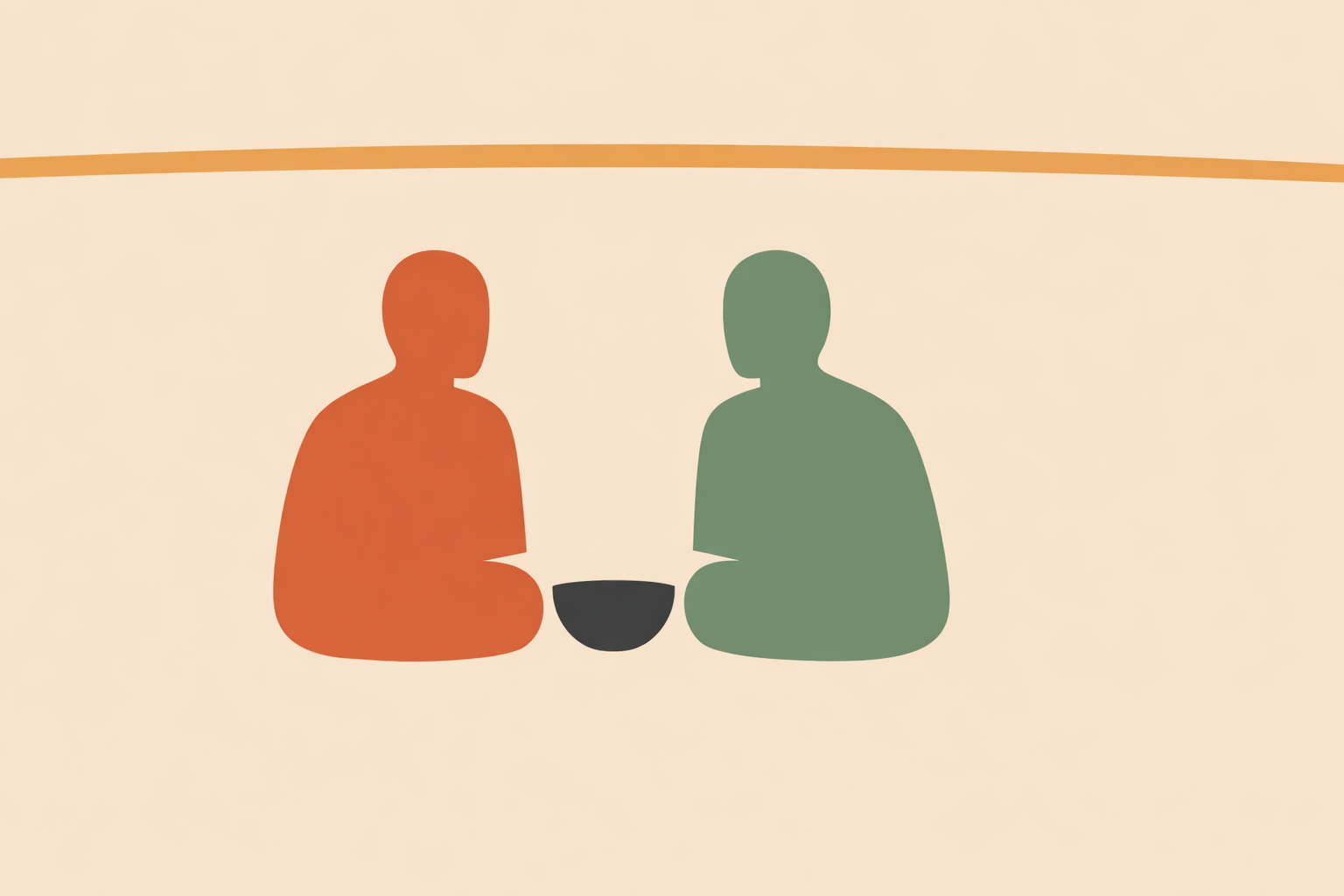
Many “communication problems” are nervous system regulation challenges in disguise. When coaching includes the body—tone, gaze, breath, pacing—relationships often soften, and understanding grows where blame used to take up space.
Turning connection into your core coaching offer. Polyvagal‑informed perspectives are increasingly applied in parenting and relationship settings, including parenting guidance. The key mechanism is co‑regulation: two autonomic systems continuously influence each other through micro‑cues like facial expression, vocal prosody, and posture. Coaching helps clients notice these cues and use them with intention.
Porges describes how the nervous system evaluates risk by processing sensory information and sorting people and situations into safe, dangerous, or life‑threatening. What this means is that when someone’s system senses danger, tone can matter more than content; and when a child is highly mobilized, reasoning rarely lands until safety lands first. This is why Deb Dana’s four R’s—Recognize, Respect, Regulate (or co‑regulate), Re‑story—fit so cleanly, especially the four R’s emphasis on state before story.
Many families already practice ancestral co‑regulation without naming it: shared meals, lullabies, movement, storytelling. These rituals quietly train safety into everyday life, and the Polyvagal Institute highlights the power of simple, rhythmic, communal practices to support social engagement.
- Couples drill: pause for three breaths, turn slightly side‑by‑side (less confrontational than face‑to‑face), soften gaze, and mirror a slower tone—then continue the conversation.
- Parenting script: “I see your body is moving fast. Let’s shake it out with me for ten seconds—then we’ll talk.”
- Team reset: begin meetings with a brief orienting round (“What’s one supportive thing within reach?”) to bring ventral cues into the room.
Conclusion: Choosing Your Polyvagal Therapy Coaching Niche
Across these niches—somatic embodiment, resilience, neurodiversity, midlife transitions, and relationships—the throughline is steady: when the body feels safer, the mind tends to gain options. This matches both modern frameworks and the lived knowledge held in communities that have practiced breath, rhythm, and belonging for centuries.
If you’re choosing where to focus, start with what you naturally gravitate toward:
- Drawn to tracking micro‑shifts in breath and posture? Somatics may be your home base.
- Love translating body wisdom into workday rituals and stress resets? Resilience might fit.
- Passionate about honoring neurodivergent wiring? Design sensory‑savvy systems.
- Called to midlife rites of passage? Build community‑rooted containers.
- Want to support families and teams? Lead with co‑regulation and relational safety.
As your niche matures, it helps to track progress in grounded, client‑defined ways. Goal attainment scaling is one established option for reflecting movement toward outcomes the client chooses. Many coaches also pair that with a simple polyvagal‑informed marker—like noticing quicker recovery after stress—to capture both outer change and inner capacity.
It’s also wise to keep learning. Some researchers have challenged aspects of polyvagal models, especially how “ladders” and shutdown are framed. Practically, this is an invitation to stay discerning, keep your coaching agreements clear, and prioritize what consistently supports a client’s sense of steadiness and choice.
What endures is simple and deeply human: breath, rhythm, presence, and community. These tools align with ancestral wisdom and modern explorations of regulation, and breath practices remain a cross‑cultural cornerstone for cultivating balance. As Deb Dana puts it, the autonomic nervous system helps us survive and thrive. In coaching, the aim is to create conditions where thriving becomes more available—moment by moment.
- Next steps: choose one niche and one population; outline three co‑regulation practices you’ll offer consistently; and define two ways you’ll measure progress—goal attainment plus a polyvagal‑informed marker like quicker recovery after stress.
- Keep weaving: blend client‑honoring traditions (song, story, movement) with clear, modern coaching agreements. Let your practice evolve alongside emerging research and your community’s needs.
Explore Polyvagal Therapy Certification
Deepen your regulation and co‑regulation skills with Naturalistico’s Polyvagal Therapy Certification.
Explore Polyvagal Therapy →