Most practitioners learn this through lived practice: you swap in a new “rose” and the blend that once lifted a room now feels heavier on the skin; the jasmine that felt luminous in anointing suddenly dominates a breath practice; a client asks why their “frankincense” smells brighter this month and fades sooner. Often, the issue isn’t just brand variation—it’s extraction method.
When extraction is unnamed or misunderstood, results naturally get inconsistent. Diffusion can feel muddy, skin work may lose staying power, and pricing becomes harder to explain with confidence. The practical shift is straightforward: match extraction to intention, then name that choice clearly on the label and in your sessions.
Aromatherapy is widely valued for well-being, and that experience depends on knowing what, exactly, you’re working with. Once you start treating each plant as a family of extracts—not a single “ingredient”—your selection gets sharper, your communication gets easier, and your results become more consistent.
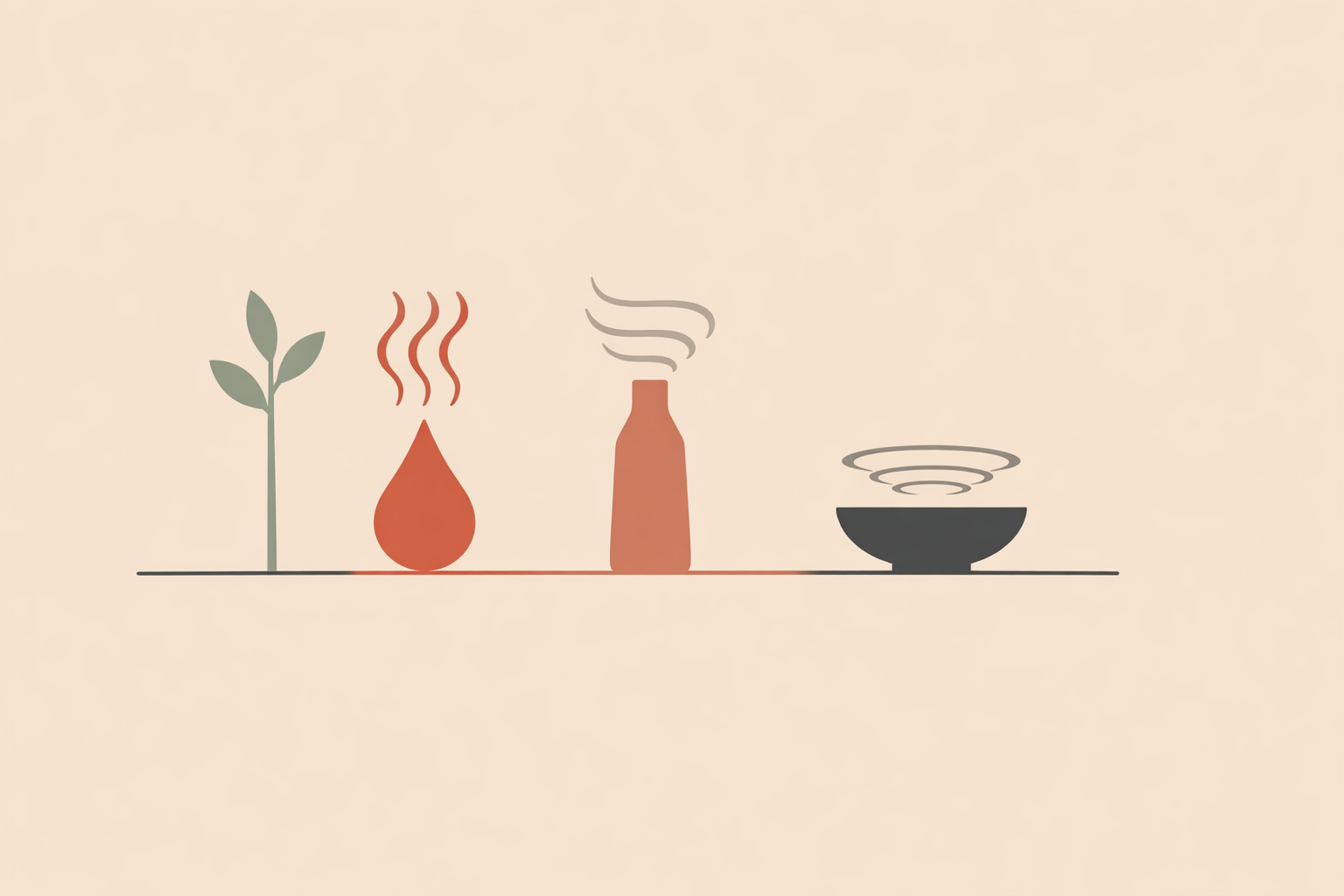
Key Takeaway: The same plant behaves differently depending on extraction method, affecting diffusion, skin presence, and blend “tone.” When you match extraction type (distilled, expressed, absolute, CO₂, or hydrosol) to your intention and label it clearly, your work becomes more consistent and easier to explain.
Why extraction changes how the same plant behaves
One plant can yield several distinct aromatic materials depending on how it’s extracted. So in real-world practice, “rose,” “jasmine,” or “frankincense” aren’t single materials—they’re families of related extracts.
Different techniques naturally create different compositions, yields, and sensory profiles. Here’s why that matters: extraction quietly shapes not only scent, but also diffusion, skin presence, and the overall emotional tone of a blend.
Broadly speaking, steam distillation and expression capture lighter, more volatile aromatics. Think of these as the “quick-moving” notes—often cleaner in the air and easier to predict in everyday blending. Solvent extraction and CO₂ methods tend to include heavier constituents, which can add depth, sweetness, and a longer-lasting presence on the skin.
Even the terminology helps you work more clearly. Many practitioners reserve “essential oil” for distilled or expressed volatile extracts, while treating absolutes and other solvent-derived materials as closely related, but distinct. This isn’t nitpicking—it’s a practical way to explain why the same plant can feel so different from one bottle to the next.
A rose is not just a rose
Rose makes this easy to feel. Rose otto (steam-distilled) often reads brighter and more sheer. Rose absolute typically feels deeper—honeyed, waxy, sometimes indolic. Both are “rose,” yet one may suit a light atmospheric blend while the other feels more at home in anointing or perfume-style ritual.
Jasmine tells a similar story. CO₂ extraction can preserve facets that steam may leave behind, which is one reason jasmine extracts can feel especially lush and complete. Solvent extraction and CO₂ are also often chosen for delicate flowers—materials that don’t tolerate heat well or yield very little through steam distillation.
Frankincense is another clear example. A distilled frankincense often feels airy and terpenic, while a CO₂ extract tends to read more resinous and balsamic. Neither is “better”—they’re simply different doorways into the same plant.
Steam distillation remains the dominant method for aromatherapy oils for good reason: it’s reliable, widely practiced, and especially suited to diffusion and day-to-day blending. Absolutes and CO₂ extracts expand your palette when delicacy, richness, or tenacity matters more than lift.
As one integrative team puts it, “Aromatherapy is a practice rich in history… backed by research and beneficial for physical and emotional well‑being.” That perspective echoes what traditional practitioners have long recognized: plants teach through scent, and extraction is one way we listen more precisely.
How to choose the right extract for the work
When a plant comes in multiple forms, choosing becomes much simpler if you start with intention—what you want the aromatic material to do in the moment.
- For diffusion and breath-focused work: choose distilled or expressed oils when you want clean volatility, quick lift, and a clearer exit from the room.
- For anointing and skin-forward rituals: choose absolutes or CO₂ extracts when you want warmth, richness, and stronger skin presence.
- For subtle or beginner-friendly aromatic work: choose low-dose distilled oils or hydrosols when softness matters more than intensity.
- For tradition-aware practice: let sourcing and extraction respect the cultural roots of the plant, including harvest methods, compensation, and how the material is prepared.
Extraction also shapes cost. Distillation can require large amounts of plant material. Absolutes involve additional processing. CO₂ extraction uses specialized equipment. Naming these differences helps people understand that price reflects craft, materials, and method—not just branding.
Clear labeling keeps that clarity alive. Listing plant name, part used, extraction method, batch, and supplier turns “behind-the-scenes” information into something you can confidently discuss—and it makes your own work far easier to repeat.
Why steam distillation remains the backbone of aromatherapy
Steam distillation is the backbone of aromatherapy because it captures a plant’s most airborne aromatics cleanly and consistently. It’s also one of the most established methods across both traditional practice and modern aromatic work.
In a still, water becomes steam and passes through plant material. That steam carries volatile aromatic molecules upward; once condensed, the aromatic output separates into two parts: essential oil and hydrosol.
Essentially, steam distillation is selective. It tends to lift lighter aromatics while leaving behind heavier waxes, pigments, and many resins. That selectivity helps explain why distilled oils often feel brighter, crisper, and easier to compose with—especially for room blends and lighter topical preparations.
For many practitioners, this is the daily foundation: distilled oils for clarity and structure, with other extract types brought in when a blend calls for more density or complexity in aromatherapy sessions.
What steam distillation captures, and what it leaves behind
Steam distillation doesn’t capture the whole plant equally—it captures what’s willing to travel with vapor.
- Captured: lighter, more diffusive aromatics that create lift, brightness, and clearer movement through air.
- Left behind: many waxes, pigments, heavier resins, and some delicate notes that may be better preserved through other extraction methods.
- Practical result: oils that often feel cleaner in diffusion, fresher in top notes, and easier to dose in lighter blends.
This is why a distilled frankincense can feel so different from a frankincense CO₂, and why delicate flowers may need another extraction route if you want their fuller, nectar-like body. Extraction isn’t a production detail—it shapes the entire aromatic experience.
Hydrosols: the gentler companion to essential oils
Hydrosols deserve their own place in practice. Hydrosols contain micro-droplets of essential oil along with water-soluble constituents that aren’t present in the oil alone. What this means is a softer, quieter aromatic impression—often perfect when you want subtlety.
Many practitioners reach for hydrosols when the goal is nuance: facial mists, linen sprays, room refreshers, or ritual moments where full-strength aromatics would feel too strong.
They’re also an elegant starting point for someone new to aromatic work—an easy way to build familiarity with a plant’s character before moving into more concentrated formats, especially in grounding sessions.
Storage, shelf life, and dilution basics
Good aromatic work isn’t only about choosing the right extract—it’s also about keeping it in excellent condition, so it behaves the way you expect.
- Label carefully: record plant, part, extraction, region, batch, and supplier.
- Store thoughtfully: keep oils cool, dark, and tightly sealed. 1–3 years is a useful general window for many distilled oils under proper storage, while some woods and resins may age more gracefully.
- Use hydrosols fresh: they’re more perishable than oils, so refrigeration and timely use help preserve aroma and character.
- Keep topical use gentle: 0.5% to 2% is a common day-to-day dilution range for healthy adults, with many situations where lower is the wisest choice.
- Let context lead: choose the smallest aromatic presence that fits the space, the person, and the intention.
Over time, reliability tends to come from precision—not from using more material, but from understanding it well enough to use less, better.
Working with extraction more intentionally
Once you start “listening” for extraction, your whole aromatic palette sharpens. Distillation brings lift and clarity. Absolutes and CO₂ extracts add depth and persistence. Hydrosols offer softness when oils would feel too pronounced.
A simple, reliable approach is to keep distilled oils and hydrosols as your everyday foundation, then bring in absolutes or CO₂ extracts when richness, sweetness, or stronger skin presence is part of the intention. Keep your collection focused, your labels clear, and your sourcing transparent.
Over time, you’ll notice extraction doesn’t just change scent—it changes pacing, texture, and how a blend “lives” in a room or on the skin. That’s where craft deepens: not in having more bottles, but in choosing the right version of a plant for the moment.
Advance Aromatherapy Certification Skills
Apply extraction-aware blending with Naturalistico’s Aromatherapy Certification for clearer sourcing, labeling, and client guidance.
Explore Aromatherapy Certification →