An edible landscape can be abundant, beautiful, and fully approvable. The key is translating an earth-centered vision into the format reviewers trust: clear scales, legible labels, and concise notes—without losing the traditional wisdom that makes the design work.
Many projects stall at the permitting desk for a simple reason: the concept is strong, but the plan doesn’t “speak” in setbacks, access routes, and site realities. When that translation is done well, the same design suddenly looks calm, organized, and easy to say yes to.
Edible landscaping—edible landscaping—has long proven itself on small suburban sites, including 1/4-acre lots, because it blends beauty, ecology, and everyday usefulness. The growing interest in urban permaculture follows that same thread: reconnecting people to place while building practical, real-project design skills.
Underneath it all are permaculture ethics—care for the earth, care for people, and fair share—guiding choices with respect for culture, community, and the living land.
“Permaculture is defined as consciously designed landscapes which mimic nature’s patterns while providing for local needs.” — David Holmgren
That’s the spirit to carry into the permit process: same soul, clearer paperwork.
Key Takeaway: Permit-ready edible landscapes succeed when you translate ecological intent into reviewer-friendly drawings: a scaled base map, legible labels, and concise technical notes. When observation, aesthetics, access, and maintenance are clearly documented, approvals often become a matter of clarity rather than compromise.
From Vision to Approval: Why Permits Support Edible Landscapes
In practice, permits can fit naturally inside an ethical land-care mindset. They encourage clarity, safety, and long-term stewardship—and a well-drawn plan protects both the site and the people living with it.
Seeing permits as protection, not a barrier to creativity
Once an edible landscape becomes visible—especially a front yard or a full-site redesign—it attracts attention from neighbors, HOAs, and reviewers. That’s where 1/4-acre examples matter: they show that edible design can look intentional, orderly, and neighborhood-appropriate when it’s planned with structure.
Permaculture has always been “design intensive.” Put simply: resilience comes from thoughtful layout. When your plan clearly shows paths, edges, sunlight considerations, and maintenance intent, it becomes easier for others to trust what you’re building.
There’s also a real shift toward recognizable skills and professional presentation, reflected in structured learning and project-ready training. Programs that connect sustainable land design with organic gardening and urban realities—like Naturalistico’s design curriculum—mirror what approval processes tend to reward: coherent drawings and grounded decisions.
Permits aren’t where tradition gets diluted. They’re where tradition gets translated—so institutions can recognize what the land will already understand.
Begin with Deep Observation
Every permit-ready plan begins with the oldest practice there is: observation. When you take time to read the site well, the design becomes simpler to draw—and far easier to defend.
Let the land speak before you draw a single line
Start with a hand sketch and a basic yard map, noting structures, slopes, existing trees, and utilities. Then gather real-world details—sun, shade, soil feel, and water movement—because strong reviews are built on site assessment, not guesswork.
Permaculture’s first principle is extended observation—treating time spent watching wind, light, and water as productive work. This echoes deep agroforestry wisdom found across many Indigenous and ancestral land traditions: patterns are read first, and only then are decisions made.
“Once you start dealing with the fine-grained character of local resources, the design solutions are all different.” — David Holmgren
Be sure to note microclimates—warm corners, damp pockets, windy lanes—because they often determine which plants thrive and which struggle.
Keep your observations as short notes and photos. Think of it like creating a “site story” that reviewers, neighbors, and clients can follow.
Turn Observations into a Scaled Base Map
Now turn field truth into a base map that’s precise and readable. When someone glances at the plan, they should immediately see order, access, and intent.
From rough sketch to precise plan reviewers can read at a glance
Measure the site and draw it to scale—many designers use 1/4-inch scale so setbacks and distances are obvious. A practical scale method is to choose a scale that fits the longest dimension comfortably on your page or screen.
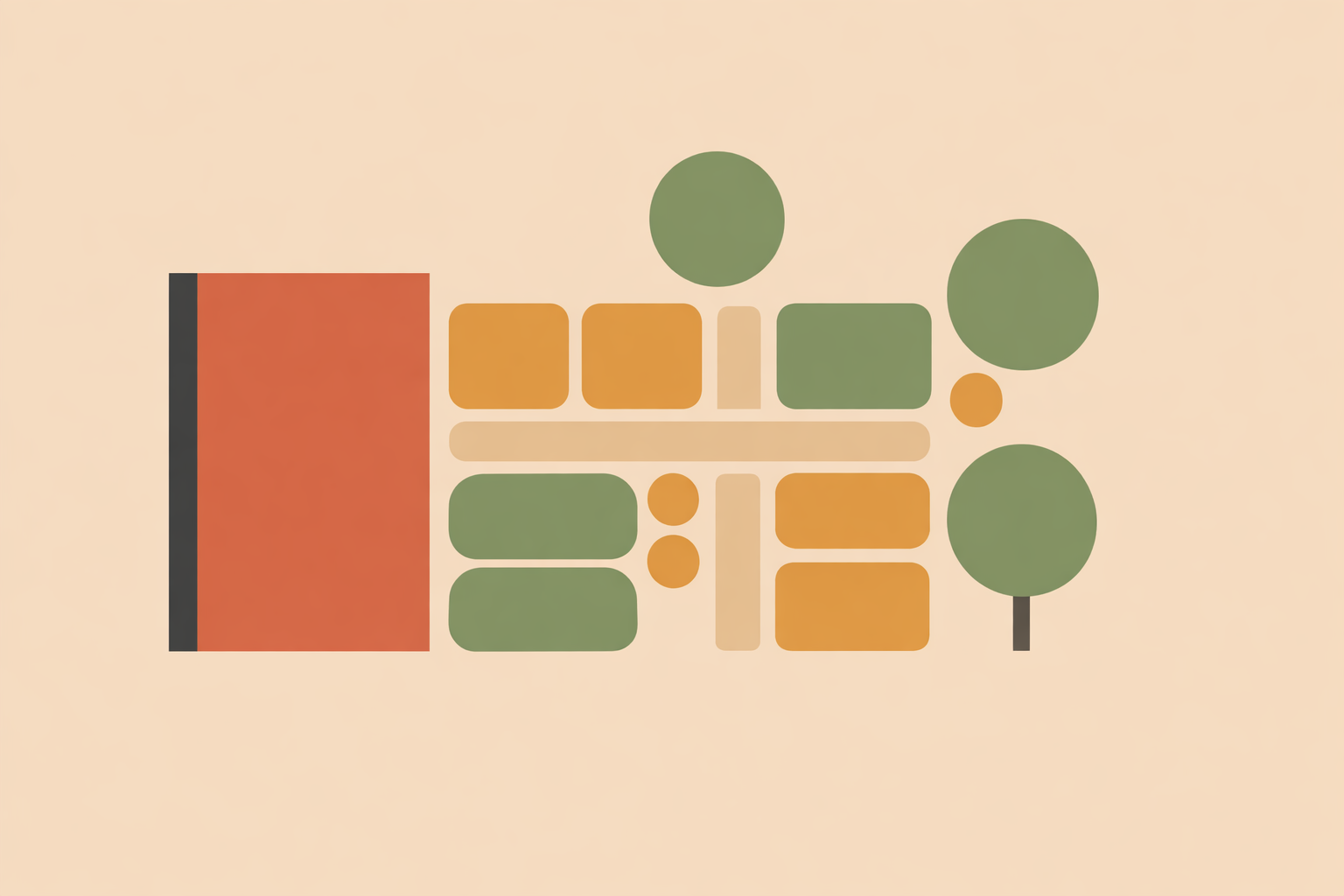
Next, sketch a bubble diagram over the base: simple circles for activity areas, higher- and lower-maintenance zones, and key points like compost or water storage. This keeps the design flexible while relationships are being tested.
Well-drawn edible landscapes read as coherent, even when they’re richly planted. Practical scaled examples show how edible intensity can vary while still protecting access, sightlines, and open space. As Bill Mollison put it, permaculture “contains nothing new; it arranges what was always there so energy is conserved.” A good scaled plan does exactly that—it reveals the logic already present in the site.
By this stage, many reviewer questions answer themselves right on the page.
Design Beautiful Edible Landscapes Neighbors Say Yes To
Beauty is part of the strategy. When a food-producing space is visibly intentional, it becomes easier for neighbors—and decision-makers—to trust it.
Using ornamental design principles to showcase food-producing plants
Build the design around simplicity and unity: repeat shapes, limit plant types in a bed, define edges, and choose a couple of clear focal points. That might be a single feature tree, an arch, or a well-placed herb border that visually “frames” the space.
Use color schemes and texture like any ornamental designer would—foliage tone, bloom timing, fruit color, and seasonal structure. You can also swap common ornamentals for edible counterparts with similar form, keeping curb appeal while adding function.
Many successful front-yard projects follow familiar patterns—front-yard plantings with clean paths and recognizable beds—then quietly integrate fruit, herbs, and seasonal crops. For fast clarity, themed beds help reviewers “get it” at a glance.
“If you’re not having fun, you have the design wrong.” — Geoff Lawton
A cared-for space communicates joy and stewardship—and that often lowers resistance more than any argument could.
Turn Ecological Wisdom into Clear Technical Notes
Technical notes are where traditional pattern knowledge becomes reviewer-friendly. Done well, they quietly prove that the design will mature gracefully and remain manageable.
Turning traditional pattern knowledge into reviewer-friendly details
Spacing: Show proper spacing based on mature size, not nursery size. Label canopy spread and access widths so airflow, light, and maintenance remain realistic.
Light: Add sun mapping for key seasonal moments and note which beds suit sun-lovers versus shade-tolerant herbs.
Tree choice: On compact sites, dwarf trees (and semi-dwarf) help manage shade and keep pruning and harvest accessible. Include expected height in your legend.
Pollination: Note which varieties need partners and where those partners are placed for greater yields. Even a simple line in the notes can prevent long-term disappointment.
Right plant, right place: Demonstrate due diligence by matching species to sun, soil, and moisture, and referencing right plant decisions with your region and growing conditions.
“When we work with nature instead of imposing our will, the solution is often found within the problem.” — David Holmgren
That’s what your notes are really saying: the design is listening to the land, not forcing a template.
Plan for Wildlife, Maintenance, and Neighbors
The smoothest approvals happen when you answer the unspoken questions in advance: Will it look intentional? Who maintains it? Will it attract pests? How does it fit the street?
Addressing the unspoken questions reviewers and neighbors often have
Habitat: Thoughtful edible landscapes can provide wildlife support—nectar, berries, seeds—while strengthening pollination and seasonal balance. In permaculture, purposeful habitat is part of resilience, not a side benefit.
Structure: Make habitat look intentional by labeling layered structure (canopy, shrubs, groundcovers) and any small water element directly on the plan.
Style: There’s a rewilding spectrum. Many designs succeed by combining tidy frontage with wilder edges, so the overall message reads “stewarded” rather than “neglected.”
Community function: Include simple notes about companion planting choices that support beneficial insects and reduce reliance on outside inputs. It’s practical, and it signals care.
Permaculture is everywhere unique; it’s the core ethics—earth care, people care, fair share—that travel universally. — David Holmgren
When you can show the ethics through visible structure and clear notes, the design becomes easier for a whole community to welcome.
Build a Repeatable Edible Landscape Design Process
A repeatable process turns inspiration into consistent results. It also makes your work easier to explain, document, and approve.
From one-off garden to a structured, client-ready workflow
Use this backbone and refine it with experience:
- Assess: Complete a site assessment of soil–sun–water, utilities, microclimates, and key views.
- Design: Draft a scaled design with paths, zones, and a layout that reads cleanly.
- Select: Choose adapted edibles, then confirm spacing, pollination, and companion relationships.
- Implement and steward: Phase the project, document implementation and care, and revisit after the first season to adjust to what the site teaches.
Ongoing learning keeps this process sharp. Good design education connects traditional land patterns with modern planning tools, which supports confident decision-making in real projects. Structured practice—like instructor feedback—helps turn ideas into drawings that others can interpret quickly.
It’s no surprise that more practitioners are collecting learner certificates as they build credible, community-facing workflows.
“Small-scale systems actually make more sense than large-scale ones.” — David Holmgren
“You can solve all the world’s problems in a garden.” — Geoff Lawton
A steady process is what turns a good idea into approvals, plantings, and harvests that keep getting better.
From Sketches to Stamps: Your Next Steps Toward Permit-Ready Edible Designs
Permit-ready is less about “playing small” and more about communicating clearly. When observation, beauty, and technical notes work together, the path from sketch to approval tends to smooth out.
Keep this checklist close:
- Observation dossier: photos, utilities, water movement, and microclimate mapping.
- Scaled base map: a scaled map with setbacks, access paths, and zones clearly marked.
- Aesthetic coherence: design principles like unity, edges, focal points, and a legible layout.
- Technical notes: spacing, pollination, adapted varieties, and right place decisions.
- Context plan: habitat layers, water features, and wildlife layers, plus a realistic maintenance rhythm.
For local fit, connect early with extension resources and local reviewers. Practical guidance on county extension support—zones, varieties, and site considerations—can strengthen your plan quickly. And keep every design grounded in context-specific design, not generic templates.
“If something is a good idea, we should be able to apply it to ourselves.” — David Holmgren
With patient observation and a clear drawing process, the land—and the paperwork—can move forward together.
Train in Permaculture Design
Apply these permit-ready planning skills through real projects in the Permaculture Design Course.
Explore Permaculture Design Course →