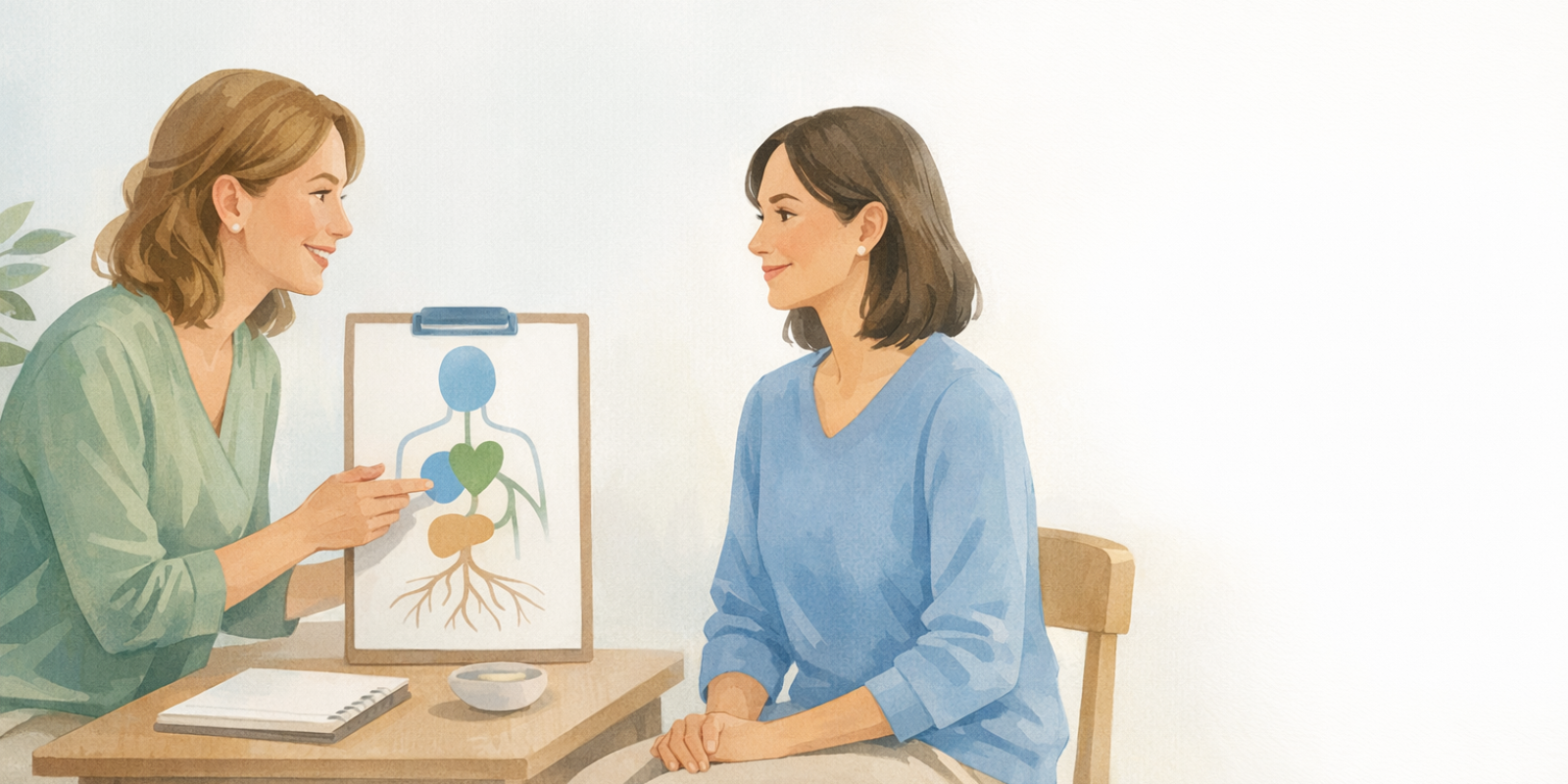
A naturopath supports whole-person wellbeing by working with lifestyle, nutrition, botanicals, and nature-based practices—always within clear boundaries and with a collaborative mindset.
Real life isn’t siloed, so this work isn’t either. Contemporary descriptions recognize naturopathy as support for spiritual wellness alongside daily habits and nourishment, keeping the focus on the person rather than a single complaint.
Traditional voices say the same thing, just with different phrasing. As Sheeba Asad puts it, it’s “an approach that emphasizes emotional, physical, and spiritual wellness” to create a more complete path. Globally, naturopathy is described as a distinct system that brings physical, mental, emotional, and spiritual dimensions into one coherent approach—more like a compass than a single tool.
Key Takeaway: Naturopaths support wellbeing by integrating lifestyle, nutrition, botanicals, and nature-based practices through a transparent, collaborative process. The work is guided by core principles, clear scope, and safety-first boundaries—helping clients build sustainable change while referring out when needs are urgent or beyond training.
Step 1: Redefine Your Naturopath Role for a Modern World
Step past outdated stereotypes and into the real work: a grounded guide who respects ancestral wisdom and translates it into modern, doable rhythms.
From old stereotypes to integrated holistic guide
Naturopathy grew from European and other ancestral traditions, with food as a foundation and long-standing practices like hydrotherapy and herbal approaches rooted in nature. That heritage still matters—today it’s simply applied with more context, better communication, and clearer boundaries.
International bodies continue to describe naturopathy as a distinct system that follows nature’s patterns and includes classic approaches such as hydrotherapy, adapted for modern life.
Day to day, the craft is rarely about a single “magic” tool. It’s coordinating sleep, stress skills, movement, nutrition, and botanicals so they reinforce each other—an approach commonly summarized as using lifestyle and botanical strategies to support the body’s natural processes.
Think of the practitioner as a pattern-spotter and translator. As Iva Lloyd notes, skilled practitioners “make sense of the complexity of health,” turning a client’s lived experience into a clearer path forward. Modern descriptions also frame naturopathic care as whole-person based, not limited to one system or isolated concern.
Step 2: Anchor Your Work in Core Naturopathic Principles
Principles—not rigid protocols—define the work. Lead with nature’s wisdom, keep a whole-person lens, look upstream for contributing patterns, and choose the gentlest effective steps.
Healing power of nature, whole-person view, root-cause thinking
At the heart of naturopathy is trust in the body’s capacity to adjust and recover when supported well. Core professional statements emphasize supporting inherent self-healing, addressing underlying contributors, working with the whole person, and using the gentlest approach likely to help. Educational organizations echo this emphasis on the body’s inherent wisdom as a guide for broader wellbeing.
That’s why sessions often focus on context—not as “extra,” but as essential information. As Christa Louise describes, the aim is a pattern of healing that reaches across everyday life, including emotional and social functioning, not just physical comfort.
Prevention and daily rhythm also sit at the center of this tradition. The old Kneipp reminder still holds: when people don’t make time for daily health, they often spend much more time later on struggle—an idea closely aligned with these core principles. Put simply: small habits compound.
Step 3: Map the Client Journey in Your Naturopath Sessions
A strong process feels transparent and collaborative: a deep first conversation, a realistic plan, and steady follow-through.
From deep story and assessment to a collaborative plan
First sessions are about story and patterns. You explore diet, stress, sleep, movement, environment, and emotional landscape to see how the pieces connect. Naturopathic overviews emphasize a detailed history that includes lifestyle and environmental influences.
Education is part of the value, not an add-on. Clients often leave with clearer language for what they’re experiencing and why daily choices matter. Educational organizations describe this as building health literacy so people can participate meaningfully in their own progress.
From there, you co-create a plan. Think of it like rebuilding a foundation while also fixing the squeaky door: early steps can bring noticeable comfort, while deeper change builds as routines settle. Case descriptions suggest bigger quality-of-life shifts often unfold over 3–6 months. Research mapping whole-system practice also points to positive outcomes across a wide range of concerns when support is structured and ongoing.
Step 4: Make Your Naturopathic Toolkit Visible and Grounded
People feel safer—and engage more fully—when they understand what you use and why. Be clear about your tools, their traditional roots, and what “realistic progress” looks like.
Traditional tools, modern evidence, realistic expectations
Across cultures, the toolkit is often familiar: food, herbs, water therapies, breath and movement, time in nature, and deep rest. European perspectives describe a system that blends national traditions with naturopathic principles, including hydrotherapy and herbal work.
Nutrition is frequently the starting point because it’s both powerful and practical. Many practitioners begin with steady, blood-sugar-aware meals—protein, fiber, colorful plants, healthy fats, and mindful use of stimulants—so the body has a calmer baseline while sleep and stress patterns are also supported. Educators often frame this as foundational root-cause work.
When discussing herbs, tie lineage to evidence without overpromising. Ginger (Zingiber officinale) has a long history of traditional use for supporting digestion and is often described as “warming” in traditional frameworks. A modern study also reported changes in inflammation-related markers with daily ginger in higher-risk participants.
Whole-system reviews also describe benefits in areas like musculoskeletal discomfort, often reflecting combined movement and nutrition strategies that match the breadth of the toolkit. In metabolic-focused programs, following food and lifestyle plans has been associated with improvements in measures such as blood pressure, underscoring how daily practices can add up.
As Paul Saunders emphasizes, “The principles … are what distinguish it.” Tools matter, but they land best when they’re clearly connected to a philosophy and a plan.
Step 5: Be Clear About Scope, Safety, and When You Refer Out
Clarity builds trust. Be explicit about what you do, what you don’t do, and when you collaborate or refer out. Safety is part of the craft.
Safety, scope, and collaborating with other professionals
Start with “first, do no harm,” and choose the least force necessary—principles formalized in professional summaries of do no harm. In practice, this includes screening for potential interactions with common prescriptions, especially those affecting clotting, mood, blood pressure, or blood sugar. Evidence-informed guidance highlights the importance of checking for interactions before suggesting herbs or nutrients.
Collaboration is a strength. When someone already has a care team or relevant test results, keep communication respectful and encourage appropriate monitoring. Integrative commentaries highlight the value of ongoing communication and prudent tracking when certain botanicals or nutrients are involved.
Extra caution is especially important during pregnancy and postpartum, with reduced kidney or liver function, in autoimmune conditions, and for elders or anyone on multiple prescriptions. Global safety frameworks advise gentler approaches and careful selection in these contexts. Also be clear about urgent red flags: chest pain, sudden severe headache, slurred speech, difficulty breathing, new one-sided weakness, or severe abdominal pain require immediate emergency attention. Lifestyle and coaching programs may support metabolic and cardiovascular wellbeing over time, but they are not a substitute for urgent care.
Finally, keep claims honest. This role supports whole-person wellbeing and sustainable change; it doesn’t promise cures. As Sheeba Asad reminds us, the real work lies in “searching for … root cause” and helping daily life align with what the body needs to thrive.
Step 6: Communicate Your Role and Boundaries On and Offline
Plain speech builds trust. Share a simple, human story: what you support, how you work, what tools you draw on, and how you collaborate.
Storytelling, simple language, and ethical marketing
Lead with outcomes people actually care about—steadier energy, more restorative sleep, calmer digestion, and more confidence in daily choices. Whole-system reviews note shifts not only in physical measures but also in outlook and coping, which is why it’s fair to speak to optimism and agency. As Sheeba Asad observes, a “positive change in thinking” can be an unexpected part of the journey.
Metaphors can help people “get it” quickly. Framing symptoms as signals—like dashboard lights—helps clients understand why you work upstream. Many educators use this framing to explain root cause work. And the “teacher” principle is practical: satisfaction and long-term follow-through often grow when people receive consistent education and coaching, especially around sleep, energy, and stress.
Here are example scripts you can adapt:
- What I do: “I help you understand what your body is asking for—through food, herbs, rest, and daily rhythms—so you can feel more like yourself again.”
- How it works: “We begin with your story and daily patterns. Together we build a simple plan—nutrition, sleep, stress skills, movement—and evolve it over time.”
- What to expect: “Most people notice small shifts in the first few weeks; bigger changes tend to build over a few months as habits settle in.”
- Boundaries: “I don’t replace emergency or specialized care. I collaborate with your existing team and refer out when something is beyond my scope.”
- Evidence stance: “I draw on traditional practices and modern research. A growing body of studies shows meaningful outcomes for whole-person approaches, and I’ll share relevant resources as we go.”
Keep your website, intake forms, and session language consistent with these promises. Clear boundaries reduce confusion and attract people who genuinely want a thoughtful, stepwise process.
Conclusion: Own Your Naturopath Role and Boundaries
This role is both timeless and timely: honoring traditional roots while translating them into realistic steps for modern lives. When you lead with principles, map a clear journey, and communicate scope with warmth, your work becomes easier to explain—and easier to trust.
Naturopathy is a living tradition, evolving as new insights emerge while staying grounded in nature and community. Research continues to mature as well, with reviews highlighting real-world outcomes while calling for ongoing high-quality study. The practical takeaway is steady and simple: keep learning, keep your approach coherent, and keep your boundaries kind and clear.
Own this role with humility and confidence. Your steady, whole-person guidance is needed—and when offered with integrity, it can change the course of a life.
Ready to Go Deeper?
Take the next step with a Naturalistico certification — designed for practitioners ready to deepen their expertise.
Explore the Course →