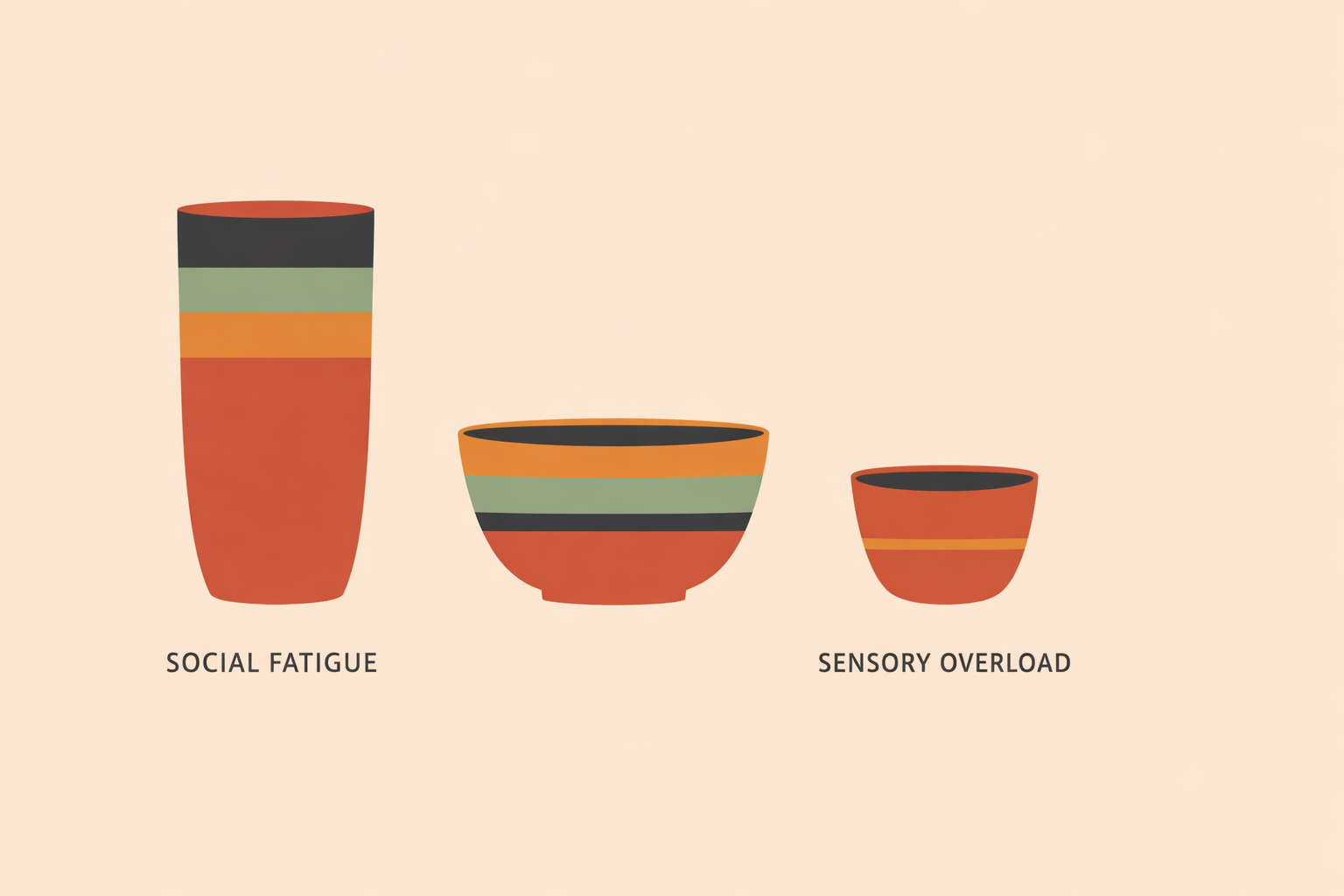
Run a standard intake with a highly sensitive client and you may feel a quiet mismatch: big questions can land like pressure, pauses get filled too quickly, and the client’s best information—body cues, environment, and relational nuance—never quite makes it into words. Goals might be named, yet the system is already overstimulated. What can look like hesitation is often protection, and a sign the structure needs adjusting—not the person.
An HSP-first first session changes the aim. Rather than squeezing history and a plan into an hour, it uses the DOES lens—depth of processing, overstimulation, emotional reactivity, sensitivity to subtleties—to explore how the client’s inner world works in real life. You still leave with practical next steps, but you get there through pacing, layered answers, and questions that respect a sensitive system’s natural rhythm.
Key Takeaway: An effective first session with highly sensitive clients is designed around the DOES lens and careful pacing, so nuance, body cues, and subtle environment/relationship signals can be named without overwhelm. The goal is to co-create a clear, small next step that fits the client’s nervous system and builds steady momentum.
Before you ask: Preparing the first HSP session
The first session starts before anyone speaks. Your pacing, environment, and pre-session communication quietly tell the client, “You don’t have to rush here.”
Uncertainty is often more draining than the conversation itself. A short note explaining what will happen (and the approximate flow) helps many HSP clients settle ahead of time. A small pre-work prompt also helps—just enough to let them reflect at their own pace on energy, values, and what matters right now—so the live session can go deeper without feeling pressurized.
Next, set up a sensory-friendly container. Lighting, sound, and temperature all influence capacity. In virtual sessions, you can co-create options like brief screen breaks or camera-off moments. In person, predictable rhythm and simple grounding elements (like a comfortable place to rest hands) can make the space feel easier to be in.
Traditional lineages often orient to seasons and cycles, and that wisdom translates beautifully into coaching pace. Naturalistico’s HSP approach includes seasonal rhythms—inner winter, spring, summer, autumn—so expectations match the client’s current energy. It also encourages clear pacing agreements from the start: permission for pauses, reflection between sessions, and a shared plan for strong emotion. As Jenn Granneman observes, HSPs naturally listen deeply—and they tend to thrive when that same quality of listening is offered back to them.
Environment, rhythm, and advance reflection
- Send a quieting “what to expect” note and short reflection prompts 48–72 hours beforehand.
- Curate light, sound, and pace; name your plan so there are no surprises.
- Invite a simple arrival ritual that feels culturally respectful — tea, a deep breath, or a brief body scan.
Opening the space: Grounding and connection questions
The first minutes set the tone: warm, unhurried, and spacious. A brief grounding plus one or two openers helps the client settle enough to share what’s real.
Start with welcome and orientation—often 5–10 minutes—so your client can arrive. A tiny ritual can help: “Two breaths. What’s most alive right now?” This kind of centering matters because it signals presence, steadiness, and choice.
Then offer an easy doorway: “What brings you here today?” lets the client choose a manageable starting point. From there, relationship and rhythm questions build trust: “What are your hopes for our work together?” and “What daily or weekly rhythm helps you do your best work?”
HSPs are often naturally skilled at supporting others. As Jenn Granneman notes, sensitive coaches are excellent at holding space—so it’s fitting that the first session helps the client feel that same care directed toward them.
From centering rituals to “What brings you here today?”
- “If it feels good, let’s take two slow breaths. What’s one word for how you are arriving?”
- “What’s something you want me to know so I can support you well today?”
- “What timing and pace feel respectful for you as we talk?”
Seeing the path ahead: Vision and gentle-challenge questions
Once the field feels calmer, you can look toward what wants to grow. The aim is clarity without pressure: name the vision, anchor it in values, and meet obstacles with compassion.
Keep it concrete but light: “What goals would you like to explore?” and “What would success feel like three months from now?” Then balance vision with reality: “What obstacles show up most days?”
Now choose scale. Naturalistico emphasizes two-degree shifts—small, achievable steps rather than dramatic overhauls—because sensitive systems often do best with steady traction. You might ask: “What’s a two-degree action that honors your energy this week?” As Jenna Avery says, being highly sensitive is both a gift and a responsibility, and your questions can reflect that dignity without turning growth into a grind.
Clarifying goals without overwhelm
- “If your life moved 2% closer to what you want, what would you notice first?”
- “What part of your vision feels ready now, and what needs more incubation?”
- “What value — creativity, belonging, steadiness — wants a seat at the table this season?”
Honoring stress, the body, and boundaries in the first session
Clarity often lives—or stalls—in the body. So from day one, you explore stress patterns, body cues, and boundaries, treating the nervous system as a trusted collaborator.
Curious, nonjudgmental questions reveal what already supports the client: “How do you typically handle stress or setbacks?” Listen for what helps them settle (walks, quiet mornings, pauses before answering) and what quietly drains them (late-night scrolling, bright lights, open-plan work). Naturalistico’s approach also looks at how sleep, sensory load, and relationships shape day-to-day capacity.
Then you seed boundary literacy: “Where does your system whisper ‘no,’ and where does it whisper ‘yes’?” Naturalistico treats boundary work as a core skill—translating subtle internal signals into clear choices. As Laura Horton Ludwig reminds us, sensitive people can thrive when they live in a way that’s true to them, and boundaries often make that truth livable.
Inviting body wisdom and non‑negotiables
- “What does ‘overstimulation’ feel like in your body — tight chest, racing thoughts, fog?”
- “Which 1–2 daily non-negotiables (sleep window, device cut-off, nature time) guard your energy?”
- “Who gets your clearest ‘yes,’ and where might a caring ‘no’ create space?”
Finding existing wisdom: Strengths, resilience, and resources
Every HSP arrives with a toolkit. When you name strengths, past wins, and support people, you build momentum and soften the old “too sensitive” story.
Start with what’s already working: “What strengths will help you in this process?” The seasonal lens can help prioritize: “Which strengths do you want to lean into this season?” Then harvest resilience: “Can you tell me about a time you overcame a challenge? What supported you?”
From there, translate strengths into two-degree action. Think of it like turning a talent into a daily lever: empathy becomes a midday self-check-in, pattern recognition becomes a weekly look-back, discernment becomes a simple “not today” boundary. Naturalistico’s approach favors these small, kind moves because they’re easier to sustain. As Ted Zeff reminds us, sensitive people often carry a mission of care—your job is to help them live it without burning out.
Remembering the client is not starting from zero
- “What qualities — discernment, empathy, intuition — feel like home for you?”
- “Who are your people for encouragement, and what’s your plan to reach them this week?”
- “Which self-support practices are keepers, and which want a kinder, simpler version?”
Co‑creating the journey: Support, pacing, and next‑step questions
Close the first session by shaping the container together. When support style, pacing, and next steps are co-designed, sensitive clients tend to leave clear and steady rather than flooded.
Ask plainly: “What kind of support from me is most helpful—reflection, structure, gentle challenge?” Align on progress: “How do you measure progress—by feelings, habits, outcomes?” Then confirm timing needs: “How much reflection time do you want during and between sessions?”
Finish with a small “digest” moment. Naturalistico recommends a micro-integration: a one-sentence session summary, one body cue the client noticed, and the smallest next step. Finally, set expectations for periodic reviews—every 4–6 sessions—using DOES as your map: “What grew? What still strains?” As Laura Horton Ludwig emphasizes, sensitive people can thrive when support is tuned to how they work best.
From “How can I support you?” to integrating the first session
- “When you’re overwhelmed, how should I respond — slower questions, a pause, or a quick recap?”
- “What’s our two-degree next step for the week?”
- “How will we know this coaching is working for you?”
Conclusion: Bringing your HSP first‑session questions together
A strong first session becomes a living sequence: prepare the ground, open gently, clarify vision, honor the body, gather strengths, and co-create the next steps. With the DOES lens and seasonal rhythms guiding your pacing, depth becomes direction—and sensitivity becomes steady momentum.
Keep refining as a craft. Draft your ideal flow, try it with a few clients, and then gather feedback about what felt most supportive. Naturalistico’s approach is about designing journeys, not perfecting a one-off conversation.
As your practice evolves, keep weaving modern insight with ancestral wisdom: honor cycles, value subtlety, and choose the smallest kind next step that still counts. A final note of care: because HSPs can tip into overwhelm when pace is too fast or expectations are unclear, it helps to keep the environment predictable, invite pauses, and end with one simple action rather than a long list. Sensitive people don’t need fixing—they need spaces that recognize how they already work.
Coach HSPs with confidence
Deepen your first-session pacing and DOES-based questions in the Highly Sensitive Person (HSP) Coach course.
Explore the HSP Coach →