Coaches who support clients with intrusive thoughts often recognize the moment: a client shares a disturbing image, and the natural impulse is to reassure, explain, or analyze. Yet tight efforts to control or reason with intrusive content can unintentionally keep the loop going. When the nervous system is activated, the most helpful tool is often language—steady, repeatable phrases that name what’s happening without granting it authority.
Scripting offers that structure. It brings the feared thought into awareness on purpose, makes room for the body’s discomfort, and supports a values-led choice to do no compulsion. Over time, values-based exposure can shift attention away from threat-monitoring and back toward what matters. The aim is simple: let language become learning—through consent, pacing, and repetition—so practice happens in a safe container, not only in crisis.
Key Takeaway: Imaginal scripting turns intrusive thoughts into deliberate, values-led exposure: clients name the fear, allow discomfort, and practice not doing compulsions. Ethical coaching relies on clear scope and consent, adjustable pacing, and “may or may not” language plus rumination-stoppers so learning happens without feeding reassurance or rituals.
Using OCD scripts ethically in a coaching role
Scripting is potent work, so it deserves a clear and caring container. When you name your role, set boundaries, and agree on safety signals, clients tend to feel braver—and you stay firmly in integrity.
Start with clear agreements: how long you’ll do activating practice, how a client can pause, how you’ll track intensity, and what you’ll do if something feels like “too much, too fast.” Keep the stance values-led and skills-based—supporting growth and choice rather than labels or promises. Naturalistico’s coaching stance reflects this kind of grounded, ethical frame.
Scope, safety, and clear agreements
Be especially thoughtful when supporting clients whose communities face ongoing harm. Guidance on culturally responsive adaptation notes that some worries reflect real threats; brushing them off as “irrational” can be unsafe. Scripting can still help—by honoring reality while training a different response to the mind’s alarm system.
Traditional and ancestral wisdom can be a powerful anchor here, as long as it’s approached with humility. Name sources, seek consent, and avoid borrowing practices for effect—principles aligned with transparent sourcing and ethical use.
When a client’s needs point toward care best held by a clinical partner—especially when imaginal scripts are paired with in-life exposures, as recommended for Pure O themes—collaborate or refer rather than improvising. As one peer expert cautions, “There are people that say they’re coaches…and say that they actually…are adequately trained” for OCD. Let that be a call to ongoing learning. Scope clarity is a kindness to everyone involved.
Acceptance scripts and “may or may not” phrases
When clients get stuck, uncertainty is often the doorway forward. Short “may or may not” lines keep the question open and can counter intolerance of uncertainty. They’re simple enough to remember when the nervous system is loud—and that’s exactly why they work.
A helpful foundation is a base script that starts with values: “I accept that OCD shows up, and I commit to facing these thoughts.” Many practitioners teach this kind of entry line and then build into personal content through careful personalisation.
Creating a base script clients can return to
From there, add MOMN (“may or may not”) lines. For relationship themes: “I may or may not be in the right relationship.” For contamination: “I may or may not get sick from touching this doorknob.” This style of may or may not scripting helps clients practice non-resolution without rituals.
Keep scripts adjustable: lighter versions for early practice, more activating versions as capacity grows. Values-based exposure training often recommends building stability in session before moving to more challenging steps. Then repeat the exact lines that spike anxiety until the body learns, through experience, that anxiety spikes can ebb without compulsions.
Hershfield and Corboy put it plainly: “To react to OCD is to jump into compulsions. To respond to OCD is to observe what your mind is doing and choose your next step.” That’s the aim of these phrases—building the skill to respond to OCD with steadiness.
Inviting discomfort: “Just Right” and playful anti‑OCD scripts
Once a client can hold uncertainty, you can begin inviting the “icky” feeling on purpose. Used skillfully, play softens OCD’s authority and helps clients practice not fixing what feels “off.”
“Just Right” scripts greet discomfort rather than chasing it away: “Yay, icky feeling—come on in.” This spirit is central to Just Right scripting and teaches the body that “off” does not equal danger. One coach describes picturing themselves “like a happy pig in a mud puddle,” a memorable happy pig image that many clients immediately understand.
Humour can help too—light taunts like, “Oh, I hope it always looks crooked, OCD!” These playful jabs model non-engagement with content while still allowing the feeling. And if a feared scenario is deliberately exaggerated—“the absolute worst happens and… I keep living my values anyway”—learning often deepens, as shown in IOCDF’s sample scripts.
“When you deliberately do the opposite of what the OCD wants…you start to take the power away from the OCD,” writes Laura L. Smith, pointing to the practice of doing the opposite. Fiona Challacombe adds that the more thoroughly you do the opposite of what OCD demands, the easier it becomes not to ritualize. In many traditional lineages, this kind of paradox is familiar: freedom grows when you stop bargaining with fear.
Stopping mental loops: rumination‑breaking phrases
After enough exposure for the moment, it helps to end cleanly. Short, pre-written phrases can stop the mental debate and guide attention back to life.
These lines function like “verbal shields”: “That’s an OCD question. I’m not answering right now.” or “Not deciding today.” Say it once, then pivot into an absorbing activity. This is the heart of rumination-breaking tools: one-and-done, then re-engage with the world.
Think of rumination like a bad phone call: use the line once, then “hang up.” Don’t stay on the line arguing. That’s the logic behind the bad phone call protocol. It also helps to be clear that rumination-breakers are not meant to intensify exposure; they’re for closing the loop after enough practice has already been done.
If the phrase gets repeated, polished, or analyzed, it can become another compulsion. Name that risk in the agreement. Then plan a sensory “landing” activity—movement, craft, prayer, or time in nature. As James Callner encourages, progress is “one step at a time—never giving up.”
Guiding a full imaginal script session for intrusive thoughts
A full scripting practice has an arc: the thought appears, urges rise, and a values-based choice is made—repeated until the body calms enough to carry the learning forward.
Include the first flicker (“I’m holding the knife and a thought flashes…”), the body response (“my stomach drops…”), the doubts, and the pull toward compulsions. This mirrors effective imaginal exposure design. Then choose pacing together: build from easier to harder (hierarchical) or go straight to the worst-case (flooding) when the client’s system, readiness, and consent support it.
Pacing, repetition, and tracking anxiety
Within the same session, repeat the script until distress drops substantially without rituals, a guideline echoed in IOCDF materials on 50% reduction. This is values practice in real time: the obsession is present, and the client still chooses their direction—core to values-based exposure.
Between sessions, aim for steady, sustainable repetition. Some people do best with multiple brief passes per day, like the suggestion to practice scripts 1–5 times daily. Others prefer fewer, longer practices. The best plan is the one the client can truly keep.
Tracking intensity before, during, and after helps the nervous system “see” its own learning—spikes rise and fall without rituals, which is the essence of anxiety tracking in imaginal work. As Fred Penzel quips, “If you want to think about it less, think about it more.”
- Set intention: which value are we practicing for?
- Read or listen: slow, steady, kind tone
- Pause to feel: name sensations without fixing
- Repeat: until intensity eases meaningfully
- Close: one rumination-breaker, then re-enter life
Honouring culture and tradition in OCD scripts
Scripting works best when it sounds like the client’s real life. When language feels like home, the practice tends to land deeper—and it becomes easier to repeat.
Begin with inclusive language and genuine curiosity. Ask pronouns and mirror them. The ADAA’s guidance on inclusive language supports gender-neutral defaults like “they” and “folks,” not as performance, but as a baseline of respect.
Next, confirm the ground truth. Some vigilance is shaped by lived context; calling fears “irrational” can erase reality. Naturalistico’s guidance for culturally diverse settings emphasizes honoring what is real while still training new responses to internal sirens.
Traditional anchors can be especially supportive when invited by the client. Many contemplative lineages use breath and witnessing phrases—“I am not my thoughts; I observe and let them pass.” You can pair that with scripting as an entry or exit using breath awareness and the reminder “I am not my thoughts”. If prayer, mantra, song, or ancestral imagery matters to the client, co-create lines that fit—while naming sources, seeking permission, and avoiding appropriation.
Finally, normalize that this is skill-building. “As you’ve unwittingly trained yourself… it’s going to take time and perseverance to retrain yourself. OCD is a cunning beast,” write Katie d’Ath and Rob Willson. Culture-rooted scripts often make that perseverance feel more meaningful—less like a technique, more like a practice.
Bringing it together: scripting for intrusive thoughts in ongoing OCD coaching
Scripting works best as a living practice inside a bigger plan: calibrate challenge, review learning, and keep tying the work back to values, identity, and daily choices.
A simple arc many coaches use looks like this:
- Clarity: document themes, values, and consented goals
- Foundation: build a base acceptance/MOMN script
- Challenge: add “Just Right” and playful anti-OCD lines
- Containment: agree on rumination-breaker phrases and post-practice routines
- Progression: choose hierarchical or flooding styles for imaginal work
- Review: track intensity shifts and practical wins weekly
Scripting is most potent when it’s integrated into a broader plan of values-based exposures and everyday follow-through, rather than treated like a stand-alone trick. Many clients also benefit from closing practice with something embodied and familiar—especially when it connects to a tradition they already trust.
Conclusion
When intrusive thoughts flood the mind, your language can become a handrail: simple lines that welcome uncertainty, befriend “icky,” and end the debate when it’s time to return to living. Scripting turns alarms into stories—and stories into choices.
Hold the container with care: clear scope, culturally informed language, and pacing that builds confidence. Then keep returning to values, consent, and the traditional wisdom that helps the client feel rooted. That’s how language becomes practice, and practice becomes freedom.
Train in OCD Coaching
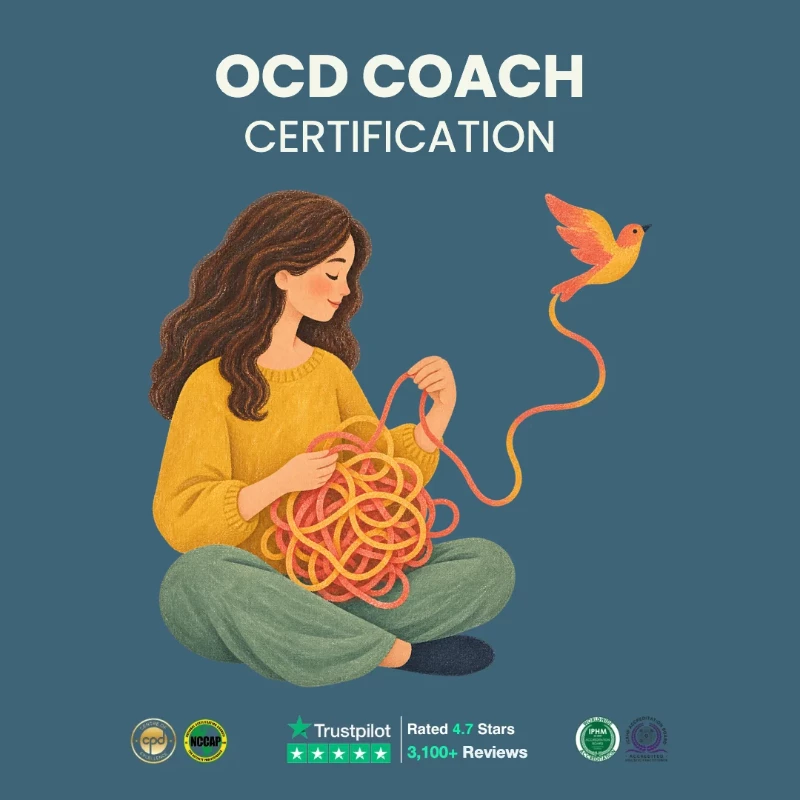
Apply scripting ethically with the Obsessive Compulsive Disorder (OCD) Coach Certification.
Explore the OCD Certification →