


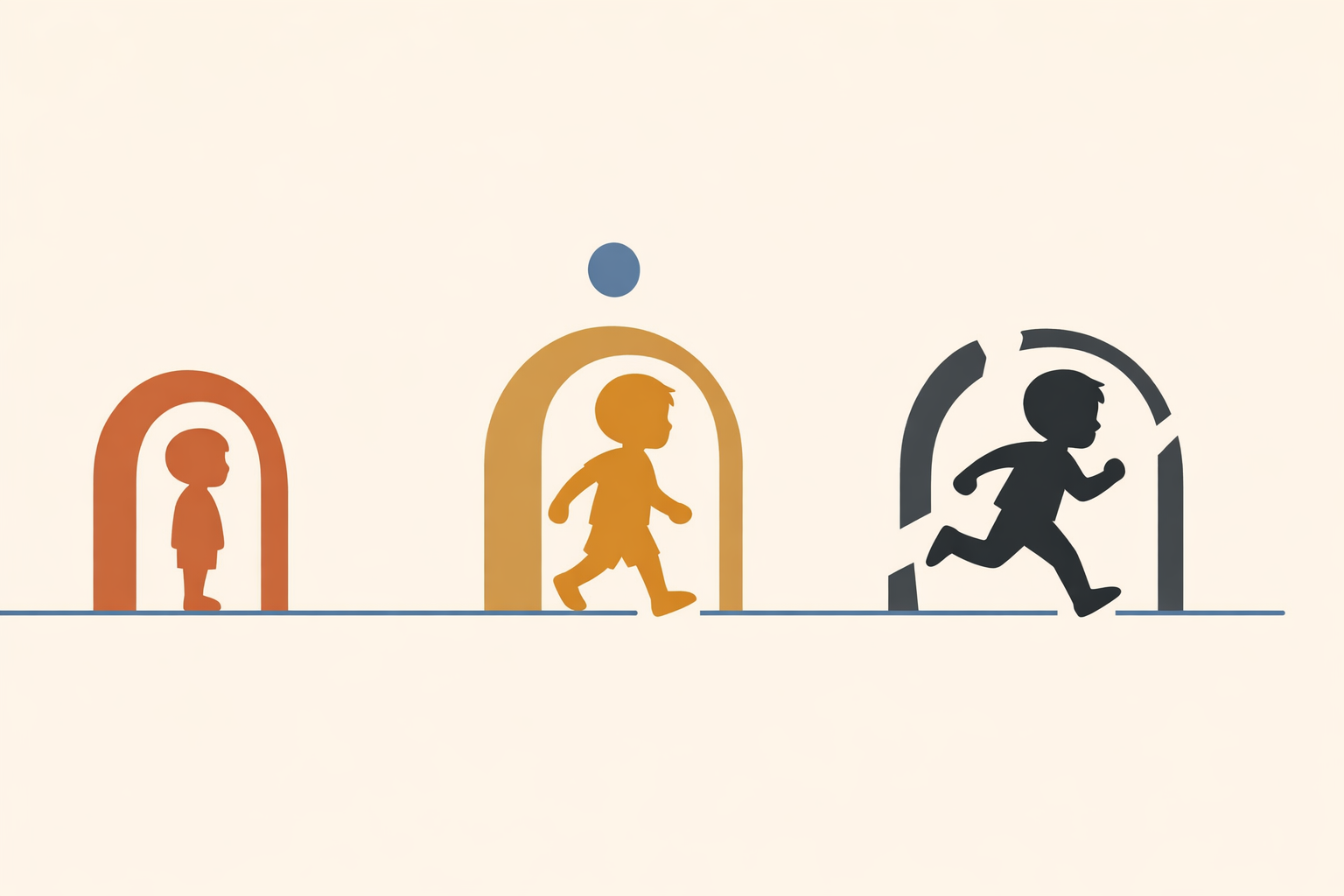
Every child-facing practitioner eventually meets this dilemma: a bright, fast-moving child whose energy is starting to strain classrooms and playdates. Caregivers may call it “just high energy,” while teachers describe more interruptions, grabbing, and bolting. Your notes may show the shift from “sometimes” to “most days.” The real question isn’t whether the child is spirited—it’s whether impulsivity is still within a typical developmental range, or whether it’s becoming a broader self-regulation concern.
That distinction matters. Move too quickly and you can misread temperament. Wait too long and safety, learning, and relationships can take a hit. Families rarely want labels first; they want clear observations, grounded judgment, and next steps that feel supportive.
Key Takeaway: Red-flag impulsivity is best understood as a cross-setting pattern over time, not a single difficult moment. Anchor expectations in age norms, track frequency and impact, identify the impulsivity type and likely drivers, and respond without shame while building long-term skills with caregivers and schools.
Step 1: Know What Typical Impulsivity Looks Like by Age
Before you decide something is “too much,” anchor expectations in development. Children generally move from quick reactions in early years toward more deliberate choices in the school years—and that shift is gradual.
In toddlerhood and preschool, acting first and thinking later is common. Waiting, sharing, and stopping on cue are still emerging skills. Across the early years, self-regulation is fundamental, but it’s built through repetition, adult support, and maturing capacity.
By early school age, many children can pause with a reminder, wait a short turn, and recover more quickly after excitement. They still slip—especially during transitions and high-energy group moments—but you tend to see more of a “gap” between urge and action.
Classroom routines help strengthen that gap. Guidance for educators consistently highlights how behavior expectations support impulse control over time.
Many elder traditions also describe early childhood as a time of “hot energy”—something to guide with rhythm and structure, not suppress. That framing keeps the child’s vitality intact while still emphasizing responsibility and skill-building.
Step 2: Spot When Impulsivity Crosses Into Red-Flag Territory
Impulsivity becomes more concerning when it’s frequent, persistent, disruptive, and shows up in more than one setting. Put simply: red flags are patterns.
Four practical questions keep things clear:
- Frequency: Is it occasional, daily, or many times a day?
- Duration: Has it been going on for a few difficult weeks or for months?
- Impact: Is it affecting learning, friendships, group participation, or family peace?
- Settings: Does it show up only in one environment, or across home, school, and community spaces?
When the behavior is intense, keeps showing up across settings, and isn’t easing as peers mature, it deserves attention. Often this is the stage where teachers report an uptick: more interruptions, grabbing, bolting, and conflict during transitions.
Safety raises the urgency. Running into streets, climbing out of bounds, lashing out physically, or moving toward danger without any pause calls for an immediate, coordinated plan—calmly, without turning the child into “the problem.”
In many cases, it helps to shift the frame away from “bad behavior” and toward regulation skills that need strengthening. When the pattern is frequent, disruptive, and cross-setting, cross-setting difficulties become the most useful lens.
Step 3: Identify the Type of Impulsivity You’re Seeing
Impulsivity isn’t one single thing. When you can name the type, you can choose support that fits—rather than relying on generic “be good” reminders.
- Motor impulsivity: the body moves before thinking (leaving the seat, touching everything, grabbing, blurting, running ahead).
- Reward-driven impulsivity: novelty and immediate payoff pull strongly (thrill-seeking, limit-pushing, abandoning longer-term plans for the moment).
- Emotional impulsivity: action follows a flood of feeling (yelling, storming off, hitting, throwing, regret after the wave passes).
Many children have one “main channel.” A child may be emotionally explosive but able to focus deeply on a favorite project. Another may be warm and affectionate yet struggle to stop their body from interrupting or darting away.
Traditional family language often captures this with dignity: “busy hands,” “hot heart,” “strong curiosity.” That kind of naming can be wonderfully practical—it describes what’s happening without shrinking the child to a label.
Step 4: Look Beneath the Behavior for Root Drivers
The same outward behavior can grow from very different roots. The more accurate the “why,” the more humane—and effective—your plan becomes.
Start with the body. Sleep loss, hunger, under-movement, over-stimulation, and sensory overload can all reduce a child’s ability to pause. Think of it like a cup that’s already near the brim—one more loud room, rushed transition, or scratchy tag can tip it over.
Then consider the child’s emotional world. Family transitions, school pressure, shifting friendships, and social friction can intensify impulsive reactions. Some children are carrying strain more quietly than adults realize—until it shows up as “behavior.”
Learning demands are another common driver. When a child struggles to follow instructions, keep pace, decode text, or hold steps in mind, they may blurt, distract others, avoid tasks, or “clown” to escape frustration or shame.
A simple root map helps you organize what you’re seeing:
- Body: sleep, food, movement, sensory input
- Heart: stress, transitions, grief, conflict, belonging
- Mind: attention, language, working memory, frustration tolerance
- Environment: routines, predictability, crowding, noise, unclear expectations
- Community: caregiver capacity, school support, cultural context, access to steady guidance
Essentially, you’re building a story that makes the behavior make sense. That story guides better choices—without shaming the child or blaming the adults.
Step 5: Respond in the Moment Without Shaming
In the middle of an impulsive moment, the aim is straightforward: protect safety, preserve dignity, and turn the moment into practice.
- Safety first: move people or objects if needed so no one gets hurt.
- Regulate yourself: soften your voice, slow your breathing, and keep your body language steady. Children often tune to our state before they can take in our words.
- Name the action clearly: “You grabbed the toy.” “You ran when it wasn’t safe.” Keep it brief and concrete.
- Set the limit: “I won’t let you hit.” “We stop before the road.”
- Show the next move: offer one alternative the child can actually do right now: “tap my arm and ask,” “hands on knees while waiting,” or “feet to the line.”
- Practice immediately: if possible, rehearse the better action once while the moment is still alive.
- Offer a reset: a quiet corner, a drink of water, a breathing pause, or a short movement reset can help the child rejoin with dignity.
Structure matters, but warmth is what makes structure teachable. From a traditional perspective, the adult’s role isn’t merely to stop behavior—it’s to guide raw energy into skill.
As many practitioners say, children do not learn steadiness through humiliation. They learn it through repetition, relationship, and clear boundaries held calmly, much like positive discipline at its best.
Step 6: Build Long-Term Self-Control Skills
Impulse control grows through practice, not lectures. The most effective supports are often simple—then repeated until they become part of everyday life.
Play is one of the best training grounds. Games that require stopping, waiting, and listening let children rehearse self-control in a lively, low-shame way. Stopping games like Simon Says, Red Light/Green Light, and Freeze Dance are classics for good reason.
Positive reinforcement builds momentum. When a child pauses, waits, asks, or recovers more quickly than usual, point it out clearly. Over time, positive feedback helps strengthen self-control behaviors.
Emotional language is another steady builder. When children can name what’s happening inside—“My hands feel buzzy,” “My chest feels tight,” “I’m getting too mad”—they start to notice the moment before the impulse takes over. Here’s why that matters: awareness creates a small space where choice can grow.
Adults do best with shared structure too. Home and school support is smoother when expectations are visible, predictable, and consistent. For children with regulation challenges, clear rules and stable routines can improve both behavior and engagement.
And starting early helps. Over time, early interventions can support broad improvements in self-regulation and behavior, with ripple effects into learning and social participation.
When to Widen Support Beyond Coaching
Coaching can do a great deal, but it isn’t meant to carry every situation alone. When impulsive behavior stays persistent, intense, and cross-setting over time, it’s appropriate to widen the circle of support.
Consider bringing in additional support when:
- the behavior regularly creates safety risks
- aggression or explosive reactions remain strong beyond early childhood
- learning and peer relationships are being significantly disrupted
- the pattern continues across settings despite consistent support
- caregivers and teachers describe the same concerns over time
When long-term patterns are evident, helpful advice can include teachers and other qualified local specialists who can add perspective. This isn’t a failure of coaching—it’s thoughtful, ethical practice.
Conclusion: Compassion, Pattern Recognition, and Steady Guidance
As a child psychology coach, the work is often to help adults see clearly without becoming harsh. You’re noticing patterns, not condemning personalities. You’re translating intensity into understanding, and understanding into practical support.
That matters because self-regulation shapes far more than behavior in the moment. Over time, early self-regulation relates to later learning, relationships, and everyday well-being.
It also matters that practitioners care for themselves while doing this work. Your steadiness is part of the container—especially when supporting children whose nervous systems tend to run hot.
Keep the frame simple: observe the pattern, understand the driver, respond without shame, and practice the skill again and again. Children rarely need adults who are louder. They need adults who are clearer.
Ready to deepen your skills in child-centered coaching?
Explore the Child Psychology Coach Certification to build practical, ethically grounded tools you can use in real client work.
Train as a Child Psychology Coach
Apply these impulsivity-support strategies with confidence in the Child Psychology Coach Certification.
Explore Child Psychology Coach →










