Most beginner classes reveal the same pattern: students fold forward, the backs of the legs light up, spines round, and a few knees lock as people chase depth. For a teacher, that raises an immediate, practical question: how do you help students meet sensation without tipping into strain?
With tight hamstrings, the most helpful shift is simple. Stop chasing depth. Start building functional, resilient range through clear cueing, moderate intensity, steady breath, and balanced sequencing.
The aim isn’t dramatic shapes. It’s comfortable, reliable movement that supports both practice and everyday life.
Key Takeaway: Safe beginner hamstring work prioritizes comfort, breath, and moderation over depth. Normalize tightness, keep knees soft, use props, and favor shorter, repeatable rounds that pair stretching with strengthening so students build reliable range without provoking strain or sharp sensations.
What makes hamstring work feel safe for beginners
Safe hamstring work starts with trust. When students feel steady enough to breathe and stay present, range tends to open in a way that’s usable—not just “more.”
A key insight is that early flexibility gains often come from improved stretch tolerance rather than immediate tissue change. Put simply: the body learns it can allow the sensation before it offers more range.
That’s why the emotional tone of a pose matters. When threat and anxiety rise, protective tension rises too; when the system settles, students often access greater movement. Teachers see it all the time—less striving, more ease.
Breath is one of the clearest tools for creating that safety. Gentle nasal breathing—especially with slightly longer exhales—can help reduce arousal and soften unnecessary bracing. A simple classroom rule works well: if the breath gets strained, back out a little and rebuild.
Intensity and timing matter, too. Many beginners do better with shorter, moderate rounds than long passive holds. Research suggests long duration stretching isn’t always the best early entry point, and repeated shorter bouts can have different effects on comfort and tolerance.
In practice, that often looks like:
- moderate sensation rather than maximum sensation
- smooth breathing rather than bracing
- 2–3 shorter rounds rather than one long push
- clear permission to bend the knees, use props, and stop early
This is ahimsa in lived form: non-harming expressed through pacing, clarity, and respect for each student’s range on that day.
Can yoga change tight hamstrings over time?
Yes. With consistent, balanced practice, hamstrings often become more workable, more comfortable, and more resilient.
This fits traditional understanding beautifully: asana was never meant to be a contest in depth. It’s training in steadiness—effort with ease, mobility with strength, and sensation with composure. That’s the environment where change tends to last.
Modern research points in the same direction. An 8‑week program improved hamstring flexibility, and two weekly sessions have also been linked with measurable improvements. Even in athletic settings, yoga can help maintain flexibility across a demanding season.
At the same time, not every approach produces the same result. Some structured interventions show no change in sit-and-reach. Here’s why that matters: programming is everything—pose choice, intensity, frequency, breath, and whether strengthening is included.
That’s why many experienced teachers don’t rely on stretching alone. Strength—especially eccentric loading—often builds a more dependable range than passive length work by itself. Students may not just reach farther; they feel steadier once they get there.
So the most useful answer is: yoga can support meaningful change when it’s practiced consistently, taught skillfully, and balanced with strength.
Beginner-friendly poses for tight hamstrings
Start where students can relax enough to feel clearly. Supported and supine options often create the best first experience, because they reduce the “fight” that can show up in forward folds.
Helpful starting points include:
- Supta Padangusthasana with a strap
- legs up the wall with a gentle hamstring angle
- supported hip hinges with hands on blocks or a chair
- Uttanasana with generous knee bend
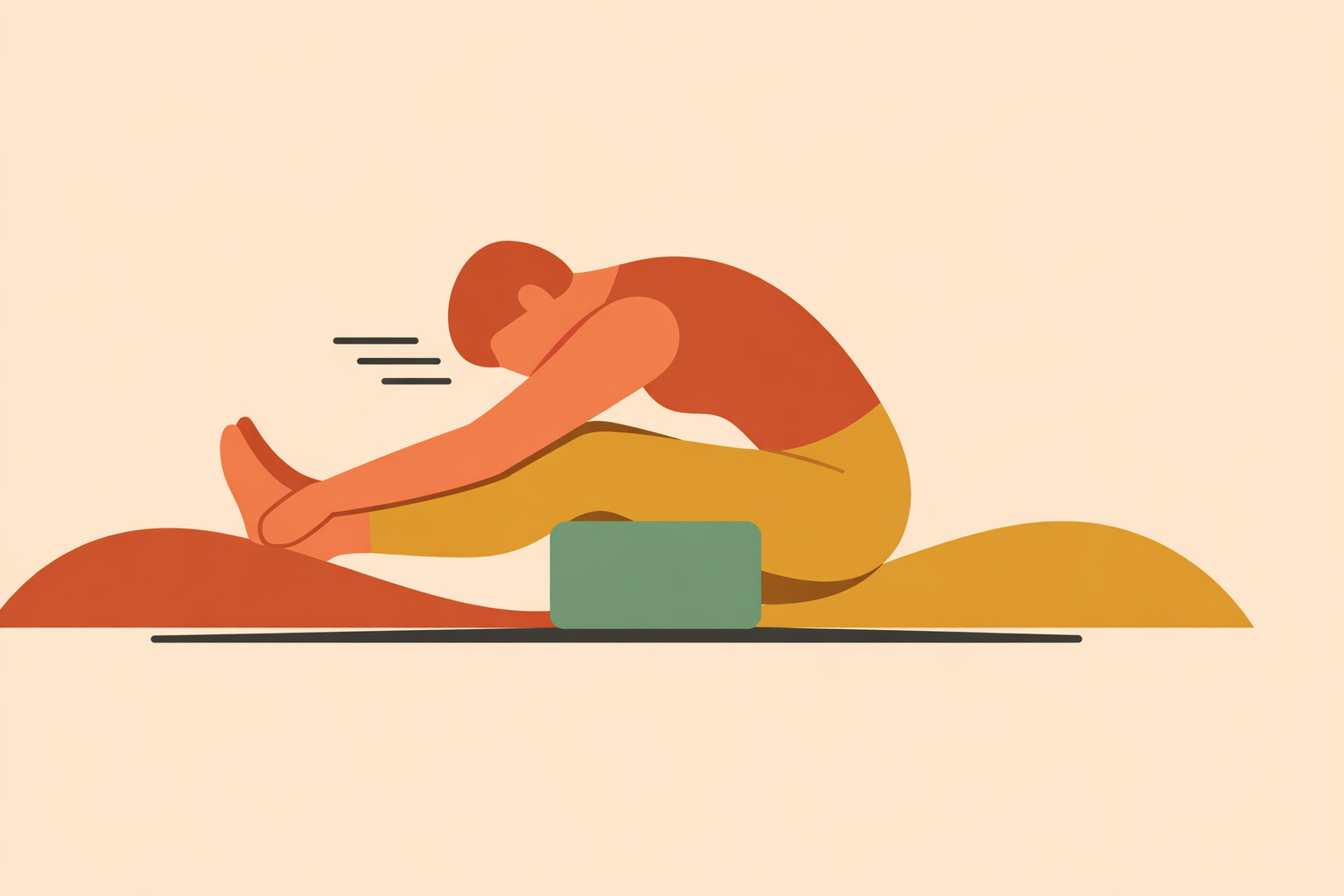
- Paschimottanasana with hips elevated on blankets
- Janu Sirsasana introduced gradually
Supine strap work is a standout because students can adjust the angle, keep the pelvis steadier, and stay out of strain. Wall-based variations can also feel especially supportive for apprehensive or older students, since wall support can improve balance and make the overall experience more accessible.
When you bring students into standing folds, set them up to succeed. In Uttanasana, cue bent knees first, then length through the front of the torso, then support under the hands. In seated folds, elevate the hips before asking for more reach—sometimes one folded blanket changes everything.
As confidence builds, asymmetrical shapes like Janu Sirsasana can highlight side-to-side differences without overwhelming the student. Keep the mood exploratory. Props aren’t a sign someone is “behind”—they’re often what makes the work precise and sustainable.
Common compensation patterns and how to coach around them
Most beginner patterns with tight hamstrings are predictable—and that’s good news, because predictable patterns are teachable.
Rounding the spine instead of hinging. When hamstrings limit pelvic movement, many students compensate with more lumbar flexion. Cue “crease at the hips,” “lengthen forward,” and “bend the knees enough to keep the spine spacious.”
Locking the knees. Habitual hyperextension can increase posterior knee stress and reduce useful muscular support. A gentle micro-bend usually improves sensation immediately.
Over-pulling or stacking end-range too soon. Heavy sensation near the sit-bone area can irritate the proximal hamstring tendon, especially when students chase stretch without enough strength and recovery.
Misreading sensation. A broad stretch through the back of the leg is often workable. Sharp, pinching, burning, or radiating pain is a different category and calls for immediate modification or stopping.
Hands-on adjustments without clear boundaries. Pressure at the pelvis or backs of the knees can create both physical and consent concerns. Ethical standards emphasize explicit informed consent for physical adjustments. For beginner hamstring work, props and clean verbal cueing are usually the simplest, most respectful route.
How to sequence the first 4–6 weeks
For beginners, simple and repeatable usually works best. Two focused sessions per week that blend stretching and strengthening can create steady progress without overload.
That rhythm matches both real-world teaching and programs where twice‑weekly sessions support steady gains. Early on, it’s less about endless variety and more about consistent inputs.
A useful teaching arc looks like this:
- Weeks 1–2: supine strap work, wall support, gentle hip hinges, and simple posterior-chain strengthening such as glute bridges
- Weeks 3–4: supported standing folds, seated forward folds with props, continued bridges, and light hip-hinge patterning
- Weeks 5–6: asymmetrical folds, a moderate increase in hold time, and simple eccentric hamstring-focused strength
Sample 15–20 minute mini-sequence:
- 2 minutes of nasal breathing with longer exhales
- 3 rounds of Supta Padangusthasana, 5–8 breaths each side
- 2 rounds of supported Uttanasana on blocks, 5–8 breaths
- 2 sets of glute bridges, 8–10 reps
- short constructive rest
Track progress in practical ways: steadier breathing, less guarding, a clearer hip hinge, and more ease getting in and out of shapes. Deeper range may come later—or it may never be the point. Either way, useful change is happening.
What this means for your growth as a teacher
Teaching tight hamstrings well isn’t about collecting clever stretches. It’s about learning to read bodies, pace sensation, and build confidence—one class at a time.
It also means widening the focus beyond shape. Breath, attention, consent, language, sequencing, and inclusion all matter. Many students with tight hamstrings arrive feeling “behind”; your job is to replace that hierarchy with curiosity, skill, and self-trust.
Finally, strong teaching comes from ongoing development that translates directly into real sessions. The best education isn’t static—it evolves with your questions and the people in front of you.
Conclusion: is yoga for tight hamstrings safe for beginners?
Yes—when it’s taught with respect for individual range, moderate intensity, and balanced programming. Safe hamstring work is rarely dramatic. It looks like bent knees, useful props, steady breath, thoughtful sequencing, and strength that supports flexibility.
Across both traditional teaching and evidence-informed practice, the message is consistent: go gradually, teach the hinge, build tolerance without force, and support the stretch with strength. Beginners don’t need to conquer their hamstrings—they need a more skillful relationship with them.
A final note of care: encourage students to work within comfortable sensation, avoid sharp or radiating pain, and seek appropriately qualified support when something doesn’t feel right. With that foundation, hamstring work tends to become steadier, clearer, and more grounded—on and off the mat.
Ready to deepen your teaching?
Explore the Yoga Teacher Certification to build practical, supportive skills you can use with real students from day one.
Teach Beginners with Confidence
Build safer, clearer cueing and sequencing skills in the Yoga Teacher Certification.
Explore Yoga Teacher Certification →