Coaches often see thought spirals arrive fast: a short message lands, the client’s nervous system surges, and the session starts to feel like a debate with the mind. Common reflexes—reassurance, problem-solving, or “positive thinking”—might bring brief relief, but the same loop often returns after the call.
In practice, spirals are usually less about the exact storyline and more about the mind’s momentum. A steadier coaching response follows a clear sequence: settle first, identify the pattern next, then choose a fairer thought paired with one concrete step. This keeps the work practical, dignified, and repeatable between sessions within broader mental health frameworks.
Key Takeaway: Breaking thought spirals in coaching works best when you interrupt the loop in a clear order: NOTICE, CHECK, and CHOOSE. First, help the client pause, name the spiral, and ground through breath and senses. Next, help them spot the thinking pattern and create distance from the thought. Finally, pair a more balanced perspective with one small, observable action. Used consistently, this sequence helps clients recover choice more quickly and build steadier habits over time.
Skill 1: NOTICE the Spiral Early
Speed is part of what makes a spiral feel so convincing. The mind jumps from trigger to prediction to reaction so quickly that choice gets crowded out. The first move is to interrupt that acceleration.
NOTICE teaches the client to pause, name what’s happening, and orient through the senses. Traditional lineages have long leaned on simple settling practices—breath, contact with the ground, and everyday sensory attention—because presence changes the quality of the moment. In coaching, this creates enough steadiness for the client to stop obeying the spiral automatically.
Coach micro-script
- “Pause. Something has activated me. I do not need to solve the whole future right now.”
- Take one slow exhale. Feel the chair under you or your feet on the floor.
- Name 3 things you see and 2 sounds you hear.
- “Notice the thought. Notice the feeling. Notice where it lands in the body.”
Many clients will say it feels unnatural to stop mid-spiral. That’s expected. The goal is to create a little room between the surge and the next reaction.
Catching the loop early also makes the rest of the sequence easier to use. Research on decentering links stronger awareness of thoughts with lower reactivity to reduced distress.
60-second NOTICE drill
- Label: “This is a spiral.”
- Breath: one slow exhale.
- Senses: feel one point of contact, name two visual details, notice one sound.
- Orienting thought: “I can come back to this with more clarity.”
Example
During a commute, Sam’s mind jumps to, “I’m failing at everything.” Instead of debating it, Sam says quietly, “Spiral.” Then comes one longer exhale, one hand on the steering wheel, and one named color inside the car. The problem isn’t solved, but the intensity drops enough to regain a bit of choice.
A practical tip: rehearse NOTICE at neutral times—making tea, washing hands, opening a laptop—so it’s familiar before it’s needed under pressure.
Skill 2: CHECK the Thinking Pattern
Once there’s a little space, shift from wrestling with the content to recognizing the pattern. Spirals tighten when every scary thought is treated like a fact that must be answered immediately.
One small language change can create breathing room: “I’m having the thought that…” or “My mind is predicting…” Research connects this kind of reframing with psychological distance. Many contemplative traditions teach a similar skill: you can witness the mind without being ruled by it.
Use pattern labels lightly
- Catastrophizing: jumping to disaster from one cue
- All-or-nothing thinking: seeing only extremes
- Mind reading: assuming you know what others think
- Fortune telling: acting as if the future is already settled
- Overgeneralizing: turning one setback into a permanent rule
- Mental filter: zooming in on what is wrong and overlooking the rest
- Personalization: taking excessive responsibility
- Should statements: rigid inner rules that create pressure or shame
- Emotional reasoning: “I feel it, so it must be true”
- Labeling: reducing the self to a fixed negative identity
The point of labeling is not to “win” an argument with the client’s mind. It’s to loosen the grip of the loop so the client can relate to the thought more wisely.
Coach prompts that open perspective
- “What here is directly observable, and what is interpretation?”
- “What might your mind be adding to the story?”
- “If this thought were a headline, what details are missing?”
- “What would a wiser, steadier version of you say about this moment?”
Keep examples culturally and personally familiar. Work on cultural adaptation in CBT suggests culturally relevant examples can strengthen engagement, which matters just as much as technique.
- Mind reading: “I’m assuming I know what they think. I may need more information.”
- Catastrophizing: “This is one possibility, not the only outcome.”
- All-or-nothing thinking: “It does not have to be perfect to count.”
Example
Maya gets a terse message: “We need to talk.” Her mind jumps to “I’m getting fired.” In session, you invite her to say, “I’m having the thought that I’m getting fired.” Then you ask, “What do we know, and what are we guessing?” She sees she has a brief message and a fearful prediction. The spiral loosens because the prediction stops posing as certainty.
Two-minute CHECK worksheet
- Trigger: __________
- Automatic thought: __________
- Pattern label: __________
- What I know: __________
- What I’m adding: __________
- Fairer perspective: __________
Some clients connect better with imagery than labels. A cloud, a knot, a wave, or a gust of weather can be easier to work with than clinical terms, especially when those metaphors already exist in the client’s family or cultural language.
Skill 3: CHOOSE a Fairer Thought and One Small Action
Awareness opens the door, but behavior carries change forward. After the pattern is named, help the client choose a steadier perspective and tie it to one small action they can actually do.
A balanced reframe matters here. Not forced positivity—just a thought that’s more honest and workable. Research suggests mindfulness- and CBT-based approaches can reduce rumination and worry, which fits well with pairing reframes and small steps.
Coach micro-scripts for balanced thoughts
- “This may be uncomfortable, and I can still respond with clarity.”
- “Anxiety is here, but it does not get to decide my next move.”
- “Today is hard, and I still have one useful step available.”
Then choose the action: small, observable, and fully within the client’s control. This is often what stops a spiral from turning into endless inner debate.
Examples of grounded actions
- Send one message you have been avoiding.
- Walk for 6 to 10 minutes and name three things you notice outdoors.
- Set a timer for five minutes and begin the task without aiming to finish it.
- Write down the one question you actually need answered.
Example
Jay keeps delaying a portfolio update because the mind says, “If it isn’t perfect, it’s pointless.” After checking the pattern, Jay reframes to, “An imperfect draft gives me something to improve.” The action is intentionally modest: set a seven-minute timer and write three bullet points. Movement breaks the old loop.
One-minute reframe-and-act template
- Trigger: __________
- Old thought: __________
- Balanced thought: __________
- One small action: __________
- When I will do it: __________
Clients often ask, “What if I still don’t feel like doing it?” The sequence still works. NOTICE and CHECK reduce pressure; CHOOSE supports action that reflects values, even with discomfort present.
Light reinforcement can help the habit stick: a check mark, a cup of tea, a breath in sunlight, or a short note of self-appreciation after the action.
How the NOTICE-CHECK-CHOOSE Sequence Builds Change Over Time
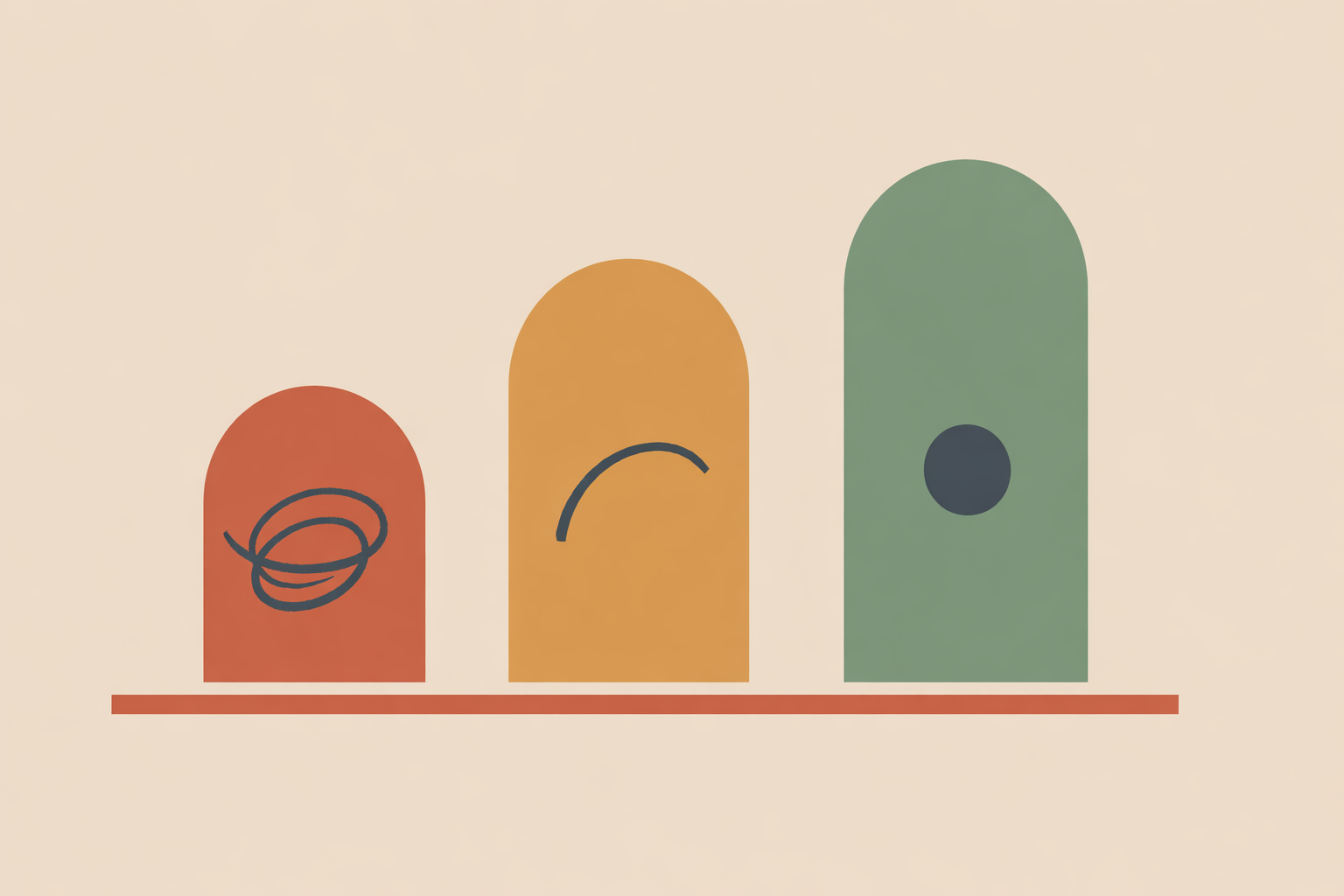
Used together, NOTICE, CHECK, and CHOOSE create a dependable arc. Settle attention first, meet the mind with perspective second, then take one grounded step. That order fits how spirals actually unfold.
Progress usually looks like catching spirals sooner, spending less time inside them, and returning to choice more quickly. That shift is substantial.
Ways coaches can track change
- How often spirals happen each week
- How long they last
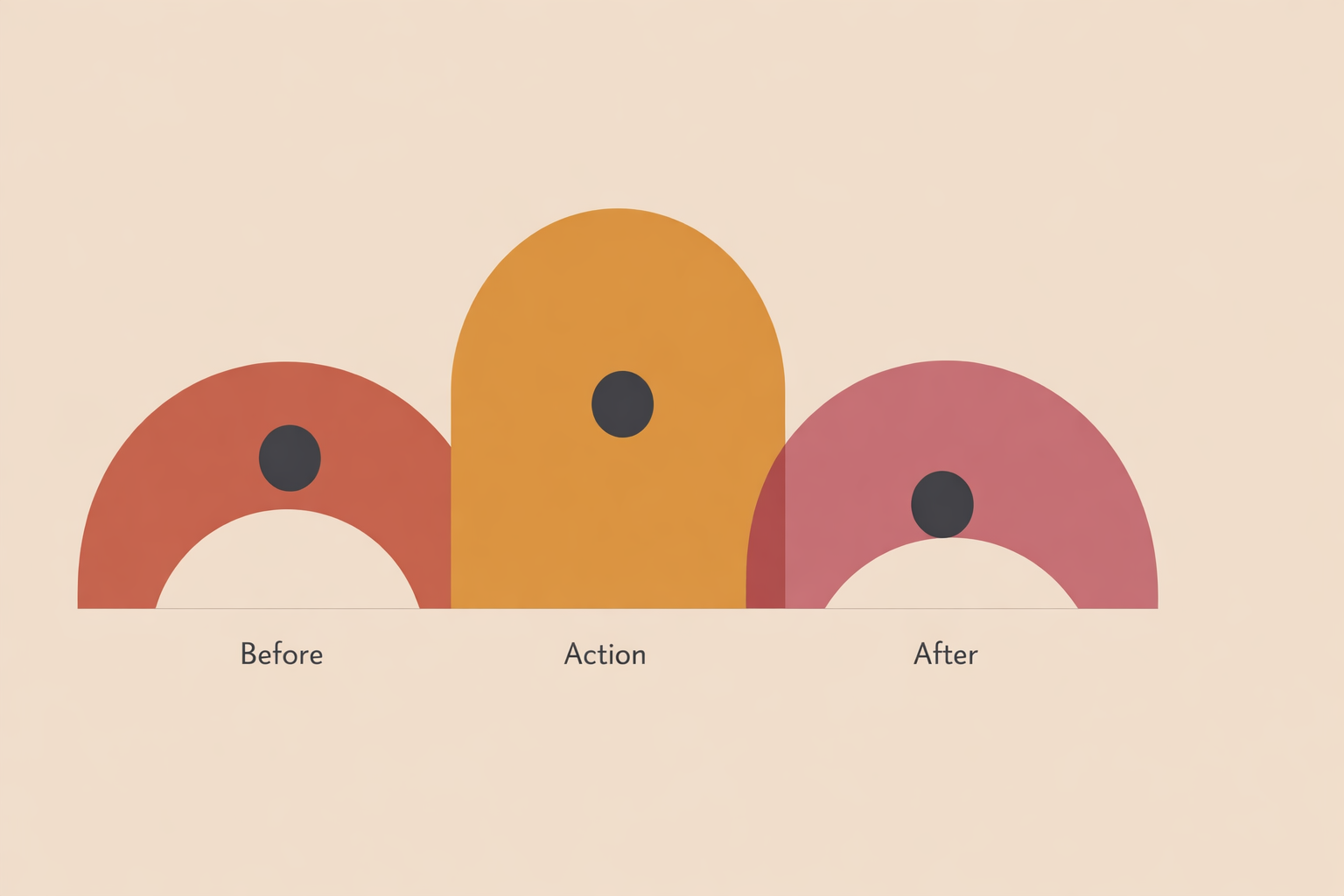
- Intensity before and after NOTICE
- Reassurance-seeking patterns
- Avoidance behaviors
- Number of small grounded actions completed
- Client-defined well-being markers such as steadier routines, more connection, or improved follow-through
It also helps to plan for tougher seasons ahead of time.
Simple relapse-planning checklist
- Early signs that a spiral is building
- Common triggers
- Habits that make spirals worse
- Go-to NOTICE, CHECK, and CHOOSE prompts
- People the client can lean on for practical or emotional support
- A minimum routine that keeps the day anchored
Keep the approach culturally grounded and human. Tools inspired by CBT don’t need to feel sterile; they can live inside familiar routines and meanings. Reviews of adapted CBT link these adjustments to engagement and outcomes. In real life, that might look like practicing NOTICE during morning prayer, CHECK while journaling with tea, or CHOOSE after a grounding song or a few quiet breaths before family responsibilities begin.
As with any skill, results vary, and some clients will benefit from additional support beyond coaching—especially if spirals come with overwhelm that feels unmanageable. Still, this sequence gives most people something reliable: a way to return to steadier attention, a fairer inner voice, and one next step they can take today within practical mental health frameworks.
Deepen CBT Coaching Skills
Apply these spiral-interrupting steps with more structure in the Cognitive Behavioral Therapy Course.
Explore the CBT Course →