


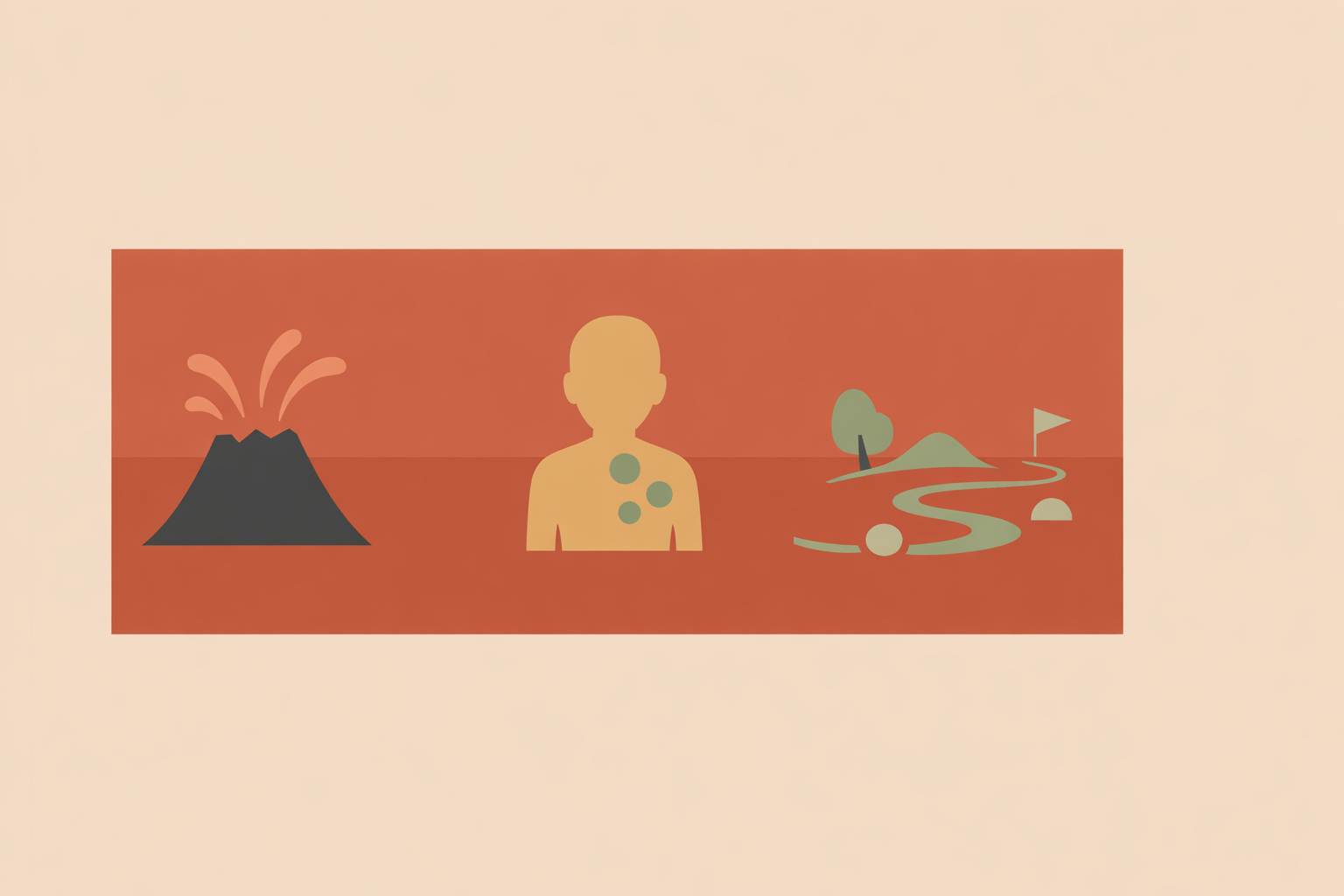
Lean child-work settings are common: a shared office between classes, a mobile visit with a backpack, or a short slot that starts late and ends early. In those moments, a child’s energy may be big while time, privacy, and materials are limited. Talk-heavy approaches can sometimes escalate or stall, and completely open-ended drawing may drift. What tends to help most is a portable, repeatable flow that invites expression, organizes intensity, and supports settling—without pushing a child to share more than they want to.
Paper is ideal for this. It’s familiar, flexible, low-cost, and easy to revisit. With a simple three-part sequence, one sheet becomes a steady container for big feelings, body awareness, and story. The child stays in the lead, you can carry the process across settings, and each revisit builds on what came before instead of starting from scratch.
Key Takeaway: A simple, repeatable paper-based sequence can create safety and depth in lean settings: externalize the feeling, locate it in the body, then shape it into a story. This structure supports child-led expression while making intense emotions easier to track, settle, and revisit across short or mobile sessions.
Activity 1: Volcano of Feelings for Big Emotional Energy
A single sheet of paper can hold a lot. The Volcano of Feelings turns anger and intensity into something visible: triggers, body cues, and chosen calming supports all in one place.
Children usually recognize a volcano immediately, and that familiarity lowers the stakes. Instead of asking them to explain “my anger” directly, you invite them to describe lava, pressure, smoke, heat, and eruption. In practice, many children find it easier to speak honestly about the image than about themselves—and that little bit of distance can be a gift.
As the picture takes shape, the feeling becomes more trackable. Linking triggers with body signals helps a child see that anger isn’t random—it has a pattern. Youth self-awareness guidance often emphasizes noticing how the body feels under stress and connecting sensations with emotions and thoughts.
- Materials: 1–2 sheets of paper, crayons or markers, optional stickers.
- Draw the volcano: Make a wide base, a crater, and space for lava, smoke, clouds, and “cooling” elements nearby.
- Layer 1 — Before: Around the base, draw or write triggers (a bell for transitions, a face for teasing, a clock for waiting).
- Layer 2 — During: Inside the volcano, color the rising intensity. Add body cues like hot cheeks, tight fists, shaky legs, or a racing chest.
- Layer 3 — After: Beside the volcano, add chosen supports: water, a quiet corner, stretching, slow breaths, a trusted adult, or a signal the child can use.
Keep your language light and curious: “Where does the lava rise first?” “What makes the smoke bigger?” “What cools the mountain down?” Think of it like staying in the child’s metaphor while quietly building practical emotional vocabulary.
If a child doesn’t want to talk much, that’s fine. Let the drawing do more of the work—pointing, circling, and coloring are all meaningful participation.
Group variation: Draw one large volcano on shared paper. Invite each child to add one trigger, one body cue, and one cooling idea. Over time, a shared emotional language often develops naturally, much like in child-centered play therapy.
“Play is a child’s natural medium for self-expression.”
Activity 2: Emotion Map and Body Mandala
Once the feeling has a picture, the next step is noticing where it lives in the body. A body outline and a small mandala give children a gentle way to translate emotion into sensation, color, and pattern.
This is often where a child shifts from “something is wrong” to “I know what’s happening inside me.” That clarity can be settling on its own. What this means is the child gains a reference point they can point to, rather than having to explain an overwhelming inner experience on demand.
- Materials: Paper, crayons or markers, optional pre-drawn body outline.
- Color the body map: Invite the child to show where feelings live today (red for hot, blue for calm, yellow for buzzy, green for settled).
- Add sensation words: Offer choices like tight, heavy, floaty, prickly, wobbly, or full.
- Use symbols: Dots for tingles, zigzags for energy, clouds for fogginess, waves for ease.
- Create the mandala: Inside a circle, draw shapes or patterns that match the day’s inner weather.
The circle matters. It creates a bounded space that feels holdable—especially for big feelings. Mandala-style work shows up across many ancestral and traditional creative practices, and that long-standing familiarity is one reason circles and repeated patterns can feel intuitive and grounding.
Here, the practitioner’s role is not to interpret too quickly. Stay with what’s observable: “I notice the shoulders are bright red.” “The middle of the circle looks calmer than the edges.” “You added space around the chest.” Reflection without pressure helps the child stay connected to their own meaning.
Bridge into action: Ask the child to choose one small regulation move—stretch, shake out hands, press feet into the floor, or take a long sigh. Then invite them to add a second color showing how the body feels after.
Activity 3: Story World on Paper
After mapping the feeling and the body, paper can become a story world. This is where symbols, helpers, obstacles, and change start to organize into a narrative the child can shape.
Draw a large rectangle with a border. This is the child’s world. Inside it, anything can appear: mountains, rivers, caves, safe houses, storms, bridges, creatures, protectors, or a very small version of the self. The border creates a clear container. The child decides what belongs inside, what stays outside, and what changes over time.
Story-based play supports are associated with stronger social skills and emotional understanding in children. More broadly, well-structured social-emotional approaches are also linked with better self-control and reduced aggression. Put simply, a strong story form helps children explore challenge and support without being “taught a lesson” at.
- Set the scene: Ask, “Where does the story begin?” Let the child draw the land first.
- Add figures: These may be people, animals, weather systems, helpers, or obstacles.
- Trace an arc: Mark a path for before, during, and after. What happened? What got in the way? What changed?
- Bring in earlier work: Ask where the volcano heat appears in this world, or where the body’s calm place might live.
- Close the world: Draw a gate, fold the page, or place it in a folder so the story can rest until next time.
This works especially well when materials are limited or the setting changes from week to week. Revisiting the same drawing over time often helps children go deeper with less pressure. A blocked road becomes a bridge. A storm gains a shelter. A frightened figure finds an ally. The image holds continuity even when the room does not.
Group variation: Create a shared land with separate corners or zones. Children can connect paths when they want closeness, or keep boundaries visible when they need space.
“Toys are children’s words and play is their language.”
Why This Three-Part Flow Works So Well
The strength of this sequence is its simplicity—each step builds naturally on the last:
- Volcano: gives the feeling an image.
- Body map and mandala: gives the image a felt location.
- Story world: gives the experience movement and meaning.
Together, they create safety, symbolism, and depth with very little equipment. They also support child-led work. Child-directed play is known to support decision-making and a sense of control, which is one reason paper-based activities can feel surprisingly powerful.
The flow is easy to scale. Some sessions may use all three; others might stay with the volcano for ten minutes and end there. Essentially, you’re offering a familiar path the child can recognize and trust—rather than a checklist to complete.
With consistent practice, these activities can strengthen self-awareness, self-regulation, communication, and empathy beyond the session space. Broader social-emotional learning research suggests these skills can show sustained improvements across settings when practiced consistently.
Practice Notes for Keeping the Work Child-Led
A few principles keep the process simple, respectful, and child-led:
- Model rather than direct: Draw beside the child if needed, but don’t take over.
- Reflect what you see: Name colors, shapes, movement, and choices before offering meaning.
- Keep disclosure optional: A child can work fully through image and metaphor.
- Return to familiar forms: Repetition builds confidence and fluency.
- Respect cultural context: Let symbols, stories, and meanings come from the child’s world, not your assumptions.
Engagement often deepens when the adult becomes a steady witness rather than a manager of the activity. Presence matters more than polish. A simple crayon drawing made with care can open more than a perfectly planned exercise held too tightly.
Joy matters too. As Karyn Purvis is widely quoted as saying, “it takes 400 repetitions to learn a skill… or 12 repetitions with joy and laughter.” Whether or not the numbers are exact, the heart of it is true in real work: children learn best when the experience feels safe, engaging, and alive.
Closing Thoughts
You don’t need a fully equipped room to offer meaningful play-based support. Paper, color, rhythm, and relationship can go a long way. In lean settings, these three activities offer a practical arc: map the energy, notice the body, and weave the story.
Used gently and consistently, they help children externalize intensity, recognize internal signals, and experiment with new possibilities while staying in charge of their own pace. That balance—structure with freedom—is often what makes the work feel both grounded and respectful.
Keep cautions simple and proportionate: adapt to the child’s age, pace, and context; avoid over-interpreting symbols; and let boundaries, consent, and cultural humility guide the process. When in doubt, return to observation, simplicity, and connection.
Train in Play Therapy
Build on these paper-based activities with practical methods in the Play Therapy Certification.
Explore Play Therapy Certification →










