Clients often ask about lavender for a tense cat, show up with “pet-safe” blends from social media, or mention that a cat licked a drop of tea tree. In those moments, clear language matters as much as good judgment. With cats, the baseline is simple: less intensity, more ventilation, and real freedom for the cat to move away.
Key Takeaway: Safe aromatic support for cats begins with restraint. Explain that cats are especially sensitive to concentrated scents, keep any diffusion minimal and optional, favor hydrosols over essential oils, avoid trendy DIY blends, and respond calmly if exposure happens. Across all five scripts, the thread is the same: low intensity, careful observation, and respect for feline choice.
Script 1: Explain why cats are a special case
Many people assume that if a scent feels gentle to them, it will feel gentle to a cat. In practice, cats are different. Their sensory world is more intense, and their bodies handle aromatic compounds in their own way, so experienced practitioners start by lowering intensity from the beginning.
Core client message
- “Cats are not small humans or small dogs. They tend to be more sensitive to concentrated scents, so we always work more gently.”
- “With cats, there is no universal ‘safe for every animal’ oil. We think in terms of lower intensity, careful observation, and choice.”
- “If we use plant aromatics at all, hydrosols are usually the better place to begin.”
This framing keeps the tone steady: it sets expectations without alarm. It also helps clients see that gentleness is a form of respect, not fear.
Script beats you can adapt
- Normalize gentleness: “Essential oils are highly concentrated. For cats, softer is wiser.”
- Keep it practical: “We avoid overwhelming the senses. If a cat wants distance, that is useful information.”
- Offer a gentler path: “Hydrosols let us work with the plant in a much quieter way.”
- Protect autonomy: “Your cat should always be able to walk away.”
Example in practice: “Mina seems unsettled by travel. Rather than starting with essential oils, let’s try a lightly offered chamomile hydrosol at a distance and see whether she chooses to rest nearby.”
Script 2: Set firm boundaries around diffusing essential oils
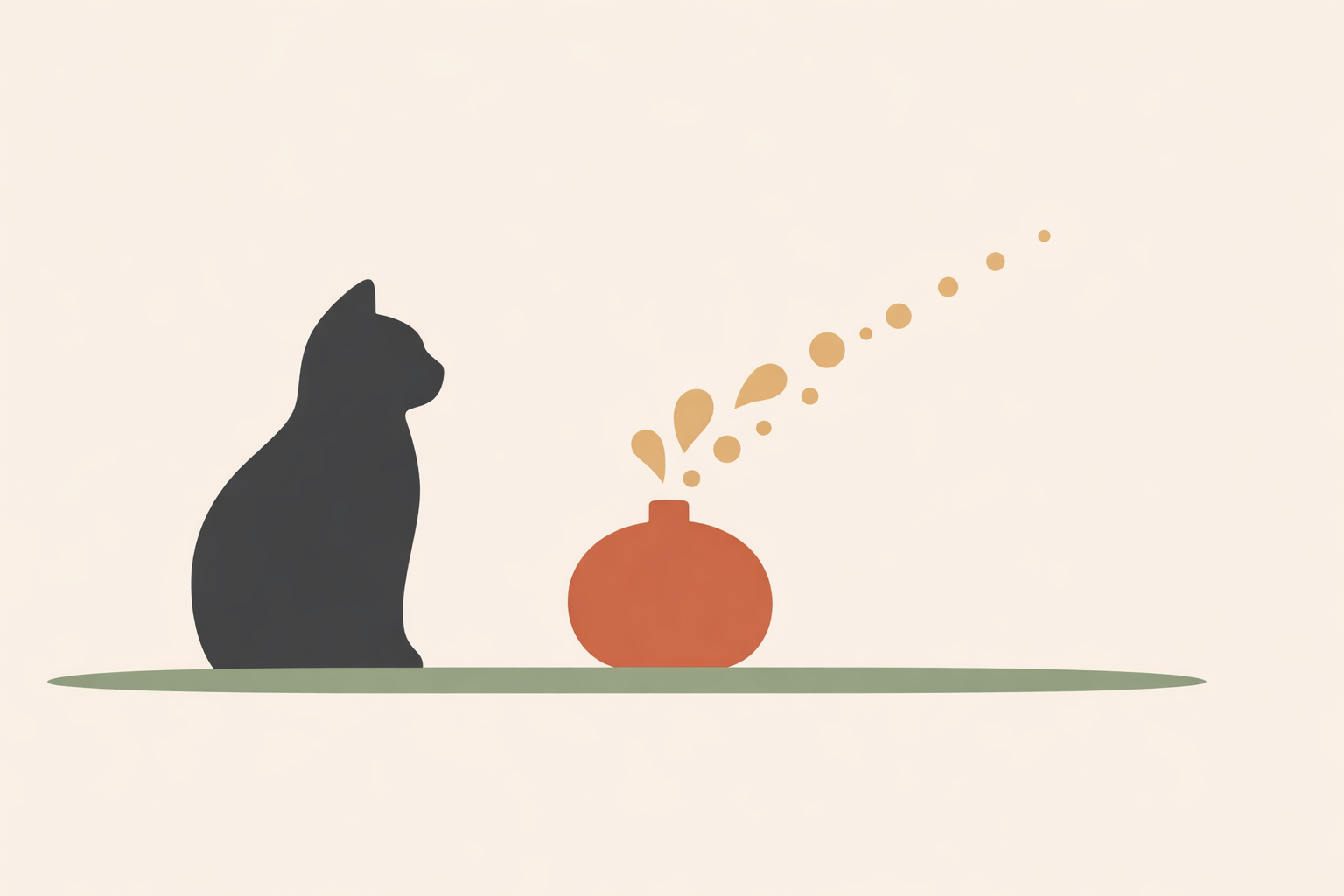
If a client still wants to diffuse, boundaries need to be clear. A diffuser spreads aromatic material through a whole room, and with cats that can create more exposure than people expect. In a feline household, diffusion should be rare, light, and easy to stop.
Core client message
- “Diffusion is optional, not necessary.”
- “If we diffuse at all, we keep it brief, light, well ventilated, and always give the cat an open exit.”
- “The moment your cat shows discomfort, we stop.”
Script beats for diffuser use
- Use less, not more: “One drop of a single mild oil is plenty if you are diffusing in a cat’s home.”
- Keep sessions short: “Think in minutes, not hours, with long scent-free breaks afterward.”
- Support airflow: “Open the door, crack a window, and do not trap the cat with the scent.”
- Choose observation over assumptions: “If your cat leaves, hides, squints, sneezes, or seems unsettled, switch it off.”
- Keep the setup clean and out of reach: “Store oils securely and wipe down residue after use.”
Many practitioners who choose to diffuse around cats keep sessions very brief and amounts tiny. The steady principle is minimal exposure, plenty of fresh air, and generous pauses between any aromatic offerings.
Concrete example: “Tonight, if you want to try it, use a single drop for a very short session with the window cracked and the door open. If Luna leaves or looks bothered, turn it off right away.”
Script 3: Prefer hydrosols and self-selection
For cats, hydrosols are often the more graceful choice. They carry trace aromatic material in water, so the scent is much softer than an essential oil. Many cats respond better when the offering is quiet and optional.
Core client message
- “With cats, we do not need to apply concentrated oils to the body.”
- “Hydrosols are usually a gentler and more cat-friendly option.”
- “We offer the scent and let the cat choose the level of engagement.”
This approach fits a classic principle of traditional practice with animals and animal wellness: subtler inputs make it easier to read a true response.
Script beats for self-selection
- Start with one or two options: “Rose, Roman chamomile, or linden hydrosol are common gentle starting points.”
- Offer, do not impose: “Present the scent at a distance and see whether your cat leans in, settles, or simply ignores it.”
- Use a bowl or saucer method: “A few drops of hydrosol in water can be placed away from food and litter so the cat can approach on their own terms.”
- Try a cloth method: “A lightly misted cloth near a resting area can work well if the cat remains comfortable with it.”
- Read the response: “Settling nearby, soft eyes, or calm curiosity can be encouraging signs. Quick exits, avoidance, or repeated lip-licking suggest the offering is not welcome.”
Example in practice: “For Tobi’s unsettled energy after the move, let’s place a small saucer with linden hydrosol near the bookshelf and simply observe. If he spends time near it, that tells us something. If he walks away, that tells us something too.”
Script 4: Help clients question DIY blends and “pet-safe” marketing
Clients usually mean well. The challenge is that online advice about cats and aromatics is often inconsistent, overly confident, or driven by marketing. The most helpful move is to give clients a steadier filter without shaming their curiosity.
Core client message
- “I understand why that label sounds reassuring, but ‘pet-safe’ is not a meaningful standard for every cat.”
- “Many popular oils are too strong or too risky for feline households.”
- “When in doubt, skip the oil and choose the gentler option.”
Script beats for checking products
- Look past the front label: “If the bottle hides what is actually inside, it is not a good choice.”
- Be wary of strong aromatic families: “Minty, camphor-like, sharp, spicy, and heavily citrus profiles are not where I start with cats.”
- Remember that route matters: “A scent in open air is different from a product applied to fur, used in a small bathroom, or left where a cat can groom it off.”
- Keep the standard simple: “If the setup depends on the cat tolerating intensity, it is probably not the right setup.”
Real-world reframe: “I know that blend sounds fresh and clean, but for a cat it may be too much. Let’s leave the trendy recipe aside and work with something quieter instead.”
Script 5: Respond calmly when a cat has already been exposed
When someone calls in a panic, your steadiness matters. Keep the guidance practical and within scope. The focus is to stop further exposure, observe clearly, and direct the person toward urgent professional support when needed.
Core client message
- “First, stop the exposure and move your cat to fresh air.”
- “Keep things calm and do not try random home fixes.”
- “If your cat seems unwell, get immediate professional support.”
Script beats for immediate response
- Stop the source: “Turn off the diffuser, cap the bottle, and remove any spilled material.”
- Reduce contact: “If something got on the coat, gently remove residue and keep the cat from grooming the area.”
- Do not improvise: “Do not force food or other substances by mouth.”
- Gather details: “Note the product, the approximate amount, and the time of exposure.”
- Observe closely: “Watch for drooling, wobbliness, unusual quietness, digestive upset, coughing, or changes in breathing.”
- Escalate promptly: “Any breathing change, collapse, tremors, or marked lethargy calls for urgent help.”
Example phone script: “Turn off the diffuser and open the room. Keep Miso somewhere quiet and note what was used and when. Watch closely for any change in breathing, balance, energy, or comfort, and contact urgent support right away if anything feels off.”
When you follow up later, keep the focus on learning rather than blame: “You acted quickly, and that matters. Going forward, let’s store all aromatic products securely and keep your cat’s environment much simpler.”
Conclusion
Working with cats asks for humility. They do not respond well to force, and they rarely need much from us. The most supportive aromatic approach is subtle, spacious, and easy to decline.
In day-to-day practice, that usually means choosing hydrosols more often than essential oils, keeping diffusion for rare and carefully observed situations, and taking “pet-safe” marketing with a critical eye. It also means setting the room up well: fresh air, an open exit, and no pressure on the cat to participate.
When in doubt, pause and choose the gentler path in animal aromatherapy. If any exposure leads to signs of distress, prompt professional support is the right next step.
Train in Animal Aromatherapy
Build safer, cat-centered protocols with the Animal Aromatherapy Certification.
Explore Animal Aromatherapy →