Practitioners often default to “more stones, more effect.” The result can be a busy table, uneven responses, and a client who leaves relaxed but unfocused. More often than not, the issue is the session design. Without a clear Root-to-Crown flow, consent-based placements, and pacing that respects sensitive centers, the experience can feel scattered rather than coherent.
What tends to work best is simpler: a reliable progression, a small core set of stones, and enough spaciousness for the client to notice their own experience. A five-stone framework gives you exactly that.
Key Takeaway: A clear Root-to-Crown structure helps crystal sessions feel steady, cohesive, and easier to adapt. Red Jasper and other Root allies create a grounded base; Citrine brings focus and forward movement; Rose Quartz softens the Heart with gentler pacing; Amethyst supports quiet, reflective states when paired with grounding; and Clear Quartz helps tie the whole session together. Breath, brief reflection, and simple aftercare deepen the experience without overcomplicating it.
1. Red Jasper and Root Stones for Grounding
Start at the Root and let the client arrive. When the lower body feels settled, everything you do above tends to land more cleanly. Red Jasper is a classic opener because it’s long associated in practitioner tradition with steadiness, containment, and embodied presence.
Before any placement, name the plan in plain language: “We’ll start by grounding. I’ll place one stone near the hips and one near the feet, always over clothing. You can change your mind about any placement at any point.” Clear expectations often do as much for the session as the layout.
A common, respectful foundation is Red Jasper beside the pelvic bowl, with a second grounding stone at the ankles or soles to encourage a downward, settling orientation. Many clients recognize the shift once the body begins to soften.
You can broaden the base with Hematite, Smoky Quartz, or Black Tourmaline. These traditional Root allies are often chosen because they feel stable in session, especially for sensitive clients.
Root work doesn’t require intimate placement. Beside the hips, between the knees, at the ankles, or at the soles usually provides enough lower-body contact while keeping consent easy and clear.
- Simple layout: Red Jasper near the pelvis, grounding stone at the feet.
- Consent-forward option: offer “hips, knees, ankles, or feet?” rather than assuming one placement.
- Gentler pacing: begin only at the feet if the client needs more distance before moving higher.
By the time you’re ready to move on, the room often feels quieter and breath has slowed. That shift is supported by stillness, attention, and a sense of safety, not only by what’s on the table.
2. Citrine at the Solar Plexus for Forward Movement
With the foundation set, the Solar Plexus is a natural next step. Citrine is widely used here for confidence, agency, warmth, and momentum. In traditional chakra practice, this is the center of will and purposeful action.
A straightforward placement is above the navel, followed by a few easy breaths. Keep guidance client-led: “Let your attention rest at the center of your body. Notice any warmth, space, or resistance without forcing anything.” If you use affirmations, keep them light and unpressured.
Clients often describe this segment in sensory language: more brightness, more lift, more readiness. Treat those as meaningful lived experience and use them to help clients name what’s changing for them.
For a 45-minute session, 5 to 8 minutes here is usually plenty. It supports engagement without tipping into strain or overstimulation.
If you want a gentle bridge before moving on, ask one short coaching question and then pause: “What feels one step more possible than it did ten minutes ago?”
- Placement: Citrine above the navel.
- Prompt: “What feels more possible now?”
- Micro-check: rate forward momentum from 1 to 10 before and after the hold; in belief-shaped crystal contexts, people may still report a shift in how they feel.
With Root and Solar Plexus established, the session has both stability and direction. That makes it much easier to approach the Heart with care.
3. Rose Quartz at the Heart With Gentler Pacing
The Heart responds best to subtlety. Rose Quartz remains the classic choice because it’s traditionally linked with self-kindness, tenderness, relational warmth, and emotional softening.
Flexibility matters more than finding a single “correct” placement. Some clients enjoy a stone at the center of the chest. Others relax more with stones in the hands, beside the ribs, or simply near the upper body. Heart work deepens when the client can fully settle into the choice.
Forgiveness, boundaries, and self-acceptance often surface during Rose Quartz work. These are longstanding themes from energetic tradition and client report, so hold them as invitations rather than guarantees.
Because this center can shift quickly, breath becomes your best pacing tool. If the client feels exposed or overwhelmed, lengthen the exhale, reduce the weight or proximity of the stone, or move it to the hands. Many practitioners also notice that breath modulates activation well in these moments.
- Chest option: Rose Quartz at the sternum over clothing.
- Lower-intensity option: one stone in each hand.
- Supportive phrase: “We’ll let this be gentle.”
- Quick check-in: “If your heart needed one boundary today, what would it be?”
When the Heart feels softer and still contained, it becomes natural to explore the upper centers without losing the grounded tone you’ve built.
4. Amethyst for Quiet Reflection at the Brow or Crown
Amethyst is a trusted choice when the session turns contemplative. In traditional chakra mapping, it’s linked with the Third Eye and Crown, where the emphasis shifts from action to quiet perception.
Keep this segment spacious. A smooth stone at the brow, or just above the crown, is often enough. Verbal guidance can be minimal; one line like “Notice the space behind your eyes” can carry the whole hold.
Upper-center work is usually steadier when it stays connected to the lower body. Pairing Amethyst with a grounding stone at the feet is a classic practitioner approach for keeping the session coherent.
Clients also commonly drift into a meditative or sleep-like state here. Research on crystal use suggests that reported sensations can arise with both real and placebo crystals, shaped largely by expectation, suggestion, and the ritual container. That fits well with traditional practice: the container is part of the work.
- Layout: grounding stone at the feet, Amethyst at the brow.
- Timing: around 5 to 7 quiet minutes is often enough.
- Prompt: “If an image, word, or feeling surfaces, just notice it.”
Now the session has traveled from grounding into reflection. The close is about integration, not intensity.
5. Clear Quartz for Integration and Session Coherence
Clear Quartz is often used as the unifying stone in a chakra layout. Traditionally, it’s described as an amplifier and integrator, especially when you’ve moved through multiple centers in sequence.
Many practitioners also use it as a practical structural tool: it can mark the close, connect upper and lower placements, and help the layout feel like one continuous process.
Common placements include the crown, the hands, or points along the midline. Reviews suggest no evidence for distinct stone-specific effects. In session design, Clear Quartz still earns its place because it helps clients recognize the “closing” of the experience.
How you frame the work matters just as much: “This is an experiential session using stones, breath, and attention. You can tell me what you notice, and we’ll move at your pace.” That keeps the container respectful and the client in the lead.
Clients often report meaningful outcomes: more ease in the body, clearer choices, better rest, a stronger sense of inner order. In controlled settings, similar subjective improvements have been reported with both real and placebo crystals, highlighting the role of attention and ritual. Ethical practice values the experience without overstating the stone.
- Closing option: Clear Quartz in both hands for three slow exhales.
- Alternative: Clear Quartz at the crown while you remove lower stones and close from top to bottom or crown to feet, depending on your method.
- Documentation cue: note placements, timing, client language, and any clear shifts in tone or presence.
Used this way, Clear Quartz supports what every strong session needs at the end: continuity, clarity, and a clean landing.
Designing a Cohesive Root-to-Crown Session
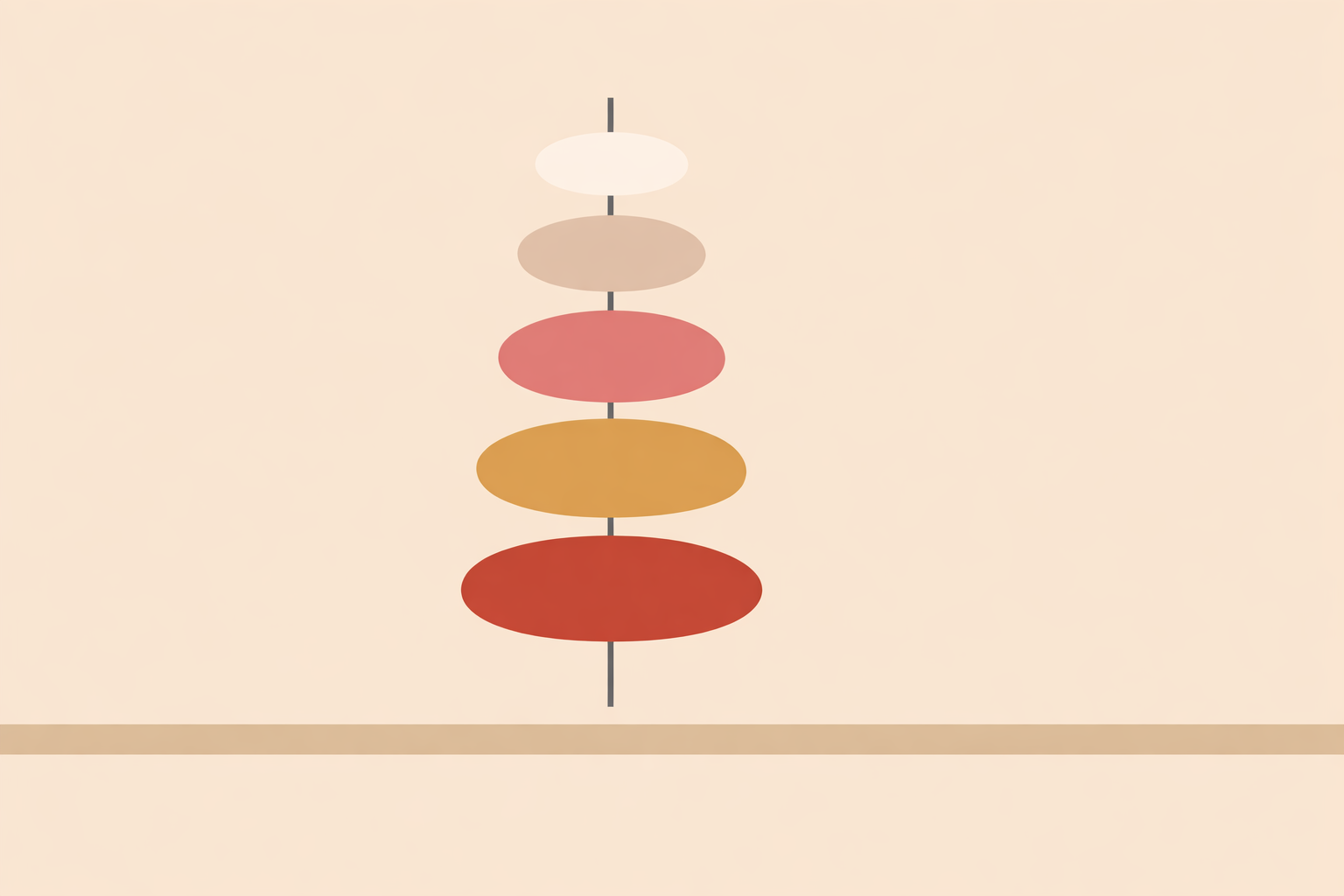
A Root-to-Crown sequence gives your work a dependable backbone. Red Jasper settles the base, Citrine brings movement, Rose Quartz softens the center, Amethyst invites quiet reflection, and Clear Quartz helps the session resolve as a whole. The value is in an arc the client can feel and follow.
A workable 45 to 60 minute flow might look like this within energy healing practice:
- Ground, 5 to 8 minutes: Red Jasper near the pelvis, grounding stone at the feet, slow breath, consent check.
- Focus, 5 to 8 minutes: Citrine above the navel, one short prompt, time for silence.
- Soften, 6 to 10 minutes: Rose Quartz at the chest or in the hands, gentler breathing, client-led pacing.
- Reflect, 5 to 7 minutes: Amethyst at the brow or just above the crown, with grounding maintained at the feet.
- Integrate, 5 to 8 minutes: Clear Quartz in the hands or at the crown, three-breath close, quiet return.
Small additions can deepen the experience without making it busy: breath cues, a brief visualization, a carefully chosen affirmation, or a few minutes of true silence. More broadly, guided imagery can enhance well-being, which fits beautifully alongside crystal-based ritual.
After the session, keep aftercare easy: water, rest, journaling, a walk, or a few unhurried breaths. Simple aftercare supports integration without turning the close into an analysis.
In the end, the strongest crystal sessions are the clearest ones: grounded, consent-based, well-paced, and honest about scope. When you work that way, these five stones become a steady framework for presence, reflection, and well-being within chakra energy healing.
Master Chakra Energy Healing
Go deeper into Root-to-Crown session structure with the Chakra Energy Healing Certification.
Explore Chakra Energy Healing →