Most practitioners meet CBD when a client living with persistent pain wants one more option. The best place to begin is not the product. It is the plan.
CBD tends to earn its place when it’s one supportive layer inside a broader approach, with clear goals around function, sleep, mood, and day-to-day ease. That focus keeps expectations realistic, helps you spot early wins, and reduces the chance of getting pulled into “dose chasing” when results are modest or inconsistent.
Key Takeaway: CBD can have a limited but practical adjunct role in persistent pain when used with clear goals, cautious titration, and strong product screening. The clearest fit is often nerve-related or centralized pain, where early changes may show up first in sleep, mood, and daily function rather than dramatic shifts in pain intensity. Topicals can make sense for localized discomfort, while oral use is best approached with low starting amounts, defined review points, and attention to interactions, liver concerns, and overall scope.
Why sleep and mood often improve before pain intensity
With persistent pain, the first worthwhile shift is often better sleep. That can be more useful than chasing a dramatic change on a pain scale.
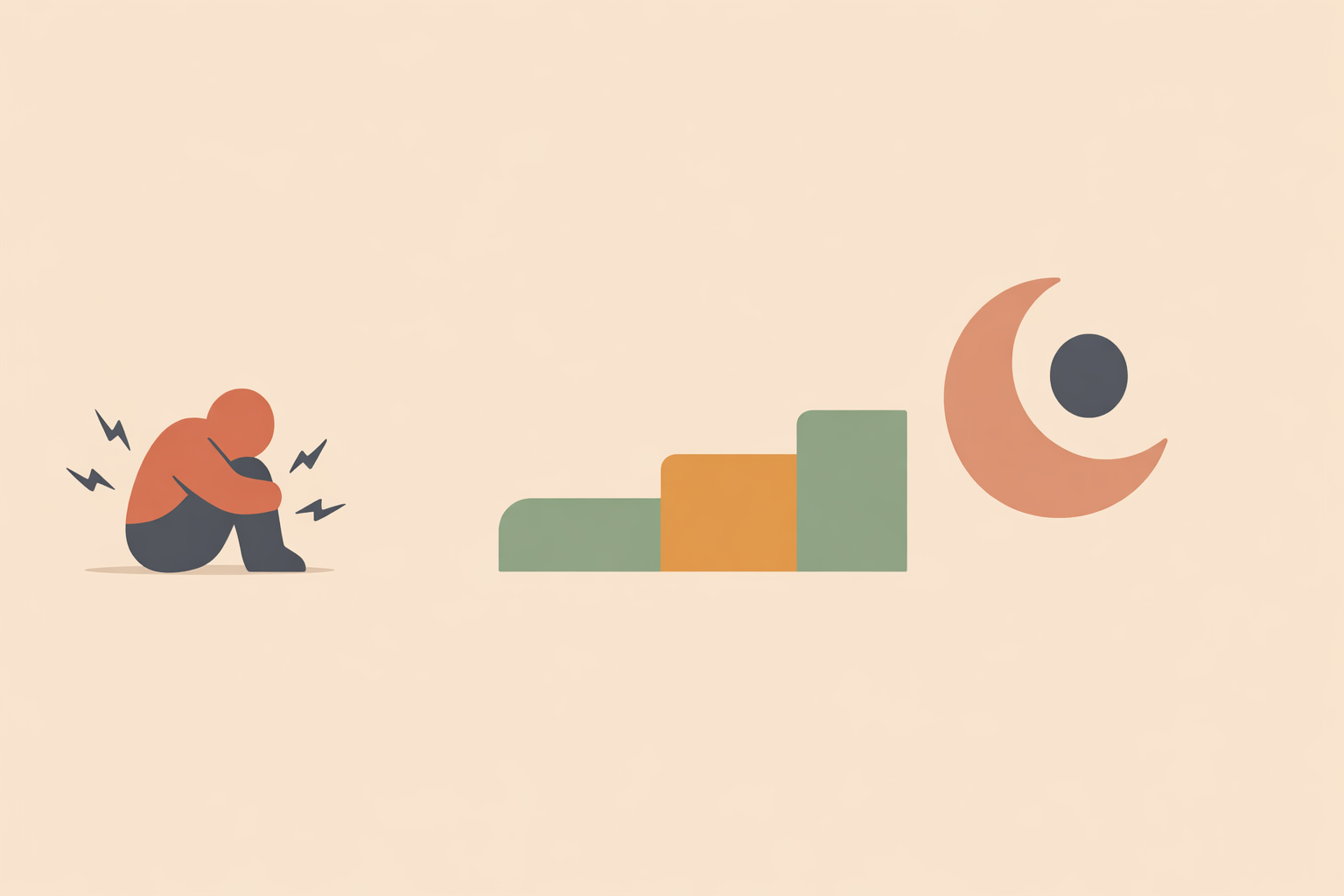
Research suggests sleep and mood can improve before later changes in pain intensity. There is also a strong sleep–pain link, where better nights can lower next-day pain reactivity.
This matches what many practitioners see. A client may still say, “The pain is there,” while also reporting fewer night wakings, more patience, less dread at bedtime, or an easier start to the morning. Those wins create more capacity for movement, pacing, and self-regulation.
Some people also report feeling less keyed up at night and less on edge during the day with CBD. Formal support for that exact pattern remains limited, but it’s common enough in real-world coaching work to track it carefully.
Useful outcomes to monitor include:
- time to fall asleep
- number of night awakenings
- morning stiffness
- daytime irritability or tension
- willingness to walk, stretch, or resume a valued routine
When clients can see these shifts clearly, they’re less likely to drop a potentially helpful plan too early, especially when they are tracking more than pain intensity.
Using evening CBD thoughtfully for sleep-related support
If sleep is the main target, evening use is often the simplest place to start. Pairing CBD with a steady wind-down routine also makes it easier to know what’s helping.
Many practitioners begin with a modest oral or sublingual amount 30 to 90 minutes before bed and track the same small set of outcomes for one to two weeks. This approach leans more on practice-based wisdom than strong formal evidence, yet it’s a workable, low-complexity entry point.
A simple evening structure might include:
- screens off or dimmed
- light stretching or breath-led mobility
- a consistent CBD time
- a brief morning check-in: slept better, same, or worse?
Observational pain cohorts using cannabis oil extracts often report better sleep alongside changes in pain and general well-being. That supports sleep as a main review point during a trial.
Topical and transdermal CBD for localized discomfort
When discomfort is clearly local, a topical or patch can be a better first experiment than an oral format. It’s also a good fit for people who want a lower-commitment trial or prefer to avoid broader whole-body exposure.
Topicals and patches are commonly used with the aim of reaching skin, fascia, and near-joint tissues while limiting wider exposure. Strong direct evidence remains limited, so treat this as a practical option rather than a guaranteed route.
In real-world work, topicals make the most sense when:
- the area is small and specific
- the person wants a simple first experiment
- you want one clear functional outcome to review
- interaction concerns make oral experimentation less appealing
Examples of functional outcomes include:
- buttoning a shirt more comfortably
- walking downstairs with less guarding
- settling a sensitive area enough to sleep
Keep the trial short and concrete. Two weeks is often enough to judge whether a topical is meaningfully helping.
Product quality matters here as much as anywhere else. Independent testing often finds CBD products mislabeled or contaminated, so a current Certificate of Analysis should be treated as basic due diligence.
- Check CBD content per mL or gram.
- Confirm whether THC is present.
- Look for screening for heavy metals, solvents, and microbes.
- Match the batch number on the product to the certificate.
How to titrate CBD without making it the centre of the plan
Titration works best when you start with the outcome, then build the amount around it. Choose a goal you can observe, and let the dose serve that goal.
Most practitioners follow the same broad logic: start low, go slow, and review often. Real-world use varies widely, and many people with persistent pain report using roughly 20 to 100 mg per day, though that pattern reflects everyday practice more than strong formal evidence.
Controlled pain trials have sometimes used much higher amounts. One neuropathic pain trial used 800 mg/day, which helps explain why research-driven expectations can drift away from what most people find practical.
Microdosing is also common, especially for beginners. If you choose that route, keep the experiment simple so the results are actually interpretable.
A practical four-week framework might look like this:
- Week 1: low evening amount, same time each night
- Week 2: small increase only if helpful and well tolerated
- Week 3: consider splitting across the day only if daytime tension, irritability, or flares are central goals
- Week 4: hold, refine, or stop based on agreed outcomes
During titration, ask for one or two supportive anchors alongside CBD:
- a short walk
- breath-led mobility
- a pacing goal
- a consistent wake time
This keeps the plan multimodal and helps clients turn any extra ease into meaningful action, much like other natural alternatives to pain medication.
Know the limits of high-dose CBD
More is not automatically better. In pain support, higher-dose CBD often increases burden faster than it increases benefit.
Trials frequently use amounts far above what most people would choose day to day, which can skew expectations. Higher-dose use is also where side effects and liver stress become more relevant.
A meta-analysis found liver enzyme elevations were more common at higher CBD doses. That’s a strong reason to avoid rapid escalation or treating large amounts as the default next step.
In practice, if a modest, well-structured trial produces no meaningful shift in sleep, function, mood, or daily ease, pushing the dose upward often adds confusion rather than clarity. A review, pause, or pivot can be the more skilled move.
Side effects, interactions, and who needs extra caution
CBD is often described as gentle, but it still deserves careful screening. Some people feel noticeably sedated, light-headed, unsettled in the gut, or emotionally “off.”
Reported side effects include fatigue, gastrointestinal upset, headache, and appetite or weight changes. Daytime fogginess and dizziness matter especially for anyone with balance concerns, driving demands, or a history of falls.
Interactions are another key consideration. CBD can inhibit CYP3A4 and CYP2C19, meaning it may raise levels of some substances processed through those pathways. Extra care is warranted when someone is using anticoagulants, certain antiepileptics, antidepressants, or immunosuppressants.
Some groups deserve a more cautious threshold from the outset, including:
- people with liver concerns
- older adults with fall risk or multiple prescriptions
- adolescents
- people navigating serious mental health challenges
- people with active substance use concerns
Guidance on CBD-related liver safety supports extra caution in higher-risk situations, especially where liver vulnerability is already present.
Product quality: full-spectrum, broad-spectrum, or isolate?
Before discussing format, make sure the label language is clear for the client.
- Full-spectrum: products contain multiple cannabinoids and may include trace THC.
- Broad-spectrum: products aim to remove THC while keeping other plant compounds.
- Isolates: contain CBD only.
These distinctions matter because some clients prefer to avoid THC entirely, some are sensitive to broader cannabinoid profiles, and others want the simplicity of a single-compound trial.
Whatever format is chosen, quality control is essential. Mislabeling and contamination are common enough that Certificates of Analysis should be standard practice, not a premium feature.
A quick product screen should include:
- batch-specific certificate
- clear CBD amount per serving
- THC disclosure
- screening for heavy metals, solvents, and microbes
- recent test date
How to run a clean CBD trial in practice
A clean trial is simple, measurable, and easy to stop.
Before starting, agree on:
- one main goal
- one or two secondary outcomes
- the starting amount and timing
- the review date
- the stop signals
Examples of good goals include:
- sleep through the 2 to 3 a.m. waking window
- walk around the block without a flare
- stand to cook for 15 minutes more comfortably
Helpful stop signals include repeated dizziness, notable daytime sedation, gastrointestinal upset, mood shifts, dark urine, yellowing of the eyes, or any sudden drop in steadiness or clarity.
If a trial helps, get specific about what changed and what else supported the change. If it doesn’t help, that’s still valuable information. The aim is to learn whether CBD is genuinely supportive for this person, in this context, at this time.
Working within scope while respecting traditional knowledge
CBD conversations sit best inside an educational, collaborative scope. You can help clients clarify goals, review product quality, track outcomes, and notice patterns, without drifting into unsupported certainty.
It also matters to respect cultural and ancestral relationships with cannabis. Some clients come from lineages where it has long been used for comfort, ritual, or settling the body. Those histories deserve care rather than erasure.
A grounded approach is to ask what the client already knows, what feels respectful, and what outcomes matter most now. Then add contemporary best practices around product testing, interactions, and titration on top of that existing wisdom.
Conclusion
CBD has a place in persistent pain support, but usually a modest one. It tends to be most useful when goals are realistic, the trial is structured, and the focus stays on sleep, function, mood, and daily capacity rather than dramatic pain relief.
For some people, the meaningful win is fewer night wakings. For others, it’s a calmer baseline, easier movement, or enough comfort to rejoin a small part of ordinary life. Used this way, CBD doesn’t have to be the hero to be helpful.
Start carefully, track what matters, verify product quality, and respect limits. Let the person’s lived response guide the next step, and keep the wider herbalism and plant medicine plan doing most of the work.
Explore Medicinal CBD Certification
Build safer, clearer CBD trial guidance with the Medicinal CBD Certification.
Explore Medicinal CBD →