Most practitioners recognize the moment when conversation stops creating movement: a client repeats a familiar loop, last session’s plan quietly slipped, and it’s clear the challenge lives in a wider web than one habit or one relationship. When the room feels complex, a quick visual map often brings more traction than more talking.
Key Takeaway: Holistic life-mapping gives practitioners practical, visual ways to see systems and choose leverage points. Five tools are especially useful in live sessions: a Systemic Relationship Map to plot the “village” around a person; a Classic System Map to visualize influences around one core issue; a Landscape Map using four lenses to balance inner and outer, individual and collective; a Journey Map to bring in time, turning points, and values; and a Systemic Constellations Map for embodied insight when words alone are not enough.
Tool 1: Systemic Relationship Map for Seeing the Client’s “Village”
Begin with the wider field around the person. A simple page of circles and lines can make support, strain, and responsibility visible within minutes, turning overwhelm into something you can work with.
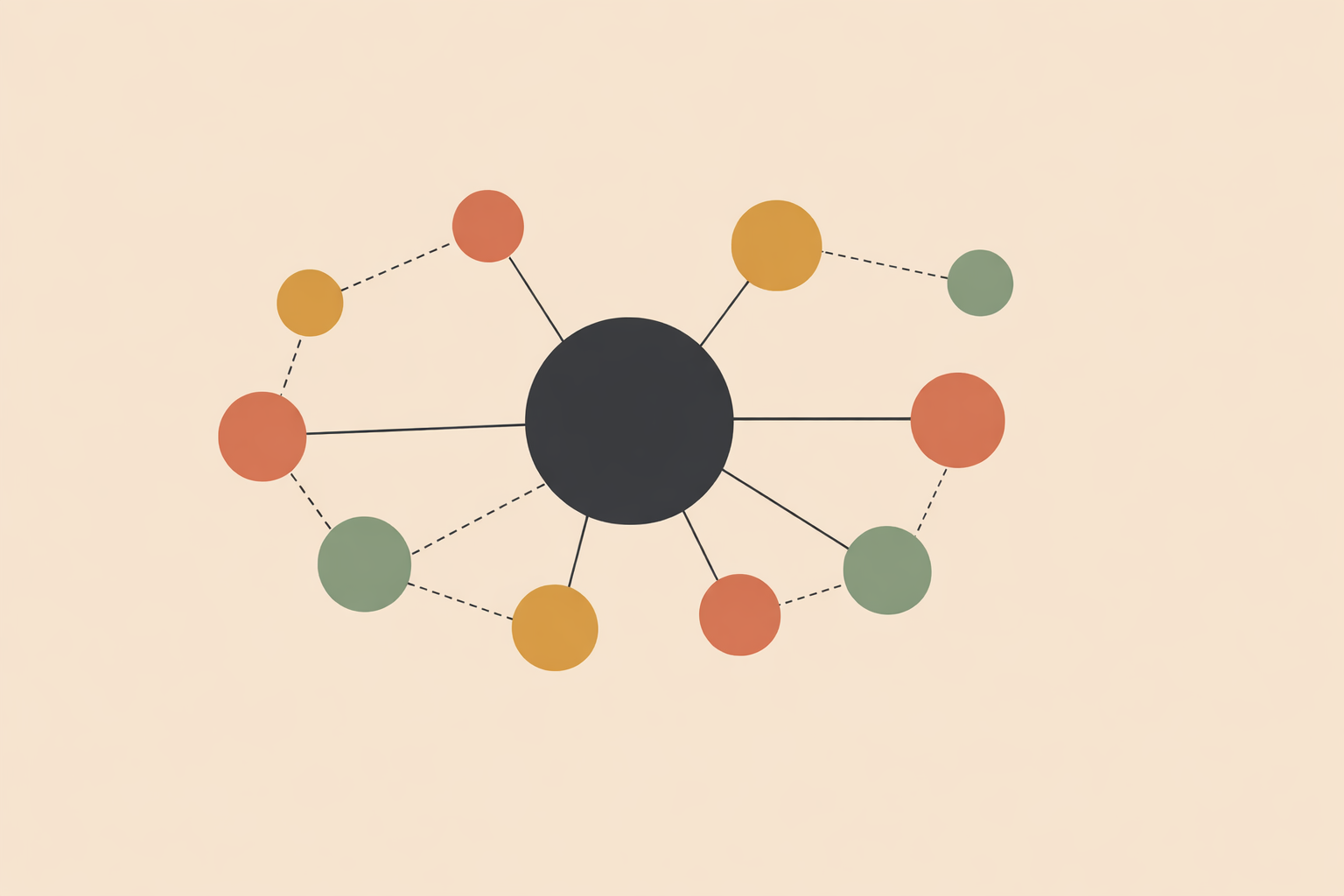
Invite the client to draw themselves in the center, then add the people, groups, roles, places, and practices that shape their days. This might include family, colleagues, neighbors, spiritual community, creative work, land, or daily rituals. Ask them to place each element closer or farther away based on felt closeness, not obligation.
Next, map connection quality. Solid lines can show steady or nourishing contact; dashed lines can show intermittent, uncertain, or draining ties. Many clients immediately recognize where energy flows and where it leaks.
To sharpen the picture, add one quick rating beside each element: “How supportive does this feel right now?” Then explore with a few focused questions:
- Which connection gives you energy?
- Which one asks too much of you?
- Where is a boundary ready to be reset?
- What relationship wants one small act of care?
In session, this map helps clients recalibrate boundaries and invest attention more intentionally. It also prevents the work from collapsing into a single “problem” when the real pressure is spread across roles and relationships.
For example, a client might place “Work team,” “Co-parenting,” “Grandmother’s teachings,” and “My own evening practices” on the page. “Co-parenting” sits close enough to matter, but the line is dashed and the support rating is 5/10. A grounded next step appears quickly: not a dramatic overhaul, but a weekly planning text sent every Sunday evening.
Tool 2: Classic System Map for One Repeating Issue
Once the village is visible, it often helps to zoom in on one stubborn pattern. A Classic System Map shows what’s shaping the issue and where a small change could ripple outward.
Write a short issue statement in the center, then place influences around it: people, routines, beliefs, unspoken rules, logistics, finances, time pressure, cultural expectations, and physical conditions. Add arrows to show what influences what.
This shifts the tone of the work. Instead of only “What’s wrong?”, the questions become “What’s feeding this?” and “What keeps it moving?” That framing reduces blame and increases choice.
A Causal Loop Diagram also helps practitioners spot feedback loops and time delays that keep a pattern going, even after a brief improvement.
Include visible and invisible influences. Workload, commute time, and household noise often matter, but so do beliefs like “I have to do this alone” or inherited rules like “rest must be earned.” In traditional lineages, these inner rules are often understood as powerful forces in the system, not side notes.
Many clients swing toward one extreme: they either blame themselves for everything or blame “the system” for everything. Mapping holds both at once and clarifies where agency is real.
Imagine a client mapping disrupted sleep. Around the center: late-night scrolling, evening caffeine, apartment noise, low morning energy, and pressure from a manager. Once the arrows are in place, the loop becomes obvious: poor sleep lowers morning energy, lower energy reduces follow-through, unfinished work raises pressure, and pressure makes late-night unwinding harder. Two modest experiments can change the whole loop: no caffeine after mid-afternoon and a better sound buffer at night.
Tool 3: Landscape Map with Four Lenses
Some challenges stay stuck because the conversation keeps returning to one angle. The Landscape Map offers a fast way to widen perspective.
Draw a four-part grid and explore:
- Inner individual: feelings, values, beliefs, meaning
- Outer individual: habits, skills, behaviors, routines
- Inner collective: relationships, culture, belonging, shared stories
- Outer collective: structures, schedules, resources, environment
This is especially useful when a client is carrying too much self-blame or searching for a single perfect fix. When each lens gets attention, options multiply and the work becomes more balanced.
For practitioners grounded in traditional knowledge, this four-lens view often feels natural. Meaning, ritual, and ancestral memory tend to show up strongly in the inner and relational spaces, while schedules, housing, work systems, and digital habits often sit in the outer ones. The map gives each its proper place.
In practice, a client brings “exhaustion.” In one section: grief, purpose, pressure to be useful. In another: coffee, phone use, skipped meals. In a third: family expectations, team culture. In the fourth: office noise, long commutes, no quiet space. Once it’s visible, the path forward feels concrete: one small shift in each quadrant often supports more change than pushing for one big answer from one lens.
Tool 4: Journey Map for Time, Turning Points, and Values
When the present doesn’t explain itself, add time. A Journey Map shows how today’s patterns were shaped across seasons of life, including the values and loyalties that still influence choices.
Draw a horizontal timeline from early life to the present, leaving space for what is emerging next. Mark chapters and turning points: moves, losses, initiations, commitments, ruptures, renewals, and periods of stability.
Seeing events in sequence can improve insight into patterns and meaning over time. In session, clients often relax when they can see the larger arc instead of arguing with the latest flare-up.
To deepen the map, invite a few reflections:
- Who was beside you in this chapter?
- What value became stronger here?
- What protective strategy began here?
- What did this season ask you to become?
This work tends to be gentle and affirming. Clients often notice that their growth came with community, nature, creativity, or a slower rhythm, and they can rebuild those supports intentionally. Others recognize that over-responsibility began as an honorable adaptation and no longer needs to drive every decision.
For instance, a client maps migration, a period of isolation, a first sense of belonging through community growing, then a later phase of overwork. Across the page, the pattern is clear: vitality returns whenever life includes tending, place, and shared effort. The next step becomes a practical realignment with what has already proven nourishing.
Tool 5: Systemic Constellations for Embodied Insight
When paper maps have done their job and the client still feels stuck, it can help to step into the system. Systems-based coaching often works this way: systemic constellations bring insight through lived spatial experience.
Set up the issue in space using objects, markers, or positions in the room. Elements might include people, roles, values, institutions, inner parts, or inherited stories. The client then stands in different positions and notices what changes in sensation, attention, impulse, or perspective.
This approach is valuable when something is clearly present but hard to name. Hidden loyalties, exclusions, burdens, and resources often become easier to recognize when they are placed and felt.
Constellations are often chosen when a client says, “I understand it, but I’m still stuck.” The body registers distance, pull, tension, or relief before the mind finds clean language.
Care matters here. Move slowly, set clear agreements, and keep everything choice-based. The aim is steady, useful insight that the client can integrate into daily life.
A brief setup is often enough. Place markers for “Me,” “Work,” “Rest,” “Family Story,” and “Community.” Invite the client to stand with each one and describe what they notice. A small repositioning can shift the whole picture: “Rest” comes beside them, “Family Story” is acknowledged rather than automatically followed, and “Community” moves into view. The next step stays modest and real, such as protecting one shared meal each week or reclaiming one quiet evening.
Choosing the Right Life-Mapping Tool
Each map has its moment. Good facilitation is mostly about choosing the tool that fits what’s happening right now.
- Use a Systemic Relationship Map when the client needs to see their wider web of support, strain, and belonging.
- Use a Classic System Map when one recurring issue needs to be untangled.
- Use a Landscape Map when the story is too one-sided and needs fuller perspective.
- Use a Journey Map when history, values, or turning points are shaping the present.
- Use a Systemic Constellation when words are no longer enough and embodied insight may help.
Keep it light. One clear question, one page, and one small experiment is usually plenty. The goal is not a perfect model; it’s a useful view of the system that helps the client move with more choice.
Remember that every map is provisional. People evolve, relationships shift, structures change, and new insight rearranges the picture. A good map stays flexible and supports ongoing adjustment.
Above all, let the map honor the client’s real ecology. Make room for ancestors, teachings, community memory, place, ritual, and values alongside schedules, structures, and daily behaviors. When the whole field is visible, change often feels like alignment rather than force.
Train in systems-based coaching
Apply these mapping tools in practice with the Systems Based Life Coaching Certification.
Explore Systems Based Life Coaching →