Frontline dementia support rarely offers long, quiet stretches. You step into a space where energy shifts quickly, language can come and go, and the window for connection might be five minutes. In that moment, trivia or “Do you remember?” questions can unintentionally create pressure.
What tends to work better is something immediate and gentle—something already within reach. Everyday objects and short music moments both invite connection through the senses, rhythm, and routine. They help a person feel seen and included, without turning the interaction into a memory test.
Key Takeaway: In fast-paced dementia support, connection is more reliable when it’s sensory and relationship-led rather than recall-based. Familiar objects can invite identity and story without pressure, while brief music moments enable participation through rhythm and routine, even when words are limited.
Idea 1: Everyday objects for quick, no-prep reminiscence
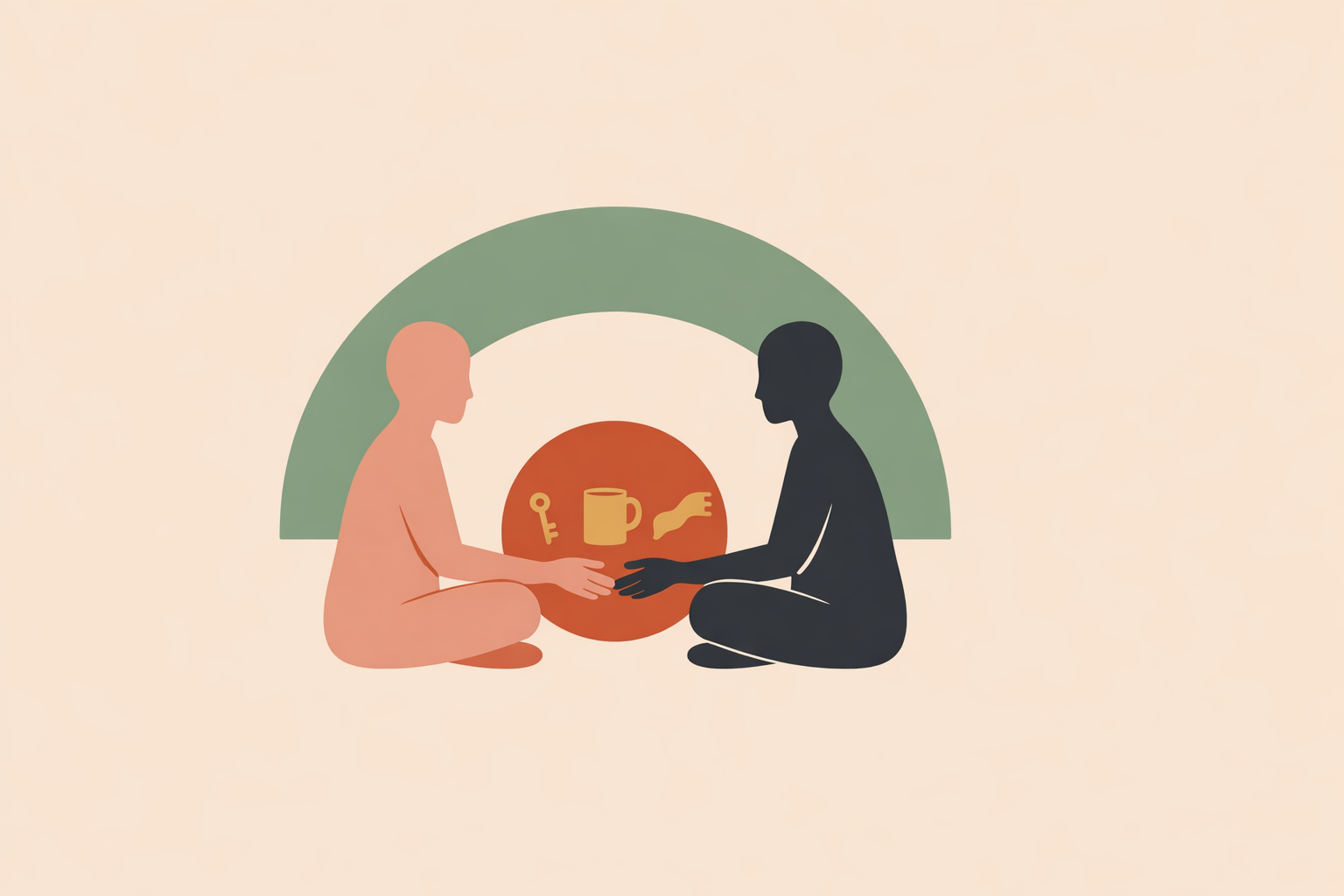
Familiar objects are often the fastest doorway into personhood. A scarf, keyring, mug, comb, purse, recipe card, or ball of yarn gives the moment somewhere to land. Instead of asking for facts, you offer something the person can see, touch, and respond to in their own way.
This matters because some kinds of recall can fade earlier than deeply practiced, body-based familiarity. What often stays more available are routines, sensorimotor habits, and the comfort of “I know this.” Ordinary objects meet the person through use, texture, and recognition rather than effortful remembering.
In practice, an object can bring visible shifts: shoulders soften, eyes focus, hands wake up. Someone who finds direct questions tiring may suddenly talk more—or simply settle into a calmer, connected pause. And even when the story isn’t retained later, the emotional tone can remain. People with Alzheimer’s may not recall an event, but feelings linger.
That’s why Allen Power’s reminder stays close: we’re not here to test recall—“what we’re trying to do is to create well-being.”
Many traditions have long honored elders through daily roles, familiar tools, and shared household rituals—wisdom carried in ordinary things. Modern dementia support increasingly returns to that same grounded approach: simple, sensory practices woven into the rhythm of the day.
Why familiar objects work
- They reduce pressure by giving attention somewhere concrete to rest.
- They invite identity through roles: host, maker, traveler, parent, gardener, fixer.
- They support participation through touch, gesture, and sensation, not only words.
- They make it easier to follow the person’s lead rather than directing the exchange.
How to run a 5–12 minute object-based reminiscence moment
- Scan the space: Look for what’s already there: a tea cup, handbag, knitting, a newspaper, a hat, a framed photo.
- Ask permission: “May I sit with you and look at this scarf together?” Make “no” easy and respected.
- Begin with observation: “This red is beautiful,” or “This mug looks well loved.”
- Invite, don’t quiz: Try prompts like:
- “What does this bring to mind?”
- “How does this feel in your hands?”
- “Who in your life used something like this?”
- “What kind of day does this belong to?”
- Follow the sensory thread: If words are slow, stay with texture, weight, warmth, smell, shape, or movement.
- Reflect strengths and roles: “You seem like someone who took great pride in hospitality.”
- Name one anchor to carry forward: “You really lit up talking about market mornings.”
- Close gently: Offer thanks and transition smoothly to what’s next.
Mini-scripts you can use today
- “This wallet looks well traveled. What journey comes to mind when you hold it?”
- “Your hands know this yarn. What do they remember doing?”
- “These photos are full of laughter. What kind of laughter lives here?”
For low-verbal or nonverbal moments
- Place the object in the person’s hands only with permission.
- Mirror their pace of touch—smooth, tap, turn, hold.
- Offer simple choices by gesture: “Blue or green?”
- Name what you notice without overinterpreting: “This seems calming,” or “There’s a spark here.”
Simple group version
- Use one shared object at a time: Passing a basket or item creates structure.
- Offer three ways in: See, Feel, Remember.
- Keep turns brief: Thirty to sixty seconds is often enough.
- Choose objects linked to everyday roles: Gloves, ribbons, utensils, tools, fabric, postcards.
Consent, safety, and cultural respect
- Ask before touching personal belongings or moving closer.
- Watch for cues that something feels too tender or overstimulating.
- Do not assume an object carries the same meaning for everyone.
- Keep sensory load light at first—especially with scent, sound, or heavy items.
What to document
- Preferred themes: gardens, cooking, church socials, travel, craft, music, fixing things.
- Core roles: host, maker, organizer, teacher, storyteller, problem-solver.
- Responsive objects: what sparked the eyes, hands, posture, or voice?
- No-go areas for now: note them plainly and respectfully.
Done well, object-based reminiscence stops feeling like an “activity” and becomes part of the everyday culture of support—small moments that affirm identity, dignity, and connection.
Idea 2: Music moments when words are hard
When speech is halting, music often reaches through another door. Rhythm, humming, and familiar songs allow participation without demanding conversation. Someone may not be able to answer a question, yet still sway, tap, or join a chorus with surprising accuracy.
Many practitioners recognize the shift: a tune begins and the room changes. Faces lift, hands find the beat, and a person who felt far away can become present again. Think of it like giving the body a friendly pathway to follow when conversation feels fragmented.
Familiar melodies are deeply practiced. They live not only in thought, but in breath, timing, movement, and emotional association. In that sense, the body remembers—even when names, dates, or details won’t come.
Why music works when words don’t
- It allows participation without requiring full sentences.
- It engages rhythm, breath, and repetition.
- It can support steadiness and shared attention.
- It creates connection quickly in both one-to-one and group settings.
How to create a 10-minute music moment
- Settle yourself first: Take two slower breaths and meet the person where they are.
- Choose one or two familiar songs: Early-life and culturally rooted songs often work best.
- Start with rhythm: Tap a gentle beat on your thigh or a table.
- Hum before using words: Humming lowers the demand and invites easy joining.
- Use call-and-response: Sing one line, then pause and gesture openness.
- Add simple movement: A scarf, tapping hands, or slow swaying can be enough.
- Reflect small successes: “Your foot found the beat straight away.”
- Close softly: End with a final hum, a quiet breath, and thanks.
Scripts you can borrow
- “Let’s hum a tune our bodies know. Mmm-mmm… your turn.”
- “I’ll sing the first line, and you can join any part you like.”
- “Would you like the beat in the hands or the feet today?”
If words are especially hard
- Use a single vowel sound such as ah or oh.
- Keep tempo steady and not too fast.
- Pair sound with movement: swaying, tapping, or tracing circles with a scarf.
Personalize with respect
- Build small playlists around life chapters, neighborhoods, celebrations, or gatherings.
- Honor language, accent, and cultural roots.
- If you are unsure of pronunciation: hum rather than forcing a version that feels careless.
- Stay alert to songs linked with grief or overwhelm, unless the person clearly chooses them.
Simple group shape
- Seat people so they can see each other:
- Use a two-song arc: Start familiar and mid-tempo, then close slower and softer.
- Offer light roles: Beat keeper, echo leader, opener, closer.
Sensory and consent notes
- Begin with low volume and adjust gently.
- Be thoughtful with headphones; they can help one-to-one but isolate in groups.
- Keep endings predictable. A familiar closing ritual often helps the body settle.
What to track over time
- Which songs spark voice, hands, eye contact, or calm?
- Which tempo supports steadiness best?
- What kind of ending leaves the person most settled?
- What patterns should be shared across the wider support network, perhaps using simple behavior management notes?
As with objects, the aim is not memory performance. It is belonging—and music can make that belonging tangible within minutes.
Bringing both practices into everyday dementia support
Objects and music pair beautifully because they offer two ways in. If language is available, an object may open a story. If language is thin, music can create connection first. If talking becomes tiring, you can shift smoothly from the hands to the breath, from the mug to the melody.
Over time, these brief moments build a clear, practical picture: what steadies the person, what enlivens them, what feels familiar, and what needs a gentler approach. When that knowledge is documented simply and shared consistently, the whole circle of support can respond with more ease and continuity.
And keep the emotional layer front and center. A person may forget details of the scarf story or the song, yet comfort remains. The felt sense of being honored often lasts longer than the facts—and that’s a powerful place to work from.
When in doubt, keep it simple: use what’s already in the room, and follow the hands, the breath, the rhythm, and the person in front of you, using calm dementia communication techniques that reduce pressure rather than add to it.
Build Dementia Support Confidence
Apply object- and music-based connection skills with the Dementia Certification Course.
Explore the Course →