Many women’s circles begin with heartfelt sharing or a big practice right away. It can feel warm, yet some people stay braced while others drift. The issue is rarely care; it’s usually the order of operations.
When facilitation helps the group settle first, depth becomes easier to hold. A steadier arc is straightforward: orient the senses, gather with breath, root attention in contact and place, let gentle movement happen, offer simple containment, weave in sound, and make room for rest.
Key Takeaway: Women’s circles often feel more grounded when they follow a regulation-first arc. Start with orienting and clear logistics, then invite a brief, choice-based breath practice. From there, use grounding, gentle movement, self-touch, soft sound, and deliberate rest to create a container that supports presence without forcing intensity. Predictability, consent, and cultural care matter more than novelty.
2. Use a Brief Shared Breath as the Threshold
Once the room has landed, breath can mark the threshold into circle. Keep it gentle, brief, and optional.
A longer exhale is often a friendly entry point. A 4-count inhale and 6-count exhale works well for many groups because longer exhales tend to support a sense of ease. Some groups also enjoy a couple of easy rounds of box breathing.
In shared spaces, shorter practices are usually the most supportive. Trauma-aware facilitation often prioritizes choice-based breathing over anything intense or prolonged. The aim is shared settling, not “doing it right.”
If the room feels buzzy, one or two rounds of the physiological sigh can bring things down quickly.
Name choice clearly: “If this doesn’t feel supportive, return to your natural breath, open your eyes, or rest your hands on your body.” Many facilitators avoid forceful patterns and fast pacing in mixed-capacity groups to reduce the chance of hyperventilation.
- Micro-script: “Inhale for 4, exhale for 6. Let the exhale be easy, not pushed. We’ll do a few rounds together.”
- Timing idea: 1 to 3 minutes is often enough before moving into check-ins or intention setting.
3. Ground Through Earth, Contact, and Sensation
After breath, grounding makes calm tangible. In women’s circles, nature-based approaches often deepen that feeling of being held.
Outdoors, grounding can be as simple as feeling the earth under the feet, noticing air on the skin, or resting attention on a tree, stone, or bowl of water. Many practitioners return to these rituals because nature grounding can steady mood and attention while helping the group feel connected beyond the room.
Indoors, keep it sensory: feel the pressure of the feet, the weight of the hips, the texture of a stone, or the back against a chair. These somatic cues are often enough on their own.
Support the process by lowering excess input. Softer lights, gentler sound, and less visual busyness help reduce overstimulation.
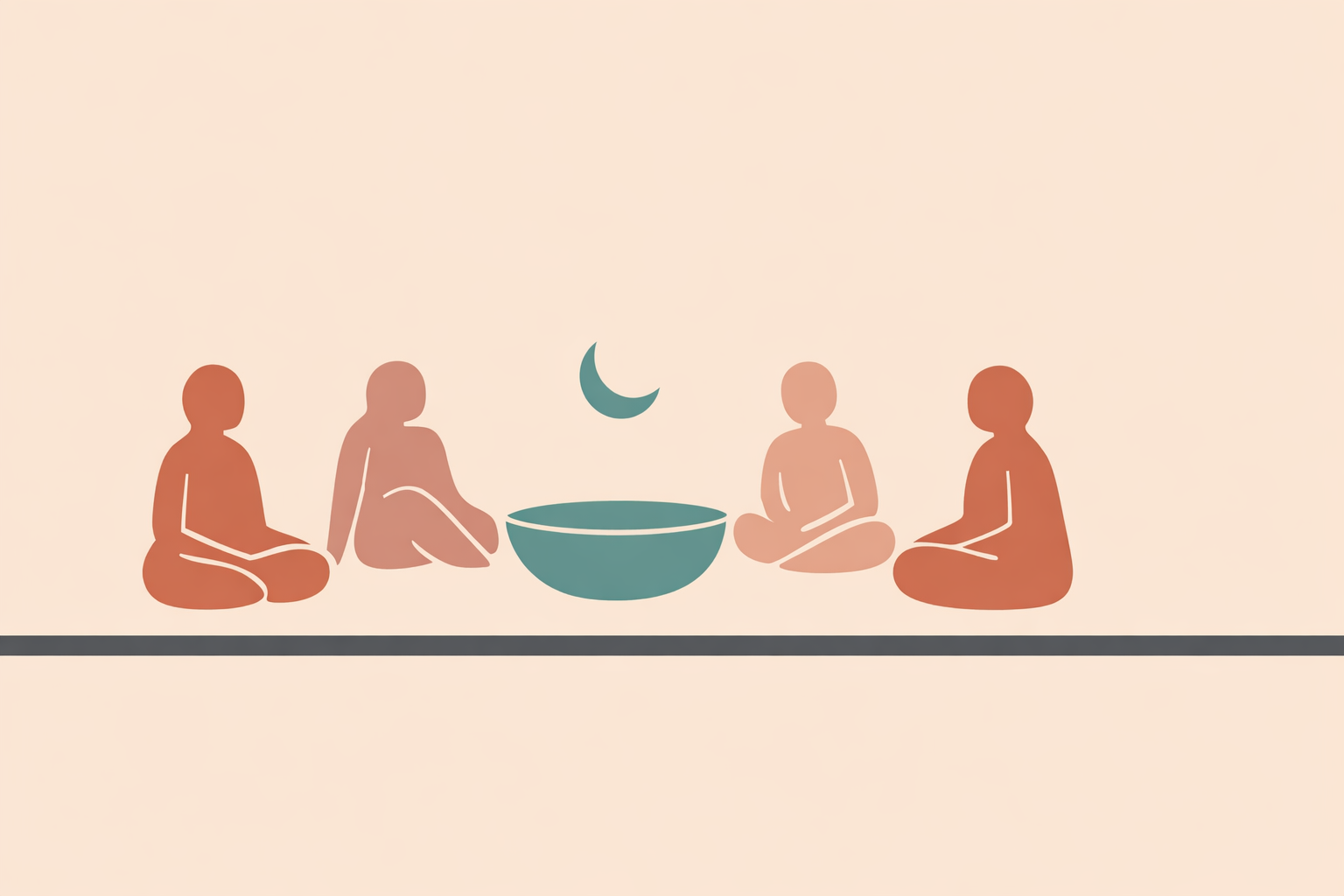
- Nature altar: A bowl of soil, a dish of water, a candle, and a feather can give the circle a quiet focal point.
- Indoor prompt: “Notice the temperature, weight, and texture of what you’re holding. Let your next breath meet that sensation.”
- Supportive cue: “If you want more backing, lean into the wall for a few breaths and feel yourself held.”
4. Add Gentle Rhythmic or Bilateral Movement
Stillness isn’t always the fastest path to settling. Many bodies soften when they’re allowed to sway, rock, or walk.
Gentle rhythmic movement can reduce bracing and help breath return naturally. In circle, that might be side-to-side swaying, small shoulder rolls, or a slow rock through the feet.
Alternating, left-right actions can also be supportive. Tapping, arm swings, or side-to-side stepping are common forms of bilateral movement when someone needs help settling after feeling activated.
Sometimes, the best support is a brief reset outside the circle. A quick walk can help someone return with more steadiness.
Keep movement invitational, not performative. Participants set their own range, pace, and intensity.
- Two-minute flow: sway right and left with the breath, then alternate shoulder taps, then circle the shoulders slowly.
- Walking ritual: one quiet lap around the altar with lowered gaze and attention on the exhale.
- Wall support: place hands on the wall and gently rock forward and back for several breaths.
5. Offer Self-Touch and Simple Containment
After sharing or strong emotion, self-touch can gather attention back in. It’s practical, private, and easy to scale.
Hand-to-heart, hand-to-belly, forearm holds, and a gentle self hug are common options many women already know from lived experience and tradition.
Props can add steadiness: firm cushions, folded blankets, weighted objects, or leaning into a wall. Many guides point to weighted blankets and steady pressure as supportive for settling.
If your group likes structure, a short round of muscle relaxation helps people feel the difference between holding and releasing.
Consent is central. Offer self-touch as a choice and name alternatives (hands by sides, holding a prop, or orienting to the room). Trauma-aware leaders offer alternatives without requiring explanations.
- Micro-script: “Option to place one hand over the heart and one over the belly. Or keep your hands relaxed and simply notice your seat and feet.”
- Prop basket: firm bolsters, small weighted pads, scarves, or folded blankets labeled for optional support.
- Contain-and-release: gently squeeze the arms from shoulder to wrist, then shake out the hands on the exhale.
6. Weave in Sound, Voice, or Song
Sound can settle a group without requiring conversation. In many traditions, it’s also a natural way to return people to shared presence.
Humming is often the easiest doorway. Soft humming or simple vowel tones can lengthen the exhale and calm the room without needing musical confidence.
Keep it low-volume and brief. A few rounds of “mmm,” “oh,” or a low sustained tone is usually plenty. Some facilitators use a quiet “vooo” on the exhale because it’s easy to follow and easy to stop.
Simple shared songs can work beautifully when they’re repetitive, spacious, and optional. Many circles recognize the settling quality of lullaby songs and gentle call-and-response.
Cultural care matters. If you bring in a chant or song from a specific lineage, name its roots, ask consent before using spiritual language, and offer neutral toning too. Acknowledge cultural origins clearly rather than blending everything into a generic “sacred” style.
- One-minute practice: inhale softly, exhale on “mmm,” rest for a breath, and repeat several times.
- Song option: a two-note phrase such as “may we be held,” with humming always welcome instead of singing.
- Facilitator line: “You’re welcome to sing, hum, breathe quietly, or simply listen.”
7. Build in Rest and Cyclical Pacing
Rest belongs in the design of the gathering, not only at the end.
Predictable rhythm builds trust. When a circle follows a familiar arc—opening, settling, sharing, pausing, closing—people stop spending energy trying to guess what’s next, and many facilitators use simple client path thinking to keep that arc steady.
In women’s work, cyclical pacing can add depth without forcing anyone into a single template. Many facilitators invite reflection on shifts across menstrual, lunar, or seasonal phases because it can help people track states and choose support with more discernment.
Short, repeated pauses can be more settling than one long rest at the end. Many people respond well to brief pauses sprinkled through the gathering.
- Run-sheet example: orienting and breath, grounding, check-ins with short pauses between speakers, movement or sound, quiet rest, then closing.
- Cycle-aware option: offer lighter, more social circles at some times and deeper ritual spaces at others, always as invitation rather than rule.
- Rest cue: “Let’s take three breaths before the next share. You’re welcome to close your eyes, soften your gaze, or lie down if that feels supportive.”
Bringing the Arc Together
These techniques shine as a sequence. Orient, breathe, ground, add gentle movement, offer containment, weave in sound when it fits, then return to rest.
The proportions will change from circle to circle. Some groups need two minutes of orienting and a quiet hum. Others need longer grounding, fewer shares, and more silence. Skillful facilitation focuses on what helps the room become steady and choiceful, whether in circles or broader women’s health coaching spaces.
Keep leadership warm and clear. Name options, respect lineages, and let repetition do its work. Over time, predictable openings and closings teach the body what to expect, and the circle starts to settle more quickly.
In closing, a few cautions protect what you’re building: keep practices brief and opt-in, watch for signs of overwhelm, and avoid borrowing songs or spiritual language without clear consent and cultural context. When the container stays respectful and choice-led, depth tends to arrive naturally, especially in sacred feminine healing work.
Train in Sacred Feminine Healing
Explore the Sacred Feminine Healing Practitioner Certification to deepen your skills in consent-led, regulation-first circle facilitation.
Explore Sacred Feminine Healing →