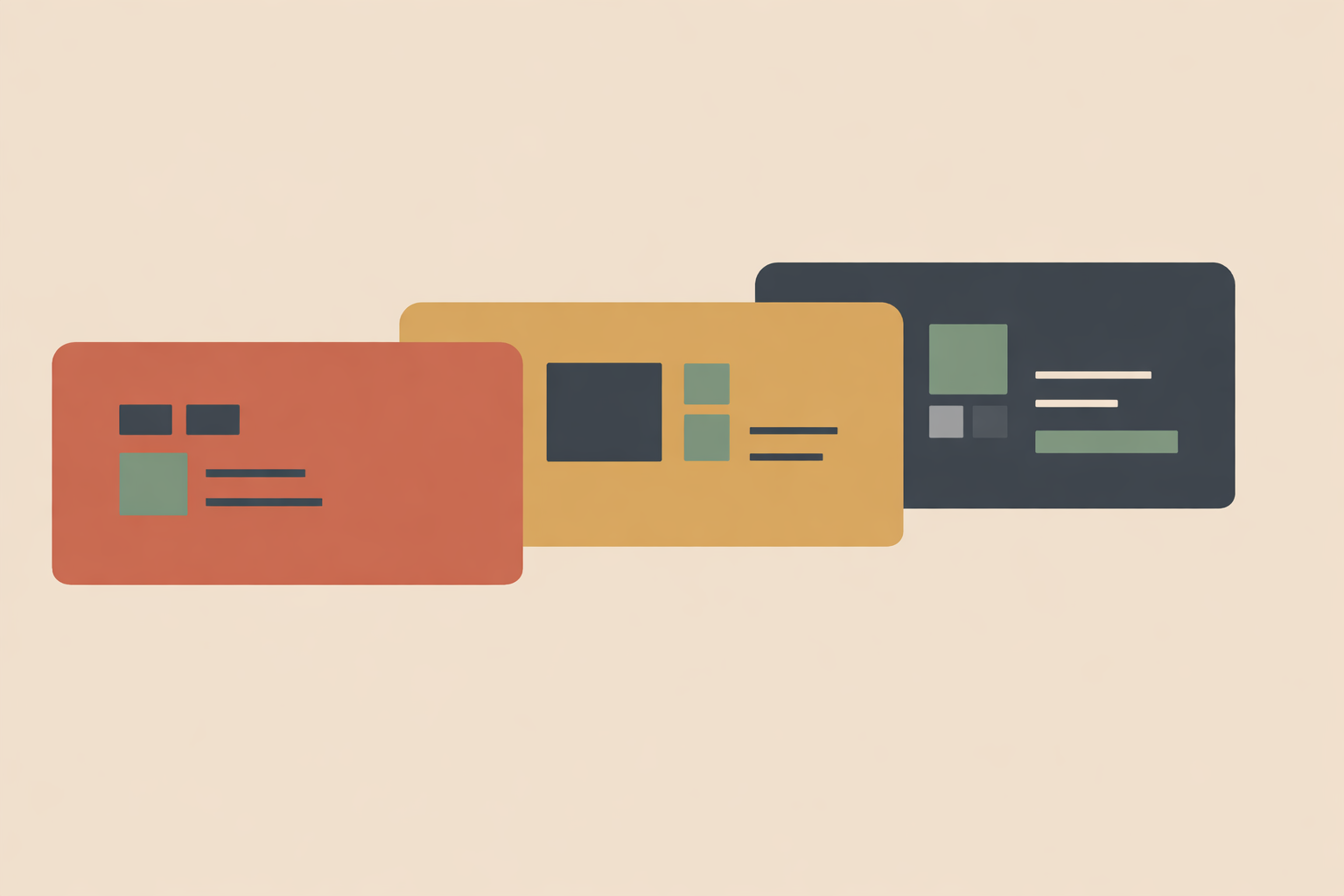
If your Rhino exports look flat—or you keep losing time “just making it presentable”—these seven free, color-driven templates can steady your workflow fast. They’re designed to turn raw views into clear, client-ready PDFs that feel warm, calm, and easy to follow.
Rhino already gives you a solid foundation: you can export a true vector PDF from layouts and preview exactly how line weights and colors will print using PrintDisplay. From there, the real craft is traditional: hierarchy, restraint, and intentional color—so the eye knows where to land.
That “first preview” matters. As one verified team designer put it, “Rhino 3D is used in my team as a way to produce first visualizations of design models… a first preview of the shape of the design.” With a tuned template, that first preview can be both quick and genuinely beautiful.
And the learning curve doesn’t have to be intimidating. “Rhino is not a hard to learn software,” shares a self-taught learner, “it is actually a very easy software to start with and you can enjoy learning from it every day for years.” The aim here is simple: color-faithful visuals that help clients feel the idea, not just interpret it—an approach Naturalistico highlights in color‑faithful visuals. Teams working this way even report 3× faster approvals than grayscale sets.
Key Takeaway: Build a consistent, ByLayer-driven base template first, then evolve it through restrained palettes, sections, shadows, storyboards, and optional interactivity. When line hierarchy, print previewing, and accessible contrast are standardized, Rhino exports become faster to iterate and easier for clients to understand at a glance.
Template 1 – Minimalist Mono: Clear, Calm Client PDFs
Start with a disciplined grayscale-plus-accent template. It quiets visual noise, strengthens structure, and becomes the backbone every other color approach builds on.
The key is committing to ByLayer control. When colors, linetypes, and print widths are set ByLayer, they tend to export more reliably than scattered object overrides. Keep the system compact: a few layer groups, a small palette, and a consistent lineweight setup that clearly separates fine detail, major edges, and annotations.
Think of it like preparing a clean tea tray: when the base is ordered, everything placed on it reads better. Use a white layout background, keep interiors quiet, and let silhouettes carry the structure. To prevent surprises, check line thickness and grayscale balance with PrintPreview and PrintDisplay before export.
Two small habits keep this template calm: avoid yellow layer colors that fight Rhino’s selection highlight, and lock layers you’re not actively using. Minimalist Mono is meant to be almost boring—so the idea becomes the most “colorful” thing on the page.
Why your first template stays almost boring
- Limit the palette and expand only when you truly need another color.
- Use silhouettes for structure; keep inner edges quiet.
- Preview with PrintDisplay before every export.
Template 2 – Bio‑Tonal Plan: Earth‑Rooted, Nature‑Inspired Palettes
Once your grayscale foundation is stable, bring in earth-toned color so plans feel grounded and human without becoming busy. Ochres, clays, moss, and slate often read as calm, familiar, and trustworthy.
A simple workflow: save Minimalist Mono as “Bio‑Tonal Plan.3dm,” then replace a few key grays with nature-based swatches. You can draw from curated color palettes while keeping your layer logic intact. Many practitioners keep a couple of reusable bases (for example, an Earth set and a Forest set), each with viewports and print scales already prepared.
Traditional color wisdom helps here: subtle, mineral-like pigments tend to support comprehension because they don’t compete with linework. For example, “ochre reds” have a long visual history, and digital collections show how ochre reds behave on screen. Keep names explicit (L0_Structure_Brown, L1_Vegetation_Green) so palette swaps stay effortless; consistent layer naming makes iteration and collaboration smoother.
If you’d rather adapt than build, the McNeel forum often includes sample .3dm files with layout setups you can recolor. And don’t underestimate observation: “Other thing I find good is looking at real life objects and draw on paper… it helps to have a 3D view of objects.” That habit naturally trains your palette toward what actually exists in the world—so your diagrams feel more believable.
Grow greys into grounded, living color
- Map a single accent first (for example, vegetation), then expand cautiously.
- Keep annotation colors high-contrast for legibility.
- Save each palette as its own template .3dm for reuse.
Template 3 – Vibrant Section: Focused Color for Inner Landscapes
When you need immediate clarity inside the model, switch to a section template: vibrant color on the cut geometry, muted context around it. Put simply, it’s contrast with restraint.
To shape hierarchy, rely on a few dependable color strategies—harmony, complementary pop, triads, monochrome depth, or warm/cool splits. Naturalistico’s guide breaks down these color theory moves in Rhino-friendly terms. The core tactic stays consistent: a bold cut accent, with surroundings shifted into softer bio-tones. This Vibrant Section pattern helps clients understand “what matters” in a single glance.
For crisp linework, Make2D is a practical ally. Generate clean profiles, then place them in layouts so they inherit layer colors and widths; the official training covers Make2D and layout detail views in a way that’s easy to standardize.
If you’re iterating quickly, Grasshopper can drive parametric color changes so palettes update in seconds. And if you add materials, keep them minimal; as one Novedge tip notes, “Applying textures and materials in Rhino 3D can significantly enhance the visual appeal and realism of your models.” In sections, the goal is still readability—so let materials support, not dominate.
Use contrast without visual overload
- Reserve high-chroma color for the cut plane only.
- Push background layers two steps duller and lighter than the cut.
- Keep annotation boxes neutral; let arrows and markers carry the accent.
Template 4 – Shadow‑Enhanced Plan: Depth Through Light, Not Clutter
Next, invite depth through light rather than more linework. Soft shadows and a simple sun/sky setup can replace lots of hatches and extra outlines—so the plan breathes, and the space reads immediately.
Rhino’s sketch-like display modes (such as Pen or X‑Ray) pair well with a basic lighting approach for fast, hand-drawn-adjacent diagrams; this sits behind Naturalistico’s Pen mode guidance. Keep your background white, add gentle ambient shade, and let silhouettes do the work; the white background recipe holds up especially well in early PDFs.
Setup stays simple: enable Environment > Sun and choose a Sun preset that suits your ground tones. For smaller file sizes without losing clarity, mix raster shadows with vector lines by exporting hybrid PDFs.
When you do add materials, keep them soft and textural. As a Novedge specialist notes, “Creating realistic materials in Rhino is crucial for achieving professional‑quality renderings”—but in orthographic plans, subtlety often supports understanding better than heavy realism.
Let light do the work your pen used to do
- Use one sun angle across all views for continuity.
- Lower inner edge opacity; keep silhouettes sharp and clear.
- Reserve textures for ground or background planes, not every surface.
Template 5 – Layered Isometric Storyboard: Showing Process, Not Just Objects
Once your plans, depth, and sections are stable, shift from “a view” to “a journey.” This template uses isometrics, clipped details, and color-grouped layers to guide clients step by step, instead of dropping them into a single final image.
Create a new layout page, set your size, add detail views, and align them cleanly. The Level 2 training shows layouts and clipping planes so compositions stay coherent. Keep line variation readable; the 0.1–1.0mm range is a solid guide for vector exports.
For visibility control, name and order layers by story stage (00_Refs … 90_Annotations). Using numeric prefixes makes toggling and filtering far quicker. Rhino can also export all layout pages as a single PDF, which keeps the client experience smooth and linear.
This kind of sequencing fits how real work unfolds: understanding grows in layers. As one reviewer said of a favorite educator, “He teaches how to use the powerful tools of this software to design.” The storyboard template channels that power toward clarity—one step at a time.
Turn your 3D model into a narrative sequence
- Repeat the same isometric across pages; change content, not camera.
- Use a consistent accent per step to cue progression.
- Align annotation blocks and number them to match your layer structure.
Template 6 – Gradient Sky Backdrop: Atmosphere and Accessibility Together
After structure and process are coming through clearly, you can introduce gentle atmosphere. A soft gradient “sky” adds tone—so long as readability stays the priority. Essentially, it’s warmth without sacrificing clarity.
Muted, human-scale palettes tend to work best. Traditional Japanese wabi‑sabi tones often blend gracefully with Rhino-style backgrounds. If you want more consistent color across screens and print, you can anchor choices with measurable differences like CIEDE2000—a practical way to avoid “close but muddy” color shifts.
Then test legibility. WCAG guidance recommends 4.5:1 contrast for normal text and 3:1 for large text; run your palette through a contrast checker so your annotations remain easy to read. For inclusive visuals, it also helps to validate high‑contrast icons and indicators and offer a strong-contrast variant alongside your standard version.
If you hit friction, lean on the wider ecosystem. “The Rhino 3D community is active and highly supportive,” and that shared knowledge can save hours of trial and error. This template is about honoring attention: inviting enough to draw people in, clear enough to keep them there.
Blend wabi‑sabi palettes with modern contrast standards
- Use vertical gradients that stay pale behind key text zones.
- Reserve saturated accents for objects and markers, not backdrops.
- Publish two variants: standard and high-contrast.
Template 7 – Custom 3D PDF Interactive: Let Clients Explore, Not Just Observe
Finally, when a static page can’t carry the whole idea, consider an interactive 3D PDF—something clients can orbit, zoom, and toggle without Rhino installed. Used well, it becomes a guided experience instead of a one-way presentation.
Tools like SimLab’s 3D PDF plugin can add custom backgrounds and interactivity, including zoomable views, exploded sequences, and layer-based color toggles.
Rhino workflows are evolving here too. Rhino 8 supports Grasshopper-driven batch PDF flows where templates update as sliders move, and community tools can handle batch export into multipage documents. Some ecosystems even offer one-click template libraries to keep color logic consistent across deliverables.
There’s also a useful design principle behind interactivity: when people can explore, they often stay engaged longer and remember more. This is discussed in research on interactive displays and user engagement. In practice, it simply means clients can learn by doing—turning confusion into curiosity.
From flat handouts to guided, clickable experiences
- Define a small, intentional set of named views clients can switch between.
- Color-code layers so toggles tell a consistent, coherent story.
- Include a one-page “How to explore” panel directly inside the PDF.
Conclusion: Turning These Rhino 3D Templates into Everyday, Client‑Ready PDFs
Together, these seven templates form a living workflow: start with Minimalist Mono, add earth-rooted Bio‑Tonal color, focus attention with Vibrant Section, bring depth through Shadow‑Enhanced plans, explain step-by-step with Isometric Storyboards, set tone with Gradient Skies, and—when useful—invite exploration with Interactive 3D PDFs. Each template builds on the last, so you’re never starting from zero.
For reliable delivery, keep a simple export checklist: confirm vector lines, sensible DPI for raster shadows, embedded fonts, appropriate color spaces, and flattened transparency. Naturalistico shares a practical PDF checklist you can adapt. And when you want a finishing touch, many practitioners do a quick Illustrator pass for layout nudges or graphic overlays.
As in all good, tradition‑honoring practice, start simple, iterate with care, and let the work keep teaching you.
Next steps:
- Duplicate your current Rhino template and build “Minimalist Mono” today.
- Create one Bio‑Tonal palette and swap it into an active project.
- Pick a section view and trial a vibrant cut color with subdued context.
- Schedule one focused hour to test an interactive 3D PDF for your next review.
A final note of care: color systems are powerful, and they work best when they’re consistent and inclusive. Keep accessibility checks for text and icons, keep file sizes reasonable, and avoid over-texturing. Used with integrity, color doesn’t just decorate—it clarifies, invites, and helps projects move forward with the steadiness of both modern tools and long-standing visual tradition.
Master Rhino 3D color
Drawing course : Rhino 3D and Color builds the same template-first workflow into reliable, client-ready exports.
Explore Rhino 3D and Color →