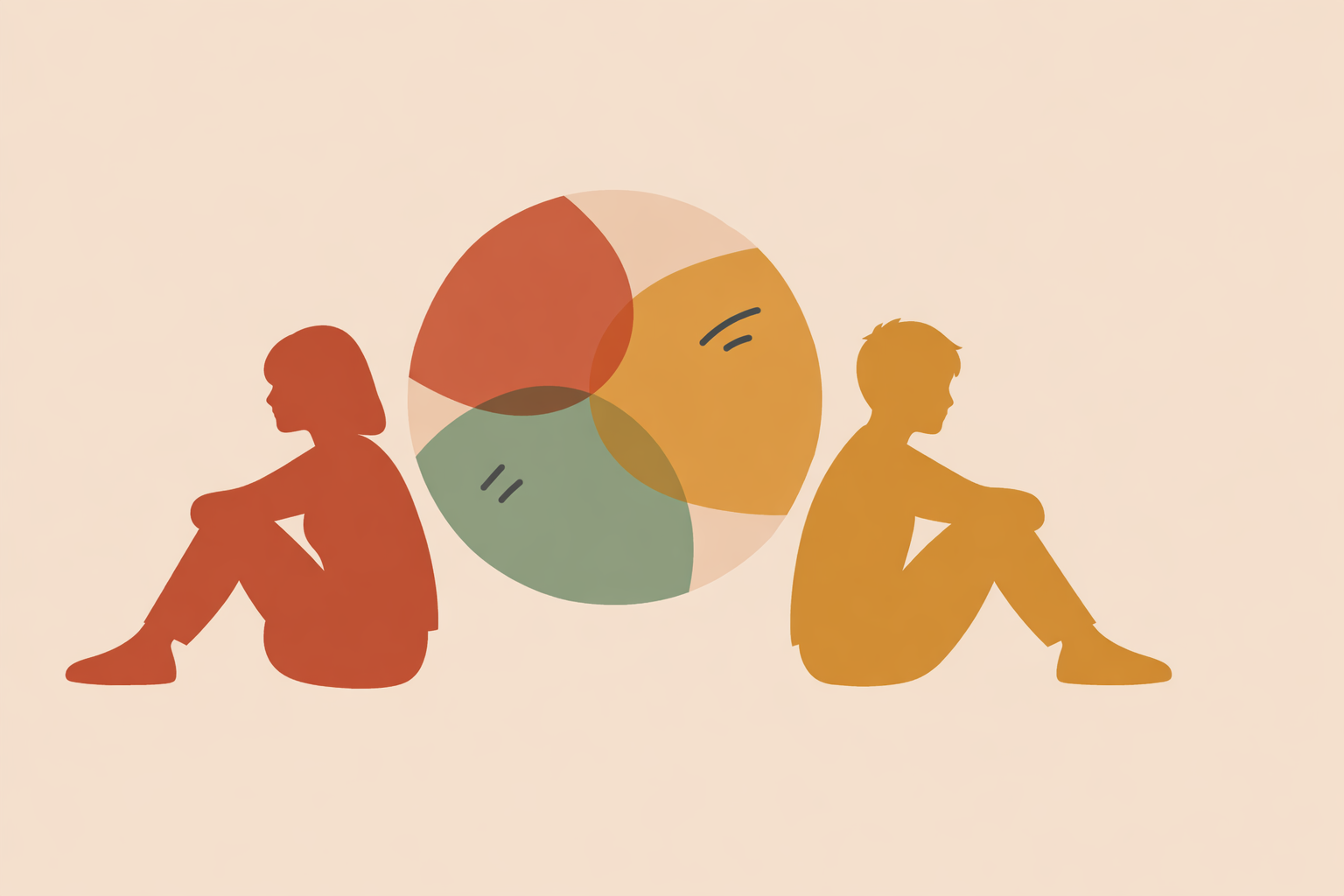
Work with shy adolescents often defaults to talk first: a quick check-in, eye contact prompts, then “share about your week.” With many teens, that sequence backfires. The more they’re asked to produce words on demand, the smaller they make themselves. Withdrawal gets mislabeled as resistance, and self-esteem takes another hit. Even well-meant icebreakers can raise social threat instead of building connection.
An art-led approach offers a gentler entry. When making comes before disclosure, teens can settle, choose, and participate without feeling exposed. Over time, that simple shift supports belonging, self-trust, and a steadier sense of self.
Key Takeaway: Self-esteem in shy teens often grows more reliably when belonging begins with making rather than disclosure. A predictable, low-pressure creative process helps lower social threat, supports agency, and gives reflection a safer place to land.
Why art helps shy teens open up
Art gives shy teens a “third point” of attention. Instead of feeling watched, they can focus on color, shape, texture, and image. That change in focus matters because the invitation shifts from “tell me about yourself” to “notice what’s here.”
Image-based work is especially supportive because feelings don’t have to be fully verbalized to be real or workable. Reviews of youth art work suggest art-making can reduce anxiety while helping young people externalize emotions. In the room, that may look like a heavy line for tension, torn paper for confusion, or a sudden bright patch of color that says more than a paragraph could.
Art also offers healthy distance. A teen may not be ready to describe their inner world directly, but they can often point to part of an image and say, “That feels crowded,” or “This area feels calmer.” Symbol opens the door without forcing exposure.
A small setup choice helps: sit side by side facing the artwork rather than face to face. It reduces performance pressure and keeps attention on the making.
How art-building processes support self-esteem
Shy teens often live in comparison: how they look, how they sound, whether they seem awkward. Creative work gently moves attention toward agency. The focus becomes “What am I choosing?” and “What feels true?”
Self-esteem grows when teens experience themselves as capable of noticing, choosing, revising, and finishing. They start to recognize their own qualities in action: patience, courage, honesty, restraint, curiosity.
Art-making helps because it gives immediate evidence of choice. A teen selects paper, changes a color, tears an image, starts again, and keeps going. Those small decisions build self-trust from the inside out.
Reflection also lands better when it stays close to process. Instead of praising the final piece, name what the teen did: “You stayed with that,” “You made a strong choice there,” or “You found a way through when you got stuck.” Confidence roots more deeply when it’s tied to lived experience rather than approval.
Designing sessions that feel safe from start to finish
A predictable session arc lowers uncertainty. Shy teens usually do better when they know what’s coming and can feel a clear beginning, middle, and end. The structure doesn’t need to be complex; it needs to be steady.
A simple rhythm works well:
- Arrival and settling
- Warm-up or low-pressure opening
- Main art-making period
- Gentle reflection
- Closing and transition
Community-based youth art programs using non-evaluative, low-pressure structures have reported benefits for confidence and belonging. Many facilitators see the same pattern: when teens aren’t pushed to perform insight, insight often arrives more freely.
For a 60- to 75-minute session, you might use:
- 5–10 minutes: quiet arrival, materials visible, simple choice-based warm-up
- 20–30 minutes: focused art-making with permission for silence
- 10–15 minutes: optional sharing using process questions
- 5 minutes: closing phrase, written note, or grounding transition
Consistency is what makes the room feel reliable. Over time, reliable spaces invite deeper participation.
Low-pressure art activities that build confidence
With shy teens, start with prompts that reduce perfection pressure and let identity emerge indirectly. The goal isn’t impressive artwork. The goal is safe participation, choice, and honest expression.
Useful options include:
- Symbolic collage: invite the teen to gather images, colors, and words that feel like “me right now.”
- Inside/outside mask work: one side shows what others usually see; the other holds what is less visible.
- Safe place drawing: create a place, real or imagined, where the body can soften.
- Abstract color painting: express a feeling with line, shape, and color rather than literal images.
Material choice matters, too. High-control tools like pencils and markers often feel predictable for anxious teens. Fluid media like watercolor or ink can invite emotional release, but they may feel riskier at the beginning. Offer both without pressure and let the teen decide.
That freedom to choose is part of the support. Even a small decision about materials can help a teen feel more settled and more in charge of their experience.
Reflecting without pressure
The conversation after making can deepen insight, but only if it stays gentle. Reflection should support ownership, not create another performance moment.
Process-based prompts are usually best:
- What part came easily?
- What part surprised you?
- Where did you slow down?
- What feels strongest in the image?
- If this color had a voice, what would it say?
Third-person language can help as well. Instead of asking, “Why did you draw yourself so small?” try, “What seems to be happening for this figure?” That bit of distance often makes honesty easier.
Keep sharing optional. Teens don’t need to explain everything they make. When reflection pressure stays low, insight and confidence tend to show up with more ease because the teen remains in choice rather than defense.
Using groups gently with shy teens
Groups can offer what shy teens often need most: belonging without spotlight. It works best when the group is shaped with care.
Start small. Two to four teens is often enough at first. Keep agreements visible and simple:
- We describe; we do not rate.
- Passing is always allowed.
- We focus on the art, not the person.
- We respect each other’s pace.
- Teasing stops the process immediately.
This last point matters. Peer teasing and bullying can harm adjustment quickly, especially for teens already carrying social fear. If that dynamic appears, pause and restore the frame at once.
Stay attentive to status dynamics, too. If one teen’s realism or speed starts to dominate the room, shift to prompts that widen the field: abstraction, texture work, or activities where comparison matters less.
Hybrid delivery can help some teens take an early step. Research on youth anxiety support suggests remote formats can be as effective as in-person formats for key outcomes. A mix of video and in-person sessions can lower early activation for guarded teens and make eventual in-room participation feel more manageable.
When to slow down and widen support
Most shy teens benefit from steady pacing, real choice, and a non-judgmental creative structure. Still, there are moments when the format needs to soften or the support around the teen needs to widen.
Watch for escalating shame, repeated overwhelm, shutdown after reflection, or distress that intensifies rather than settles. These cues call for less pressure: simpler prompts, shorter sharing, or a calmer setting. Trauma-related distress may call for more specialized support, and arts-based work has been used to reduce distress when the wider support is well matched.
The core principle is simple: don’t push through activation in the name of progress. Slow, respectful pacing protects trust, and trust is what makes the work possible.
Bringing it into your practice
Begin with one or two reliable prompts, a steady session rhythm, and a short list of reflection questions you genuinely like using. Keep your language permission-based and let choice do more of the work. Over time, teens usually show you what helps them feel safe enough to participate more fully.
What matters most is not artistic skill. It’s your ability to create a calm frame, respect pace, and treat making as a valid path into confidence and connection. Belonging doesn’t always begin with speaking; very often, it begins with hands, color, texture, and the quiet relief of not having to perform before you’re ready.
Train in Therapeutic Arts
Build on these art-led strategies with the Therapeutic Arts Certification for deeper, safer facilitation skills.
Explore Therapeutic Arts →