BBT is often treated like a forecasting tool, and that’s where many charts start to unravel. Clients chase a single spike, retake readings, and refresh apps when the line jitters. Yet postpartum sleep disruption, shift work, travel, alcohol, and minor illness can all create measurement noise that gets mistaken for cycle trouble. When that happens, coaching can fill with more rules and more pressure, and far less learning.
Key Takeaway: Treat BBT as a retrospective confirmation tool, not a prediction tool. The clearest charts usually come from a steady measurement routine, simple annotations for disturbed readings, and pairing temperature with cervical mucus rather than expecting one data stream to carry the whole story.
1. Reframe BBT as Confirmation, Not Prediction
Most clients want BBT to tell them when ovulation is about to happen. A steadier approach is to teach it as a look-back pattern that confirms what the body has already signalled.
BBT rises after ovulation, which makes it a retrospective signal rather than a reliable predictor. Coaching works best when you look for a trend across several days, instead of reacting to one lonely number.
After ovulation, progesterone often creates a sustained rise in waking temperature. The shift can be subtle, so calm interpretation matters more than dramatic chart-reading.
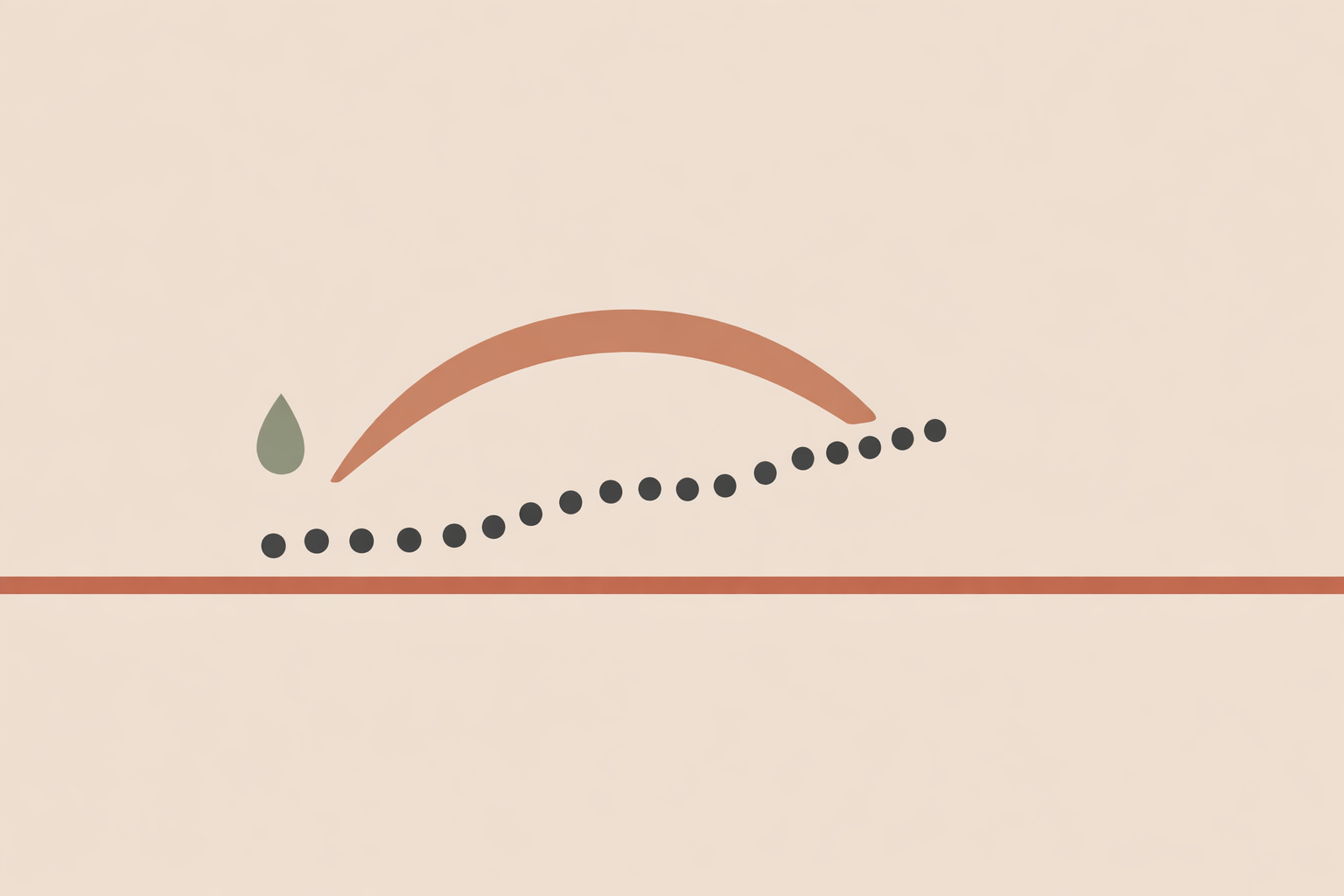
A helpful teaching image is straightforward: lower temperatures before ovulation, then a gentle hill afterward. Clients stop waiting for a theatrical spike and start recognising a steadier arc.
If a chart looks flat or confusing, it doesn’t automatically mean “nothing happened.” It often means the signal got muffled by sleep, routine, or life stage.
2. Stabilise the Morning Routine Before Interpreting the Chart
Before calling a chart irregular, standardise how it’s measured. Many zigzag charts reflect measurement noise far more than true cycle irregularity.
The goal is consistency that’s good enough to reveal a pattern.
- Take the reading immediately after waking, before getting up or starting the day.
- Keep readings close to the same time each day to reduce temperature drift.
- Use the same device and the same route for the full cycle. Switching mid-cycle can create erratic patterns.
- Keep the thermometer within reach at night so the process stays simple.
- Record the number once rather than retaking it until it feels “right.”
In practice, routine changes the chart more than most interpretation “hacks.” A calmer system produces calmer data, and calmer data is easier to learn from.
3. Annotate Disturbances Instead of Deleting Them
A messy chart is still information. It often becomes more useful once the context is visible.
Alcohol, smoking, fragmented sleep, early activity, and travel can create misleading changes in BBT from one day to the next. Rather than deleting readings, keep them and mark them clearly so the pattern can still emerge over time.
A small annotation system keeps it manageable:
- S: poor sleep
- I: illness
- A: alcohol
- T: travel or time zone change
- L: late reading
This reduces self-blame. Instead of “my cycle is chaotic,” the story becomes “this reading followed a short night, travel, or a feverish day.”
A quick weekly data check also helps. Unit mix-ups, decimal slips, or app entry mistakes can look like dramatic shifts when they’re really simple recording errors.
4. Pair BBT With Cervical Mucus for a Clearer Fertility Picture
BBT works best when it’s not asked to carry the whole story alone. Pairing it with cervical mucus often makes the fertile window far easier to understand and teach.
Many practitioners see confidence return here: temperature confirms, while mucus provides earlier day-to-day context.
Cervical mucus typically becomes slippery and stretchy during the fertile window, then often becomes thicker or less abundant afterward. That shift is frequently easier for clients to notice in real time than a temperature rise.
Using both signs also reduces uncertainty, since multiple signs generally offer more clarity than BBT alone.
When temperatures are disrupted by illness, broken sleep, or travel, cervical secretions often remain the steadier guide. That longstanding practitioner wisdom also sits at the heart of fertility awareness methods, and clients are usually relieved to learn they don’t need to depend on one fragile metric.
A no-rise chart doesn’t always mean ovulation didn’t happen. Sleep shifts, device inconsistency, and life-stage transitions can obscure the pattern, which is another reason to teach charting as a whole-body practice rather than a temperature obsession.
5. Adapt Charting for Postpartum Life, Shift Work, and Broken Sleep
Real life rarely offers ideal charting conditions. Supportive charting respects that from the start.
Breastfeeding and postpartum sleep disruption can affect readings for a time, and shift work or travel can do the same. Charting can still be useful; it just needs gentler interpretation.
For new parents and shift workers, a practical approach is to take the reading after the longest uninterrupted sleep block, note the time, and treat it as lower-confidence when needed. This is grounded in practitioner experience and tends to serve clients better than forcing an unrealistic “perfect” morning schedule.
The same principle applies more broadly. If someone has late nights, rotating shifts, or frequent travel, the method should bend enough to stay usable. When the routine is impossible, even a healthy cycle will look confusing on paper.
If evening training, sauna, cannabis, or cold exposure seem to affect next-day temperatures, log them neutrally. Over time, patterns often clarify through steady observation.
6. Lower the Pressure With a Minimum Viable Chart
Some clients don’t need more tracking. They need less pressure.
If someone is refreshing apps compulsively, retaking readings, or organising life around protecting the chart, the issue is no longer technical. The chart has stopped supporting learning and started feeding perfectionism.
A minimum viable chart can reset the relationship. For one cycle, keep only:
- wake time
- temperature
- a brief sleep note
- one mucus observation
This lighter structure keeps fertility awareness intact while reducing burden. It also helps clients return to curiosity rather than performance.
A short reset week can help too: no interpretation, only neutral noticing. This is a practical, experience-based coaching tool that often softens stress and restores perspective.
Language matters. “This cycle has incomplete data” supports learning; “I failed” shuts it down. “My body needs more context” invites steadiness and self-trust.
7. Keep Scope Clear and Support Ethical Next Steps
BBT can teach a great deal, and it also has limits. In holistic coaching, charts are tools for observation, education, reflection, and body literacy. They’re not a basis for overpromising outcomes or making claims beyond scope.
If uncertainty continues across multiple cycles despite consistent charting, or if there is significant pain, unusual bleeding, ongoing fever, suspected pregnancy, or emotional distress that exceeds the coaching container, another kind of support may be appropriate.
That conversation can stay warm and respectful. A clear handover is often the kindest next step when the chart keeps raising the same unanswered question.
Privacy belongs here as well. Reviewing what an app collects, shares, and allows users to export or delete can strengthen privacy protection and support trust in the coaching relationship.
Conclusion: Use BBT to Build Body Literacy, Not Control
When BBT shifts from oracle to ally, charting becomes more humane. The aim isn’t a flawless graph; it’s a client who can observe their rhythms, recognise context, and respond with steadiness and self-trust.
That usually comes down to a few simple practices: a consistent waking routine, honest notes about disturbances, attention to cervical mucus, flexible adaptation for real life, and less pressure to perform perfect tracking.
Traditional rhythm-based observation has always valued daily attention over rigid control. Modern tools can support that beautifully within women's health and fertility coaching when they’re used with humility and care. BBT is at its best as a quiet confirming signal within a wider conversation about cyclical awareness.
Train as a Fertility Coach
Build confident chart interpretation skills in the Holistic Fertility Coach Certification.
Explore the Certification →