Most family sessions reach the same sticking point: caregivers want to reduce sugar and salt, children want food that feels familiar, and weeknights leave very little room for experiments. Many common tactics—switching cereals, hiding greens in sauces, replacing chips with “better” crackers—still end in pushback, energy dips, or quiet food waste. A more workable path is to organize meals through taste.
Ayurveda’s six rasas offer a practical framework. Rather than leading with restriction, families can begin with naturally sweet foods and then add sour, salty, pungent, bitter, and astringent in small, visible, child-friendly ways. This often helps meals feel satisfying, supports variety, and gives everyone language they can use at the table.
Key Takeaway: Balanced children’s meals become easier when naturally sweet foods form the base and the other five rasas appear in small, visible amounts. In practice, that means replacing sugary breakfasts with fruit-forward porridge or toast variations, swapping heavily salted packaged snacks for simple dip plates, and serving visible vegetables in build-your-own bowls. The goal is not perfection at every meal, but steady exposure, trust, and a wider palate over time.
Swap 2: Packaged salty snacks for colourful six-rasa dip plates
Snack time is often where salt quietly takes over. Packaged crackers and chips are fast, but they make salt the main event. A dip plate offers a different kind of speed: quick assembly, more color, and several tastes in one place.
Children often do well with foods they can assemble, dip, and choose in their own order. That makes a dip plate useful nutritionally and relationally. It respects appetite and curiosity without turning snack into a lesson.
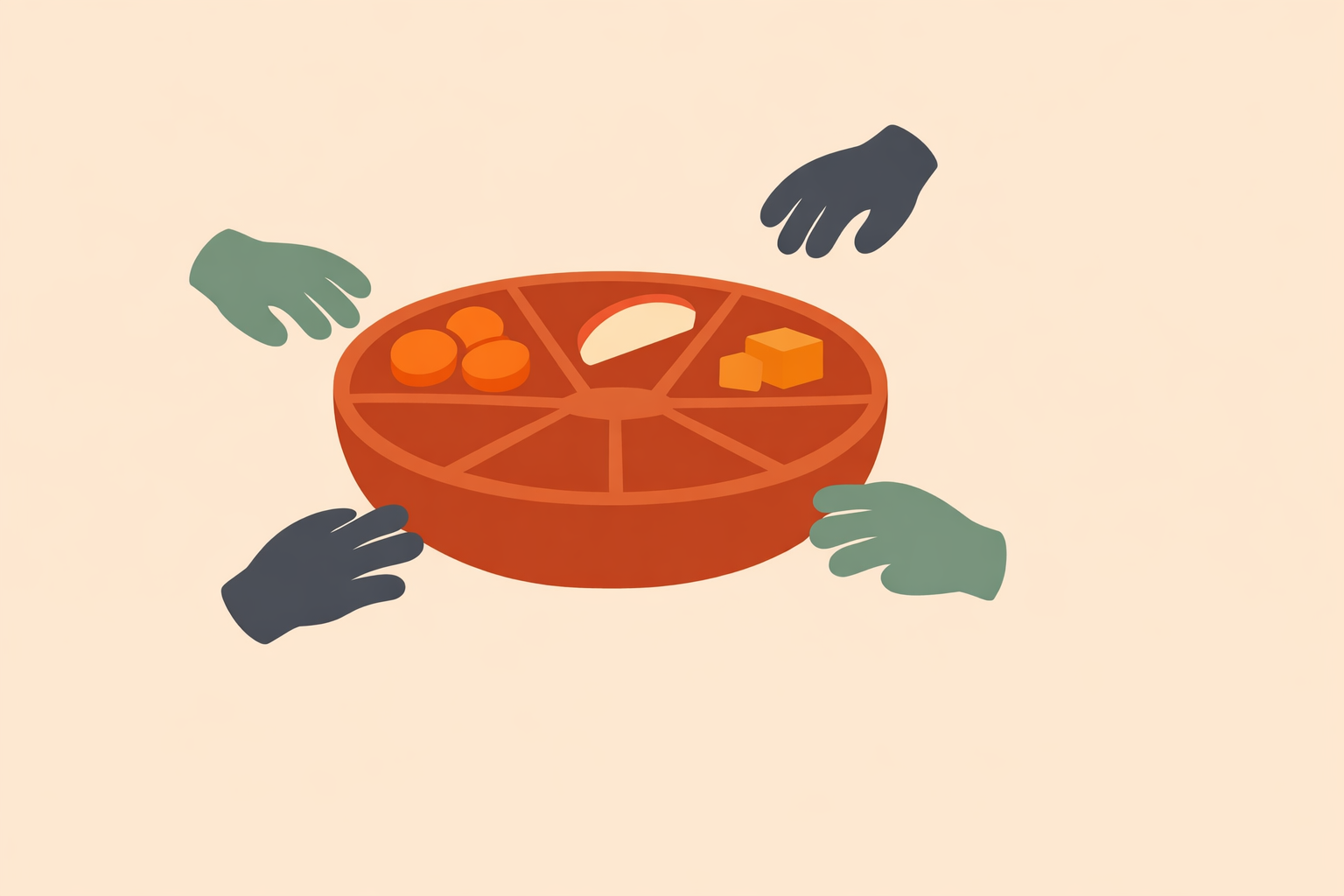
A simple six-rasa dip plate might include:
- Sweet: carrot rounds, apple slices, or soft roasted sweet potato
- Sour: plain yogurt with lemon
- Salty: a light pinch of salt in the dip or a few olives for older children
- Pungent: mild cumin, paprika, or a trace of garlic in the dip
- Bitter: tender herb leaves or microgreens in very small amounts
- Astringent: hummus or another bean-based dip
This format also makes vegetables easier to revisit without pressure. Research on early food acceptance suggests that sensory exposure—seeing, smelling, touching, and tasting foods repeatedly—can help children become more willing to try them over time.
Texture matters. For toddlers, keep everything soft and easy to manage: steamed vegetable sticks, mashed dips, soft fruit, and bread fingers. For older children, bring in crunch gradually with thin cucumber slices, lightly crisped chickpeas, or one new vegetable beside two familiar ones.
If adults worry about waste, introduce a “learning nibble.” Offer one tiny portion of the new food next to something already liked. Looking counts. Smelling counts. Licking dip from a carrot counts. Low-pressure contact is still progress.
You can even frame the whole snack this way: “We are not asking for a full serving. We are simply letting this taste become familiar.” That mindset usually calms both adults and children.
Swap 3: Hidden vegetables for build-your-own six-rasa bowls
At dinner, many adults hide vegetables because it seems easier than handling resistance. Over time, visibility plus choice serves families better. Build-your-own bowls let children meet foods openly, with far less drama.
The structure can stay very simple:
- a grain or starchy base
- a protein-rich element such as lentils, beans, tofu, paneer, or eggs
- at least two vegetables
- a mild sauce or dressing
One family-friendly example looks like this:
- Base: rice or quinoa
- Protein: yellow lentils or soft beans
- Vegetables: roasted carrots and steamed broccoli
- Crisp element: cucumber coins
- Finish: lemon-yogurt dressing with a little cumin or ginger
What makes this helpful is the balance of tastes and the clear visibility of each component. Children can see what is there, smell it, touch it, and decide how close they want to come. Familiarity grows through repetition, and repeated exposure is strongly associated with vegetable acceptance in young children.
This is also where hiding vegetables can backfire. When children feel tricked, trust is harder to rebuild. A see-and-choose approach creates a steadier relationship with food, even when progress is gradual.
Mild sauces are often the bridge. A lemon-yogurt dressing or coconut-lime sauce can soften bitter or astringent notes without erasing them. That helps children meet new tastes gently.
Many Ayurveda teachers also relate the rasas to broader constitutional patterns. For example, sweet, sour, and salty are often described as soothing for vata; sweet, bitter, and astringent for pitta; and pungent, bitter, and astringent for kapha. Used lightly, this helps families notice what combinations leave a child feeling more settled, bright, or steady, without turning meals into a rulebook or a fixed dosha identity.
Useful coaching moves include:
- Invite tiny choices: “Would you like one cucumber coin or two?”
- Keep vegetables visible in small separate piles.
- Use a simple weekly rotation so foods return often enough to become familiar.
- Repeat a successful bowl before introducing too many new elements.
For many families, this becomes the turning point. Dinner stops being a struggle over “eating your vegetables” and becomes a quieter practice of repeated, visible contact.
Using the six rasas in real family life
Across all three swaps, the pattern stays consistent: keep enough sweetness for comfort, then weave in the other tastes in small, approachable ways. Sour brings brightness, salty adds satisfaction, pungency adds warmth, bitter adds contrast, and astringency gives structure. Meals feel like family food again.
This approach is also realistic. You don’t need every taste at every meal. Work across the week, repeat familiar formats, and make one small improvement at a time.
For practitioners, a few principles keep the process grounded:
- Work toward variety over the week rather than perfection in a single meal.
- Use micro-portions and repeat them gently.
- Track observations, not numbers: what was offered, what the child did, and what seemed easy or difficult.
- Prioritize trust and visibility over sneaking foods in.
Traditional and Eastern medicine offers more than a flavor system here. It explains why some meals leave a child content and steady, while others leave them reaching for more sweetness, more crunch, or more stimulation. That’s why the six rasas work so well with families: the framework is traditional, and the results show up at the next meal.
When families begin saying things like “breakfast felt steadier with fruit and seeds” or “the dip plate helped her try cucumber again,” the teaching is in the right place: daily life. Keep meals colorful, keep pressure low, and let taste lead the learning, whether you are refining Ayurvedic practitioner certification skills or building confidence within broader traditional and Eastern medicine practice.
Master the Six Rasas
Deepen your taste-based approach with the Ayurvedic Practitioner Certification for practical, family-ready meal guidance.
Explore Ayurvedic Practitioner Certification →