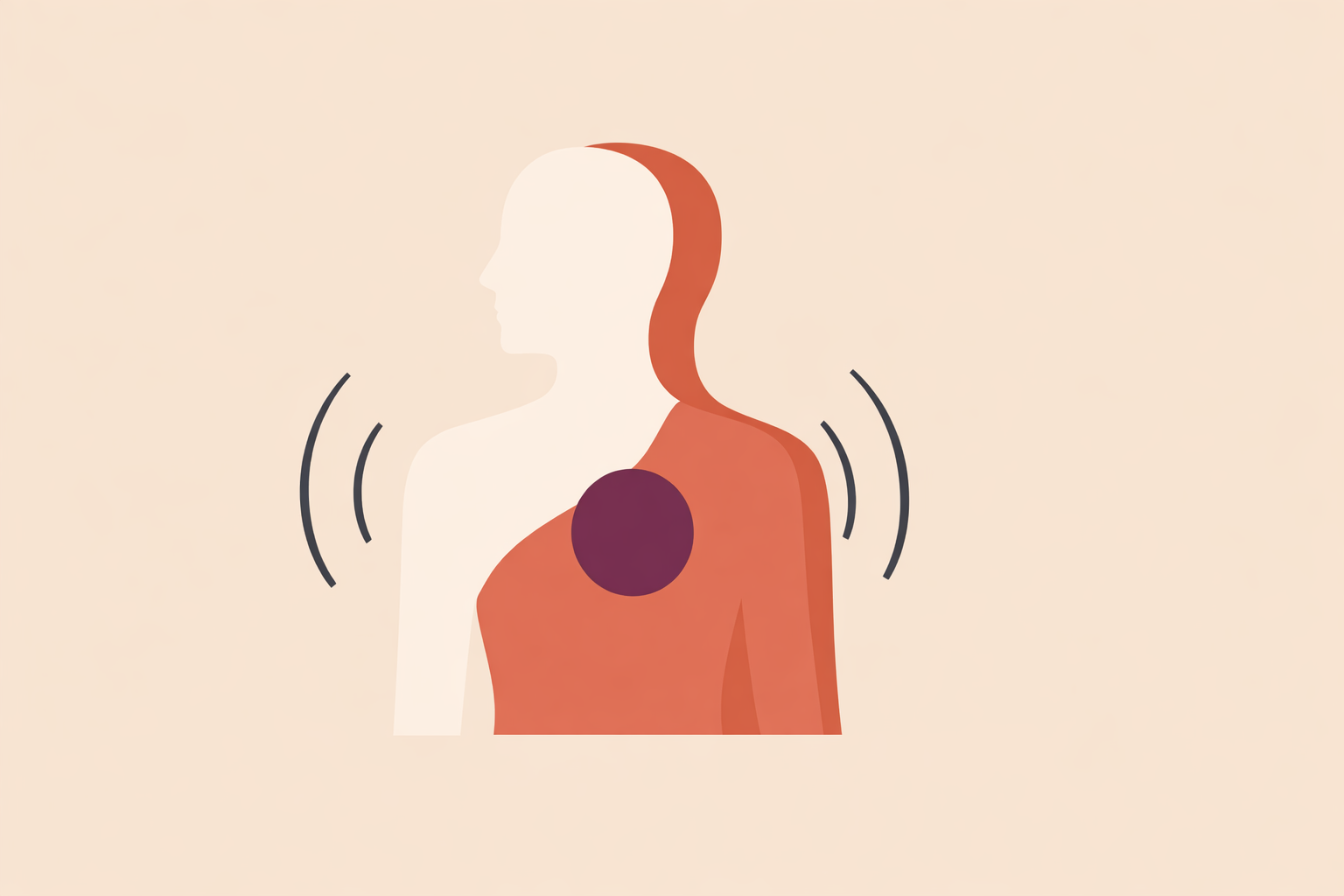
Coaches often meet body memory at the worst possible moment: a routine managerial conflict turns the client’s chest to stone, speech tightens, and the session tilts. The unhelpful defaults are familiar—reassure, push mindset harder, or go hunting for the origin story. Reassurance can minimize, mindset can miss the signal, and story-hunting can quickly outpace scope. What helps most is a steady way to turn a spike of sensation into usable information.
Key Takeaway: Treat body memory as a present-time signal you can track, link to parts, and integrate without overstepping scope. Start with orientation and consent, work in small doses, use precise language that separates sensation from interpretation, and close with grounding and choice. When the reaction is too big for coaching to hold, widen support early and respectfully.
When a client’s body reacts: first steps with body memory
When a client’s eyes widen, breath shortens, or chest tightens mid-conversation, treat it as information rather than a crisis. In parts-based coaching, sudden bodily reactions can be noticed, named, and explored without claiming certainty about the past.
Body memory includes recurring sensations, impulses, postures, tension patterns, numbness, shifts in breathing, or action urges that reliably show up in emotionally meaningful moments. It is happening now, even when it clearly has roots elsewhere.
Across many ancestral lineages, posture, breath, and organ sensations have long been understood as carrying emotional meaning. That traditional lens remains practical in modern sessions: the body communicates, even when the whole story is not yet clear.
Precision in language keeps the work clean. Separate direct experience from interpretation. Instead of “Your body remembers exactly what happened,” try, “You’re noticing tightness now. It may connect with earlier learning, current stress, or both.”
A steady first move is to slow down and ask, “Where do you feel it most right now?” Then mirror the client’s exact phrasing: “A fist under my sternum,” “buzzing in my arms,” “holding my breath.” You now have something real to track without jumping ahead.
Before going deeper: safety, scope, and consent
Before you explore, pause for a quick capacity check. This creates a clear decision point: stay with the sensation, slow the pace, or shift focus.
Many coaches use the idea of a window of tolerance to gauge whether someone can stay present enough for useful work. If the client can track the room, speak coherently, reflect on what they notice, and choose pace, you can usually proceed gently. If panic escalates, speech fragments, or they seem suddenly far away, downshift immediately.
Consent is ongoing, not a one-time question. Offer clear options: “We could spend a minute noticing this tightness and stop at any point, or we can leave it for today and focus on your next step. What feels right?” A simple stop signal (hand, word, small gesture) reinforces choice.
Keep scope crisp. Coaching can support present-moment awareness, steadiness, values, and next actions. When a reaction exceeds what the coaching space can hold, the ethical move is to widen support rather than push further.
Somatic tracking: listening in small doses
Most people try to get rid of strong sensations fast. A steadier approach is to listen in small portions. In many sessions, tracking turns intensity into information the client can work with.
Keep attention specific: location, size, intensity, temperature, movement, rhythm. “As you talk about that email, what do you notice in your body right now?” is often enough. Curiosity does more than pressure.
Small doses matter. Working by titration builds capacity more reliably than chasing a dramatic release. The aim is contact without overwhelm.
Alternate attention between what feels activated and what feels neutral or supportive. Spend a few seconds with chest pressure, then a few seconds noticing feet on the floor, the chair supporting the back, or another steadier area. This kind of pendulation often creates enough space for the system to settle.
Breath can help when it stays gentle. In somatic practice, exhales are often used to support steadiness. Avoid forcing the breath; soft and natural is usually the better choice.
- Name and locate: “Pressure in the sternum, about the size of a fist.”
- Add a resource: “Notice the support of the chair.”
- Alternate attention: a few seconds on activation, a few seconds on support.
- Check choice: “Do you want one more round, or a break?”
Look for small, repeatable signals of settling: the jaw unclenches, the breath deepens, the pressure softens a little. Those shifts become practical feedback the client can learn to recreate.
Linking body memory with inner parts
Once there is a little space around the sensation, a helpful next question is: “Who in me is carrying this?” That shift often restores perspective and choice.
A parts-based lens treats inner reactions as roles or perspectives rather than personal defects. Many clients quickly recognize protectors such as perfectionism, vigilance, people-pleasing, or overthinking. Underneath, there may be younger or more tender aspects carrying fear, grief, shame, or exhaustion.
Naming the part is often enough to reduce overwhelm. “There’s a worried part here,” or “A controlling part is tightening everything,” can help the client remember they are more than the reaction. Naming and unblending frequently brings back choice.
Try simple, respectful questions:
- “Is there a part of you connected to this tightness?”
- “What is this part trying to prevent?”
- “What would help this part trust you a little more right now?”
A client might say, “It’s the part of me that has to stay sharp or I’ll be humiliated.” That already gives direction. You can explore what support that part would accept: slower speech, clearer boundaries, more preparation, or permission to pause before responding.
When activation rises: containment, grounding, and return to choice
If activation builds, aim to reduce intensity. A big release can look convincing in the moment, yet it does not always leave someone steadier afterward.
When the body tips toward panic, shutdown, or disconnection, return to orientation. Invite the client to look around the room, feel the chair, name neutral objects, or sip water. Basic grounding techniques bring attention back to the present.
Containment is a respectful pause: “We do not have to do all of this now.” You might imagine placing the material somewhere safe for later, write down one clear note about it, or agree on a brief personal check-in after the session.
A reliable session arc often looks like this:
- Consent and orientation
- Clarify intention
- Resource first
- Explore in small doses
- Integrate what was learned
- Return to ordinary life
This structure helps clients leave clearer and more choiceful, rather than raw or wrung out.
When it is more than coaching can hold
Some reactions call for a wider circle of support. Recognising that early protects the client and the integrity of your work.
Repeated depersonalisation, derealisation, amnesia, profound detachment, or losing continuity in the session suggest high dissociation and are strong signs to stop deeper somatic exploration and consult or refer. In the same way, active self-harm, suicidal intent, severe instability, psychosis, mania, or intoxication call for urgent specialist support rather than more activation work.
It is also important not to assume every sensation is emotional. Breathing difficulty, fainting, new neurological changes, seizures, severe chest pain, or pregnancy-related concerns need prompt attention from appropriately qualified services.
How you frame this matters. Preserve dignity: “This reaction deserves a kind of support that goes beyond this setting. We can pause the deeper work here and help you connect with the right next support.”
Cultural humility matters just as much. Body expression, eye contact, silence, spiritual language, and emotional display vary widely across communities. Rather than imposing one interpretive frame, ask: “How is this kind of experience understood in your world?” or “Is there a familiar practice that helps you feel steadier?”
A repeatable path when body memory appears
When sensation flares, you do not need to improvise. A clear sequence helps you respond steadily and ethically.
- Notice the cue: tight chest, numb legs, buzzing hands, frozen jaw.
- Name only what is happening now: “There is pressure here.”
- Check orientation, choice, and capacity.
- Ask permission before exploring further.
- Use small-dose tracking, resourcing, pendulation, or a gentler exhale.
- Link the sensation to a part, if that feels useful.
- Look for a little more curiosity, calm, or perspective.
- Choose one grounded next step.
- Close carefully, document clearly, and widen support when needed.
Emerging IFS research suggests people often report benefits from this style of inner work, while also showing that stronger research is still needed. In practice, what matters most is clear scope, clean pacing, respectful language, and a session arc that leaves the client with more choice than they had at the start.
Used this way, body memory becomes part of the map: a signal you can witness, translate, and integrate with care, whether you are building skills in trauma and emotional healing or refining a parts-based approach through inner parts integration.
Train in Inner Parts Integration
Build on these body-memory skills with the Inner Parts Integration Coach Certification.
Explore Inner Parts Integration →