


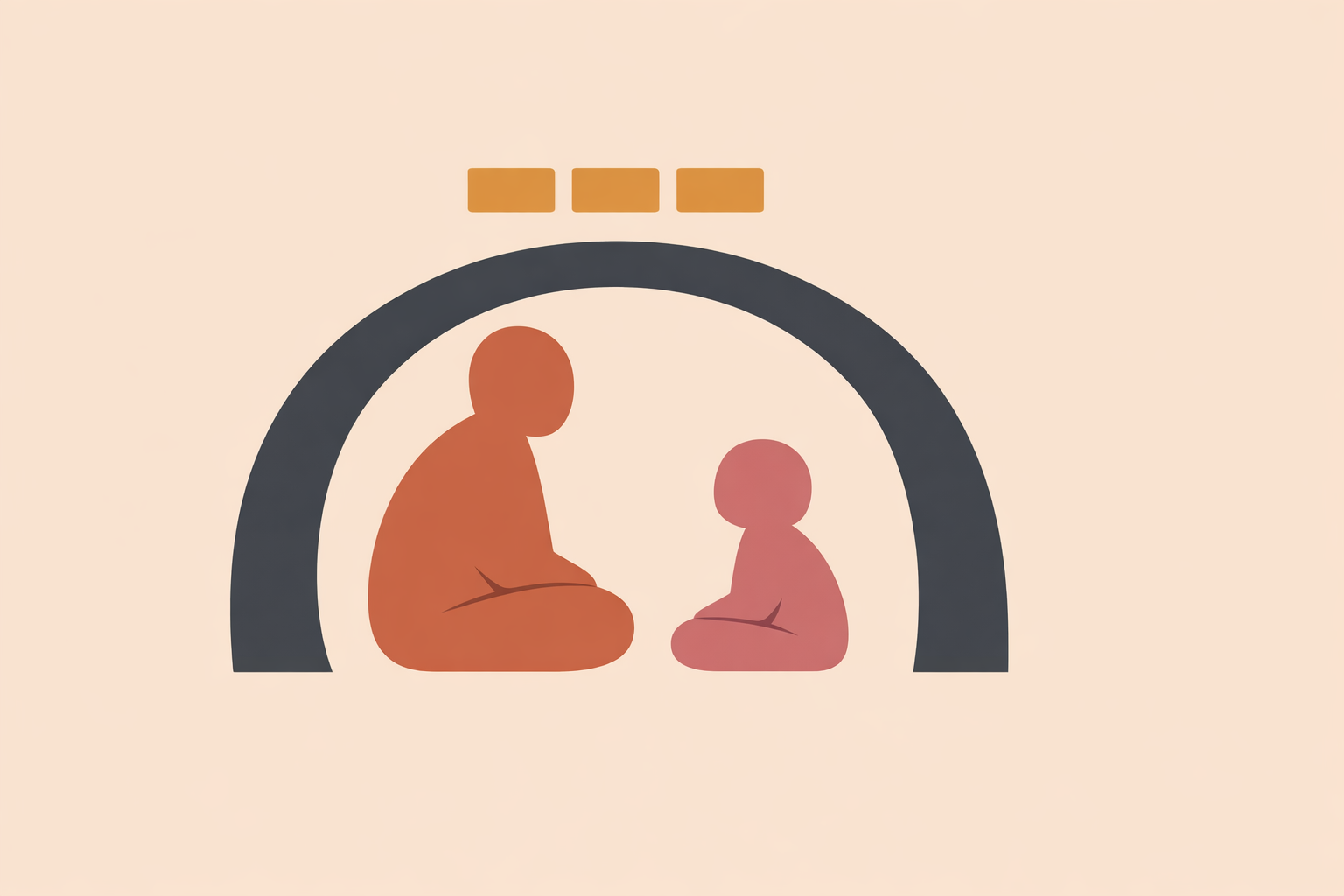
Many practitioners are trained to lead with techniques and targets: token boards, “first–then” prompts, scripted coping skills, and quick corrections to secure compliance. It works—until it doesn’t. A child shuts down, escalates, or offers a brittle “okay” that never leaves the room. The session tightens, the adult works harder, and progress depends on constant adult energy instead of the child’s engagement.
What’s often missing is the relational container that helps skills actually land. Real change tends to grow from a working alliance built on shared goals, agreed tasks, and warm structure rather than simple behavior control. When children help shape the goal, know what to expect, and feel respected inside clear boundaries, they engage with far more heart—and they practise more between sessions.
Key Takeaway: Effective behavior change with children depends on a working alliance that helps techniques become habits. In practice, that means opening with safety and structure, co-creating simple goals, listening before guiding, using play and personal meaning to rehearse new skills, holding clear limits without shame, and regularly checking how the relationship feels from the child’s point of view.
Principle 2: Start each session with safety, connection, and clear structure
Children engage more easily when they feel oriented. Before asking for effort, help them settle into the space and understand what is about to happen.
A short opening ritual can do more than extra instruction when a child arrives tense, guarded, or unsure. One useful pattern is serve–receive–name: notice a cue, respond to it, then name what happens next.
Structure matters just as much. Visual schedules, first–then phrasing, and brief previews turn uncertainty into predictability. Consistent session flow builds trust because the child starts to recognize the shape of the experience.
Try a 5-minute opener:
- 30 seconds: “What’s today’s weather inside—sunny, cloudy, stormy?”
- 1 minute: “What’s one thing going okay?” and “What’s one thing that feels tricky?”
- 1 minute: Preview the plan in plain language.
- 1 minute: Offer one small choice, such as timer sound on or off.
- 90 seconds: Do a brief connecting activity like movement, drawing, or a familiar fidget.
For example: “First we check in. Then we practise one tool. Last we pick a home step. I’ll keep us on time.” That kind of clarity helps the child relax enough to participate.
Principle 3: Co-create goals so the child owns the change
Children commit to plans they can see themselves inside. Concrete, shared steps create momentum where vague hopes usually don’t.
Goals work best when they fit the child’s language and daily reality. Instead of “be calmer,” try “use one pause strategy in the first minute of an argument” or “keep hands busy in line after lunch.” Small, observable goals give the child something they can notice and repeat.
Collaboration isn’t a “nice extra”; it’s foundational. Strong work depends on shared goals and tasks, so the child understands what you’re building together and why.
A simple four-question sequence can help:
- Goal: “What do you want to be different in the next two weeks?”
- Now: “What’s happening most days?”
- Options: “What could you try when the problem shows up?”
- Will: “Which one will you test first, and when?”
You can turn the plan into something visible:
- My goal: “Keep my hands to myself in line.”
- My first try: “Hook thumbs in belt loops.”
- When: “Every time we line up after lunch.”
- How I’ll check: “Mark a star if I used it.”
Keep the language collective: “we,” “us,” and “let’s.” It reduces the adult-versus-child feeling and invites teamwork.
Principle 4: Listen first so children feel understood, not managed
When a child feels managed too quickly, resistance often rises. When they feel understood first, most become more willing to experiment.
A useful sequence is presence, reflect, check, then guide. Stay with what the child is showing, reflect it simply, check whether you understood, and then move toward problem-solving.
With younger children, keep reflections concrete: “Your tower fell. You look frustrated.” With older children, reflect the pattern underneath: “You thought people might laugh, so you stayed quiet. Now you feel left out.”
Use this micro-sequence:
- Reflect meaning: “Sounds like your body goes buzzy when the teacher calls on you.”
- Check understanding: “Did I get that right?”
- Guide gently: “Want to test a buzzy-body reset next time?”
Examples by age:
- Ages 4–7: “Your feet are stomping. The mad is big. Should we push the wall or shake it out?”
- Ages 8–11: “When the group gets loud, your brain says, ‘I’m out.’ What could help you stay one more minute?”
- Ages 12+: “If this plan feels unrealistic, tell me. What would make it workable on a hard day?”
The aim is accurate accompaniment, so any guidance that follows feels like support rather than control.
Principle 5: Use play, interests, and culture to practise new behaviors
Children learn through doing, imagining, repeating, and adapting. Play is often the most natural pathway into skill practice.
When practice feels like a game or a meaningful story, children return to it more readily. That might look like role-play, drawing, movement, building, rhythm, music, or sensory-based choices.
Try “multiple endings” role-play. If a character faces teasing, explore several paths: shout, pause, leave, ask a question, seek support. Then ask, “What happens next in each ending?” This builds flexibility instead of a single “right” response, much like early social skills coaching does in practice.
Stories can also create useful distance. A worry can become “The Worry Alarm.” Interrupting can become a pushy character. Big anger can become a dragon with signals that show up before the flames do. Once the pattern has a shape, the child can work with it more creatively.
Cultural responsiveness matters here too. Ask respectful questions: “How does your family show respect?” “What does being strong mean at home?” “Are there stories, songs, or games that feel like you?” If you use traditional stories or symbols, do so carefully, accurately, and with consent. Respect for origin always matters more than novelty.
Adapt for neurodiversity as well. Offer different response modes such as drawing, pointing, writing, movement, or AAC. Do not demand eye contact, stillness, or verbal fluency as proof of engagement.
Principle 6: Hold warm structure with clear limits and no shame
Children need warmth and boundaries. In good practice, they reinforce each other.
Warm structure means clear limits delivered without humiliation, sarcasm, or power struggle. The message stays steady: your feelings are real, and the boundary still stands.
Start with curiosity about what the behavior may be doing for the child: seeking connection, avoiding overload, creating control, meeting a sensory need, or expressing frustration. Then name what happened in simple, observable terms. Specific language supports learning far better than global labels.
Natural and logical consequences work best when they are related, respectful, and proportionate. The purpose is teaching and repair, not punishment. If a child leaves the activity, the next step might be to pause their turn and help them rejoin with a support in place.
Try this three-step boundary script:
- Validate: “You don’t like this, and I can see that.”
- Limit: “We do need to choose one safe way to practise today.”
- Choice within limit: “Do you want the two-breath pause or the wall push?”
A simple note format can help you stay grounded:
- Antecedent: “Noise rose in the room.”
- Behavior: “Child left seat three times in ten minutes.”
- Consequence: “Lost turn; rejoined with prompt.”
- Plan: “Offer quieter option; practise break card; reinforce return with a chosen role.”
Warm structure protects dignity while keeping the work usable, especially on hard days.
Principle 7: Repair ruptures and keep checking the relationship
Even strong relationships wobble. Misattunements happen, and plans sometimes miss the mark. What matters is repairing well and returning to shared purpose.
Inviting feedback keeps the relationship strong over time. Research suggests that child and parent alliance feedback can offer relationship insight. It also shows only moderate agreement across perspectives, so the child’s experience shouldn’t be guessed; it should be asked.
Try a repair sequence like this:
- Name it: “I talked over you just then.”
- Own your part: “That wasn’t respectful. I’m sorry.”
- Invite the child’s view: “How did that feel for you?”
- Agree on a next step: “If I rush again, can you give me the pause sign?”
Short feedback loops make repairs easier:
- Two-thumb check: “What helped? What should we change?”
- Emoji meter: calm, mixed, tough, then one reason why.
- One-line survey: “Today felt useful: yes / kind of / not really.”
Over time, these check-ins teach something powerful: the relationship is something the child can shape, not just receive.
Conclusion: Integrate alliance and method for lasting behavior change
Behavior change with children rarely comes from technique alone. It grows more reliably when relationship, structure, and practice method support each other.
Approach sessions as a whole: begin with safety and clarity, set shared goals, listen before guiding, practise through play and personal meaning, hold firm and respectful boundaries, and repair quickly when connection slips. Methods matter, and they become far more usable when the child feels involved.
Measure progress with a wide lens. Look for the child’s own sense of change, small observable shifts, carryover across settings, and growing independence. Expect plateaus and zigzags; stress, life transitions, and developmental changes naturally affect momentum.
Across ancestral traditions, child guidance has often lived inside relationship: story, song, shared work, rhythm, and communal belonging. Modern evidence-informed coaching can honor those roots while offering clear, practical structures for everyday sessions in child and adolescent development and broader child psychology coaching. Keep alliance central, keep methods concrete, and the work becomes a shared path forward.
Explore Child Psychology Coaching
Build deeper, relationship-first behavior change skills in the Child Psychology Coach Certification.
Explore Child Psychology Coach →










