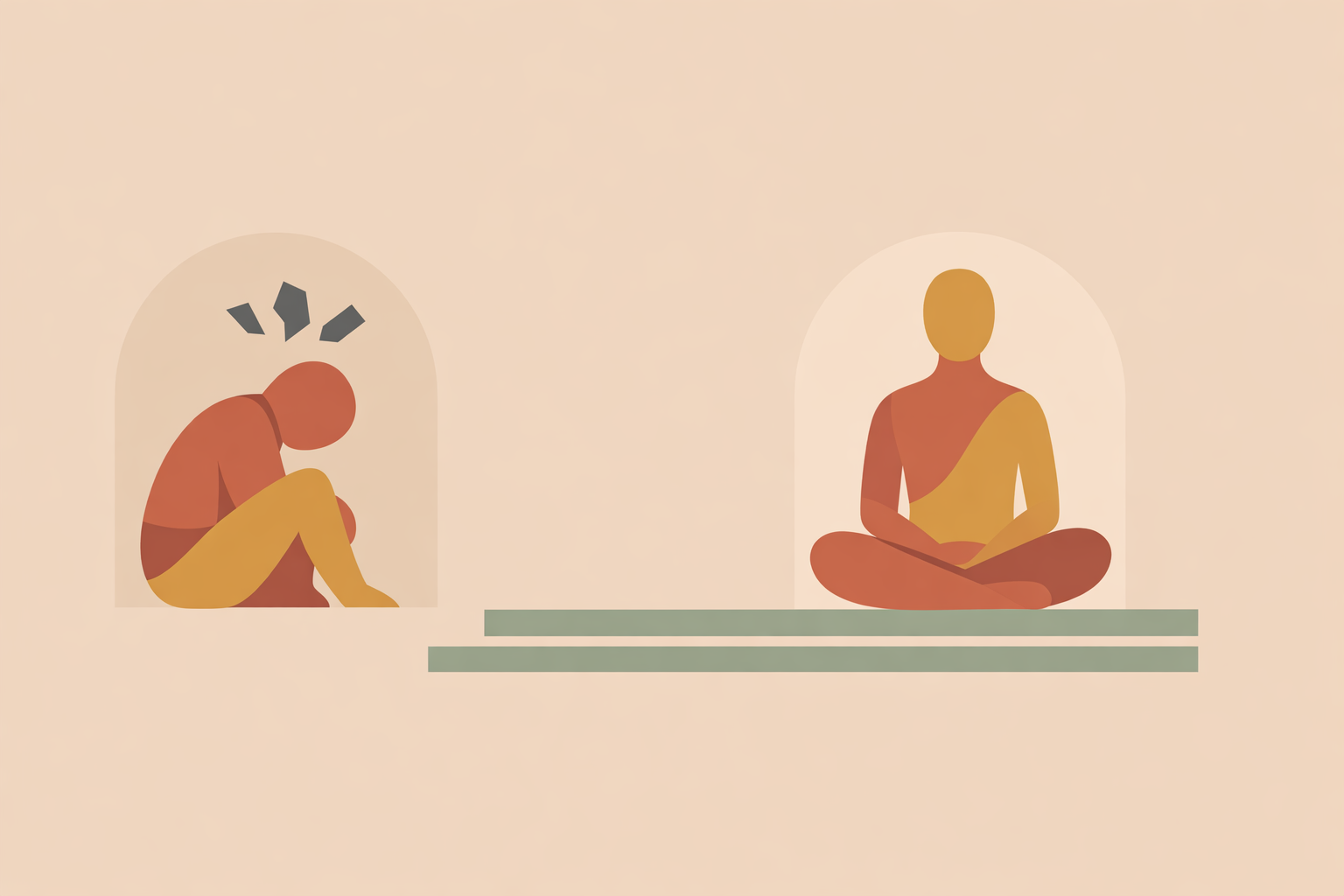
Even experienced facilitators meet their edge when a participant shifts from open and connected into overwhelm mid-circle. The reflex is often to add more: more explanation, deeper breathing, stronger sound, another pour. When a nervous system is already running hot, that extra input can turn a manageable moment into a bigger surge.
Key Takeaway: Safe cacao facilitation treats sudden over-activation as a spike to be stabilized, not a story to be amplified. The clearest response is simple: slow the room, reduce stimulation, orient the participant, and pause additional cacao. Understanding cacao’s stimulant profile—and how breathwork, sound, heat, and group intensity can stack on top of it—helps you respond cleanly in the moment and design calmer, more spacious circles going forward.
When someone spikes in a cacao circle
A spike is a rapid rise in activation that outpaces the pace of the circle. You might see rapid speech, restlessness, shallow or fast breathing, trembling, flushing, difficulty following guidance, or panic language like “I can’t do this.” Sometimes it also looks stimulant-like: shakiness, a pounding heartbeat, nausea, dizziness, headache, or repeated trips to the restroom.
Early signs can be quiet: foot tapping, scanning the room, gripping the cup, or losing track of simple instructions. Treat those signs as useful information. The intensity has outrun capacity.
Timing offers clues. If the shift starts after drinking cacao and includes tremor, racing heart, nausea, urinary urgency, or a wired feeling, cacao stimulation is a reasonable factor to consider. Sometimes emotional material and stimulation rise together, and your job is still the same: reduce load and restore choice.
Spike vs emotional release
Emotional release usually keeps some rhythm. There may be tears or shaking, yet the person can still track your voice, respond to simple prompts, and soften over time.
A spike tends to narrow options. Breath becomes strained or rushed, eyes dart or glaze, instructions don’t land, and the person may want to bolt, freeze, or cling.
A quick check helps you decide what support to offer:
- Can they answer simple questions?
- Can they slow down even one breath with you?
- Can they feel their feet or name what is around them?
- Is intensity rising rather than resolving?
If the answer is mostly no, stop interpreting and start simplifying.
What to do in the first two minutes
Lead with grounding, choice, and less input. You’re not trying to “solve” the moment; you’re helping the person reconnect with the room and regain enough steadiness to choose their next step.
Approach slowly from the front or side. Name yourself, ask to check in, and then make the space simpler: lower music, reduce strong sound, soften lights if possible, and create a quieter pocket around them. Offer a chair, back support, cooler air, or more space.
Useful language is plain and non-dramatic:
- “I’m here with you. We can slow this down.”
- “You have options. We can sit, step outside, or stay right here.”
- “No need to explain anything right now.”
Simple first steps:
- Pause active practices.
- If breathwork is underway, return to natural breathing with eyes open.
- If sound is intense, lower the volume or stop.
- Orient to the room: door, window, floor, chair, light.
- Offer low-effort anchors such as feet on the floor, back against the chair, or cool water in the hands.
- Invite rather than command.
Most spikes settle with steady facilitator presence and a clear reduction in sensory input. Calm is contagious.
How cacao’s stimulants can contribute to over-activation
Ceremonial cacao can feel gentle, but it is active. It contains methylxanthines, mainly theobromine with a smaller amount of caffeine, and these can push some people from alertness into over-activation. Larger or more concentrated servings are more likely to bring side effects.
These compounds can influence wakefulness, urination, and cardiovascular activation. One person feels open and settled from a serving that leaves another buzzy and restless.
Theobromine, caffeine, and the “wired” feeling
Theobromine is typically higher than caffeine in cacao. It’s often experienced as smoother than coffee, yet it still has real stimulant effects. Large cocoa intakes have been associated with sweating and trembling, which fits what facilitators sometimes see when a serving is too strong for that person or that moment.
Theobromine and caffeine can influence wakefulness, urination, and cardiovascular activation. In some people, theobromine may contribute to a faster heart rate, which can feel like an overly noticeable or pounding heartbeat after a strong cup.
Duration matters too. Theobromine has a relatively long half-life, so a participant can feel activated well after the circle ends. This is also why a second pour sometimes tips a comfortable start into later shakiness, nausea, or restlessness.
Why breathwork, sound, and environment matter
Cacao is only one part of the “stack.” Breath patterns, sound, movement, heat, hydration, crowding, and group tempo all shape the outcome.
Intensive breathwork can magnify light-headedness and tingling. Hyperventilation can cause dizziness and tingling, so when someone is already escalating, encouraging deeper or faster breathing often adds fuel rather than support.
Sound stacks too. Loud bowls, gongs, strong vocals, heavy bass, and emotionally intense tracks can overwhelm sensitive participants. Heat, dehydration, hunger, prolonged stillness, and a packed room can have the same effect, especially in combination.
If several people look flushed, edgy, or glassy-eyed, widen the lens. The container itself may be running too hot.
Real-time decisions around dose and pacing
When a body signals “enough,” pause the pour. Bigger servings don’t guarantee a deeper experience; they often raise the odds of overstimulation.
If someone reports palpitations, tremor, nausea, anxiety, dizziness, or headache, stop additional cacao and shift to cooling, rest, water, and observation. That protects choice and prevents a spike from turning into a harder landing.
Helpful reminders for cacao facilitation:
- Normalize half-servings from the start.
- Make top-ups clearly optional.
- Do not frame more cacao as more courage or more depth.
- Watch the room before offering a second pour.
- Slow the arc if restlessness is spreading.
Also consider the participant’s day as a whole. Coffee, tea, energy drinks, pre-workout products, and stimulant supplements can compound cacao’s effects. Because cacao contains caffeine and theobromine, the total stimulation load can be higher than someone expects.
When a spike needs urgent outside support
Many spikes settle with reduced input, calm presence, and time. Some signs deserve urgent outside support and should never be minimized.
Take the situation seriously if you notice chest pain, severe shortness of breath, fainting, seizure-like activity, severe confusion, blue lips, one-sided weakness, or a sustained very fast or irregular heartbeat. In that moment, the circle stops and your venue plan takes over.
Keep your response simple:
- Stop the ceremony activity around the person.
- Bring in your co-facilitator or host.
- Create calm and privacy.
- Follow the venue’s emergency plan.
- Do not tell the person it is “just anxiety” or “part of the release.”
Preparation makes this easier. Keep the venue address visible, know the best entrance to direct support, and clarify team roles before anyone arrives.
Aftercare, reflection, and redesigning the circle
Once the room settles, shift into respectful follow-up. Check in privately and ask what would feel supportive: quiet, a brief conversation, a message the next day, or a few grounding suggestions. Avoid making their experience a group lesson unless they clearly want that later.
Document neutrally while details are fresh: what you observed, when it started, how much cacao was served, which practices were active, how the space felt, and what helped. If multiple participants spike in one event, pause and review the cacao batch or recipe before serving it again.
Then redesign with curiosity rather than blame:
- Was the serving size too ambitious for the group?
- Were smaller cups genuinely normalized?
- Did breathwork, movement, and sound stack too tightly?
- Was the room too hot, crowded, or under-ventilated?
- Did participants have clear options to sit out, open their eyes, or move to a quieter area?
Small shifts often change everything: shorter arcs, default half-cups, gentler sound choices, more orientation before intensity, and more spacious pacing between peaks.
Closing perspective
Skillful cacao facilitation honors both the spirit of the practice and the reality of the body. When the cup, the room, or the pacing becomes too activating, the best response is steady and practical: reduce stimulation, widen choice, and help the person re-orient.
Cacao can invite warmth, connection, and insight, and it can also be stimulating, especially with concentrated servings or layered intensity. Keep your cautions for your closing reminders: dose conservatively, design for spaciousness, and always have a clear plan for when someone needs more support than the circle can provide.
Train as a Cacao Guide
Apply these safety principles in practice with the Cacao Ceremonial Guide Certification.
Explore the Certification →