Your calendar is full, your waitlist is growing, and the promise that made your practice trusted—individual attention over time—can feel threatened the moment you consider a cohort. You want to expand capacity without losing context, nuance, or safety.
You’ve likely seen group programs that widen access while thinning the work: a big personality, a huge resource library, and very little follow-through. And yet, most clients are working the same core levers—sleep rhythms, movement, recovery, stress regulation, connection—where repetition and community can make consistency easier. The real question is practical: how do you grow without turning depth into a slogan?
Longevity coaching can scale when structure—not volume—does the heavy lifting. Depth comes from clear healthspan outcomes, right-sized groups, consistent cadence, and firm boundaries; from onboarding that sharpens goals and constraints before the first session; and from micro-personalization inside a shared path. Done well, a cohort becomes a multiplier: peer connection reinforces practice, the curriculum stays lean and repeatable, and delivery remains high-touch without turning into 1:1 for everyone.
Key Takeaway: Longevity coaching scales best when a clear, repeatable cohort structure protects depth—through right-sized groups, strong onboarding, and firm scope. Add micro-personalization (segmentation, barrier-based prompts, brief feedback, and breakouts) so participants feel seen while shared cadence and guardrails keep quality, safety, and trust intact.
Why longevity work fits group coaching
Longevity work fits groups because the foundations of healthspan have always been communal. Sleep, movement, nourishment, stress downshifts, and social connection are simply easier to sustain when people practice alongside others. Lifestyle frameworks commonly address movement, nourishment, sleep, stress, and social ties together—an easy match for cohort design.
This isn’t new. Traditional cultures have long supported vitality through shared meals, walking together, seasonal routines, intergenerational support, and collective rituals of rest and resilience. What we call “group coaching” can be a modern container for something ancient: learning well-being in company, not in isolation.
That’s also why longevity coaching naturally spans multiple domains. Naturalistico highlights multiple domains—movement, sleep, stress, emotional resilience, nourishment, and connection—where group learning becomes a mirror. People swap practical solutions, borrow what fits, and feel less alone in the uneven rhythm of behavior change.
There’s real power in connection. Research and reporting on social well-being point to the importance of community building in reducing isolation and supporting habit consistency. Global guidance also recognizes that social connection can protect health across the lifespan. Naturalistico likewise emphasizes connection and community as core ingredients of healthy aging—so group work isn’t just compatible with longevity coaching; it supports the target outcomes.
Practically, cohorts work well because many longevity themes share common principles even when the details differ: walking routines, strength habits, recovery rituals, evening wind-downs, and stress regulation. Guidance highlights how goal setting and barrier-solving can be taught once and adapted widely—a strong foundation for group programs.
And because change happens between sessions, a shared rhythm helps. Lifestyle and stress program research emphasizes that behavior change requires ongoing support and real-life practice. Think of it like tending a garden: weekly tending beats a single, intense day of work.
Even popular longevity narratives (like the Blue Zones) tend to spotlight communal patterns—shared meals, regular movement, strong ties, intergenerational belonging. Whether or not one accepts every conclusion, the broader lesson holds up well: long-term vitality is often reinforced by culture and connection, not effort in isolation.
Done well, groups don’t pull longevity coaching away from its roots—they bring it back to them.
Protecting quality at scale: architecture over charisma
Quality at scale comes from architecture, not from trying to be endlessly “on.” Strong group programs protect depth through clear outcomes, thoughtful cohort design, and disciplined scope.
It’s common to try to solve scale with more personality: more energy, more messages, more availability. That can feel personal for a while, but it creates a fragile system—one that eventually depends on the coach overextending.
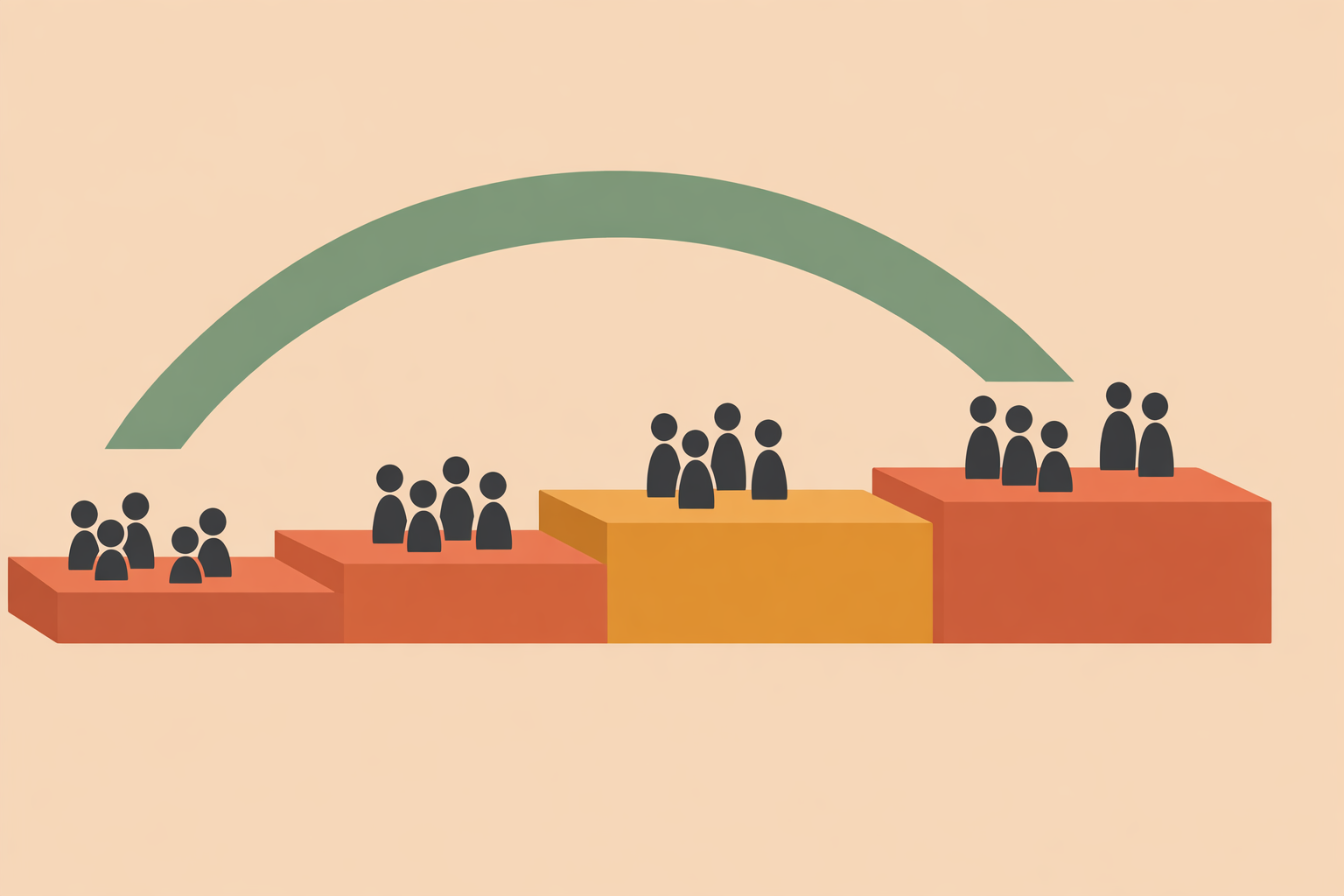
A better path is a container that carries quality for you. Cohort-based programs build shared momentum and are easier to refine over time than open-ended communities. A defined beginning, middle, and end gives participants a shared journey—and gives you a repeatable structure you can improve each round.
From there, onboarding becomes one of your biggest quality levers. Naturalistico emphasizes baseline intake, goal clarity, and readiness checks so you understand what each person is aiming for and what constraints they’re working with. Put simply: you protect personalization before you ever teach a module.
That clarity also helps your scope stay clean. A pre-coaching assessment can surface priorities, routines, and obstacles so the shared curriculum lands in a way that still feels individual.
From there, the strongest group offers solve a concrete problem, not a foggy identity. Behavior-change guidance favors specific, proximal goals—the kind you can practice this week—over distant, vague outcomes. So a cohort built around evening routines, daily movement, or steady weekday energy often holds attention better than “total life transformation.”
Content is another place where good design beats sheer quantity. Scale doesn’t require more material; it usually requires less, better. Naturalistico emphasizes repeatable modules: a handful of essentials taught clearly, then applied to different lives. Here’s why that matters: repetition with relevance builds skill, not just information.
As one Naturalistico student put it, “I rate this course highly in regards to the knowledge it imparted, its organization,” and especially how it helped “put all the pieces together.”
That’s the heart of sustainable scale: a structure that helps people see the pieces—and helps you deliver with steadiness, not strain.
Making group longevity coaching feel personal
Group coaching feels personal when people can recognize themselves in the process. The goal isn’t to customize everything—it’s to build micro-personalization into a shared path so each participant knows what to do next in their own real life.
Start with segmentation. If everyone receives the same targets and examples, some will feel overwhelmed and others under-challenged. Behavior-change guidance recommends tailoring goals over time to match capacity.
In practice, that can look like “starter / steady / stretch” options: movement variations, different evening routine versions, or recovery choices based on schedule and confidence. The lesson stays the same; the action step becomes selectable.
Next, tailor around barriers rather than personality types. When prompts speak to real constraints—time, low confidence, discomfort, family load, irregular schedules—people can actually use them. Frameworks emphasize identifying barriers and planning around them for better follow-through.
Short written feedback can do a lot of heavy lifting here. A brief note on a log can help someone feel seen and stay consistent. Practical guidance supports using logs for follow-up so new behaviors stay alive between sessions.
Small breakouts help too. Many adults speak more honestly in pairs or trios, and the trust that builds there often improves participation in the full group. Group programs commonly use small-group discussions to increase safety and engagement.
Optional focus tracks can add another layer of relevance: sleep-first, movement-first, stress-first. This aligns effort with present capacity instead of asking someone to overhaul everything at once. Behavior-change guidance reinforces the value of small, achievable goals paired with self-monitoring—exactly what a focused track supports.
Finally, keep life stage in view. A midlife professional with a packed calendar and an older adult seeking steadier routines may want similar outcomes, but they’ll need different examples and pacing. Guidance notes that isolation and support matter across ages, but how people access support differs. Naming those realities makes your program more respectful—and more usable.
The shared path stays steady; the steps become personal. That balance is what lets a cohort feel held without requiring you to reinvent your work for every participant.
Building a high-touch, low-friction delivery model
A strong delivery model keeps people engaged without overwhelming them. The sweet spot is usually simple: consistent live sessions, light support between sessions, and just enough tech to reduce friction.
Too little contact and momentum fades; too much and attendance drops or you become the bottleneck. Many programs use weekly sessions for continuity without overload.
That cadence gives people time to practice, reflect, and return with real observations—not just good intentions. Guidance also describes how repeated contact over weeks can be enough to support visible routine change, especially with some between-session accountability.
Between-session support doesn’t need to mean private access for everyone. One sustainable option is brief office hours or structured Q&A time—enough space to clear obstacles without converting the whole cohort into 1:1.
For async support, simpler is often better. A short check-in form, app prompt, or reflection once or twice a week can maintain check-in and connection without turning the experience into constant monitoring.
Peer pods add another steadying layer. Small groups of 3–5 people can improve consistency because participants start showing up for one another, not just for the coach. That aligns with wider guidance that social connection supports well-being across the lifespan.
And then there’s technology. Used poorly, it flattens the work into noise. Used well, it quietly carries the admin load so your attention stays human. Naturalistico’s framing is clear: a support stack, not a replacement stack.
The aim is a rhythm that feels steady and alive: enough structure to hold the group, enough space for real humans.
Who thrives in group longevity coaching (and who needs more 1:1)
Group longevity coaching fits many people, but not everyone in the same way. Skilled coaches match the container to the person—not the other way around.
Beginners often do well in groups when the space is safe, paced, and well scaffolded. They’re more likely to stay engaged when goals are specific and manageable and the tone is experimentation, not performance.
More experienced participants usually thrive when there’s optional challenge and room to refine—advanced tracks, deeper practice invitations, and more nuanced feedback.
Midlife professionals often benefit from hybrid design. Time fragmentation—not motivation—is usually the main constraint, and guidance emphasizes adapting plans to real-life barriers. That often means flexible timing, micro-habits, and async support rather than a calendar-heavy model.
Older adults may value the social fabric of group work deeply when facilitation is clear and pacing is respectful. Guidance highlights isolation and loneliness as major concerns for older people, which underscores the value of groups—along with the importance of realistic expectations and modifications when energy, life events, or discomfort change what’s possible.
Sometimes the responsible move is to recommend individualized support outside the coaching container—especially when distress is intense, persistent, or significantly disruptive. Boundary guidance is clear that in those situations, outside support can be the better path.
As one Naturalistico graduate reflected, the training shifted their identity from a “health enthusiast” to someone with a structured framework for guiding long-term behavior change.
A real framework doesn’t just help you teach habits—it helps you spot fit, adjust the container, and support people with integrity.
Guardrails for scale: ethics, misinformation, and honoring tradition
As your reach grows, your responsibility grows with it. Guardrails protect participants, preserve the integrity of traditional wisdom, and keep your group culture rooted in trust rather than hype.
Misinformation is one of the clearest risks in longevity spaces. People often arrive with strong beliefs shaped by sensational claims or fragmented online advice. Reviews and public guidance have raised concerns about unreliable digital content. In a cohort, the job isn’t to shame people—it’s to teach discernment, slow down bold claims, and build a culture of careful thinking.
This matters even more when traditional and ancestral practices are involved. These lineages deserve respect, context, and humility. They aren’t props for branding, and they shouldn’t be stripped of roots and repackaged as quick hacks. Honoring tradition means naming origins where appropriate, avoiding appropriation, and sharing practices in a way that’s both reverent and practical.
At the same time, respect doesn’t mean switching off discernment. Strong facilitation can hold two truths at once: traditional knowledge carries real value through long practitioner experience, and participants still need help distinguishing grounded guidance from exaggeration. In today’s digital landscape, unmoderated content can contribute to harmful behaviors, which makes skilled group leadership even more important.
Clear scope is another essential guardrail. Participants should know what your group does, what it doesn’t do, and what happens when concerns fall outside the container. Coaching frameworks emphasize defined boundaries and written expectations, including signals for when additional support is needed.
That includes noticing red flags and responding responsibly. Integrity isn’t only what you include—it’s also what you know not to hold inside a group space.
Finally, boundaries protect you, too. When coaches become always available, tolerate disrespect, or drift beyond their role, the quality of the space erodes. Boundary guidance notes that blurred boundaries strain well-being and reduce effectiveness for everyone.
Scale without guardrails is just expansion. Scale with guardrails becomes stewardship.
Conclusion: scale your longevity groups by design, not by accident
A longevity coach can scale group work without losing depth when the program is built as a living system. Cohorts, clear outcomes, smart micro-personalization, ethical limits, and a sustainable rhythm are what keep quality intact.
Seen this way, scaling isn’t packing more people into the same call. It’s increasing repeatable capacity without diluting care—designing for trust, pacing for real habit change, and letting supportive systems carry the admin weight so your attention stays human.
And it helps to remember what longevity work is really for: better days. More energy, more steadiness, more mobility, more resilience, and more self-trust. We already know that support well-being is one of social connection’s great strengths—and many of those outcomes grow faster in community, especially when the group is rooted in respect for ancestral wisdom and guided by practical behavior change.
If you’re refining your model, start simple: narrow the problem you solve, tighten the cohort structure, strengthen onboarding, and build one clear pathway with a few meaningful options inside it. Then improve the container round by round.
Longevity coaching is increasingly recognized as an interdisciplinary niche blending well-being education, behavior change, and lifestyle support. Ongoing development makes that balance easier to hold—especially when you’re building for long-term practice, not quick fixes.
Train in Longevity Coaching
Build cohort programs with clear outcomes and guardrails through the Naturalistico Longevity Coach Certification.
Explore Longevity Coach Certification →