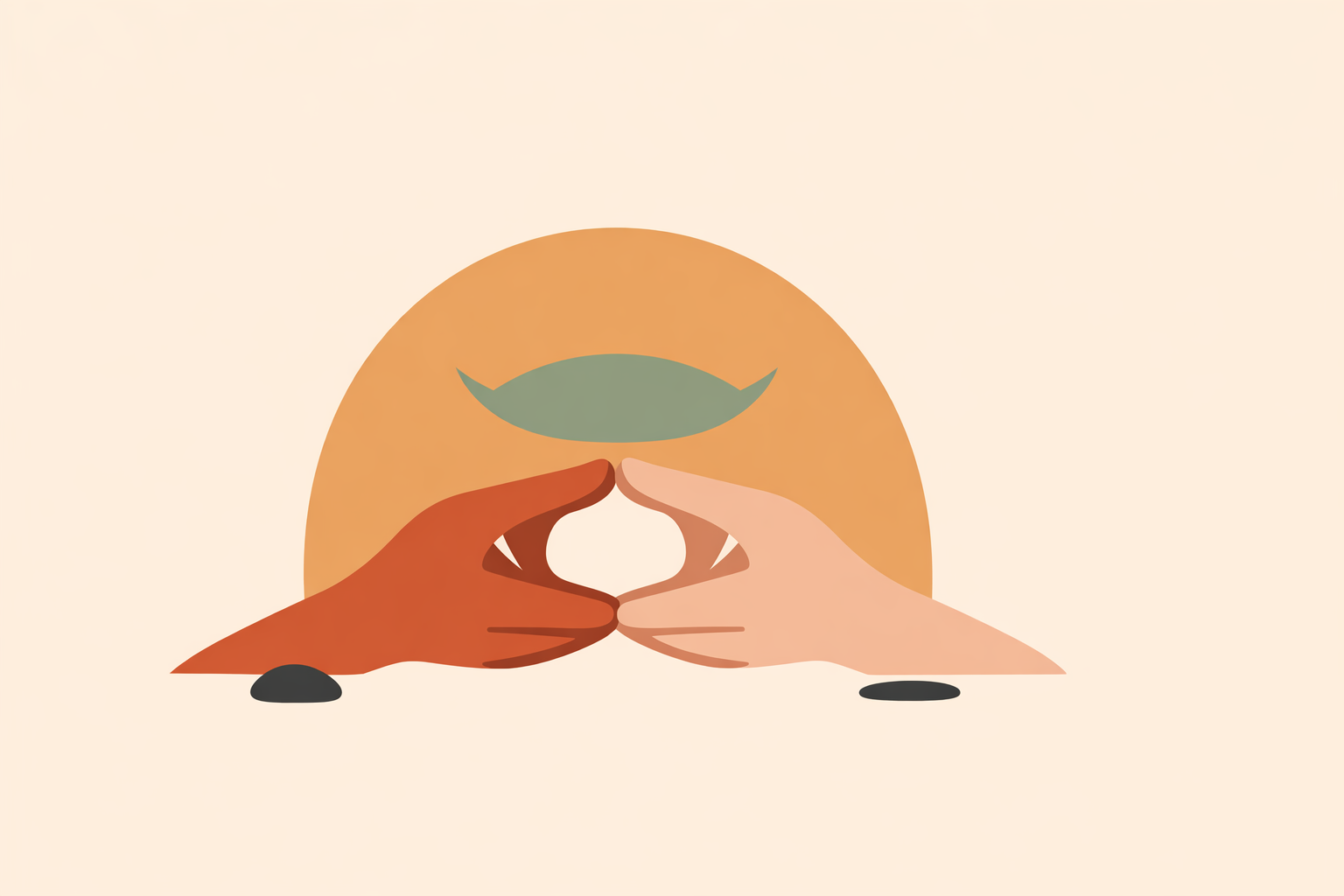
Breath cues and posture usually carry a mindfulness session. With some clients, though, those cues don’t quite land. They may arrive overstimulated, rushed, or worried about doing it “right,” and extra effort only tightens the mind.
Mudras offer a steadier entry point. These deliberate hand gestures give attention a clear place to rest, so mindfulness becomes more tangible: feel the contact, notice the breath, soften effort. Used respectfully and without overpromising, mudras can bring steadiness, clarity, and ease to sessions that might otherwise stay stuck in the head.
Key Takeaway: Small, optional hand mudras can make mindfulness more accessible for stressed or distractible clients by offering a concrete attention anchor. In practice, they work best when introduced for a clear reason, paired with simple breath awareness, adapted for comfort, and taught in language that respects both traditional roots and modern coaching settings.
What mudras are: traditional gestures, practical anchors
Mudras are intentional hand gestures, and in some lineages they also include full-body seals or positions. In yogic and contemplative traditions, they are used to shape inner experience and direct prāna (life-force) toward qualities like calm, devotion, and focused awareness. Traditional texts and later commentaries reflect traditional use across centuries of practice.
In a modern session, you can honor that heritage while keeping your language client-friendly. A simple frame often works best: “We’re using a hand gesture as a steady point for attention.”
Traditional and contemporary views can sit side by side. Reviews describe mudras as gestures that influence states, while also presenting them as non-invasive practices that engage breath, body, and mind together.
For clients, the practical point is straightforward: the hand shape is there to help awareness settle.
How mudras support mindfulness practice
Mudras tend to support practice in three connected ways: they give a tactile anchor, they encourage a more regulated inner tone, and they often nudge breathing toward a smoother rhythm.
First, they offer a definite place to return to. Mudras can function as attention anchors that feel easier than breath alone for some people. Fingertip contact and a gentle hand shape often steady attention and reduce mental chatter, especially for beginners or anyone feeling overstimulated.
Second, they’re traditionally used to invite quiet and steadiness, and integrative writing suggests they can promote parasympathetic settling when paired with gentle breathing. In everyday session language, many people experience this as dropping out of “trying hard” and into a calmer mode of awareness.
Third, hands and breath influence each other. Reviews note potential autonomic responses and respiratory effects when mudras are practiced with breath awareness. In the room, it often looks simple: the hands steady, the exhale softens, and attention becomes easier to sustain.
Some claims go far beyond what’s well-supported, especially around specific brainwave changes or precise biomarkers. It’s usually enough to stay with what consistent practice shows: many people feel more settled and more embodied when attention has a clear place to return.
When to introduce mudras in sessions
Introduce mudras when they solve a real problem. If a client is restless, overthinking, or struggling to stay with the breath, a simple hand gesture is a useful next step. If breath awareness is already steady, you may not need to add anything.
For high-stress or burnout presentations, a basic mudra paired with a slow exhale may aid stress settling and help the person enter practice more easily.
Beginners usually do best with one gesture, introduced for a clear reason. The aim is a felt support they can actually use, not variety.
A practical filter:
- Good fit: busy mind, shallow breathing, mental over-effort, difficulty starting.
- Optional: clients already comfortable with breath or body awareness.
- Adapt or pause: physical discomfort, overwhelm, numbness, or aversion to body-focused cues.
For people with trauma histories or dissociative patterns, body-focused practice can feel intense without careful pacing and choice. For people with hand pain, arthritis, neuropathy, or hypermobility, even light pressure can be too much. In both cases, consent and alternatives matter more than keeping the gesture.
How to structure a mindfulness session with mudras
Keep the structure simple. Mudras are most effective when they support the session quietly rather than becoming the main event.
A clear session arc might look like this:
- Arrival: settle posture, feet, and seat. Name the mudra as optional.
- Introduce the gesture: invite a light thumb-to-index-finger touch or another simple shape.
- Orient attention: feel the fingertip contact, then notice the breath.
- Sustain practice: return to the hand sensation whenever the mind wanders.
- Release and reflect: let go of the gesture, notice any difference, and check in briefly.
Brief holds are usually enough at the start. A short window is often plenty for familiarity and settling, especially when the gesture is new.
Keep your prompts plain: “Let the thumb and finger meet gently. Feel that contact. When the mind wanders, come back there first, then notice the breath.”
Pairing mudras with breath awareness
Mudras often deepen when paired with gentle breath cues. The breath helps spread the settling effect through the whole practice, and the gesture makes the breath easier to track.
Reviews suggest that combining mudras with breathwork may enhance regulation. In practice contexts, pairing mudras with pranayama is also associated with respiratory efficiency and a steadier internal rhythm over time.
Simple pairings usually work best:
- Even breath: inhale and exhale for the same count while maintaining soft hand contact.
- Longer exhale: keep the inhale easy and let the exhale run slightly longer.
- Natural breath: hold the mudra without changing the breath; notice both.
There’s no need to force technique. If counting creates strain, drop it and keep the mudra as a quiet anchor.
Adapting mudras for different clients
Mudras work best when they stay optional, adaptable, and clearly explained. That’s what makes them appropriate across different bodies, backgrounds, and comfort levels.
For beginners, stick to one or two gestures at most. For sensory-sensitive clients, reduce complexity and let them choose whether the hands stay in awareness or rest comfortably. If there’s discomfort, soften pressure, shorten the hold, or use open hands on the thighs.
Mudras can be as inclusive as other mindfulness tools within positive psychology and wellbeing practice when offered without pressure. A session can go beautifully even if hand-based focus isn’t a match for that client.
Cultural respect matters. These gestures come from established contemplative traditions and deserve clear acknowledgment rather than being used as decorative extras. A brief line is often enough: this gesture comes from yogic practice, and the client is welcome to try it or leave it.
How to speak about benefits and limits
Clear, grounded language builds trust. Mudras don’t need big claims to be useful. It’s enough to say they may support steadier attention, calmer breathing, and a more grounded experience of practice.
That matches traditional understanding and the current evidence base. Research on mudras is still developing, and available reviews suggest possible benefits for attention, emotional regulation, breathing, and stress-related settling. Present them as supports for well-being and self-awareness, not guaranteed outcomes.
Useful phrases include:
- “This may support a steadier focus.”
- “Some people find this helps them settle more quickly.”
- “If it does not feel supportive, we can return to open hands or another anchor.”
It also helps to gather feedback. A simple helpfulness rating at the end of a session shows which gestures, timeframes, and breath pairings truly serve your community, and it keeps your teaching responsive.
Conclusion
Mudras belong in mindfulness sessions when they serve a clear purpose. For clients who need a concrete anchor, they can make awareness more immediate, breathing more settled, and practice less effortful.
The most reliable approach stays simple: start with one gesture, keep it optional, pair it with gentle breath awareness, and adapt it for the person in front of you. Taught with cultural respect, clear language, and modest claims, mudras remain what they have long been in lived practice: small gestures that invite a quieter, steadier way in.
Begin with one short sit and notice what changes as you build meditation coaching skill. The hands often teach what words cannot.
Train as a Meditation Coach
Build mudra-and-breath session skills in the Meditation Coach Certification.
Explore Meditation Coach Certification →