Adults often meet their younger patterns in ordinary moments: a small conflict that feels enormous, a sudden urge to please, anger that arrives too fast, or a body response that seems older than the situation. In that context, play-informed inner child work can feel surprisingly grounded. It gives feeling states a symbolic language, so people do not have to rely only on analysis or memory-heavy conversation.
Key Takeaway: Play can support adult inner child work when it is used as a consent-based, symbolic, and culturally attuned practice within a clear holistic scope. The most useful applications stay simple: objects, images, movement, and brief creative prompts that help adults approach younger feeling states at a workable pace, then translate insight into everyday self-support.
What “Play-Informed” Means in Adult Holistic Practice
With adults, clarity builds trust. Formal play therapy belongs to specific professional contexts and training pathways. Play-informed holistic practice is different: it adapts the useful qualities of play—imagination, experimentation, symbolism, movement, and choice—for reflection, self-awareness, and personal growth.
That distinction keeps the work clean and well-held. You’re not presenting creative exploration as a substitute for formal mental health support. You’re offering structured, consent-based ways to explore patterns, needs, and inner responses within a coaching or well-being frame.
In adult inner child work, play-informed methods might include:
- object placement and miniature scenes
- drawing, collage, or clay
- brief role dialogue between younger and adult selves
- movement, gesture, and sensory grounding
- story, metaphor, and symbolic ritual
The strength of these methods is their fit with adult autonomy. People can choose, revise, pause, or decline. They are invited to notice, rather than to perform.
The purpose is to support adult-led contact with what childhood left behind, then bring that understanding forward into daily life.
How Play Creates Enough Distance to Explore Safely
One of play’s most useful qualities is symbolic distance. Instead of stepping straight into a charged experience, someone works with something that represents it. That small amount of space often makes honest contact possible.
Symbolic distance helps adults move toward sensitive material without feeling as though they must relive it. A figure, stone, drawing, or tray scene can hold emotion externally for a moment, which supports steadier reflection and clearer choice.
Creative methods also help when language is thin, tangled, or overly intellectual. Meaning-making can emerge through drawing, clay, puppets, or character dialogue when direct explanation feels out of reach.
Practitioners have long valued externalizing practices like object work and sand tray style scenes because they slow the process down. The adult self gets more room to stay present, track the body’s response, and adjust the pace.
Many traditional and ancestral approaches have also relied on story, song, ritual, gesture, and symbol rather than explanation alone. In that wider view, play-informed work sits inside a long human understanding: symbols can carry what plain language cannot.
Play-Informed Tools for Adult Inner Child Work
The most effective tools are usually simple, low-pressure, and easy to adapt. The goal isn’t artistic skill. The goal is contact, pacing, and choice.
Images and objects
- Child-self sketch: Invite a quick drawing of the younger self as they feel today. Ask about posture, expression, or what they seem to want.
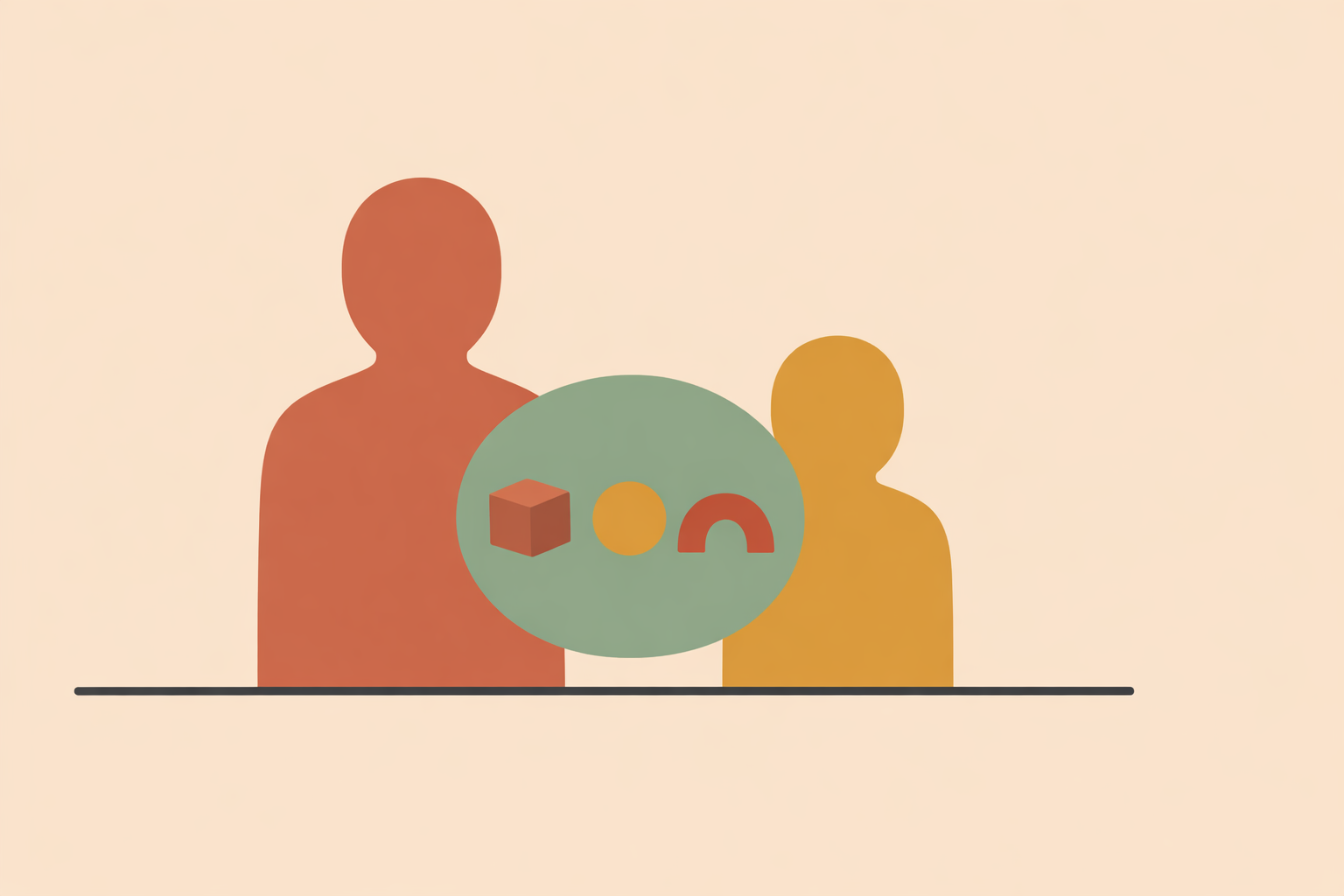
- Miniature scene: Create a small world around a theme such as “home,” “belonging,” or “what safety looks like.” Let the person decide what each item means.
- Two-voice card: Write one line from the younger self and one from the adult self. This often reveals unmet needs and current capacity in a direct but gentle way.
Movement and sensory support
- Micro-movements: Small actions such as pressing palms to a wall, shaking out the hands, or lengthening the exhale can help settle activation.
- Texture choices: A soft fabric, a smooth stone, or a warm cup can help the person notice what supports steadiness.
- Orienting: Naming what is visible, audible, and physically supportive in the room can bring attention back to the present.
Symbol and placement
- Support and strain map: Choose one object for a younger stressed state and one for support. Place them in relation to each other and notice what feels right.
- Boundary scene: Use objects to represent “me,” “pressure,” and “choice,” then explore where more space is needed.
- Protective symbol: A stone, thread, card, or token can stand for adult protection and be carried as a reminder through the week.
These approaches reduce the demand to explain everything perfectly. They create room for discovery, and for relief to arrive through direct experience.
Turning Symbolic Insight Into Everyday Reparenting
Play becomes most valuable when it leads to steady, ordinary self-support. This is the heart of reparenting: the adult self offering care, structure, encouragement, and protection in ways that are practical enough to live.
Reparenting often looks very everyday:
- eating before becoming depleted
- resting before total exhaustion
- speaking more kindly to oneself
- keeping small promises
- leaving spaces that repeatedly undermine dignity
- creating routines that support calm and steadiness
Play helps because it makes these choices felt, not just understood. A care menu on a card, a brief “shelter” moment with a blanket as a symbol of safety, a note from the adult self on the mirror, or a protective object in the pocket can support follow-through.
A compact sequence that works well is:
- Play: Create a scene, image, or object map.
- Notice: Name what happens in the body, mood, or impulse.
- Name: Put clear language to the younger state or pattern.
- Reparent: Ask what the adult self can offer now.
- Choose: Turn that into one realistic action.
- Integrate: Repeat it enough that it becomes familiar.
For example, someone might build a scene around Sunday evening pressure, notice a collapsed feeling in the chest, name it as a younger performance pattern, and choose one act of adult care such as closing the laptop earlier, eating before work, or taking a short walk before preparing for the week.
Over time, repeated self-kindness and self-structure can shift emotional tone. Many traditional lineages also emphasize daily acts of self-respect—how one eats, rests, tidies, and tends the home—as meaningful forms of repair. Reparenting through play fits naturally with that view and with trauma and emotional healing work more broadly.
Consent, Culture, and Scope
For this work to stay helpful, ethics need to be built into the method.
Start with consent and pacing. Explain what you’re offering, why you’re offering it, and that the person can pause, decline, or modify the exercise at any point. Play-informed work should invite; it should never corner.
Avoid leading memory. It’s easy to influence recall through suggestive questions. Stay with present experience, symbolism, felt response, and the person’s own meaning-making rather than pushing for certainty about the past.
Let interpretation belong to the person. Symbols are not universal codes. Cultural context shapes the meaning people give to images, objects, and sandplay symbolism. A snake, moon, thread, bird, or bowl can carry very different significance across traditions, families, and spiritual backgrounds.
Stay within holistic scope. Some people need specialist support beyond play-informed coaching or well-being practice. Active psychosis, acute suicide risk, severe dissociation, mania, active substance dependence, or an inability to remain oriented to the present generally call for more specialized support.
Reduce dependency. Whenever possible, close with one self-led action. The goal is to strengthen the person’s own capacity for grounding, choice, and self-support.
Respect cultural roots. If symbol, ritual, or ancestral framing is part of the work, approach it with care, context, and humility. Invite people to draw from their own traditions where meaningful, rather than borrowing sacred forms superficially.
Conclusion: A Grounded Place for Play in Adult Inner Child Work
Play can support adult inner child work when it stays simple, respectful, and clearly held. Its value lies in giving adults a symbolic, sensory, creative way to meet younger feeling states without forcing disclosure or relying on explanation alone.
Used well, play-informed approaches help people slow down, notice what’s actually happening, and respond with more choice. They also pair naturally with holistic traditions that value experience, meaning, and steady everyday practice, including inner child work and broader emotional healing practice.
Keep it grounded: one symbol, one insight, one supportive action at a time. For people with complex histories or intense states, it’s wise to prioritize scope, pacing, and appropriate specialist support when needed so the work remains stabilizing rather than overwhelming.
Explore Inner Child Work Certification
Build a clear, consent-based approach to symbolic practice in the Inner Child Work Certification.
Explore Inner Child Work →