Clients with IBS increasingly arrive curious about a carnivore diet—or they come in having already tried it. Dismissing it can strain trust, while rushing to endorse it can create unnecessary restriction. A steadier approach is to treat a carnivore-style phase as a short, structured experiment: clear boundaries, simple tracking, and a defined path back to a broader way of eating.
This works best when it’s framed as a temporary elimination approach rather than a belief system. The value isn’t “meat only” as an identity. The value is simplicity: fewer variables, clearer feedback, and a cleaner way to learn what helps, what doesn’t, and what belongs in the next phase.
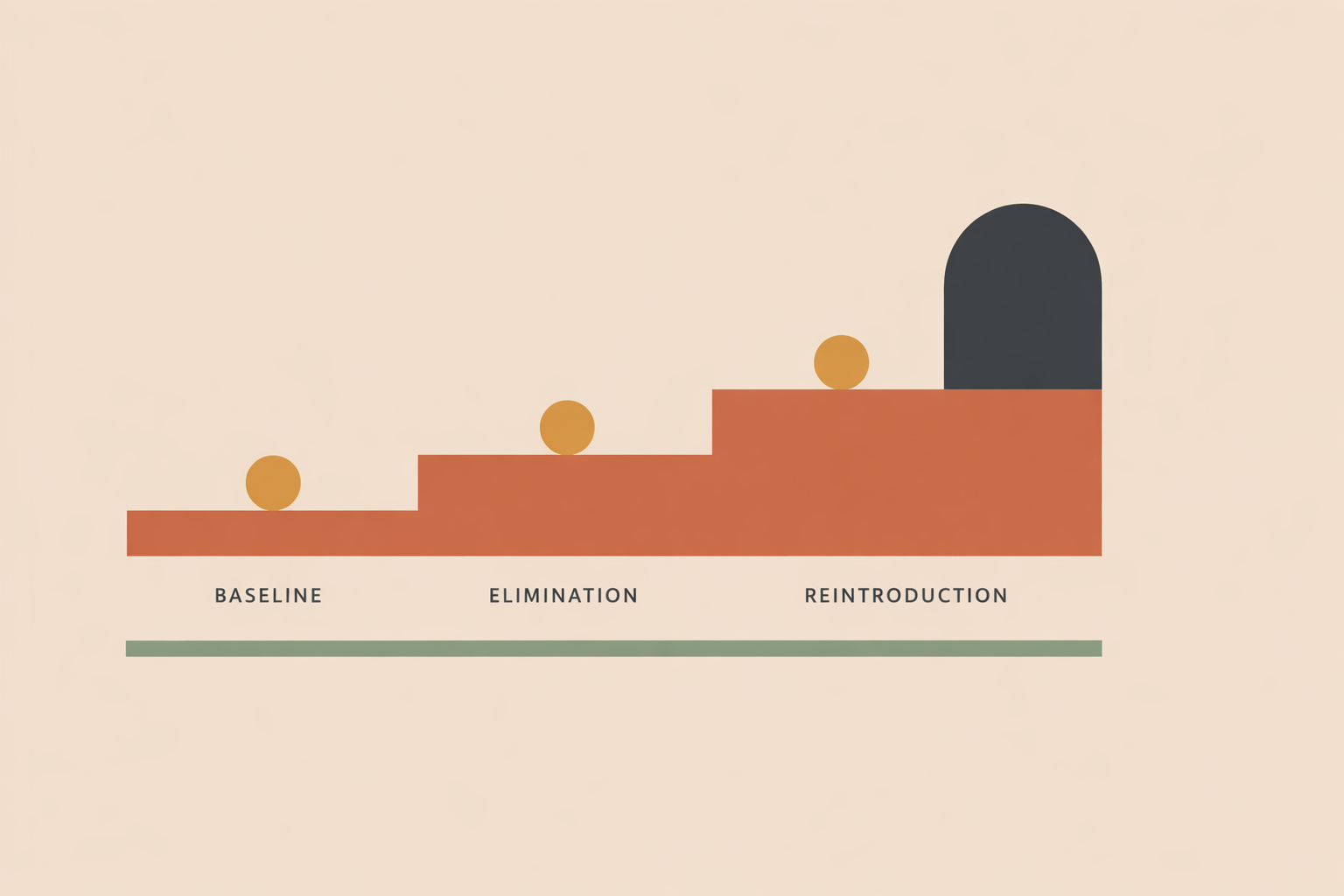
Key Takeaway: Use a carnivore-style approach as a short, structured elimination to clarify IBS triggers—not as a first-line or permanent diet. Start by screening fit and red flags. Then set a clear timeframe, outcomes, and stop-rules. Track a baseline before changing meals. Keep the food list simple, meal timing steady, and adjustments small. If the pattern continues beyond a brief trial, pay attention to nutrient coverage and longer-term well-being. Then reintroduce foods methodically so the client can move toward a less restrictive, more sustainable diet.
Step 1: Screen Whether a Carnivore-Style IBS Trial Is a Good Fit
For most practitioners, gentler changes come first, with stricter eliminations held in reserve. IBS guidance points to low-FODMAP as the best-supported restrictive approach, which makes a carnivore-style phase a selective tool rather than a default starting point.
Screening protects the client. A meat-only phase is highly restrictive, and it’s usually a poor fit for anyone at risk of malnutrition, dealing with food insecurity, or navigating an eating disorder. IBS guidance flags restrictive diets as unsuitable in those situations.
When the fit is strong, it’s typically with a motivated client who wants a simple framework, has already explored more moderate adjustments, and is genuinely willing to reintroduce foods later.
Client snapshot: Maya, 34, has IBS-M with daily bloating and unpredictable bowel movements. She has already worked on meal regularity and lower-FODMAP choices with partial relief. There is no history of obsessive food rules, and she has stable access to fresh foods. She is open to a defined 3- to 4-week experiment if it stays structured and reversible.
- Quick screening questions:
- What would make this experiment feel worthwhile in 3 to 4 weeks?
- Have you noticed any major warning signs or symptoms that need separate support?
- Do you have steady access to fresh animal foods and a basic way to prepare them?
- Does a stricter food phase tend to make you feel calmer, or more obsessive and stressed?
- Are you willing to reintroduce foods after the trial rather than staying in elimination mode indefinitely?
If the fit is poor, don’t force it. A broader, less restrictive plan is often the wiser move.
Step 2: Set a Clear Goal, Timeframe, and Exit Plan
A carnivore-style phase works best when it has a beginning, a purpose, and an end. In IBS work, elimination frameworks generally use short-term restriction followed by reintroduction, and the same structure keeps this approach grounded.
Before changing any meals, agree on three things: how long the experiment will last, what improvement you’re looking for, and what signs mean it’s time to stop.
Example agreement:
- Length: 4 weeks of strict carnivore-style eating, then 2 weeks of reintroduction.
- Main aims: Less urgency, less bloating, and calmer mornings.
- Included: Fresh beef, lamb, poultry, pork, fish, shellfish, eggs, animal fats, salt, water, and simple herbal teas.
- Excluded at first: Dairy, processed meats, sweeteners, spice blends, sauces, and packaged meat products.
- Meal rhythm: 2 to 3 meals per day, with no pressure to fast.
- Success markers: More predictable bowel movements, lower bloating, less pain, better energy, or greater confidence leaving the house.
- Stop-rules: Worsening loose stools, marked fatigue, escalating food fear, clear undereating, or a strong sense that the plan is becoming destabilizing rather than supportive.
This turns a trend-driven idea into a practical coaching container—clear enough to learn from, and safe enough to step away from if it isn’t helping.
Step 3: Record a Baseline Before Changing Meals
Without a baseline, it’s easy to over-credit (or unfairly blame) the diet. Spend a few days capturing the current pattern before the first carnivore-style meal so you have a real comparison point.
IBS guidance repeatedly highlights everyday levers like meal frequency, meal size, fat intake, fluids, and fiber. Those details often shape symptoms as much as the food list itself.
What to track:
- Bowel pattern: Frequency, consistency, urgency, and timing.
- Digestive comfort: Bloating, abdominal discomfort, reflux, or nausea.
- Energy: Morning steadiness, afternoon dips, and general resilience.
- Sleep: Bedtime, wake time, and perceived sleep quality.
- Current eating pattern: Foods eaten, meal spacing, caffeine, alcohol, sweeteners, and heavily processed items.
- Context: Stress, menstrual phase, travel, training load, and anything else that may influence symptoms.
Sample note: “Coffee and toast at 7 a.m.; urgent bowel movement at 8:30 a.m.; salad at lunch; bloating by mid-afternoon; pasta in the evening; energy low by 4 p.m.”
Once the baseline is clear, the trial becomes far easier to interpret.
Step 4: Build a Simple Carnivore Meal Framework
Simplicity creates cleaner feedback. In the opening phase, stick to a short list of fresh animal foods cooked plainly so patterns are easier to spot.
A basic starting list often includes beef, lamb, poultry, pork, fish, shellfish, eggs, and simple animal fats. Many practitioners leave processed meats out at first because curing agents, spices, sweeteners, and additives can muddy the picture; that same simplicity is central to keeping carnivore safe and sustainable in other coaching contexts too.
Dairy deserves a deliberate choice. Lactose is a common trigger for some people, while others tolerate certain dairy foods well. In practice, some clients do better with lactose-free dairy or hard cheeses than with milk, cream, or softer dairy. When symptoms are loud, a short dairy-free start often makes the data easier to read.
Meal rhythm matters too. Early on, two or three predictable meals are usually steadier than long gaps, irregular snacking, or oversized evening meals. IBS guidance generally supports regular meals over skipped meals and large intakes.
Simple starter meals:
- Eggs cooked gently in a small amount of ghee or tallow
- Plain beef patties with salt
- Salmon or white fish with its natural juices
- Chicken thighs or lamb, cooked simply and eaten without sauces
Keep seasonings minimal at first. A calm, repeatable pattern beats an expanding list of “allowed foods.”
Step 5: Use Biofeedback to Adjust Meal Size, Fat, and Timing
Once the trial begins, the client’s feedback becomes the compass. Stool pattern, bloating, urgency, energy, and mood all inform the next small adjustment.
Many people feel better when fermentable carbohydrates drop. IBS guidance notes that reducing difficult-to-digest carbohydrates can improve symptoms, which helps explain why a simplified carnivore-style phase sometimes brings relief.
Common patterns to watch:
- Loose stools after adding lots of fat: Big jumps in added fats can overwhelm digestion, especially for diarrhea-prone clients. Often it helps to rely more on the natural fat in whole cuts and pull back on rendered fats for a few days.
- Constipation: Some clients settle with more fluids, steadier movement, and adequate portions rather than long fasting gaps.
- Headache, fatigue, irritability: A quick shift away from a higher-carb pattern can feel bumpy. Regular meals and well-salted food often smooth the transition.
Client scenario: Evan, 41, increased butter dramatically and noticed urgency soon after meals. Reducing the added fat and relying more on whole-food protein brought things back to a steadier place within a couple of days.
Helpful micro-adjustments:
- Adjust added fat in small amounts rather than big jumps.
- Keep meal times fairly consistent through the work week.
- Track hydration and salt intake alongside symptoms.
- Add a short walk after meals and note any difference in comfort.
The tone to hold is neutral. A reaction isn’t failure; it’s useful information.
Step 6: Protect Nutrient Sufficiency if the Trial Lasts Longer
Animal foods can be deeply nourishing, and many traditional food cultures have relied on them heavily. They offer abundant protein and are naturally rich in vitamin B12, heme iron, zinc, and selenium. A short reset and a long-term pattern, however, call for different planning.
If a client wants to continue beyond a brief experiment, pay attention to what a strict meat-only pattern may undersupply, including vitamin C, vitamin D, calcium, magnesium, iodine, and fiber.
Very-low-fiber eating can reduce gas for some people in the short term, but it can also mean very low fiber overall, which may leave stool bulk and ease of passage less supported. Reviews also note that very meat-heavy patterns are linked with elevated LDL in some individuals, so longer-range awareness matters when someone wants to continue.
Ways practitioners often broaden support without abandoning the framework:
- Rotate animal foods rather than relying on only muscle meat.
- Use shellfish, oily fish, eggs, and occasional organ meats if the client is open to them.
- Support steady meal timing, sleep, movement, and sunlight exposure as part of the bigger picture.
- If the pattern continues, encourage the client to review basic health markers with an appropriately qualified professional.
The aim is stewardship: if something helps, it deserves thoughtful support.
Step 7: Reintroduce Foods Methodically and Move Toward a Broader Diet
This is where the experiment pays off. A carnivore-style phase is most useful when it functions like a bridge: symptoms settle, and then you rebuild variety with intention.
Standard IBS frameworks pair a limited phase with reintroduction and personalization. That’s central to reintroduction work, and it’s what keeps elimination from becoming an endless holding pattern.
Choose the reintroduction date before the trial begins, or define the marker that signals readiness. Then add one food at a time in modest portions, keeping the rest of the routine steady. Improvements during a carnivore-style phase can come from multiple shifts at once: fewer fermentable foods, fewer additives and sweeteners, steadier meal timing, or simpler combinations.
Simple reintroduction ladder:
- Days 1 to 3: Add one well-tolerated, simple food such as cooked zucchini.
- Days 4 to 6: If stable, test a plain starch such as boiled potato.
- Days 7 to 9: Add a fruit or another gentle whole food in a small portion.
Build variety slowly. If fiber is coming back in, increase it gradually, since increase fiber tends to land better step by step.
The best endpoint is usually a calmer digestive pattern paired with the widest menu the client can comfortably sustain.
Conclusion: Use Carnivore-Style IBS Meal Planning as a Tool, Not an Identity
A carnivore-style phase can be a strong option when it’s structured, time-limited, and paired with a real exit plan. Used well, it can quiet the noise, reveal patterns, and give clearer feedback for next steps.
When it helps, treat that as a clue. The driver might be simplicity, timing, fewer additives, or a lower fermentable load. From there, keep what worked, reintroduce thoughtfully, and aim for a more varied routine that still feels steady; that broader nutrition-and-behavior lens is part of nutrition and diet coaching more generally.
If it doesn’t help, let it go without drama. The clearest signal is the client’s lived experience. Traditional food wisdom, practical observation, and evidence-informed coaching all support the same direction: run the experiment carefully, watch the feedback honestly, and choose the least restrictive approach that still delivers real relief.
Master Carnivore Diet Coaching
Build a safer, structured IBS elimination and reintroduction approach with the Carnivore Diet Health Coach Certification.
Explore Carnivore Diet Certification →