Wellness advice often sounds straightforward: choose a tincture for faster effects. Real life is messier. Someone takes CBD oil at lunch, feels nothing by early afternoon, takes more, and later feels foggy in a meeting. Often, the product isn’t the problem. Timing is.
Key Takeaway: When CBD is swallowed, oils and capsules often behave more similarly than people expect. The biggest practical differences usually come from technique, meals, formulation, and the urge to redose too early. Clear timing guidance helps people avoid stacking, log their responses more usefully, and choose a format that fits their routine.
CBD oil vs capsules: why timing matters in practice
Good guidance starts with expectations. When people know what “normal timing” looks like, they’re far less likely to chase results by taking more too soon.
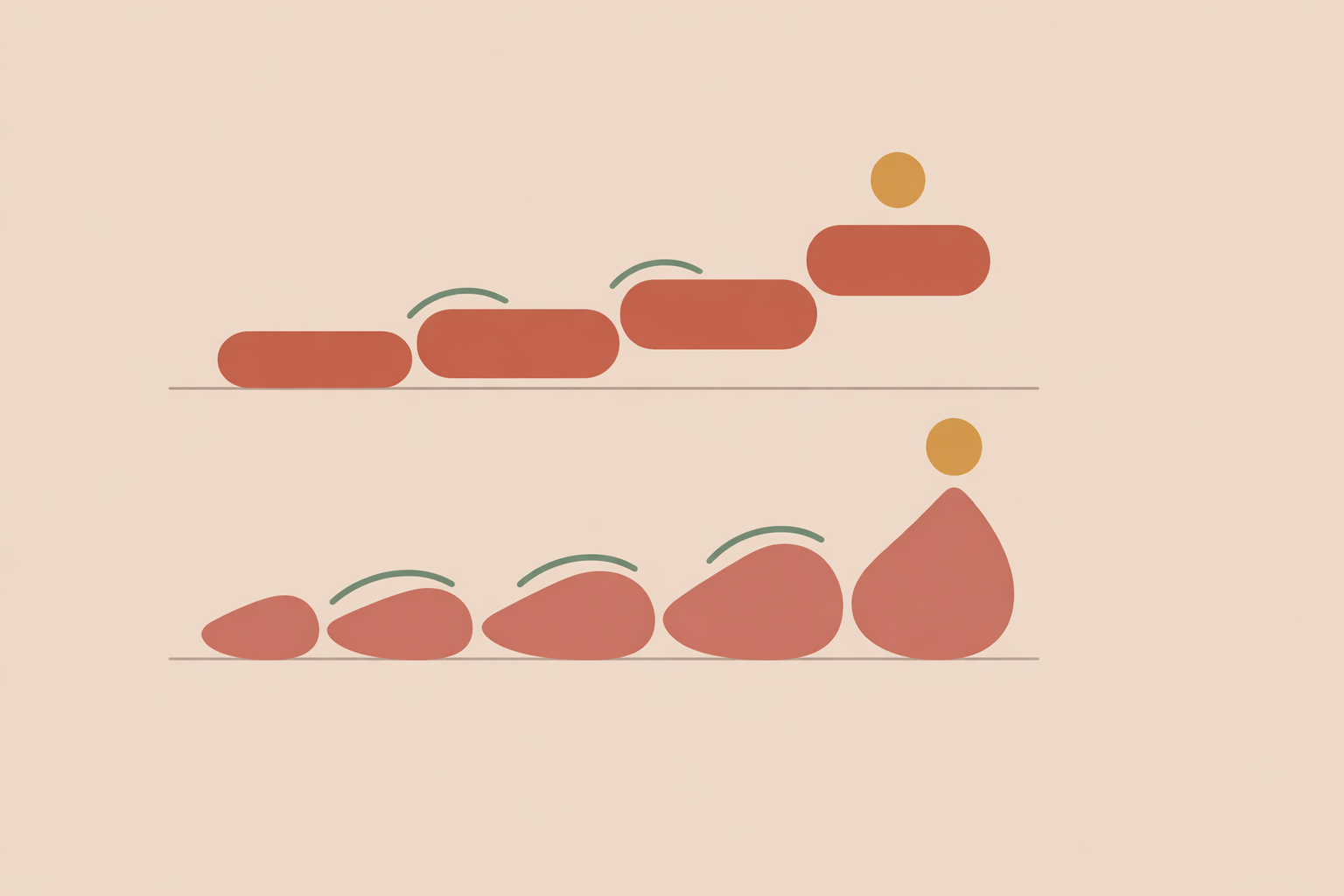
With most swallowed formats, the first noticeable shift often shows up after 30 to 120 minutes, not within minutes. And peak levels can arrive hours later. That delayed peak is the common “stacking” window, where a second dose is added before the first has fully shown itself.
Traditional cannabis practice has long respected this arc. In many lineages, edible and oil-based preparations were approached with patience, knowing effects unfold over hours. That timing awareness is a practical safety habit with deep roots, not a new complication.
A concrete timeline helps people stay steady: “If you take a capsule with lunch at 12:30, you may notice the first hints sometime between 1:30 and 3:00, and the fuller arc may come later.” When someone hears that upfront, they’re much less likely to second-guess the plan.
- First noticeable change is not the same as peak effect.
- Different people can feel the same dose at different points in the curve.
- Clear waiting windows protect trust and make feedback more useful.
What happens after you swallow CBD oil or capsules
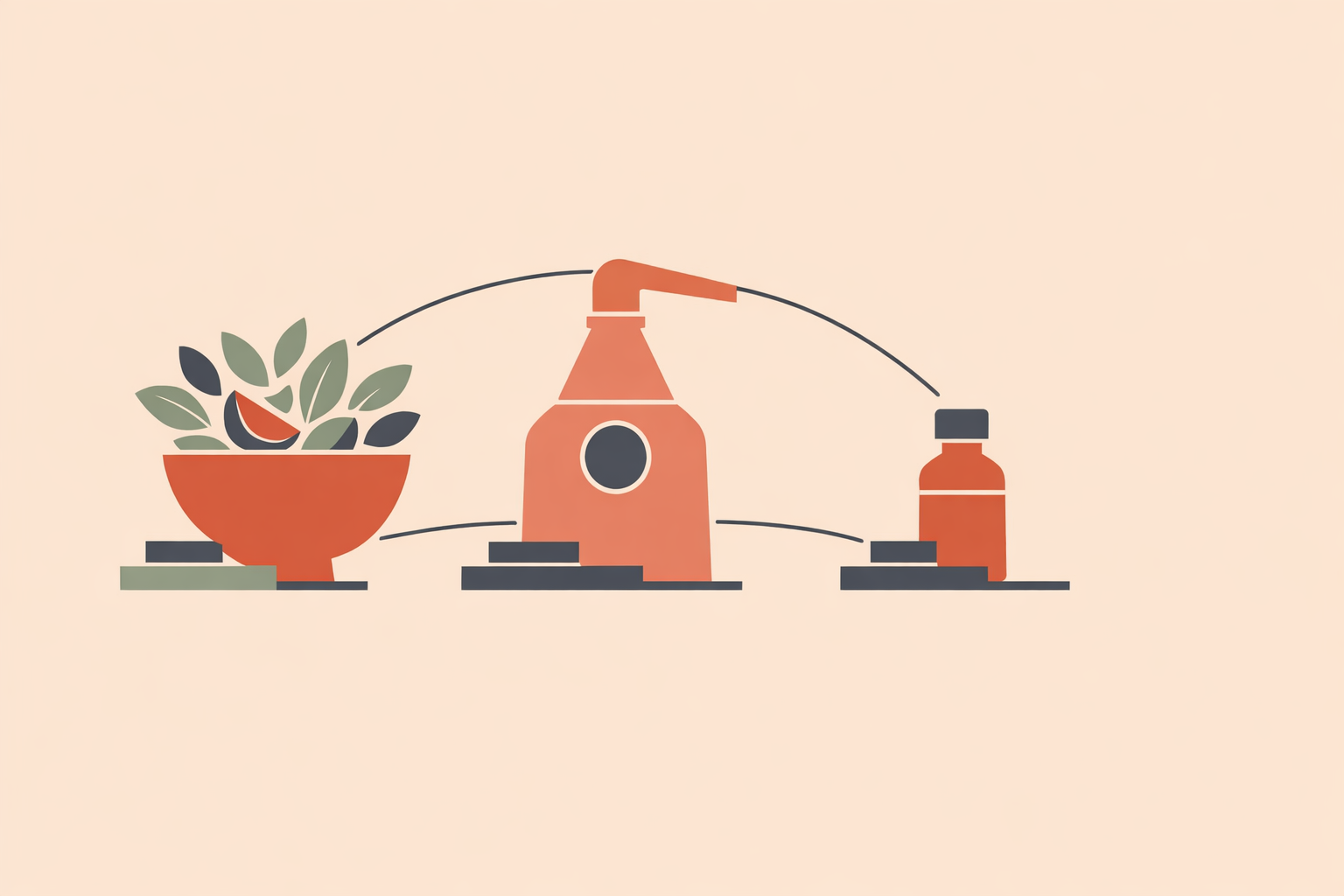
Once swallowed, CBD oil and CBD capsules travel a similar route. Both move through the gut, pass through the liver, and then enter the bloodstream.
Research reviews describe gastrointestinal absorption alongside substantial liver metabolism. In everyday use, that’s why oral CBD can feel different from one person to the next, and even from one day to another. It also explains why “oil” doesn’t automatically mean faster once it’s been swallowed.
- Capsule: the shell breaks down and releases CBD into digestive contents.
- Oil: the liquid mixes with what is already in the stomach.
- Both: CBD is absorbed through the digestive tract, processed by the liver, and then circulated.
Reviews also suggest oral CBD often reaches peak concentration within roughly 1 to 4 hours, with plenty of real-world variation depending on food, formulation, and the individual. This overlap is why oils and capsules can feel surprisingly alike when used the same way.
So if one person takes 20 mg as an oil at 8:00 a.m. and another takes a 20 mg capsule with breakfast, their timing can still land in a similar range. The label changes, but the pathway often doesn’t.
Do sublingual CBD oils really act faster than capsules?
Sometimes, yes. Always, no.
A tincture can feel faster when CBD is held in the mouth long enough for some absorption through oral tissues. In day-to-day routines, though, what people call “sublingual” is often mostly swallowed. A pharmacokinetic paper notes growing consensus that most CBD held under the tongue is eventually swallowed and absorbed through the digestive tract.
That’s one reason the real-world gap between oils and capsules is often smaller than marketing suggests. In contrast, specialized oromucosal products used in studies tend to show faster onset than typical retail tinctures.
Technique makes the difference. If someone uses a large volume, swallows within a few seconds, or drinks right after, their results may closely resemble a standard swallowed dose.
In practice, a truer oromucosal approach usually looks like this:
- Use a small volume so it is easier to hold comfortably.
- Hold it under the tongue for 60 to 120 seconds.
- Let it move gently around the lower mouth rather than swallowing quickly.
- Wait a few minutes before eating or drinking.
Even with great technique, variability remains. Reviews of retail products still describe major variability across formulations and users, so it’s best framed as a route that can feel faster for some people rather than a promise.
How food and formulation can outweigh oil-vs-capsule differences
Meals often shape the experience more than the oil-versus-capsule choice itself.
Food, especially fat, can meaningfully change CBD exposure. That doesn’t always translate to “faster,” but it can make the overall arc feel stronger or longer. One source notes that, in some contexts, a high-fat meal may delay peak timing rather than speed it up.
This is why two people can report opposite experiences and both be accurate: one feels CBD more strongly with food, while another feels it later. Intensity and timing don’t always move together.
The most useful coaching lever is consistency. When someone alternates between empty stomach, heavy meal, and random snacking, their timing signals get noisy and hard to interpret.
- Take it with a similar meal pattern for at least several days.
- Log whether it was empty stomach, light snack, or fuller meal.
- Notice both first shift and fuller arc, not just one or the other.
Formulation matters too. Lipid-based systems, liposomes, and cyclodextrins may improve exposure in some experiments. Still, “nano” or “fast-acting” claims are product-specific, and real-world advantage depends on the exact formula and how someone uses it.
Turning timing science into practical dosing guidance
The aim is a calm rhythm: take, wait, observe, log, then adjust.
For swallowed CBD, plan around the fuller arc, not the first hint. Most misreads happen when someone notices a small change, assumes that’s the full effect, then adds more.
Redosing too soon raises the chance of overshooting because peak levels can land hours after the first perceived shift. A cautious default is to wait 4 to 6 hours before judging a swallowed dose or adding more, especially after a substantial meal.
Steady routines matter over days as well. Reviews report a long half-life with repeated oral use, which fits what many practitioners see: effects can build gradually, and sudden increases can feel confusing later.
This explanation often helps people stay patient: “Tonight’s dose does not only belong to tonight. Repeated use can carry forward, so we change one thing at a time and give the pattern time to show itself.”
- Wait before redosing.
- Keep meal timing consistent.
- Increase gradually rather than in large jumps.
- Give repeated routines several days before interpreting the pattern.
Use timing logs to make patterns visible
Timing logs turn vague impressions into usable information.
A short 7- to 14-day log is often enough to show whether the main driver is format, food, timing, or routine inconsistency. Keep it lightweight so it actually gets done.
- Product name and batch
- CBD amount and format
- Time taken
- With or without food, plus meal type
- First noticeable shift
- Fuller peak window
- Duration and any unwanted heaviness or sleepiness
- Relevant context, such as travel, stress, caffeine, or cycle phase
An entry might read: “15 mg capsule, 8:10 a.m., yogurt and nuts. First shift 9:05, fuller effect 10:30 to 11:30, energy steady until mid-afternoon.” That’s usually plenty to guide the next small adjustment.
Choosing between CBD oil and capsules when timing is a priority
There’s no universal winner. The best choice is the one that matches someone’s routine, preferences, and sensitivity.
- Capsules are simple, discreet, and easy to keep consistent.
- Oils are flexible and often easier to adjust in small increments.
- Oromucosal use can feel faster for some people, when technique makes the difference real.
Capsules often suit people who dislike taste, want a no-fuss habit, or prefer pre-measured consistency. Oils are helpful for careful fine-tuning and for anyone who wants to compare swallowed timing versus held-in-mouth timing more deliberately, much like the practical trade-offs people weigh in CBD oil vs gummies conversations.
For many people, the easiest decision is to match the format to the rhythm of the day:
- Morning structure and predictability: capsules often work well.
- Small adjustments around changing schedules: oils may be easier.
- People sensitive to subtle shifts: smaller oil-based increments can be easier to explore.
Quality, boundaries, and practical care
Whichever format someone prefers, quality sets the foundation.
It’s good practice to review a Certificate of Analysis together and confirm it matches the product in hand, including batch details, CBD amount, THC content, test date, lab identity, and contaminant screening. That keeps decisions grounded in evidence rather than marketing, especially when broader CBD extraction methods shape what a label can and cannot tell you.
It’s also worth remembering that CBD can interact with other substances and won’t suit every situation. If someone is following a prescription plan or has broader safety questions, keep your role clear: support timing, observation, and informed choices, and encourage them to confirm compatibility with the licensed professional overseeing their plan.
A simple boundary-setting script works well: “We can build a clear timing plan and track your responses carefully. If anything in your wider plan could affect suitability, bring this into conversation with the professional overseeing those decisions.”
Conclusion: steady timing beats fast-acting promises
CBD oils and capsules are often closer in timing than people expect once the CBD is swallowed. What shapes the experience most is usually technique, meals, formulation, consistency, and patience.
The most reliable approach is also the least flashy: choose a format that fits daily life, keep the routine steady, avoid rushing redoses, and let the pattern reveal itself. For practitioners building skills in herbalism and plant medicine, that kind of steady observation is part of the craft.
When ancestral timing wisdom meets careful modern observation, people tend to feel more grounded, more confident, and less tempted by quick fixes. That steady clarity supports better choices over time, and for readers wanting to go deeper into medicinal CBD, there’s a structured next step below.
Explore Medicinal CBD Certification
Build clearer CBD timing and dosing habits with the Medicinal CBD Certification.
Explore Medicinal CBD →