Many coaches approach low self-esteem through 1:1 support: a thought record here, a reframe there, a gentle push toward new actions. That work helps, yet groups offer a different kind of catalyst. When someone hears their private self-criticism echoed by others, shame often loosens. The belief “it’s just me” starts to fade, and kinder thinking becomes easier to practice in real time.
Key Takeaway: A structured CBT self-esteem group can be a powerful format for rebuilding self-worth because it combines practical cognitive tools with live reflection, shared learning, and steady accountability. The most effective groups usually keep a clear scope, follow a simple 6- to 8-session arc, repeat a small set of core practices, and create a warm, respectful culture where participants can experiment with kinder self-talk and more confident action.
Why CBT self-esteem groups work so well
Low self-esteem grows quietly. A group brings those patterns into the open in a steady, respectful way, so people can challenge self-criticism with support rather than isolation.
Another advantage is social learning. Participants don’t only hear the tools explained; they watch peers test a feared assumption, try a different response, and return with a more balanced perspective. That “I saw it work” experience gives the skills weight.
There is also research showing CBT-based approaches can improve self-esteem across settings and age groups. In day-to-day facilitation, the group format often adds momentum because people start experiencing themselves differently in relationship, not only in their own heads.
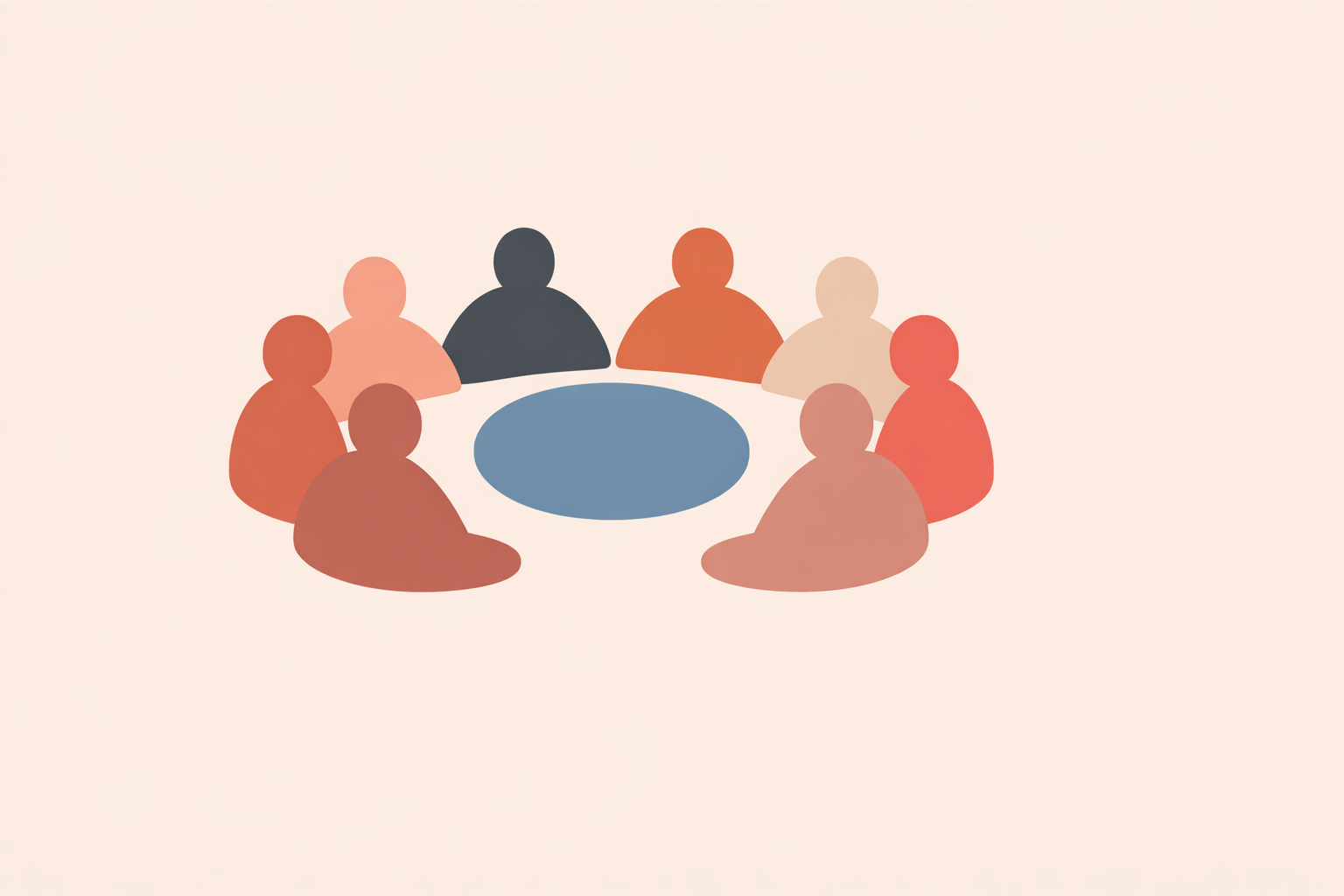
Picture an eight-person circle. One participant says, “When my manager emails late, I assume I’ve done something wrong.” Several people nod. Another says, “I do that too.” In that moment, the thought starts to look less like truth and more like habit.
Bringing circle wisdom into structured CBT
CBT can be clear and structured without feeling clinical. Long before modern frameworks, communities gathered in circles to share stories, reflect on values, and find steadiness together. A strong self-esteem group can honor that human tradition while still teaching practical skills.
This can be as simple as a brief values round at the start, a short moment for personal stories, or a closing reflection. Small rituals help the space feel grounded and human, not scripted.
Many programs in schools and communities use facilitator-led group formats and report gains in self-esteem. With a clear frame and steady facilitation, this work translates well beyond specialist settings.
The practical point: structure and warmth belong together. Teach automatic thoughts, core beliefs, and behavioral experiments, and let those tools live inside a respectful group culture. That’s often where the deeper shifts take root.
Setting scope, ethics, and group fit
Before the first session, set expectations plainly. A CBT self-esteem group sits within a coaching and well-being frame. It supports self-talk, confidence-building, emotional awareness, and practical behavior change. It is not the right place for crisis support.
People who often benefit from this kind of group include those dealing with:
- persistent self-criticism
- social hesitation or fear of being judged
- impostor-type patterns
- low confidence at work or in relationships
- stress-related dips in motivation or mood
Some people need a different level of support. If someone can’t stay safe, feels overwhelmed to the point daily life is hard to manage, or needs more intensive help than a group can responsibly hold, referral is the ethical next step.
A simple screening process helps. Keep it kind and direct. You might say: “If things feel too overwhelming right now for a structured group space, we can help you find support that is a better fit.”
Your core safeguards should include:
- a brief pre-group conversation to assess fit
- a clear explanation of your role and scope
- a referral pathway for participants who need additional support
- a group agreement covering confidentiality, consent, respectful participation, and opt-outs
Clear boundaries help people relax. When the container is steady, participants take the small interpersonal risks that self-esteem work requires.
A simple 6- to 8-session CBT self-esteem group plan
A short series can create meaningful change when the structure stays consistent. Keep the arc simple, and keep coming back to the same foundations.
- Session 1: Introduce the cognitive triangle, map the self-esteem cycle, and set group agreements.
- Session 2: Teach common thinking habits such as mind-reading, all-or-nothing thinking, and discounting positives.
- Session 3: Practice cognitive reappraisal and introduce small behavioral experiments.
- Session 4: Explore the link between body state, stress, and self-perception using grounding and paced breathing.
- Session 5: Identify rigid rules such as “I must get everything right” and reshape them into more flexible guidelines.
- Session 6: Work with deeper beliefs and gather real-life counter-evidence through strengths reflection.
- Session 7: Build a maintenance plan with early signs, go-to practices, and support people.
- Session 8: Close, reflect, celebrate progress, and set a plan for follow-up if you offer one.
This format aligns with evidence that CBT-based self-esteem interventions can lead to improvement. In practice, the advantage of a 6- to 8-session arc is repetition. People need multiple rounds of noticing a pattern, challenging it, trying something new, and reflecting before a new belief feels credible.
One useful ritual is to begin each session with a quick round: “What did you practice, and what did you notice?” It keeps progress visible and reinforces effort over perfection.
The core tools that do most of the work
You don’t need a long menu of techniques. A strong self-esteem group can run on a few core practices used consistently.
Thought records help participants slow down a self-critical spiral and examine it carefully. The flow stays straightforward: name the situation, identify the automatic thought, check the evidence, and create a more balanced alternative.
- Situation: “My manager asked to speak with me.”
- Automatic thought: “I must have done something wrong.”
- Evidence for: “The message was brief.”
- Evidence against: “They thanked me for my work yesterday.”
- Balanced thought: “It may be routine. If it is feedback, I can handle it.”
Behavioral experiments help people test feared predictions instead of obeying them. Someone who believes, “If I ask a question, people will think I am foolish,” can design a tiny real-world test and come back with what happened. Confidence grows fastest when it’s built from lived experience.
Strengths reflection broadens identity. Many people with low self-esteem are quick to spot flaws and slow to recognize resources. Peer reflection interrupts that pattern with warmth and specificity. A simple round like “What strength did you hear in their story?” can steady the whole group.
Grounding and paced breathing also support the work, especially when self-criticism rises alongside visible stress. When the body settles, people usually find it easier to think clearly and use the cognitive tools with care and accuracy.
How to hold the group well
Skills matter, and so does the culture of the room. Aim for a space that feels warm, inclusive, and predictable.
Useful norms include:
- speak from your own experience
- reflect before advising
- comment on thoughts and behaviors, not identity
- leave room for everyone
- pass when needed
A few light rituals can strengthen the container without turning the group into performance:
- a one-word check-in at the start
- a brief breath or pause before skill practice
- a closing round naming one thing learned, practiced, or noticed
Traditional forms of gathering can fit beautifully here when used respectfully and matched to the group’s context. A simple circle format, shared reflection, or gratitude close can build belonging without borrowing from cultural practices that aren’t yours to lead.
Keeping progress going after the group ends
Self-worth grows through repetition, so the final session should feel like a handover into ongoing practice.
A simple maintenance plan works best. Invite each participant to identify:
- their early signs of slipping back into harsh self-talk
- two or three practices that help most
- one person they can reach out to
- an if-then plan for common setbacks
For example:
- If I withdraw for several days, then I will message my accountability partner.
- If I start assuming the worst, then I will complete one thought record that evening.
- If I avoid a task twice, then I will do a 10-minute starter version instead of waiting to feel ready.
Brief review rituals help people keep momentum. Some facilitators suggest a weekly 10-minute check-in focused on self-talk, values, and one small experiment for the week ahead. Others offer an optional reunion or booster circle after a few months, which can help participants reconnect with the practices before old habits return.
Self-esteem rarely changes from a single insight. It shifts as people keep meeting themselves with more respect, again and again.
Turning a CBT self-esteem group into a living practice
A good self-esteem group is more than worksheets. It’s a clear structure, a respectful container, a handful of reliable tools, and a culture that helps people loosen old stories about their worth.
When CBT skills are taught in a circle with warmth and integrity, participants learn to challenge a thought and build new experience in relationship. Over time, they often feel more capable and less alone.
Start simple. Keep the scope clean. Repeat the basics. Let the group show you what pacing, language, and closing rituals fit your community best.
One note to close: group work needs thoughtful screening, clear agreements, and referral pathways for anyone who requires a higher level of support than a coaching group can hold. With those safeguards in place, this format can be a steady, respectful way to support real change.
Master CBT Skills
Deepen your group-ready tools with the Cognitive Behavioral Therapy Course and strengthen thought records, reframes, and experiments.
Explore the CBT Course →