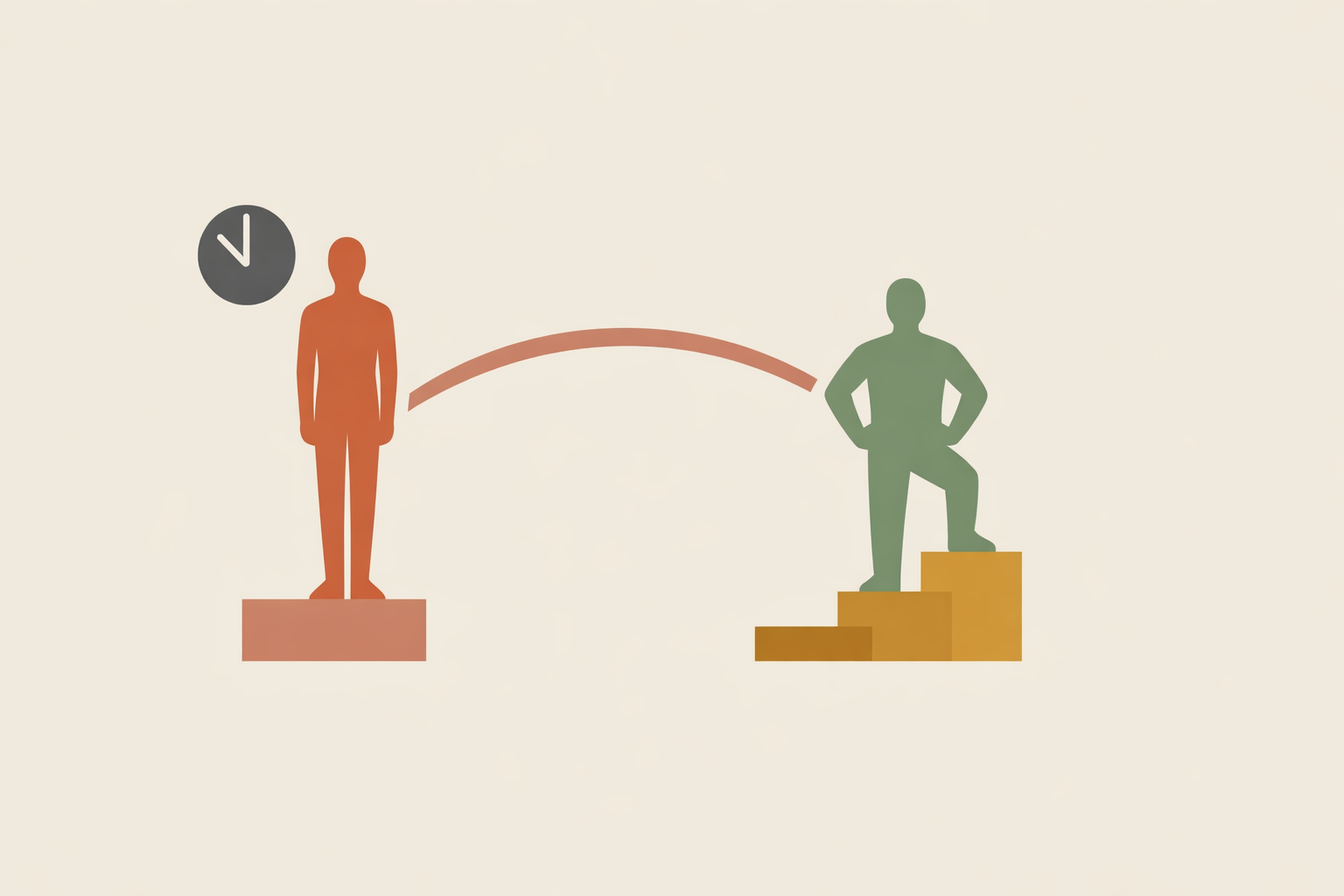
Age brackets make planning feel neat: programs “for over-60s,” progressions mapped by decade, expectations attached to a birth date. Then a 68-year-old pops up from a chair with ease while a 55-year-old struggles on the stairs, and the template stops helping. In real life, chronological age only tells part of the story.
Biological age gives a steadier lens. When a plan is built around both the calendar and the body’s current capacity, it becomes easier to choose the right pace, set realistic goals, and protect long-term independence.
Key Takeaway: Longevity coaching works best when you plan around biological age and healthspan rather than birth date alone. Simple functional markers such as walking pace, chair rises, and balance often give a more useful picture of real-world aging than speculative testing. From there, Blue Zones–inspired habits—daily movement, plant-forward eating, sleep, connection, purpose, and supportive routines—can be translated into small rituals that clients can sustain.
Chronological vs Biological Age: Seeing the Person Beyond the Number
Chronological age is years since birth. It offers life-stage context, but it does not reliably predict how someone moves, recovers, or handles daily demands.
Biological age reflects the body’s current pace of wear and renewal. Two people born in the same year can show very different stamina, strength, clarity, and resilience, so they often need different kinds of support.
This gap is shaped by both early influences and present-day choices. Early-life influences can leave a long imprint, and food patterns, movement, stress load, and social connection continue to shape how aging expresses itself over time.
For practitioners, this reframes the work immediately. A birth date may suggest caution, yet the body may be ready to build capacity. Or someone younger on paper may benefit from slower pacing, more recovery, and a gentler starting point.
Function makes this visible fast. When one client rises easily from a chair, balances steadily, and walks with ease while another struggles with those basics, the plan should reflect that reality.
From Lifespan to Healthspan: Planning for Functional Longevity
Most people don’t just want more years. They want more good years. That’s healthspan: time lived with mobility, clarity, steadiness, and autonomy.
When clients say “longevity,” they usually mean everyday freedom—walking confidently, carrying groceries, getting up from the floor, traveling, cooking for family, and staying involved in what matters to them.
This is why functional longevity makes such a useful coaching north star. It pulls the focus away from abstract numbers and back to real-life capability.
Blue Zones observations have long pointed in the same direction. Long-lived communities tend to build vitality through ordinary patterns: regular natural movement, simple shared meals, purpose, and strong social fabric. The power is in steady rhythms that can last for years.
One of the best shifts is translating lifespan wishes into lived-function goals. “I want to live to 100” becomes “I want to climb stairs comfortably, carry two shopping bags, and host family lunch without feeling wiped out.” Now the plan has traction.
Measuring Biological Age: Start With Function
Start with what the body can do today. Biological age is not captured by one perfect number, and no single test fully summarizes how someone is aging.
Advanced tools like epigenetic clocks, telomere measures, and composite biomarker models can be interesting, but daily coaching decisions usually sharpen when you begin with function.
In practice, simple performance markers often tell you more. Chair-rise performance can quickly reflect lower-body strength, coordination, and comfort with everyday transitions.
Walking pace, balance, and basic strength checks also tend to track closely with real-world aging.
A combined view works best. Traditional vitality markers such as morning freshness, stable appetite, regular elimination, smooth mood, and deep sleep have long helped practitioners read the body’s rhythm. Paired with function, they often give a clearer picture than any isolated metric.
This approach also aligns with modern thinking: functional assessment remains critical when you want a realistic view of how someone is doing.
A simple mini-battery might include:
- One-leg balance
- Five-times sit-to-stand
- Comfortable walking pace
- Basic carrying, pushing, or pulling capacity
- Subjective vitality markers: sleep, appetite, elimination, mood, and morning energy
These translate directly into life: stairs, laundry, market walks, garden work, and getting up from low seats or the floor.
Assessing Real-World Age Through a Blue Zones Lens
A strong intake listens for both biography and rhythm. It’s not only “How old are you?” but also “How do you live, rest, and carry responsibilities—and where is your energy going?”
Start with life stage and obligations, then widen into movement habits, food culture, sleep, stress, relationships, and environment. This creates a map of real-world aging that a simple checklist can’t match.
Bring in function early. Short walk checks, chair rises, and basic strength checks show quickly whether someone is operating with reserve or strain.
Then look through a Blue Zones–inspired lens:
- Natural movement: Where does movement already happen in daily life—walking errands, gardening, stairs, housework?
- Food culture: Which traditional meals already support steadiness, satiety, and nourishment?
- Sleep and rhythm: Do mornings feel fresh or heavy? Is the sleep pattern settled or broken?
- Stress load: What ongoing pressures shape the client’s energy and recovery?
- Social fabric: Who shares meals, walks, rituals, or community time with them?
- Environment: What in the home or neighborhood makes supportive habits easier or harder?
This prevents generic planning. It keeps the work grounded in the client’s actual life, not an idealized version.
A session snapshot might look like this:
- Chronological age 59; caring for parents; active in family cooking
- Balance weaker on one side; chair-rise slower than expected
- Walks to market on weekends but is otherwise fairly sedentary
- Traditional bean-based meals already present several times a week
- Sleep interrupted by worry and caregiving demands
- Some community support, but not yet built into weekly routine
That blend of function, culture, and context is what makes planning precise.
Turning Assessment Into Daily Rituals
Once you know someone’s real-world age, the next step is choosing a few strong levers and turning them into repeatable rituals.
The plans that hold are simple, culturally rooted, and easy to return to. For most clients, the core levers are familiar: natural daily movement, regular strength practice, plant-forward meals, steadier sleep, and stronger connection.
These habits matter because lifestyle factors play a major role in how biological aging unfolds.
Food is often the easiest beginning, especially when you build on existing traditions. Beans, vegetables, whole grains, and simple home-cooked meals can often be increased without asking someone to abandon their culture.
Movement works best when it’s woven into the week. Walking, carrying, stairs, sit-to-stands, and a small dose of strength practice consistently outperform ambitious plans that never become routine.
Sleep and recovery deserve equal respect. When someone is depleted or under-rested, every other habit becomes harder to sustain.
An example first-phase plan might include:
- Beans or lentils at lunch most days
- A 20-minute walk after dinner five days a week
- Two short strength sessions built around chair rises, wall pushups, and loaded carries
- A consistent wind-down routine before bed
- One weekly social touchpoint linked to movement, meals, or community
Specificity is what makes rituals stick: a clear time, a familiar setting, and low friction.
Behavior Change That Supports Biological Age
Insight rarely carries a plan on its own. Repetition does, so behavior design belongs at the center of longevity coaching.
Clients do best when goals are small enough to repeat on ordinary days. “Walk after dinner on weekdays” beats “exercise more.” “Two sets of sit-to-stands after breakfast on Tuesdays and Saturdays” beats “get stronger.”
Track both fast and slow signals. Fast signals include walking consistency, perceived energy, steadier mood, easier stairs, or improved chair-rise time. Slow signals show up as broader changes in vitality, resilience, and overall capacity.
Functional markers help because progress is visible. When a client stands more easily, balances longer, or walks with more confidence, motivation becomes grounded in lived experience.
Social structure also supports follow-through. Shared walks, family meal rituals, faith communities, or a regular accountability check-in can make supportive habits feel normal.
Two useful coaching prompts are:
- “What feels realistic even on your hardest day this week?”
- “Which habit would make the next habit easier?”
These questions keep the plan humane and sustainable.
Speaking About Biological Age Without Hype
Biological age is a helpful lens, but it should never be delivered like a verdict. The most ethical tone stays calm, practical, and focused on what can be shaped.
Keep returning to function, rhythm, and daily life. A score or estimate might be interesting, but it never tells the whole story.
Context matters, too. Social conditions, long-term stress, financial strain, and earlier life adversity can shape how aging is expressed, and childhood adversity can echo for years.
This protects clients from shame. Results are information, not a moral judgment.
Traditional practice has always understood this in its own language: the body responds to food and movement, and also to rhythm, belonging, pressure, grief, purpose, and place. Modern research may describe the pathways differently, but the underlying observation remains familiar.
Use language that builds agency without exaggeration:
- “This is a snapshot, not your destiny.”
- “We’ll work with the clearest signals first.”
- “The goal is to build capacity you can feel in daily life.”
That steadiness builds trust.
Weaving Both Ages Into One Clear Plan
Effective longevity coaching respects both timelines. Chronological age offers context about life stage and responsibilities. Biological age points to current capacity, recovery needs, and smart pacing.
When you hold them together, plans become more precise and kinder. You stop programming to a category and start supporting the person in front of you.
The most dependable levers remain simple: plant-forward meals, natural movement, strength, sleep, steadier rhythms, purpose, and social connection. These are old principles because they keep proving their value across cultures and generations.
For practitioners, the craft is translation: measure what matters, read the whole person, and build rituals that fit culture, context, and season of life.
With that approach, the work supports more than extra years. It supports years that still feel like living.
Master Blue Zones Coaching
Apply functional aging markers with the Blue Zones–Inspired Anti-Aging Coach Certification to build sustainable longevity rituals.
Explore Blue Zones Certification →