When a client locks up, more questions rarely create more clarity. In frozen moments, the part you are trying to reach is often not available for deeper inquiry, so pushing for insight can tighten the very pattern you want to soften.
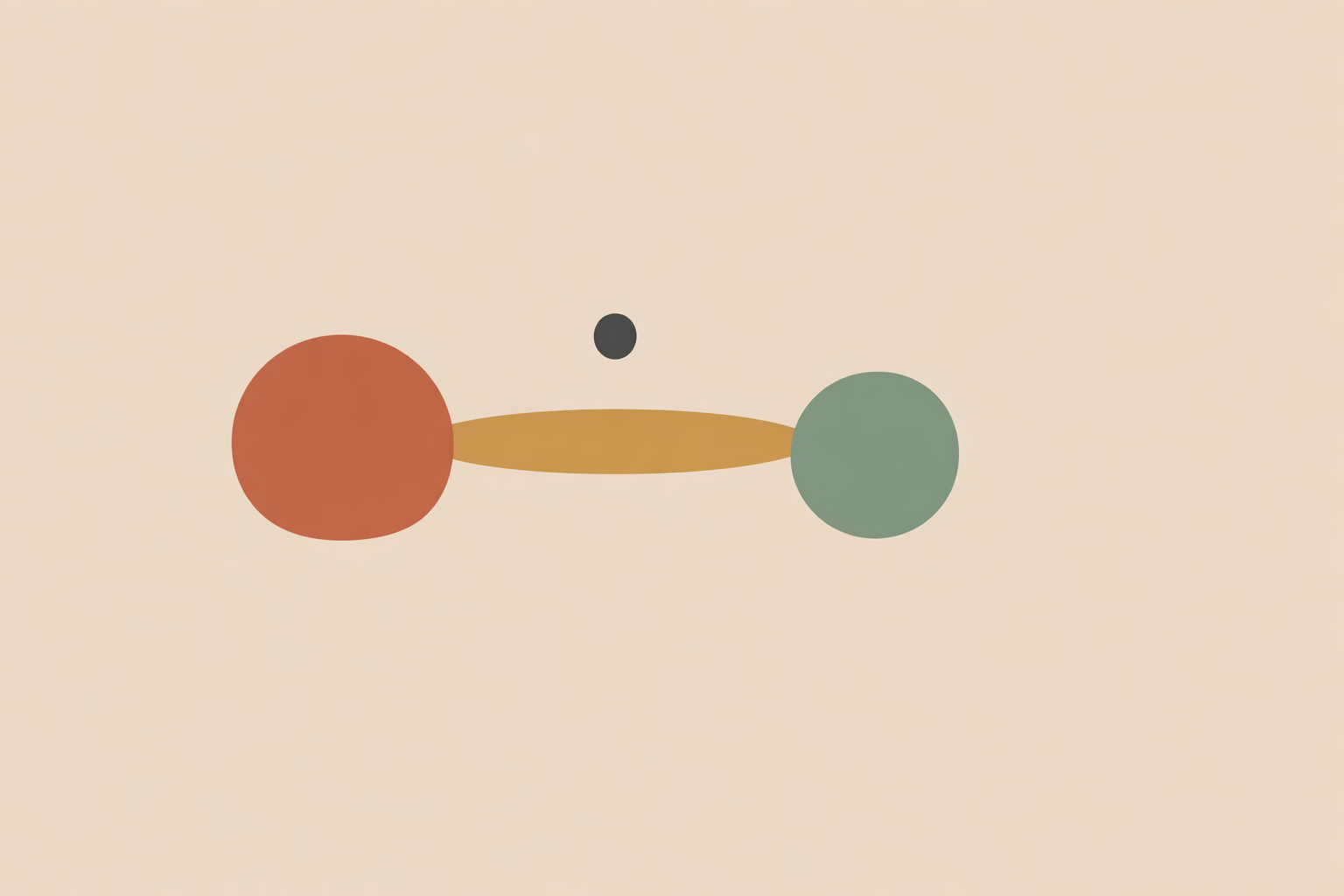
A steadier move is to change state before adding more content. Two-point offers a simple way to do that: lightly include one place that feels dense and one place that feels more neutral or supported, then rest awareness between them. Instead of forcing an answer, you create the conditions for a subtle shift.
Key Takeaway: When clients are frozen, switch from analysis to a state change using the two-point method. Lightly connect a place of contraction with a resource point so the system can settle and reorganize with less effort. Used well, this gives practitioners a gentle, repeatable structure for overthinking, heavy emotions, numbness, and remote sessions.
How the two-point method helps stuck patterns soften
Two-point works through relationship. You identify one point linked to activation, contraction, or charge, and a second point linked to neutrality, support, or ease. Then you rest awareness between them without forcing an outcome.
This echoes titration and pendulation: touching activation briefly while staying connected to something steadier, so experience can reorganize without overwhelm.
Traditional practitioners often describe this as letting a pattern loosen when it is no longer being pressed, analyzed, or resisted. The practical result is consistent in real sessions: relaxed inclusion creates more movement than mental effort.
Two-point’s mechanics also resemble older touch-and-awareness traditions found across cultures. The vocabulary varies by lineage, but the principle is familiar: light contact, receptive attention, and trust that change can arrive without force.
Practitioner state matters more than precision
In two-point work, your state matters. Exact placement can help, but an open, settled quality of attention usually matters more than getting everything “perfect.”
This aligns with therapeutic presence, where the practitioner’s quality of presence can shape outcomes independently of technique alone.
Soften your effort. Let attention widen. Stay interested, but not busy. Many practitioners find that relaxed attention is where the method becomes reliable in Quantum Entrainment and related subtle-work settings.
A helpful internal cue is: “Name the two points, include them both, then listen.”
Script for overthinking and decision paralysis
When a client is trapped in loops, connect the busy mind with a steadier point rather than feeding the loop with more content.
You might say:
- “Let’s work with the part of you that is spinning and the part that already knows how to settle.”
- “Place one hand on the forehead or crown, and the other over the heart or lower belly.”
- “With this hand, we include the looping thoughts. With this one, we include the sense that you are okay right now.”
- “Hold both gently. No need to make anything happen.”
- “Stay here for about a minute, then notice what changed, even slightly.”
This script supports decision paralysis, mental overwork, and the urgent need for certainty. What emerges is often quiet: a little more space, a little less pressure, and a clearer next step.
You can also use belief-pairing. One point represents the contracted story; the other represents a kinder or more spacious alternative. For example: “I’ll fail” and “There may be another way.” Hold both without debating either one.
Script for heavy emotions and body-based stuckness
When the experience is living strongly in the body, let the body become the map. Pair the place of intensity with a neutral or supportive anchor.
You might say:
- “Let’s include the part that feels heavy and a part that feels okay enough.”
- “Place one hand where the sensation is strongest.”
- “Place the other on your feet, your hands, the chair, or another place that feels neutral.”
- “We are not trying to get rid of the feeling. We are giving it company.”
- “Notice any tiny change in breath, temperature, texture, or pressure.”
Linking intensity with an ordinary anchor such as the chair or feet mirrors the resource-based rhythm used in pendulation.
A common outcome is that the feeling changes shape. A hard knot becomes warmer, wider, less fixed, or less urgent, and that shift is often the beginning of useful movement.
When the client feels numb: adaptations for two-point
If sensation is absent, do not push for sensation. Keep the structure and make it more symbolic.
Clients in freeze often feel numb or unable to find a clear internal resource point. That does not mean the method has failed. It means you need a gentler entry.
Useful adaptations include:
- Symbolic point: “Let this hand represent the shut-down place.”
- Space point: choose a spot in front of the body to represent a little more ease.
- Object proxy: use a cushion, scarf, or other neutral object to stand in for the heavy or distant experience.
If the body doesn’t offer a clear felt point, use representation instead. Practitioners have long worked this way, allowing points to be symbolic, spatial, or relational rather than strictly anatomical.
A gentle script might be: “Since it’s hard to feel much right now, let’s let this hand represent the shut-down place, and this spot out in front represent a tiny bit of ease. We’ll hold both for a short while and not force anything.”
Pacing, consent, and remote sessions
Two-point works best in short, light rounds. This is not an endurance practice. Often, 30 to 90 seconds is enough before you pause and reassess.
- Find two points: one activated, one neutral or resourced.
- Rest attention lightly between them.
- Notice breath, tone, micro-movements, or any small change.
- Let go and check what shifted.
- Repeat once or twice if it still feels supportive.
Signs of integration tend to be simple: deeper breathing, softer facial tone, quieter speech, and less urgency to fix everything immediately. When those arrive, the work has usually gone far enough for now.
Remote sessions can follow the same structure. The client can place their own hands, imagine points in space, or work with symbolic locations while you guide pacing and language. In that sense, two-point delivered remotely can be as practical as in-person work.
Keep your scope clear. Two-point can support evolution, clarity, and self-awareness within energy healing, and it’s best held as a complementary approach rather than a replacement for other forms of support.
Consent matters every time. If touch is involved, make it explicit and optional. If imagery is involved, keep it invitational. A simple consent line is enough: “I’d like to guide a brief two-point round with light touch or imagined touch. You can stop or adjust at any point.”
It also helps to bookend the round with ordinary orientation: open the eyes, feel the feet, look around the room, sip water. That helps bring the shift back into everyday awareness.
From stuck to subtly shifting
Frozen moments rarely need more pressure. They need a different relationship.
Two-point gives you a clear structure for that shift: name two poles, hold them lightly, and notice what changes. Over time, small shifts can add up, changing how clients meet decisions, emotions, and embodied patterns.
Keep it simple and kind. If the client cannot feel much, use symbolic points. If they feel too much, pair intensity with something ordinary and steady. Stay with consent, pacing, and what the moment is actually asking for, especially in quantum coaching contexts.
Used this way, two-point becomes a dependable way to listen through touch, attention, and timing. That’s often where stuckness begins to soften.
Train in Quantum Coaching
Build on two-point support skills in the Quantum Coach Certificate with grounded coaching structure and practitioner presence.
Explore Quantum Coach Certificate →