Sacred-geometry classes and client demonstrations often lose people at the exact point they’re meant to inspire them: the explanation. When language jumps straight to universal laws, activations, or golden-ratio mythology, thoughtful participants can pull back. What keeps most groups engaged is more solid and more shareable: clear construction, visible relationships, and respectful space for meaning.
A steadier approach is to lead with what can be shown, then offer symbolism by invitation. Name the centers, radii, chords, symmetries, and proportions first. Then, if it fits the setting, open a gentle conversation about tradition, contemplation, or personal association. This protects autonomy, honors cultural roots, and makes your facilitation easier to trust.
Key Takeaway: The most client-friendly sacred-geometry teaching starts with form and offers meaning by invitation. Lead with measurable construction, use soft symbolic language, and distinguish documented tradition from modern interpretation. This keeps your work grounded, respectful, and easier for mixed-belief groups to receive.
When over-claiming weakens trust
Sacred geometry is sometimes presented as a single, proven universal code. In real practice, that framing can blur culture, history, and technique, and it asks people to accept too much too fast. When claims outrun what the eye can verify, trust tends to thin.
You’ll see it when the golden rectangle is taught as the secret of beauty, when buildings are reverse-fitted to preferred ratios, or when modern symbolic systems are described as if they all came from one ancient source. Once participants start questioning the big story, they may also doubt what is genuinely valuable: measured construction, compositional sensitivity, and careful symbolic use.
The Parthenon is a good example. Debated claims about a golden-ratio master plan persist, and its geometry can be measured selectively to “confirm” many different ratios.
The same applies to beauty claims. Reviews find beauty link arguments far less solid than popular teaching often suggests. Proportion work still matters; it just lands better when it’s framed as a design choice and a trained eye, not a universal law.
In workshops, one simple reset often changes the whole room: “Let’s start with what we actually made.” Attention returns to the drawing, and people relax when observation comes before interpretation.
A better approach: form first, meaning by invitation
The most reliable approach has two layers. Start with the form. Then offer possible meaning without pressure. Geometry stays honest, and depth remains welcome.
A useful opener sounds like this: “We can explore this image in two ways: first as a design built from measurable relationships, and second as something that may carry personal or cultural meaning.” It sets a calm, inclusive tone from the start.
Most people can hold both truths at once: geometry is measurable, and symbolism can be meaningful. Resistance usually shows up when someone feels pushed to choose belief over observation, so invitation-based language keeps the door open.
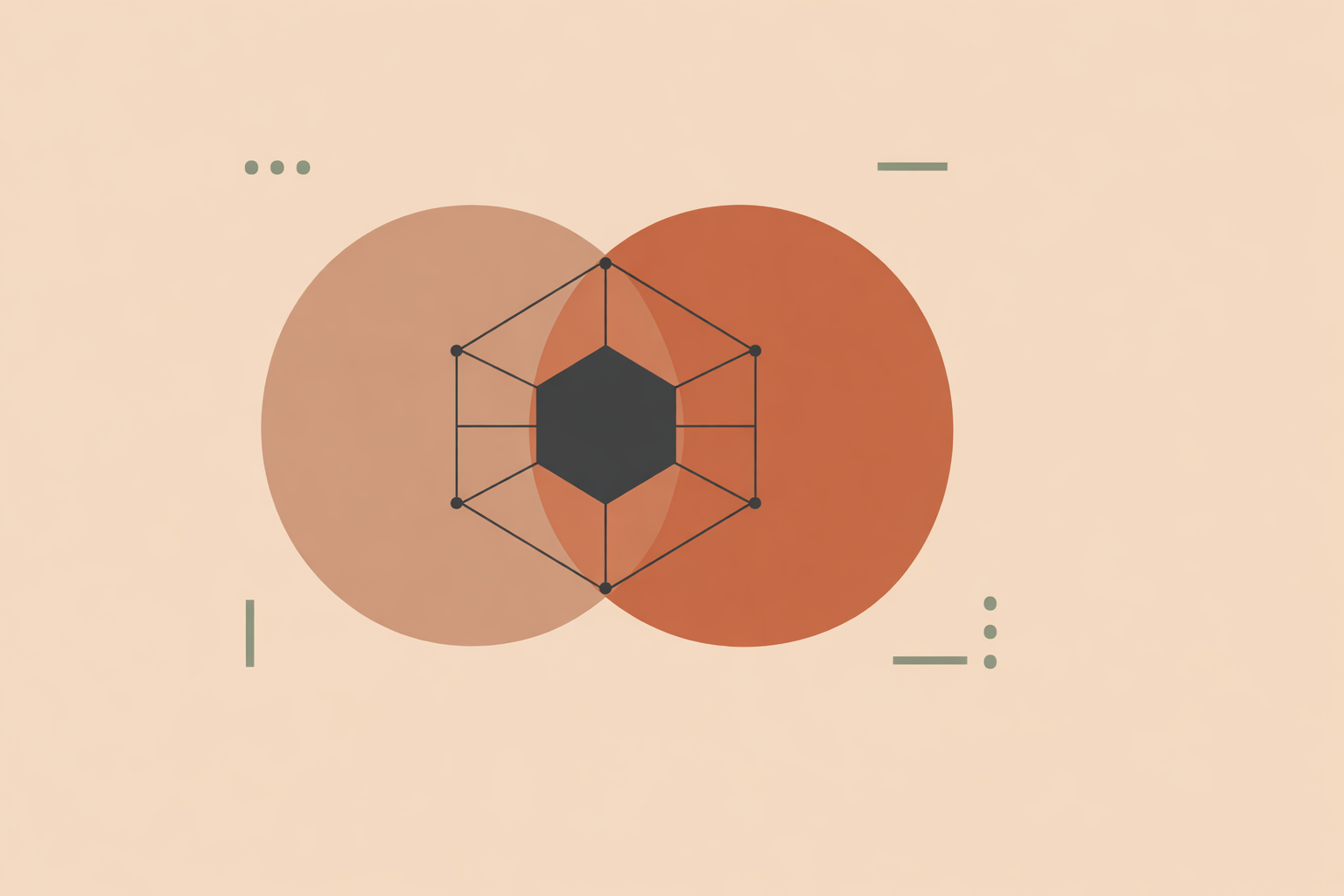
- Form language: “This construction uses a circle with six equal chords to establish a hexagonal structure.”
- Meaning language: “Some people associate six-fold balance with harmony or order. You can decide whether that resonates for you.”
This style also supports consent-forward facilitation. Phrases like “you might notice,” “some people associate,” and “you can choose” keep interpretation spacious rather than imposed.
When beliefs vary in the room, name it plainly: “No belief system is required here, and there is no correct emotional response. We are exploring form, attention, and meaning with care.” That clarity reduces tension quickly.
Practical scripts for circles, lattices, and proportions
Many practitioners draw beautifully and then rush the explanation. A steadier rhythm is to describe what was constructed first, then share what it might evoke. That habit strengthens both credibility and ease.
Circle
“A circle is defined by a center and a constant radius. Every point on the boundary sits the same distance from the center.” If the group wants a symbolic doorway, add: “Some people experience the circle as continuity or wholeness, while others simply enjoy its clarity.”
Circle lattice
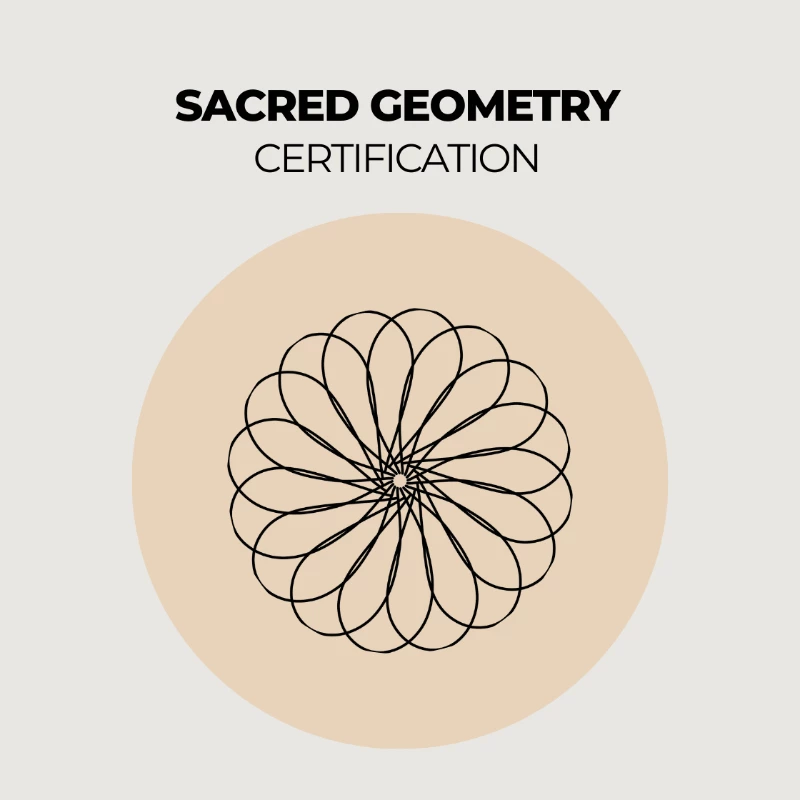
“This pattern is made by repeating equal-radius circles from neighboring centers. The overlaps create vesica-like forms and rosette petals.” Then, keep symbolism optional: “If these overlaps feel meaningful to you, we can explore that too.”
Circle-lattice constructions commonly produce vesica-like shapes and petal forms, and they have appeared across many regions and artistic contexts. Their wide historical presence is meaningful in itself; it doesn’t need a universalizing story to be valuable.
Golden rectangle
“This rectangle uses a repeatable proportion in which the longer side relates to the shorter by about 1.618.” Follow with a grounded choice: “You might use it because you like the visual relationship, not because it has been proven to be the one ideal proportion.”
A helpful exercise is to show several rectangles without labels and ask which feel balanced. People reconnect with direct seeing, and the need for a single “correct” proportion softens.
Fibonacci-based layouts
“Successive Fibonacci ratios move toward the golden ratio, so the sequence can be used as a simple scaling system for spacing and layout.” Present it as an armature for design decisions, and it stays both practical and honest.
In visual practice, ratios can unify a page, canvas, or layout. Used this way, they support coherence without any extra packaging.
How to invite symbolism without turning it into doctrine
The word “sacred” does not, by itself, prove universal spiritual power. Most often, it signals that a form holds value within a ritual, contemplative, or cultural setting, including broader spirituality and ritual contexts. That distinction keeps your language respectful and precise.
When you introduce symbolic language, use soft verbs: may evoke, can be read as, some traditions associate, some practitioners reflect on. Meaning stays relational, which helps people trust both you and their own experience.
A simple script is: “You are welcome to meet this as visual structure, reflective prompt, cultural reference, or simply a pattern.” Then pause, and let the person decide how far they want to go.
It also helps to separate documented form from later interpretation. For example: “This circle lattice appears in many places historically; the idea that it represents universal creative energy is a modern spiritual reading.” That kind of phrasing respects history and contemporary meaning-making without blending them into false certainty.
The same is true of sacred art more broadly. A diagram’s presence in a sacred context does not change the underlying geometry. The mathematics remain the same; what changes is the cultural, devotional, or contemplative frame around it.
When borrowing from living traditions, be specific and modest. Name the lineage if you know it, describe your relationship honestly, and avoid implying authority you do not hold. Respect grows from clear attribution.
Clear language for contemplative and well-being settings
In reflective settings, geometric drawing often works well because it offers structure, repetition, and a stable focal point. Many people also report that mandala-like drawing feels calming or focusing, and research has found improved mood after mandala-making in some contexts.
Responses still vary, so your phrasing carries the experience. Try: “Many people find this settling; some feel neutral; some feel restless. Notice what is true for you today.”
Mandalas, yantras, and geometric icons have been used for centuries across contemplative lineages as stable anchors for attention. That continuity matters. It shows that structured form has long supported reflective practice, including in spirituality and ritual work, even as modern explanations come and go.
If someone asks whether these practices can support attention or well-being, it’s fair to say that reviews suggest preliminary benefits while also noting the evidence is mixed.
Consent-forward scripts that support autonomy
The most supportive sacred-geometry facilitation leaves room for choice at every stage. Form-first language lays the foundation, and explicit permission strengthens it.
- Choice opener: “Would you like to try this construction, or would you prefer another image?”
- Pacing reminder: “You can pause, simplify, redraw, or stop at any time.”
- Attention anchor: “You may focus on line, spacing, repetition, or color rather than meaning.”
- Boundary statement: “I can support your reflection, but I will not assign meaning to your image for you.”
These phrases reduce pressure in mixed-belief groups and make the work more accessible. They also keep your role clear: you’re facilitating exploration, not dictating interpretation.
How to update your teaching and marketing language
If you want this approach to feel natural, build it into your materials and planning.
1. Plan the form language first.
Before a session, write down the actual operations: compass circle, equal-radius repetition, six-fold division, internal triangle, rotational symmetry. This becomes your first script.
2. Sort your statements into three categories.
- Measurable description
- Documented cultural or historical association
- Personal or modern interpretation
If a sentence doesn’t clearly belong anywhere, it probably needs revising.
3. Test beauty claims through experience.
Show several aspect ratios without naming them. Ask participants which feel balanced and why. Unlabeled comparison exercises bring people back to direct perception.
4. Rewrite inflated claims.
- Instead of: “This ancient symbol activates transformation.”
- Try: “This diagram is built from repeated circles that create petal-like overlaps. In some traditions, related forms are used for contemplation. You are welcome to engage it as pattern, reflection, or both.”
5. Add a claim-check habit.
- What is measurable here?
- What belongs to documented history?
- What is a later interpretation?
- Am I presenting preference as proof?
This small discipline keeps your language clean while leaving the work spacious enough for real meaning.
Closing perspective
Form-first, invitation-based sacred-geometry teaching doesn’t make the work smaller. It makes it clearer and more dependable. When you begin with what the compass and straightedge actually did, people can trust the ground beneath them, and symbolism has room to arrive naturally.
Centuries of living use across lineages matter, and so does precision in speech. Hold both, and sacred geometry becomes easier to share without exaggeration—strong in craft and respectful in tone.
Explore Sacred Geometry Certification
Build form-first, consent-forward facilitation skills in the Sacred Geometry Certification.
Explore Sacred Geometry →