Coaches and holistic practitioners often meet the same moment: a client’s eyes lose focus, words stop, posture goes still. The urge is to rescue the moment by asking sharper questions, pushing for deep breaths, or explaining what the body “means.” In practice, that usually adds pressure when less is needed.
A steadier response is to treat stillness as protective information. You observe what’s happening, stay respectful, and offer a small, choice-based invitation that helps the person reconnect with the room, their body, and their sense of agency.
This is where a brief Tai Chi–inspired reset can be useful. Rooted in slow rhythm, orientation, and simple movement, it gives you a way to work with freeze-like stillness without forcing speed or intensity.
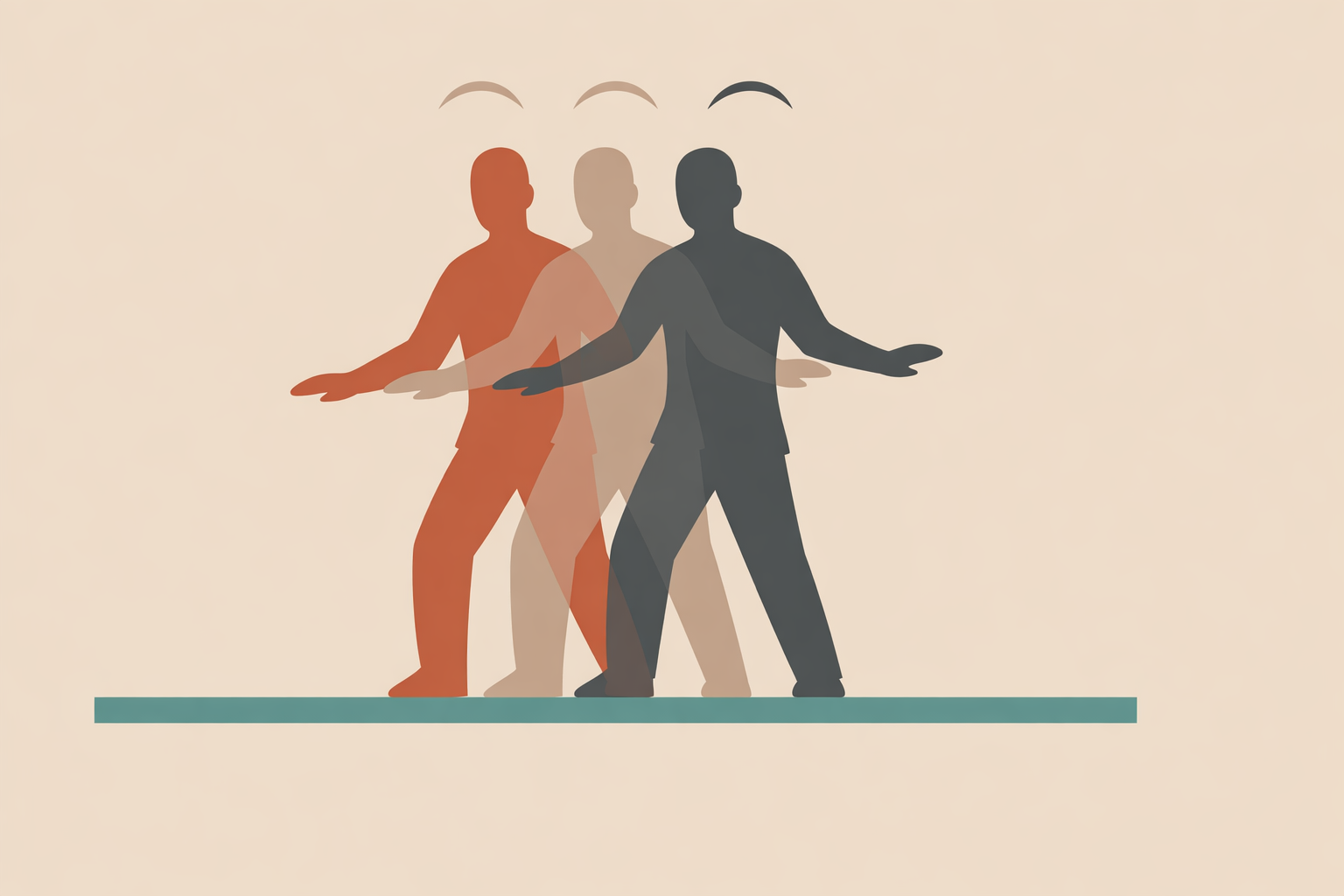
Key Takeaway: When a client becomes still or quiet, meet that shift with observation, choice, and a small movement invitation rather than pressure. A brief Tai Chi–inspired reset can help restore contact and agency through three principles: orientation to the room, rhythmic motion, and clear options. The three simplest versions are a gentle side-to-side weight shift, a soft rise-and-sink of the arms, and a small opening-and-return gesture that helps the client feel choice again.
Why Tai Chi-Inspired Movement Can Support Re-Orientation
Tai Chi and related practices have long been used to steady attention, restore balance, and invite vitality. In coaching, their strength is their clarity: slow pace, organized movement, and plenty of room for personal choice.
When someone is nearing freeze, orientation, rhythm, and small safe actions often help more than analysis. Predictable gestures lower demand. Feeling the feet, tracking the hands, and noticing the room can create enough space for the person to re-engage.
Modern research also points in this direction. Reviews of Tai Chi and qigong describe autonomic-system balance as one possible effect of these slow movement practices. Brief mindfulness-based practices have also been linked with improved psychological functioning, which aligns with what many practitioners observe: gentle attention can shift how a person meets stress.
In session, keep the aim modest and practical. You’re offering a small experiment that can help the client feel more present and more able to choose what happens next.
Before You Begin: Choice, Pace, and Safety
Any movement invitation should restore agency. Ask clearly, keep it brief, and make stopping easy.
- Ask first: “Would you like to try a one-minute reset?”
- Offer options: seated or standing, eyes open or soft gaze, very small or slightly larger movement.
- Keep the environment supportive: stable chair, clear floor, steady pace.
- Name the exit: “You can pause or stop at any time.”
- Do not force breathing patterns. If breath focus feels edgy, stay with movement and the room.
For some people, inward focus feels like too much too soon. In those moments, external orientation and clear contact points are often more settling than asking someone to go deeper inside. A slow look around the room, the feel of both feet on the floor, or the movement of the hands through space can be enough to begin.
Move 1: Open the Window
This is the simplest entry point. It pairs a gentle weight shift with visual orientation, helping the client reconnect with support under them and the space around them.
Standing version:
- Feet comfortably apart, knees soft, eyes open.
- Shift a small amount of weight into the right foot, then the left.
- Keep the motion tiny, steady, and unhurried.
- As the body shifts, invite the client to notice three neutral details in the room such as colors, shapes, or distances.
Seated version:
- Both feet rest on the floor.
- Rock subtly from one sit bone to the other, or press one foot and then the other into the ground.
- Keep the gaze open and let the eyes land on simple details in the room.
A useful cue is: “Notice the floor under you, and only move as much as feels manageable.”
This kind of slow, predictable action can loosen the grip of stillness without overwhelming the person. If the client reports even a slight increase in steadiness or contact, you can stay here or move on.
Move 2: Carry the Cloud
Once some orientation has returned, add a soft upward-and-downward arm motion. In Tai Chi and qigong traditions, fluid movement and gentle breathing often travel together. Contemporary descriptions of the practice refer to slow, flowing movements combined with breath and focus.
- Begin with the hands near the thighs or lower abdomen.
- Let the arms rise slowly toward chest or shoulder height.
- Let them float back down without effort.
- If breath wants to follow, allow it. If not, leave the breath alone.
The key is that the breath is not managed or pushed. Many clients settle when movement influences breathing naturally. Reviews discussing qigong suggest slowed breathing may support steadier physiological and emotional states, but in practice you can stay grounded in what you see and what the client reports.
You might say: “Let the hands rise as if the air is helping them. If your breath joins in, fine. If not, just keep the movement easy.”
Move 3: Gather and Release
This third gesture introduces a little more shape and choice. It helps the client feel the difference between opening and returning, expanding and pausing.
- Hold the hands in front of the chest or abdomen as if cradling a soft ball.
- Slowly widen the space between the hands.
- Then let the hands return toward one another without collapsing inward.
- Stay seated or standing, and keep the range comfortable.
The value of this move is the felt experience of choosing a little more space, then choosing return. That can be enough to restore a sense of authorship in the moment.
Keep the language flexible: “Would you like the movement smaller, larger, slower, or to stop here?” Every variation reinforces that the client has options.
How to Adapt the Reset for Different Stress Patterns
These three movements work best as a palette rather than a script. Adjust pace, range, focus, and timing based on what’s happening in front of you.
When freeze is strongest:
- Start with eyes open and clear orientation to the room.
- Keep movement extremely small.
- Stay longer with feet, sit bones, and visual contact with the environment.
When activation is high:
- Slow everything down.
- Use short, concrete cues.
- Emphasize contact points rather than asking the person to “calm down.”
When the person feels distant or floaty:
- Orient first to place, date, and surroundings.
- Use brief sequences rather than extended inward tracking.
- Check often for contact and preference.
Accessibility matters throughout. If balance is uncertain, choose seated practice or supported standing. If pain or fatigue is present, reduce range. If Tai Chi imagery doesn’t resonate, keep the language descriptive and plain. Respect for the tradition also means not turning it into something mystical or culturally flattened; use the principles carefully and transparently.
Using Micro-Resets Across Sessions
These short interventions work best when they stay light. Offer them when talk begins to loop, when the client goes very still, or when speech starts outrunning contact. Keep the first round brief, then ask what changed.
There is no one-size-fits-all recommendation for how much brief practice is enough, so let the session lead. Thirty to sixty seconds is often plenty. If the client reports more steadiness or clearer choice, continue a little longer.
Over time, repetition matters more than intensity. Reviews of Tai Chi suggest reduced stress and mood shifts are more commonly discussed with ongoing practice than with one-off experiences.
Track simple markers rather than grand conclusions:
- Eye orientation becomes easier.
- The voice sounds fuller or steadier.
- Movement becomes more voluntary.
- The client can name a preference more clearly.
- They can say whether they want to continue, pause, or shift focus.
These are practical signs that more choice is available, and that’s enough to build on.
Closing Perspective
When a client freezes, the most useful response is often the least dramatic one. Notice the stillness, respect it, and offer a small path back to contact. A gentle weight shift, a soft rise-and-sink of the arms, or a simple gather-and-release can restore presence without adding pressure.
Tai Chi offers a valuable model here: slowness, continuity, groundedness, and choice. Used respectfully within a coaching setting, these micro-movements stay appropriately small and supportive while still being genuinely effective for many people.
As with any embodied practice, adapt for comfort and accessibility, keep consent explicit, and stay responsive to the individual in front of you. When in doubt, choose the smallest version of the movement and return to orienting to the room.
Train in Somatic Coaching
Build these micro-resets into real sessions with the Somatic Coach Certification.
Explore Somatic Coach →