Mid-session, a client says, “If I speak up at work, I’ll get fired.” Many practitioners instinctively start checking the evidence, debating the logic, or rushing toward a goal. Often, that only tightens the moment.
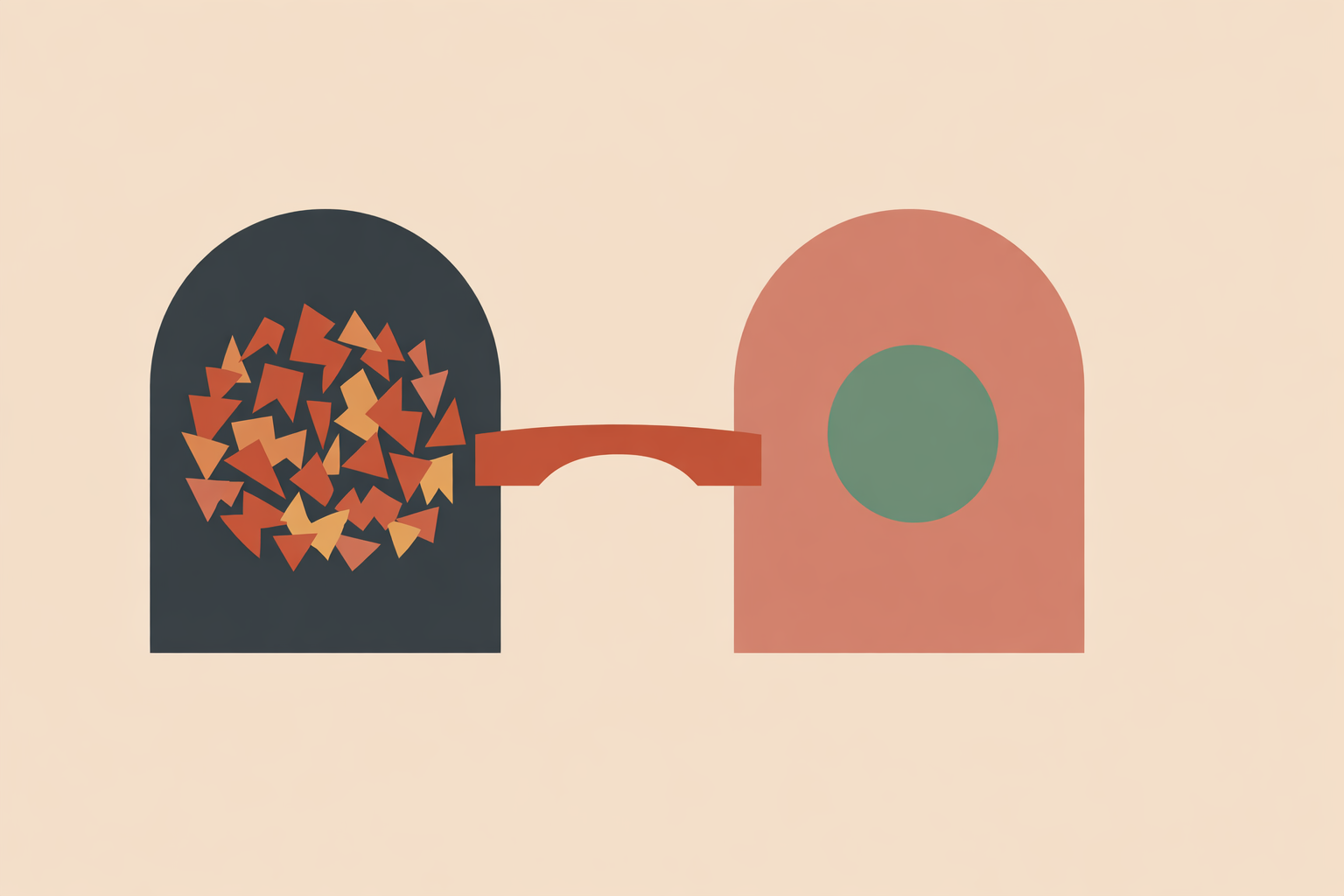
The thought stays in charge, the body braces, and choices narrow. Cognitive defusion offers a different move: stop wrestling with the content of the thought and shift the client’s relationship to it. Even a brief shift can open space for presence, discernment, and values-led action.
Key Takeaway: Defusion helps clients loosen the grip of rigid thoughts without needing to prove those thoughts wrong. In live ACT-informed coaching, that usually means using simple phrases, story naming, imagery, grounding, and small next steps so clients can act from values rather than from every passing mental alarm.
Language-First Defusion Moves You Can Use Immediately
The easiest place to start is with words. Language-based defusion is portable, fast, and easy to weave into ordinary conversation without interrupting the flow of a session.
One of the most reliable phrases is: “I’m having the thought that…” ACT-based guidance suggests this wording can create distance from a sticky thought. Instead of “I’m behind,” the client tries, “I’m having the thought that I’m behind.”
If the thought still feels fused with identity, lengthen the phrase: “I’m noticing I’m having the thought that…” That extra step of witnessing often brings separation that the shorter version does not always reach on its own.
Another dependable move is process labeling. Rather than debating whether a thought is true, invite the client to name what the mind is doing: judging, predicting, comparing, rehearsing, catastrophizing. Attention returns to process, and the story loosens its grip.
For recurring themes, story naming works especially well. Clients often feel relief when they can say, “Here comes the not-good-enough story,” or “There’s the disaster script again.” Once the pattern has a name, it’s easier to hold lightly.
You can also use playful repetition. A defusion review describes approaches such as silly voices and word repetition to reduce the grip of harsh, overlearned thoughts. A loaded word repeated slowly can start to sound like sound again, rather than a verdict.
A simple live script might be: “Let’s slow this down. Try saying, ‘I’m having the thought that I’m going to fail.’ Now say, ‘I’m noticing I’m having the thought that I’m going to fail.’ What changes, even slightly?”
Working with Stories and the Observer Self
Many clients are fused with more than single thoughts. They can also be fused with roles, identities, and long-running narratives about who they are, what they’re allowed to do, and what always happens to them.
Rather than taking the inner critic line by line, help the client recognize the bigger storyline. “I always ruin things” becomes “the failure story.” “Nobody respects me” becomes “the outsider story.” Titles make patterns easier to spot and less intimidating to hold.
From there, invite the observer stance: the part of awareness that notices thoughts, sensations, memories, and roles without being reduced to any of them. In ACT language, this is often called self-as-context. In practice, it’s the felt shift from “I am this thought” to “I am the one noticing this thought.”
A brief exercise is often enough. Ask: “Can you name the story that’s here right now? Now finish this sentence: ‘I am the one who notices…’ and name a thought, a sound, and a body sensation.” Clients frequently feel an immediate change in identity perspective through that move, even if the thought doesn’t disappear.
Once someone can notice a story rather than live inside it, there’s usually more room for choice, honesty, and a kinder kind of courage.
Imagery-Based Defusion That Feels Grounded
Imagery helps defusion move from concept into experience. Many traditions have long used contemplative images of passing weather, moving water, or open sky to support a gentler relationship with mental activity. Contemporary defusion methods echo that same spirit, and reviews describe imagery-based ways of watching thoughts rather than obeying them.
One familiar example is leaves on a stream. The invitation is simple: picture a stream, place each thought on a leaf, and watch it pass. A concise ACT-style guide describes doing this over minutes. In live sessions, even a short version can change the emotional temperature in the room.
Other images work just as well. A client might imagine thoughts moving across a cinema screen, drifting through the sky, or passing by like subtitles. The exact image matters less than the function: the thought is seen and allowed to move.
Keep imagery exercises embodied. Pair the image with cues such as feeling the feet on the floor, softening the jaw, relaxing the hands, or lengthening the exhale. This keeps the work present and reduces the chance the exercise becomes floaty or disconnecting.
A useful one-minute sequence is: name the thought, place it on the leaf, feel the feet, watch it pass, then open the eyes and name one thing in the room. That keeps the exercise anchored in the here and now.
Turning Defusion into Values-Led Action
Defusion is most useful when you spend the space it creates. Once the thought has loosened a little, ask a direct question: “If this thought were not making the decision for you, what would matter here?”
Then make the next step very small. It might be sending one message, writing three honest lines, taking one breath before speaking, or staying present for thirty more seconds in a hard conversation. Small actions build trust because they’re workable in real life.
This sequence is the heart of defusion in coaching: notice the thought, create distance, reconnect with values, and choose the next doable act, which is also central to ACT-based coaching.
For example, after naming “the pointlessness story,” a tired creative may choose to sketch for ten minutes for the sake of expression rather than output. The story still shows up, and behavior starts aligning with what matters.
Matching Defusion Strategies to the Moment
Different forms of fusion call for different responses. Strong practice comes from matching the move to the moment, rather than trying to use every tool every time.
- Overthinking: Use process labels such as judging, planning, replaying, or predicting. This helps the client step out of analysis and notice the mind in motion.
- Avoidance: Name the story that supports withdrawal, then pair defusion with one tiny act of willingness.
- Overwhelm: Ground first. Once the body has more steadiness, return to the thought with gentle distance.
- Self-criticism: Use playfulness, word repetition, or story naming. These approaches often soften harshness without forcing false positivity.
- Identity transitions: Defuse from role-based thoughts and return to deeper qualities and values that continue beyond any title or life phase.
- Burnout: Unhook from perfectionistic scripts and turn toward one achievable act of boundary, rest, or replenishment for today.
A practical rule of thumb: if the mind is racing, label the process; if the body is bracing, ground first; if the story is big and dramatic, name it and widen the lens.
Trauma-Sensitive and Culturally Rooted Defusion
Pacing matters more than technique. Some people find certain images spacious and relieving; others find them disorienting. Some phrasing feels liberating; other phrasing lands as distancing. Defusion works best when choice stays with the client.
Offer options and make opt-outs explicit. If a stream image feels wrong, use words on a screen. If imagery feels like too much, stay with labeling and breath. If internal attention becomes overwhelming, shift outward and notice colors, shapes, sounds, and contact points with the chair or floor.
The practitioner’s presence matters too. Warm tone, steady breathing, and an unhurried pace often act as co-regulating signals in the session. When your own body is settled, clients often find it easier to observe thoughts without armoring against them.
It also helps to remember that witnessing thoughts is not a new invention. Many lineages already include practices of watching the mind through breath, silence, landscape, prayer, rhythm, or evening reflection. When ACT-style defusion is integrated with a client’s cultural or ancestral contemplative language, it can feel less like importing a technique and more like reconnecting with existing wisdom.
The key is respect. Stay curious, avoid flattening traditions into generic tools, and let the client define what feels authentic and supportive in their own frame of meaning.
Integrating Defusion into Everyday Practice
Defusion becomes more natural the more personally you use it. If your own mind says, “You need to get this exactly right,” or “You should have handled that better,” try the same moves you offer others: “I’m having the thought that…” “There is the perfectionism story again.” “Can I notice this and still return to what matters now?”
Over time, this can make your presence steadier and your coaching more spacious. You become less reactive to internal commentary, which leaves more room for listening and flexible response.
In day-to-day practice, keep the tools simple. Defusion phrasing, process labeling, and story naming are easy to weave into conversation and often form the backbone of stepping back from thoughts in coaching contexts.
Defusion is a quiet skill with real impact. It helps clients notice a thought, soften around it, and choose their next step from what they value. Use it with care, offer choice, and keep it grounded, especially when a client is highly activated or feeling unsteady within broader mental health frameworks.
Train in ACT Coaching
Build defusion and values-led action skills in the ACT Coach Certification.
Explore ACT Coach Certification →