Complex trauma rarely shifts through symptom-by-symptom firefighting. A calmer hour can still be followed by the same cycle next week if the work has no organizing map. A steadier approach is to read behaviors as adaptations, then build each session around safety, predictability, choice, and what the person can actually use in daily life.
Key Takeaway: Turn complex trauma symptoms into a clear session plan by reading them as living patterns shaped by prolonged overwhelm, then organizing the work around present-moment state, one primary focus, and small repeatable actions. Begin with safety and consent, map current triggers before history, choose one lane of work—body regulation, meaning clarification, or relationship skills—keep the dose small, include cultural or ancestral resources respectfully, and track change through real-life shifts in capacity, boundaries, and recovery.
Step 1: Read complex trauma symptoms as living patterns
When someone brings panic, numbness, avoidance, poor sleep, or hypervigilance, it helps to pause before deciding which symptom to “fix.” A more useful starting point is: what pattern is trying to keep this person safe?
Complex trauma often forms through prolonged, repetitive trauma where escape is limited. Over time, protective strategies become the person’s default settings.
That’s why complex trauma commonly includes both familiar PTSD features and disturbances in self-organization that affect emotional regulation, self-concept, and relationships.
In real sessions, those effects usually don’t stay in neat categories. Practitioners often see a woven pattern touching attention, body sensations, emotions, identity, relationships, and day-to-day behavior. Holding that wider lens makes it easier to plan work the person can actually use.
When behavior is understood as protective, collaboration gets simpler. Withdrawal can be safety. Appeasing can be an attempt to preserve connection. Numbness can be overload management.
Even “small” habits can belong to one coherent pattern. Avoiding messages after 6 p.m., startling at hallway sounds, and disappearing into late-night scrolling can reflect the same internal logic: threat detection, fear of demand, and a learned way to dampen activation.
A simple working map might include:
- Signals: startle, avoidance, shutdown, numb scrolling
- Possible meanings: “Unexpected contact is unsafe” or “If I respond, I may lose control”
- Protective moves: freeze, appease, withdraw
- Session levers: orientation cues, boundary language, evening micro-choices
Some patterns also include disconnection and a heavy loss of hope, including detachment, emotional numbing, and despair. Naming these as patterns (rather than personality flaws) keeps the work respectful and practical.
Step 2: Begin each session with safety, predictability, and a state check
Before depth comes arrival. A steady opening reduces guesswork and helps the person feel choice is real, not theoretical.
A brief, repeatable arrival ritual goes a long way because predictability itself supports settling. The goal is a consent-based container that signals, “We’ll go at a pace your system can use.”
A useful opening flow can be very simple:
- Consent check: “Anything you do not want to go into today?”
- Predictability: “We’ll choose one focus, try one short practice, and close with a next step.”
- Choice check: “Would you rather start with talking, grounding, or mapping what happened this week?”
- State check: “How activated do you feel right now? How present? How much choice do you have?”
State scope and pacing plainly. “You can always say stop” often restores agency immediately.
Many practitioners also agree on navigation signals early on: a word, gesture, or chat message that means “slow down” or “pause.” It’s a small agreement that prevents overwhelm and builds trust.
Safety here is broad. It includes emotional safety, cultural respect, sensory comfort, privacy, pace, and clarity about what the session is and is not.
Step 3: Map triggers and present-day responses before exploring history
Work with what is happening now before moving toward what happened then. Present-day patterns give you clearer pacing and more usable next steps.
Mapping current triggers first helps prevent sessions from going into material the person can’t yet integrate. It also creates practical feedback: the person can notice patterns between sessions and return with real-life data.
A simple trigger map might follow this sequence:
- Trigger: What happened just before the shift?
- State change: What changed in body, attention, emotion, or behavior?
- Meaning: What did the moment seem to mean?
- Protective move: What did the person do to get safe, small, invisible, or in control?
- Consequence: What worked in the short term, and what did it cost later?
- Recovery need: What helps orientation, settling, or choice return?
For example:
- Trigger: A colleague uses a sharp tone in a meeting
- State change: Heat in the chest, tunnel vision, urgency
- Meaning: “I’m about to be attacked”
- Protective move: Immediate agreeing and appeasing
- Consequence: Short-term safety, later resentment
- Recovery need: A pause, orientation to the room, slower exhale, a delayed response
This kind of mapping separates pattern from identity. The person isn’t “bad at boundaries.” They’re moving into a fast protective strategy under pressure.
Grounding techniques tend to work best when they stay brief, choice-based, and externally oriented. For people prone to dissociation, short eyes-open practices are often easier to tolerate than long inward exercises.
You might try:
- Name five blue objects in the room
- Press both feet into the floor and notice the support underneath
- Look left and right and name the date, time, and place
- Touch three textures and describe them out loud
One short practice is often enough to restore orientation and make room for a wise next step.
Step 4: Sort the work into three planning lanes
Once the present-day pattern is visible, choose where to work. One clear lane keeps sessions focused and prevents the work from spreading too wide.
Three planning lanes are especially practical:
- Body regulation
- Meaning clarification
- Relationship skills
Body regulation fits when activation is high, presence is dropping, or thinking feels unavailable. Options include orientation, paced breathing, hand pressure, gentle movement, light exposure, nourishment rhythms, or steady sensory anchors.
Meaning clarification fits when the main driver is the story attached to an event. You might name a stuck belief, reality-check an interpretation, clarify values, or sort past danger from present conditions.
Relationship skills fits when the immediate challenge involves consent, boundaries, communication, rupture, or asking for support. You might practice one boundary sentence, rehearse a pause before replying, or identify cues that feel safe versus unsafe.
If someone spirals when a message reply is delayed, meaning work can target “Silence means rejection.” If they’re already highly activated, start with body regulation. If the pattern repeats in multiple relationships, relationship skills may be the most direct lane.
Body-based supports often land best when they are concrete and brief. Small shifts in posture or movement, paired with orientation and choice, can change the whole arc of a day.
Keep the plan narrow. One lane per session is usually enough.
Step 5: Choose one narrow objective and use the minimum effective dose
After choosing the lane, turn it into one observable objective. The aim is one next piece the person can practice, not a full overhaul.
A strong objective is specific, modest, and client-led.
- Too broad: “Stop people-pleasing”
- More workable: “Pause before I say yes at work”
- Even clearer: “Notice the first body sign before agreeing”
Then apply the minimum effective dose: the smallest intervention that moves the work forward without exceeding capacity.
For example:
- Objective: Pause before agreeing under pressure
- Minimum dose: Feel one hand on the desk, take three slower breaths, then say, “Let me check my workload and reply in ten minutes.”
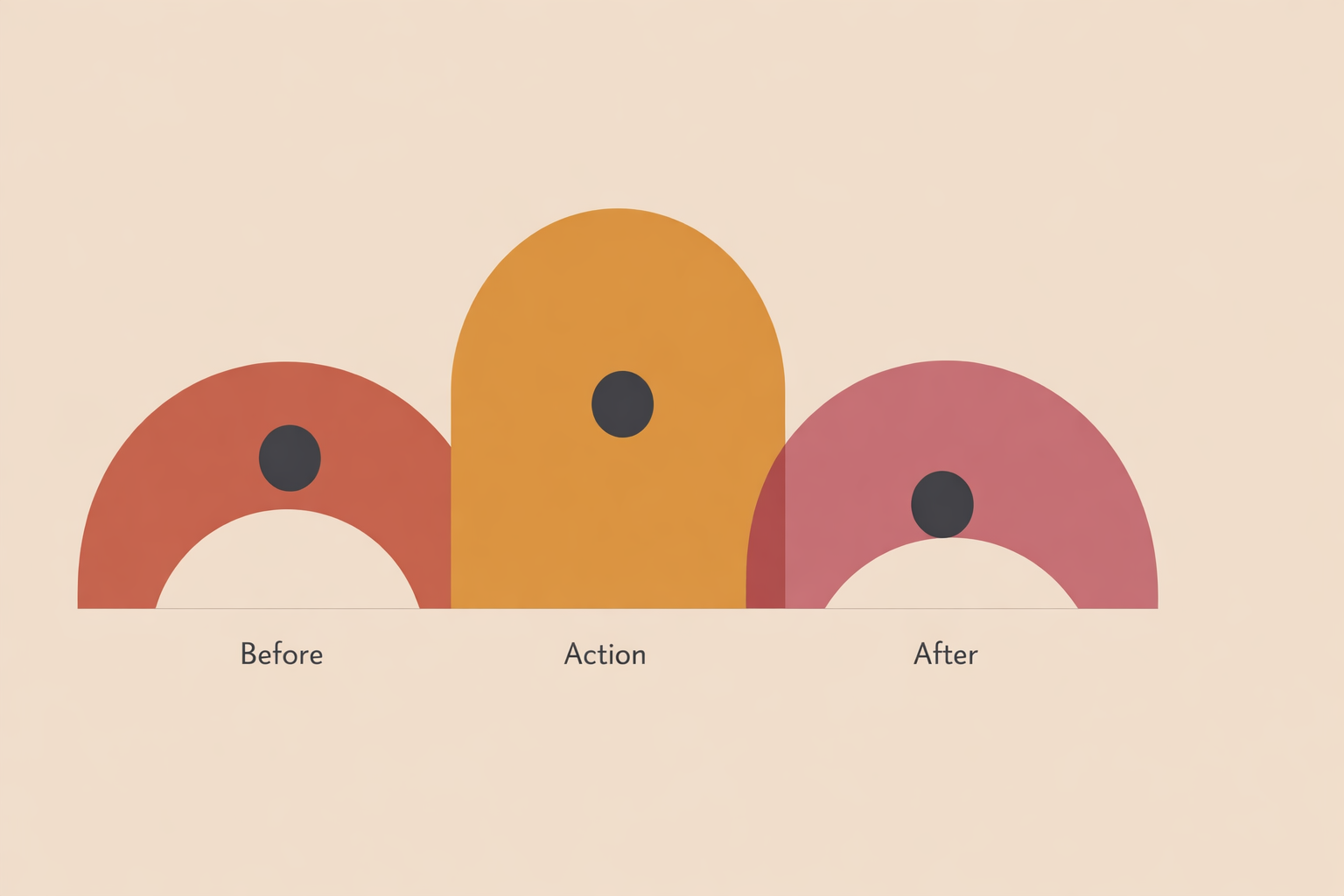
This is where progress often becomes visible. Growth can look like faster recovery after activation, clearer boundaries, more access to rest, or less collapse after a difficult interaction.
High activation in session is not automatically progress. Sometimes it signals the dose is too strong for that day. Use frequent stop-checks to keep consent active:
- “Is this still useful?”
- “Do we need to slow down?”
- “Do you want to stay here, widen out, or pause?”
Track what you can observe between sessions:
- How many times the person paused before reacting
- How long recovery took after activation
- Which phrase or practice felt usable in real life
These markers keep the work grounded and respectful.
Step 6: Weave in ancestral, cultural, and spiritual resources respectfully
Many people already carry forms of regulation and meaning from family, culture, land, ritual, or spiritual life. When these supports are welcomed properly, they can bring continuity and dignity in a way that feels deeply familiar.
This might include song, prayer, beads, poetry, kitchen rituals, steam, incense, elder sayings, sacred text, morning light, seasonal rhythms, or community gatherings.
The key is simple: the client leads. Their traditions are not raw material for borrowing or improvising out of context.
Helpful questions include:
- “Are there practices from home, family, or community that help you feel more settled or connected?”
- “What does this practice mean to you?”
- “Is this something you want to bring into your own week, or should it stay in community or family space?”
Useful guardrails include:
- Ask before inviting any cultural or spiritual resource
- Let the person define the meaning of the practice
- Do not recreate traditions that belong under elder or community guidance
- Avoid adapting or commercializing practices that are not yours to teach
For one person, an evening steam prepared the way for calm and sleep. For another, thumb-to-bead counting felt more grounding than generic breathwork. For another, a familiar song restored continuity after a difficult day. These supports aren’t decorative; when they come from the person’s actual roots and consent, they can become central to the plan.
Step 7: Track change, repair quickly, and know when added support is needed
A good session plan is living, not fixed. As capacity grows and patterns clarify, the plan should adjust with them.
Ask directly whether the pace, language, and practices are helping. When misattunements happen, repair them rather than stepping around them; repair builds trust.
Track changes that matter in daily life, such as:
- Shorter recovery time after activation
- More pauses before reacting
- Clearer needs and follow-through on boundaries
- Less avoidance
- More access to valued activity, rest, and connection
- Greater ability to notice triggers earlier
Keep professional boundaries clear. Be plain about communication channels, response times, cancellations, privacy limits, urgent-situation limitations, and the distinction between coaching support and specialized mental-health services.
Know when the circle of support needs to widen. Severe dissociation, self-harm or suicide risk, ongoing coercive control, or significantly impaired reality testing are signs that added or more specialized support is needed.
That referral isn’t a failure of the work. It’s ethical practice: the situation deserves more support around it, not less.
A useful closing rhythm for each session is brief:
- One thing the person noticed
- One practice to repeat
- One adjustment for next time
This keeps the plan visible and easier to build session by session.
Conclusion: Build a living session map, not a symptom checklist
Complex trauma work becomes more coherent when symptoms are organized into patterns. Read signals as adaptations shaped by overwhelm. Open with safety and consent, map present-day triggers before history, choose one planning lane, and keep objectives narrow with a minimum effective dose. Where it’s welcome, include cultural and ancestral supports with respect and clear consent, then track what changes in real life and repair quickly when the process needs adjusting.
Progress is often quiet but meaningful. The person notices activation earlier, recovers faster, and finds boundaries that actually work in their day.
Over time, repeated experiences of safety and agency support new patterns. The main caution is pacing: keep the work collaborative, stay inside what the person can use between sessions, and widen support when risk or complexity calls for it.
Explore Trauma Healing Coach Certification
Deepen your session-planning skills with the Trauma healing coach certification.
Explore Trauma healing →