The default move when a client balks at “Core Self” is to explain harder. Usually, that backfires. If the language sounds like a belief system instead of a practical skill, protectors tend to step in, the conversation narrows, and the session turns into a debate instead of an exploration.
A better approach is simpler: make it a small experiment. Offer plain language, keep consent active, pair the process with gentle somatic pacing, and aim for one immediate result—a little more choice, a little less fusion with the reaction.
Key Takeaway: Core Self tends to land better with skeptical clients when it is introduced as a testable attention skill rather than an idea they must adopt. The most effective entry is usually brief, plainspoken, and paced through orientation, naming one active part, creating a little space around it, and closing with steadiness.
Plain-Language Ways to Explain Core Self
Most people don’t need lofty language. They need a usable frame. When “Core Self” feels too charged, translate it into something they can try on.
- Inner coach: a steadier presence that can lead the inner team.
- Observer mode: the capacity to notice a reaction without fully becoming it.
- Values-led attention: the part of you that can choose curiosity, clarity, or compassion under pressure.
- Safe-enough presence: the quality that becomes more available when the body settles and the system is not bracing so hard.
In IFS language, people often associate Self-leadership with qualities such as 8 Cs. You don’t have to begin there. Start with wording that fits the person in front of you.
A practical line is often enough: “If ‘Core Self’ does not fit, let’s call it observer mode and see whether that helps.”
How to Explain Parts Without Making It Feel Mystical
Parts are often easiest to introduce as familiar inner roles: planner, critic, fixer, avoider, pleaser, doubter. Most people already recognize this inner variety; you’re just giving it a workable structure.
Many practitioners also distinguish between protective roles and more vulnerable layers underneath. In accessible IFS descriptions, protective parts focus on managing risk, while more vulnerable parts can hold pain, fear, shame, or loneliness.
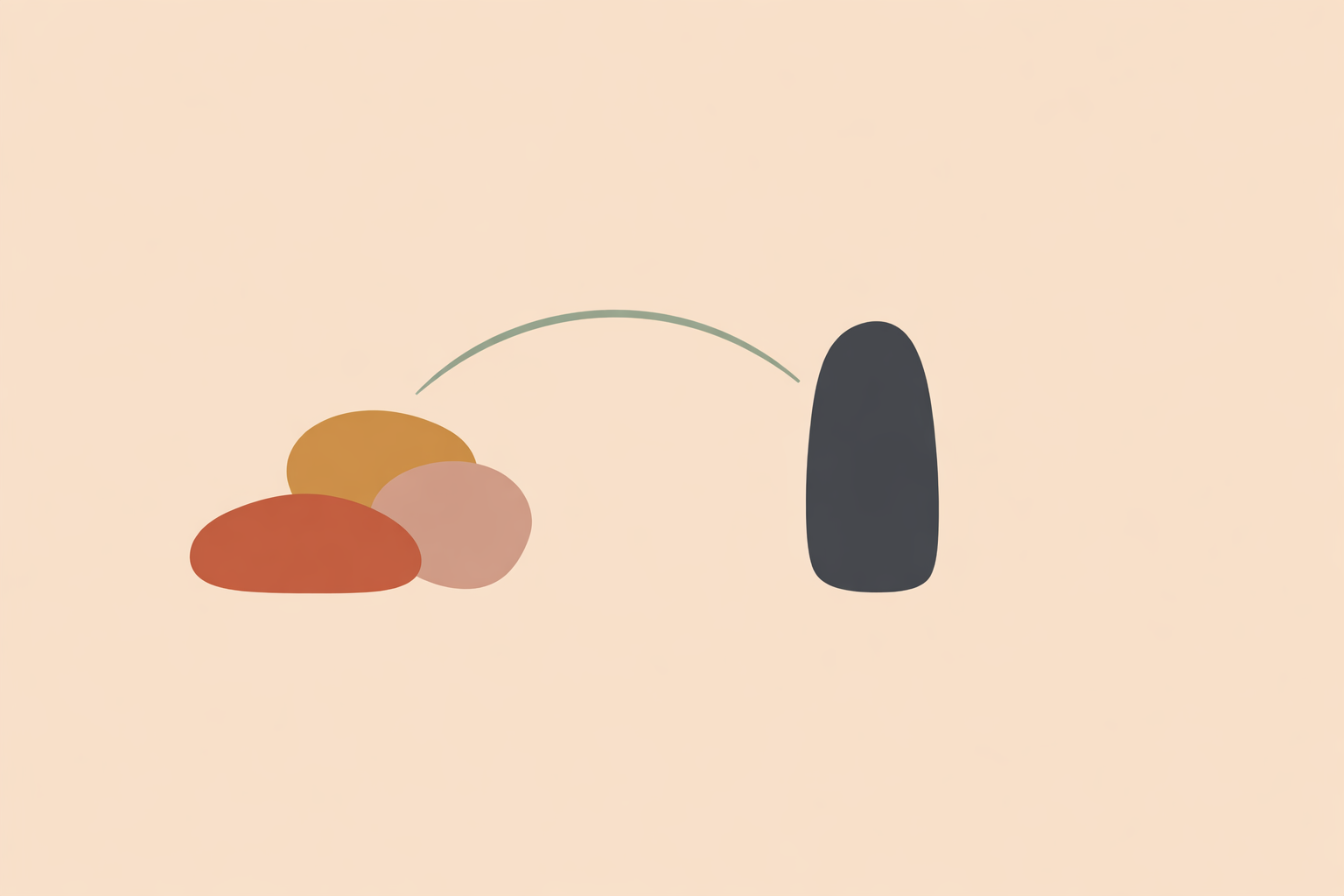
The concept that often changes things fastest is blending. Blending is when a part takes over so completely that the person feels they are the reaction. One small language shift helps: “a part of me is angry.”
That phrasing creates breathing room. It’s enough space to bring curiosity back online and choose the next step with more steadiness.
You can normalize it like this: “Nothing is wrong here. A protective part took the wheel. Let’s see if there’s just a little room to notice it rather than be fully inside it.”
A 5–10 Minute Core Self Script for Skeptical Clients
This short format introduces the experience without pressure. Keep it light, collaborative, and easy to stop.
- 1) Invite. “Most people have different inner roles. We can try a brief exercise and stop at any point.”
- 2) Orient. “Look around the room. Notice three colors. Feel the chair under you. Let the exhale lengthen a little.”
- 3) Name one active part. “Think of a mildly stressful moment from this week. What part shows up first—fixer, critic, avoider, rebel?”
- 4) Check the relationship. “How do you feel toward that part right now—curious, irritated, afraid, rushed?”
- 5) Create a little space. “See if you can say, ‘A part of me is feeling this.’ Just that.”
- 6) Appreciate its function. “Can we thank it for trying to help, even if its strategy is exhausting?”
- 7) Close cleanly. “What shifted, even slightly? Now come back to the room, your feet, and one next grounded step.”
This sequence works best when it stays brief. The aim is a direct taste of unblending, not a dramatic breakthrough.
A useful one-line invitation is: “Can we spend two minutes noticing what part is most active and whether you can feel even a little more space around it?”
Adding Somatic Cues So the Process Feels Safe
Self-led exploration is easier when the body feels safe enough to stay present. If someone is highly revved or shut down, going straight into inner dialogue can feel too fast.
Start with orientation and resource. In somatic approaches, safety and comfort are established first so the person has somewhere to return while exploring activation.
Useful additions include:
- Orient first. Let the eyes land on stable objects in the room.
- Feel support. Notice the chair, feet on the floor, or the contact of the back against a surface.
- Lengthen the exhale. A slightly longer out-breath can support settling.
- Touch and return. Briefly contact an activating topic, then return to a resource.
That back-and-forth rhythm matters. Somatic work describes pendulation and titration as a gradual way of approaching charged material without overwhelming the system.
In practice, you don’t stay with the difficult material too long. You touch it, step back, reorient, and continue only if the system has enough steadiness.
How to Handle Live Skepticism
When a client says, “This feels woo,” there’s no need to defend the language. Join their reality, lower the stakes, and protect their agency.
- “That’s completely fine. We can treat it as a metaphor.”
- “No need to believe anything. Let’s just test whether it helps.”
- “If this wording is a bad fit, give me better wording and we’ll use that.”
- “We can stop the moment it stops feeling useful.”
Time-bound experiments often build trust better than explanation. Three minutes is usually enough. A clear stop point keeps the process collaborative rather than persuasive.
It also helps to keep your language ordinary. “Inner team,” “observer mode,” and “protective reaction” often land more easily than specialized terminology.
If skepticism stays high, move away from parts language. Work with grounding, exhale, values, or present-moment choice. The relationship matters more than getting the model accepted.
When Not to Use This Script
A brief Self-intro is intentionally light, but it won’t fit every moment. If someone is highly overwhelmed, struggling to stay oriented, losing large chunks of time, or dealing with acute instability, a parts exercise may not be the most supportive next step.
In those moments, simplicity is usually wiser: grounding, pacing, practical support, and appropriate referral.
It also helps to be transparent from the beginning about scope. Coaching can support self-awareness, regulation, reflection, and choice-making, including in trauma and emotional healing contexts. It is not the place to overextend beyond your role.
A straightforward way to say this is: “I want to support you well, and I also want to stay within what is appropriate for this space. Based on what you’ve shared, it would be wise to bring in additional qualified support alongside our work.”
Closing Thoughts
When “Core Self” triggers an eye-roll, the solution is rarely better explanation. It’s usually better pacing, better language, and a smaller ask.
Keep it simple: orient, notice one part, create a little space, appreciate its protective role, and close with steadiness. That’s often enough for a skeptical client to feel the difference directly.
Over time, trust grows through experience. It grows through repeated moments of greater choice, more curiosity, and less fusion with the reaction. That is what makes this work feel real.
Train in Parts Integration
Deepen these skills in the Inner Parts Integration Coach Certification with structured practice in unblending, pacing, and Self-led language.
Explore Inner Parts Integration →