Anyone who facilitates support circles knows the familiar moment: people arrive with mixed energy, a few objects are placed in the middle, and the group quietly waits for the center to hold what hasn’t yet found words. Attention wanders. Newcomers look for cues. Regulars want a sense of continuity.
One of the simplest ways to steady that moment is structural: give the circle a clear focal point. A central, reusable crystal grid can do exactly that. It turns scattered tools into a shared anchor for intention and attention, and it gives the group a repeatable visual language. Used well, the grid isn’t decoration—it’s part of the container.
Key Takeaway: A reusable crystal grid creates a shared center that helps groups settle, focus, and move through rituals with more continuity. When you keep the layout simple and consistent, you can adapt the same structure to many circle themes while staying consent-based, inclusive, and grounded.
How crystal grids support group focus
A crystal grid supports circles on two levels at once: it offers structure, and it shapes lived experience. Traditionally, many facilitators view grids as organizers and amplifiers of subtle energy. Even setting that language aside, a thoughtful layout clearly changes how a room feels and how people arrive into it.
When the form is clear—where to look, how to begin, what the center represents—people often settle more fully. In group settings, shared structure and aesthetic focus can support mindfulness and steadiness, which is exactly what many circles are reaching for.
The geometry matters too. Circular seating and radial layouts reinforce themes many circles already carry: wholeness, rhythm, return. In that sense, the grid echoes the social shape of the group itself.
Within lithotherapy, stone qualities are often mapped through long-standing correspondences—color, mineral family, texture, symbolic associations—and refined through direct practice. These attributions are part of the craft, best shared as traditional and experiential knowledge rather than universal rules.
“The principle of lithotherapy is the manifestation of how the stone will resonate with us… on the energetic level, the person and the stone enter into a dialogue.”
Over time, that “dialogue” becomes part of the circle’s shared language. When a community meets the same grid again and again, the ritual no longer needs constant explanation; the shape and pacing are already familiar.
And familiarity matters. Consistent structure can build trust over time, which frees a facilitator to focus less on managing process and more on supporting the people in the room.
Design one reusable grid you can return to again and again
You don’t need a complex layout. One simple, signature grid—used consistently and adapted lightly—often serves groups better than constantly changing designs.
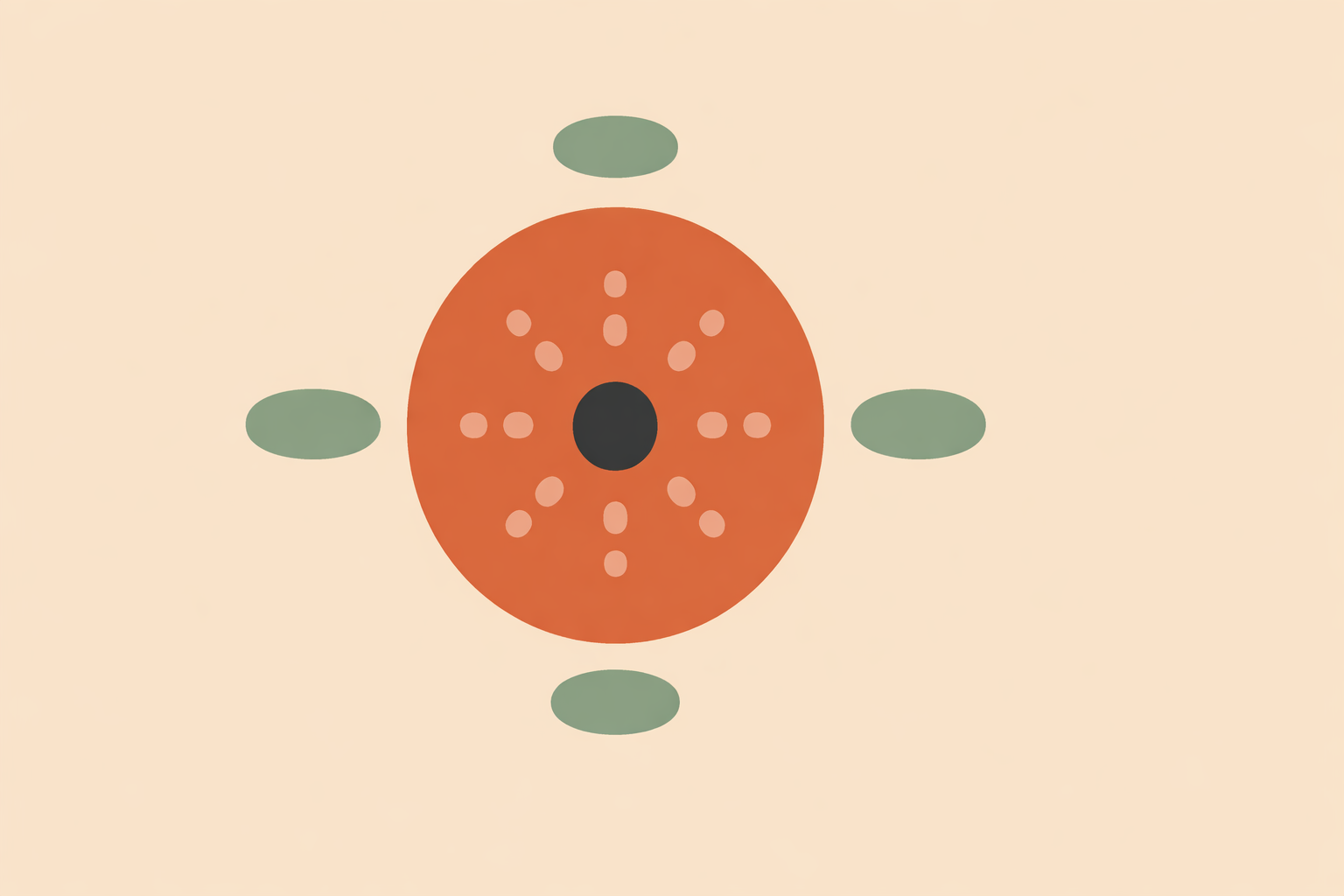
A reusable grid usually has three parts:
- A base pattern: a cloth, board, or drawn geometry that stays the same
- A center stone: the main anchor for the circle’s intention
- Supporting stones: rings, rays, or directional placements that shape the tone of the gathering
Choose a pattern you can set up quickly: a circle, square, Seed of Life, or Flower of Life is often enough. Think of it like a melody you can return to—simple, recognizable, and easy to build on.
Then select a center stone that feels steady and versatile. Many facilitators use clear quartz points or clusters because they’re visually clear and adaptable, but others choose a stone that reflects the heart of their work. Over time, that center often becomes part of the circle’s identity.
The surrounding stones are where you adjust the theme. Inner placements might lean toward tenderness, clarity, creativity, or remembrance. Outer placements often emphasize grounding and containment. What this means is: you’re building a visual language the group can learn without needing a lecture each time.
It also helps to make stone care part of your setup rhythm. Many lithotherapy teachings describe purification and recharging as foundational for maintaining the quality of the work.
“By being in contact with us, the stone will be charged… it is necessary to discharge it with the smoke of sage… or by placing it in the ground.”
Whether your preference is smoke, soil, moonlight, sound, rest, or another traditional method, consistency tends to matter more than perfection. Caring for the stones becomes part of caring for the ritual itself.
- Keep the base stable. Let the cloth, board, or pattern stay familiar.
- Change one layer at a time. Often the center or one ring is enough to shift the theme.
- Use roles, not randomness. Know which stones anchor, support, and define the edge.
- Document what works. A quick note or photo after each circle sharpens discernment.
A simple ritual for setting up and activating the grid
The best grid ritual is the one you can repeat without strain. Simple, spacious, and clear usually lands more deeply than elaborate. A reliable sequence also helps you stay present with the group rather than managing too many moving parts.
- 1. Name the purpose. Choose one clear intention for the gathering: grounding, grief support, creativity, reflection, transition, connection.
- 2. Prepare the space. Arrange the room so the grid is visible and easy to orient toward.
- 3. Select the stones. Choose your center and supporting placements according to the theme and the feel of the group.
- 4. Care for the stones. Cleanse or reset them according to your usual practice.
- 5. Invite shared intention. Offer one simple group intention, and leave room for silent individual intentions if appropriate.
- 6. Build the layout. Place the center first, then work outward in a consistent order.
- 7. Activate the grid. Trace the pattern, speak the intention, or hold a quiet pause so the group can witness the center “come online.”
- 8. Close with intention. Consciously complete the ritual rather than letting it drift to an end.
The ending is especially important in emotionally charged spaces. Guidance on transitions notes that structured closure supports containment and integration after intense sessions.
In practice, closure can be very simple: a breath together, a spoken thank-you, a hand on the heart, a final shared silence, or slowly dismantling the stones with care. The goal is a clear sense of completion.
Adapting the same grid for different circle themes
Once your base layout is established, you can adapt it without reinventing your whole approach. This is where reusable grids become genuinely practical: the group recognizes the structure, and you adjust the tone with small, intentional changes.
For grounding and steadiness
Use denser, darker stones around the outer edge and keep the center visually calm. This often helps the layout feel held rather than diffuse.
For heart-centered circles
Choose softer tones and a more open inner ring. Rose quartz, green stones, or stones you personally associate with compassion can bring gentleness without making the grid feel fragile.
For grief and remembrance
Keep the layout simple. Many facilitators use fewer stones and more space. Put simply: grief often responds better to quiet than to abundance.
For creativity and expression
Try a warmer center and more directional geometry. Triangular or spiral-feeling arrangements can bring a sense of movement and momentum.
For sensitive or trauma-aware groups
Reduce sensory load. Avoid clutter. Let the grid breathe.
Small environmental details can make a big difference. Bereavement guidance notes that bright lights and strong odors can be overstimulating for grieving people, and trauma-informed design literature highlights how soft textures and gentle visuals can support calm.
For tender groups, keep the experience spacious and invitational:
- Use fewer stones
- Choose soft rather than saturated colors
- Avoid strong scents unless the group clearly welcomes them
- Keep language invitational, never forceful
- Let people engage visually without needing to touch or interpret anything
Many practitioners also notice that some stones tend to calm while others enliven. That distinction is a familiar part of lithotherapy practice and can be used skillfully, especially when it’s framed as traditional and experiential rather than guaranteed for every person.
Practising ethically, inclusively, and with honesty
Crystal work doesn’t need exaggerated claims to be meaningful. In many circles, the practice becomes stronger when it’s offered with clarity, respect, and grounded confidence in the tradition.
It helps to be transparent about what you’re drawing from: traditional teachings, your own practitioner experience, and broader evidence where it’s relevant. People don’t need identical beliefs about stones to benefit from a well-held, well-paced ritual space.
Consent is central. Let participants know what the grid is for, how you work with it, and that direct engagement is always optional. The grid can support the environment without becoming an obligation.
Ethics also include sourcing, symbolism, and cultural respect. Choose stones thoughtfully, learn the roots of practices you draw from, and avoid borrowing language or imagery that isn’t yours to claim. A respectful approach tends to feel calmer—and more trustworthy—than anything dramatic.
Finally, keep your language inclusive. Invite adults to explore, sense, observe, and reflect. Lithotherapy is often at its best when it leaves room for discernment and wonder in the same breath.
Turning your grid into a mature practice tool
A reusable crystal grid can become a throughline across your wider work: circles, workshops, retreats, seasonal gatherings, and your own reflective practice between sessions. The shape stays familiar; the meaning deepens through repetition.
Because the form is repeatable, it’s also easier to document. A photo, a quick sketch, or a few lines of notes can help you see patterns over time: which layouts support which themes, which stones you reach for often, and what changes when you simplify or expand.
That kind of reflective tracking can improve consistency over time. In lithotherapy terms, it’s one of the best ways to refine intuition into discernment—without losing the living, responsive feel of the work.
This is also where study supports your craft: learning mineral basics, sharpening your symbolic language, and strengthening your ethical framework. The goal isn’t rigid certainty. It’s maturity—being able to explain what you do, adapt it skillfully, and stay rooted in tradition while remaining thoughtful and observant.
Given time, one good grid becomes recognizable. People remember it. You trust it. And it gives shape to the room before anyone has to say very much at all.
Closing reflection
A central crystal grid brings coherence to circle work because it offers something shared to gather around. It steadies attention, supports ritual rhythm, and gives you a repeatable structure you can adapt with care. You don’t need dozens of layouts—one clear pattern, used well, can carry a great deal.
Choose your base. Define your center. Keep the ritual simple enough to repeat. Then let the practice deepen through use, observation, and relationship.
As with any subtle, tradition-rooted practice, it’s worth holding your language responsibly: offer what you’ve seen, name what comes from lineage and experience, and keep participation consensual and pressure-free—especially in emotionally tender groups.
Go Deeper with Lithotherapy
Build a clear, ethical crystal practice with the Lithotherapy Certification.
Explore Lithotherapy Certification →