When practitioners want a sound session to feel deeper, the default is often “more”: more instruments, more volume, more symbolic language. That can work briefly, until the sound becomes too intense, the space loses clarity, or the purpose gets harder to name. Depth usually comes from structure, pacing, consent, and a clear relationship to tradition—not from piling things on.
Key Takeaway: Strong sound sessions are simple, well-paced, and transparent. A small, familiar toolkit, respectful use of traditional maps such as chakras or meridians, clear client choice, and careful volume management create sessions that feel grounded, spacious, and adaptable for aims like rest, focus, and decompression.
Core principles of sound work: rhythm, resonance, and simplicity
At its best, sound work stays beautifully simple. Rhythm, repetition, contrast, and silence shape attention and create conditions that are easier to settle into.
Frequency is the speed of vibration. Resonance is how a tone draws a response in another object or in the room itself. In real sessions, these matter most as listening skills: some sounds feel dense, others bright; some widen awareness, others gather it.
Entrainment sits at the practical center of many sessions. Repeated rhythm invites a repeated response. People vary, but steady tones, consistent intervals, and spacious pacing are often easier to follow than unpredictable sound.
A strong starting point is basic: sound a low bowl for two or three breaths, let it fade fully, then repeat. Many people naturally let their breathing organize around the decay, without being told to “do” anything. The sound gives the moment a clear shape.
How the body receives sound
People don’t experience sound only through the ears. They also register vibration, spacing, anticipation, contrast, and the emotional “feel” of tone.
In practitioner terms, the whole person listens. Sound arrives through hearing, through touch and sensation, through expectation, and through the relationship you create. A calm, consistent soundscape often supports orientation, especially when paired with slow exhalation or humming.
Over time, repeated listening refines attention. Many people begin to notice subtler shifts: breath slowing, jaw unclenching, shoulders dropping, thoughts becoming less sticky. Consistent, repeatable practice often lands more deeply than a highly elaborate one-off experience.
A short protocol that works well: inhale for four, exhale for six, hum gently on the exhale, and layer one quiet bowl tone underneath. Afterwards, ask what changed rather than telling the person what they should have felt.
Using singing bowls, tuning forks, and voice with intention
Most practitioners need fewer tools than they think. A small kit, used with care and skill, tends to create cleaner and more trustworthy sessions than a crowded setup.
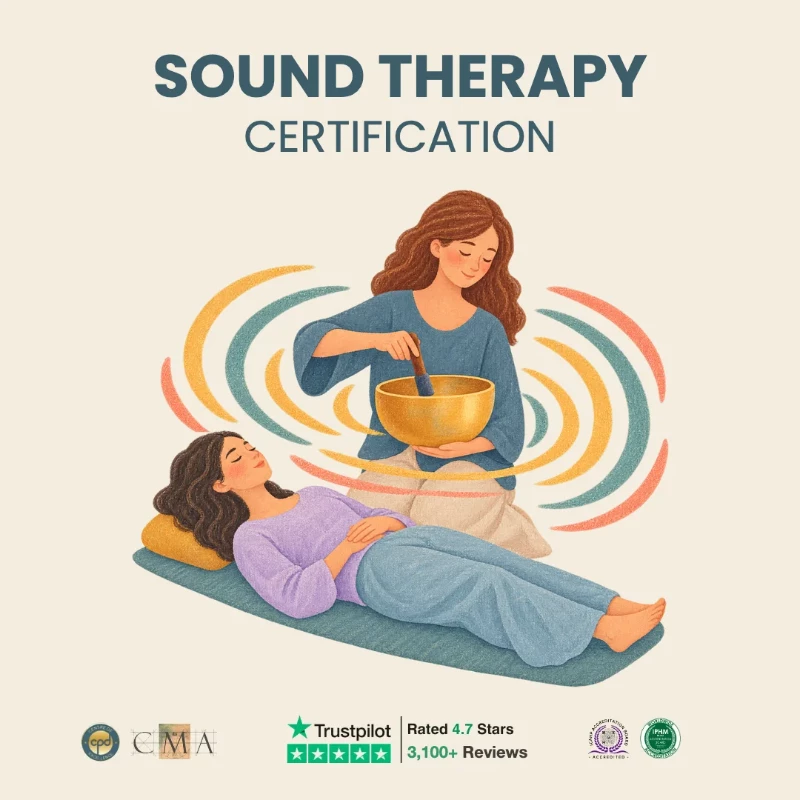
Singing bowls are excellent for pacing and atmosphere. Their long decay naturally encourages pauses, and those pauses are often where integration happens. Low and mid-range bowls are especially versatile for anchoring the room without turning every moment into a climax.
Tuning forks bring precision. Unweighted forks can support focused listening in the space around the body. Weighted forks offer a more localized vibration cue, and with clear permission, many people find that contact settling.
The voice is often the most adaptive instrument in the room. A quiet hum, a soft vowel, and measured speech can support the same aims as bowls or forks without adding complexity. Voice also carries relationship: pace, warmth, steadiness, and choice.
A practical setup might include:
- one low bowl
- one mid bowl
- one weighted fork
- one unweighted fork
- your speaking and humming voice
That small toolkit can cover a wide range of sessions when you know how each sound behaves in the space.
Working with chakras and meridians respectfully
Traditional maps such as chakras and meridians can be genuinely useful in practice. Used well, they help organize attention, sequence a session, and work with felt qualities—not just technique.
Respect makes the difference. Name the cultural roots of the framework you’re drawing from. Don’t present it as universal fact. Offer a sensory-language option for people who don’t connect with that map.
In a chakra-informed session, you might move from lower to upper centers, using changes in pitch, placement, or vowel quality to suggest grounding, spaciousness, or clarity. In a meridian-informed session, you might guide attention along a pathway through the body to support coherence and flow. Both can stay practical rather than becoming dogma.
Plain language keeps it inclusive while still honoring the tradition: “I’m orienting this part of the session toward steadiness in the lower body,” or “I’m focusing more on the upper body for a sense of openness.”
Binaural beats and brainwave entrainment: optional, not essential
Binaural beats work best as an optional add-on, not the foundation of sound work. Headphones and digital layering are not required for a strong session; bowls, voice, rhythm, and silence already provide plenty of depth.
When people ask, a balanced answer builds trust. Some reviews report small effects in areas such as anxiety and memory. That makes them interesting, but not central.
If you use them, keep it choice-led and framed as an experiment within a broader session. Some people love the inward feel of headphones; others find them tiring or intrusive.
Designing sound sessions for rest, sleep, focus, and recovery
Most people come with a clear aim: unwind, sleep more easily, focus better, or feel steadier after a demanding stretch. The practitioner’s craft is translating that aim into pacing, tone, density, and silence.
For stress and overwhelm, reduce complexity. Predictable sound, longer decays, and clear pauses help many people feel safer and more oriented. In adjacent research on music listening, shifts in cortisol levels suggest sound can influence stress reactivity. In session design, simpler arrangements often land best.
For sleep support, keep it dusk-like: slower breath, low-amplitude sound, minimal change. A review found associations with better sleep quality in adults, which fits long-standing practitioner instincts to keep evening sound work slow, soft, and consistent.
For focus, use a cleaner edge. Gentle tapping, light pulse patterns, or short distinct tones help attention gather. Keep textures lighter if the goal is alertness.
For recovery after exertion or intense days, support a downshift. Humming, diaphragmatic breathing, fewer changes, and generous integration time tend to serve better than dramatic crescendos.
- Rest-oriented session: breath cue, low bowl, silence, repeated in unhurried cycles
- Sleep-oriented session: dim room, slower pacing, soft voice, longer quiet ending
- Focus-oriented session: shorter segments, lighter rhythm, clearer transitions
- Recovery-oriented session: warmth, low tones, humming, extra time to re-orient
Trauma-informed facilitation: choice, pacing, and predictability
Sound can shift state quickly, so the session needs clear relational boundaries. Consent, choice, and predictability aren’t extras; they are core technique.
Established trauma-informed principles offer a steady frame: safety, transparency, collaboration, empowerment, and cultural humility. In sound work, these become practical actions.
- Explain the plan before you begin.
- Offer options for eyes open or closed.
- Check before using headphones or any on-body vibration.
- Give advance notice before a sound begins or ends.
- Keep a simple pause signal in place.
Small moments are often the most regulating. “Would you like softer or brighter?” gives real control. “We can stop or change direction at any point” keeps the session collaborative.
Close by re-orienting to the room: feet on the floor, edges of the space, a few visible objects, and a minute of ordinary conversation before standing.
Group and one-to-one sessions need different pacing
Group work and one-to-one work use the same core skills, but the pacing strategy changes.
In groups, keep structure clean and predictable. The room will include different sensitivity levels and different tolerances for intensity. Start gently, build gradually, and leave room for self-regulation.
Useful group norms include:
- permission to keep eyes open
- permission to sit up, move, or step out quietly
- clear guidance about where stronger sounds will be placed
- a slower build rather than an immediate immersion
In one-to-one sessions, you can be more responsive. If someone arrives agitated, begin with less sound and more space. If someone feels flat or disconnected, a little more articulation or rhythm can help engagement. The aim is accurate support, not forcing an experience.
Safety, volume, and sensitive populations
Sound work should feel carefully held. Volume, distance, repetition, and instrument choice shape the experience as much as the notes themselves.
Basic acoustics help you stay precise. Doubling distance from a sound source drops level by roughly 6 dB, which is why placement matters so much in small rooms.
Useful rules of thumb include:
- keep stronger sounds farther from the head
- prefer fewer layers over denser layering
- avoid surprise crescendos near the body
- check for sound sensitivity, tinnitus, migraine patterns, vestibular sensitivity, or recent concussion history
- offer seats with easier exits in group settings
It’s also wise to avoid placing heavy, strongly ringing bowls directly on the torso for people in late pregnancy or for those with implanted devices. Off-body sound gives far more room to stay conservative and respectful.
Ethics and scope: clear support without overclaiming
Ethics begin with honest framing. You’re offering structured support for relaxation, attention, and self-awareness. You’re not promising fixed outcomes, and you’re not presenting symbolic maps as unquestionable fact.
Keep language plain: what you’re doing, why you’re doing it, and what choices the person has. Consent stays active throughout the session.
Be clear about scope. If someone needs support beyond what you offer, say so directly and respectfully. Good boundaries protect trust.
How to explain sound work without hype
People rarely need grand claims. They need language that helps them feel oriented and in control.
Simple explanations work well:
- “We’re using steady sound to support a steadier pace of attention.”
- “You may notice changes in breath, muscle tension, or how spacious the room feels.”
- “We’ll adjust according to what you actually experience.”
If someone wants a research-leaning explanation, keep it modest and accurate. Parts of the auditory system show frequency following, which helps explain why repeated pulse and tone can feel organizing. From there, your strongest evidence is careful observation, clear feedback, and consistency over time.
A reliable session arc: orient, regulate, immerse, integrate
A clear session arc is one of the most dependable ways to deepen practice. It makes the experience easier to follow and easier to adapt.
- Orient: name the plan, establish consent, settle posture, agree on a pause cue
- Regulate: begin with breath, humming, or a single simple tone
- Immerse: move into a few well-chosen sound segments with silence between them
- Integrate: taper gradually, allow quiet, and help the person return to the room
This arc works for both short and long sessions. What changes is the dosage, not the logic.
Notes and reflection improve practice
Brief notes make practitioners sharper. They help you spot patterns, refine pacing, and remember what supported the person most clearly.
Track only what matters:
- the person’s stated aim
- their starting state
- which sounds you used
- how close or strong those sounds were
- what shifts were observed or reported
- what to repeat, reduce, or change next time
Reflection can stay simple too: What changed? What felt supportive? What would you like more or less of next time?
Integrating sound with breath, movement, and coaching work
Sound pairs naturally with breath-led practices, gentle movement, restorative formats, and energy healing and coaching conversations. The main skill is sequencing so the session stays coherent.
Before breath work, sound can establish pace. After restorative movement, a short, quiet immersion can extend rest. In coaching settings, even a brief pause with a hum or single bowl tone can mark a transition and reset attention.
Micro-sessions often do the job. A minute or two of listening between verbal segments can change the quality of the next conversation without overwhelming the container.
Supporting safe self-practice at home
Home practice works best when it’s small, familiar, and repeatable. Consistency beats complexity.
- a two-minute exhale-lengthening practice with humming
- a short evening audio at low volume
- a simple focus reset with light tapping and silence
Encourage choice-led self-practice. If a sound feels like too much, pause, open the eyes, and orient to the room. Self-practice should build trust, not pressure.
Evidence snapshots to share when people ask
When someone is curious about research, a few modest points are enough.
- Parts of the auditory system demonstrate frequency following in response to rhythmic sound.
- Music listening has been associated with shifts in cortisol levels during stress research.
- Some reviews report associations with better sleep quality.
- Reviews of binaural beats suggest small effects rather than dramatic ones.
Research doesn’t have to carry the whole practice. It sits alongside long-standing practitioner knowledge: steady sound, steady breath, and steady presence often work best together.
Conclusion
Deep sound work is quiet in its logic. It values pacing over performance, consent over assumption, and relationship over spectacle. Traditional maps can enrich sessions when held with respect and flexibility, and research can add context when it’s useful.
Build from simple ingredients: a few instruments you know well, clear agreements, careful volume, and enough silence for the experience to land. Over time, disciplined simplicity creates sessions that feel grounded and spacious, whether you are refining general practice or training more deeply through sound therapy certification.
Keep the work human. Sound is something you shape together, with clarity, care, and real room for the person in front of you to respond in their own way.
Train in Sound Therapy Certification
Deepen your session design and ethics with the Sound Therapy Certification.
Explore Sound Therapy →