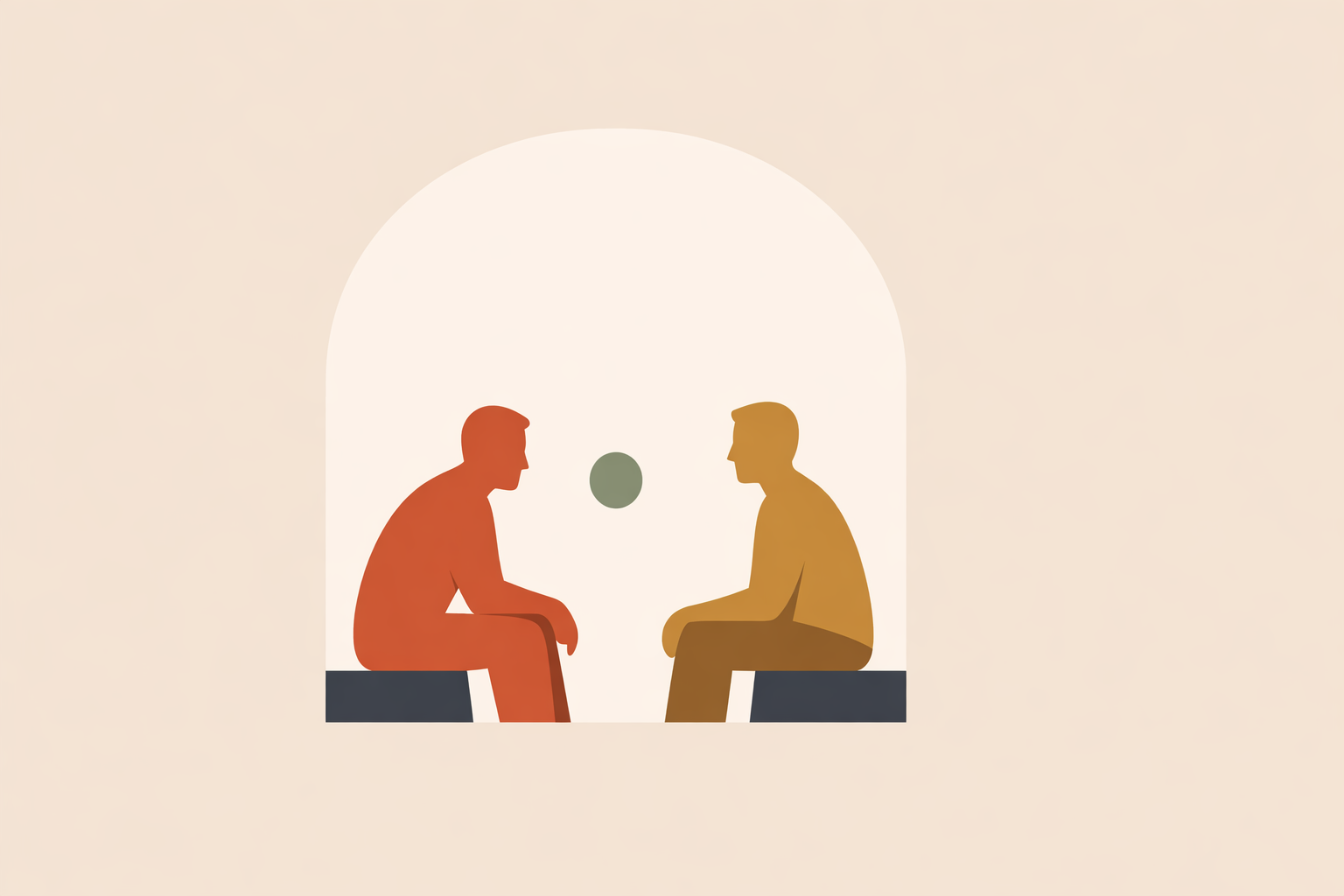
Many educators, coaches, and community practitioners default to a quick screen or a firm nudge when men show red flags around food, training, or weight. The instinct is to confront the pattern, ask about calories, or comment on visible change. With men, that approach often backfires: masculine norms reward silence, praise discipline, and punish vulnerability, so appearance talk or public probing can shut the conversation down fast. Even well-intended praise like “you look lean” or “great commitment” can reinforce the very patterns creating harm.
Key Takeaway: Trust-centered support keeps men engaged. Start with privacy, clarity, and respectful language. Use behavior-based observations instead of assumptions, ask about muscularity and performance pressures as well as food, and stay alert to culture, masculinity, and context. Hold clear boundaries, offer choices for next steps, and follow through consistently so the person feels supported rather than exposed.
Start With Trust: Why Men Often Keep Eating and Body Concerns Hidden
Trust is the first principle for conversations with men around eating or body concerns. Many hold back because they see it as a women’s issue, fear looking weak, or expect they won’t be taken seriously.
This silence often grows out of shame and the sense that support spaces weren’t built with men in mind. When a man feels you understand these concerns can affect men too, and that you won’t reduce him to a stereotype, he’s more likely to stay engaged.
The early moments matter. If the tone feels exposing or moralizing, he may decide it’s safer to say very little. A steady, respectful opening makes honest disclosure more possible.
Try this in session: “You do not need to prove anything to talk with me. I am interested in how this is affecting your day-to-day life, not whether you fit a box.”
Create Safety First: Private Setting, Clear Role, Steady Presence
Before you ask anything sensitive, build the container. Choose privacy, name your role, and explain what you can offer, what you can’t, and where confidentiality begins and ends.
Safety and trustworthiness sit at the center of trauma-informed practice, and many traditional support lineages teach the same fundamentals: calm presence, transparency, collaboration, and respect for culture and context. The person should feel they’re entering a conversation with you, not being managed.
A simple opener might sound like this: “We have about 20 minutes today. I can listen, help you think through next steps, and connect you with suitable support. I cannot label what this is or provide specialist help. What you share stays private unless there is an immediate safety issue or I am legally required to involve someone else, and if that happens I will explain what I am doing.”
That framing reduces uncertainty and protects dignity. For men who expect to be misunderstood, clarity is often what helps them settle enough to speak.
- Choose privacy over convenience.
- State the time frame.
- Explain your role in plain language.
- Be transparent about confidentiality limits.
- Keep your tone calm, practical, and non-dramatic.
Invite, Don’t Accuse: Use Behavior-Based Openings
People rarely open up when they feel accused, and masculine norms can make shutdown even quicker. Start with what you’ve observed, not what you think it “means.”
Name concrete changes: skipped meals, distress around flexibility, training through exhaustion, withdrawing from others, or increasing rigidity. This keeps the conversation grounded and reduces shame.
You might say: “I have noticed a few changes that make me wonder whether food, exercise, or body concerns are creating pressure for you. I might be wrong, and you do not have to talk about anything you do not want to, but I wanted to check in privately.”
If a disclosure starts in a shared space, protect it quickly and quietly: “Thank you for telling me. Let’s move somewhere private so we can talk properly.”
Be careful with compliments about weight loss, leanness, “discipline,” or extreme training. They can accidentally reward rigidity and make it harder for him to step back.
- Lead with what you observed.
- Avoid comments on appearance.
- Ask permission before sensitive questions.
- Keep the pace collaborative.
- Protect privacy immediately if disclosure begins in public.
Useful starters:
- “How is this affecting sleep, focus, or time with people you care about?”
- “I am less interested in how this looks from the outside and more interested in how rigid or stressful it feels.”
- “Is it okay if I ask a few questions about training, food, or supplements?”
Ask for the Whole Story: Include Muscularity, Performance, and Control
Many men don’t relate to a thinness-centered script. Their concerns may center on size, leanness, performance, control, or the pressure to look strong while staying highly defined. If your questions are too narrow, he may feel unseen and disengage.
Men’s eating and body-image difficulties often involve muscularity goals, performance pressure, supplement cycles, or compulsive training.
Widen the lens early: cutting and bulking cycles, “clean eating” rules, fear of missing workouts, distress on rest days, performance products, and how much mental space food or training is taking up. The goal is understanding, not forcing a label.
You might say: “People can get stuck in different ways—through food rules, pressure to stay lean, pressure to get bigger, training that stops feeling optional, or products that become hard to step away from. What feels most relevant for you?”
Neutral, practical questions often work best:
- “How do you feel if you miss a workout?”
- “Do rest days feel normal, frustrating, or unsafe?”
- “Are there foods you feel you cannot eat, even socially?”
- “Any products in the mix for fat loss, energy, or muscle building?”
- “Does this affect sleep, concentration, relationships, or your mood?”
Many men also feel their concerns are not addressed in typical conversations. Male-inclusive questions can be the first signal he doesn’t need to translate his experience into someone else’s template.
Include Culture, Masculinity, and Context Without Stereotyping
Eating and body concerns are shaped by identity, belonging, family patterns, community expectations, and the messages someone has absorbed about strength and self-control.
Some men feel shame when symptoms seem “unmanly,” while muscularity-focused behaviors are socially rewarded and mistaken for health. Research links these patterns with gender-related stigma, shame, and emotional suppression.
Context changes everything. Stoicism, productivity, size, and control can be prized in certain families or communities. Some men live with migration stress, racism, poverty, food insecurity, disability, or religious practices that shape how food and body concerns are understood. If the usual materials don’t reflect his world, he may assume support won’t either.
Traditional foodways and ancestral values deserve respect here. Shared meals, fasting practices, ideas of resilience, and body ideals can be deeply grounding, and they can also become tangled with pressure when context is lost. Ask with genuine curiosity instead of guessing.
Helpful prompts include:
- “What messages about being a man did you grow up with around food, body, control, or endurance?”
- “Are there cultural or family expectations that make this easier or harder to talk about?”
- “Which traditions feel nourishing and steadying for you, and which feel mixed up with pressure right now?”
This approach honors the person as the expert on his own life and supports change without asking him to reject his background or community.
Hold Boundaries and Offer Next Steps
Once you understand the pattern, shift toward forward movement. Offer guidance without taking over.
Be direct when safety is in question. Ask plainly about fainting, severe weakness, repeated vomiting, dehydration, training injuries, confusion, or thoughts of not wanting to be here. If something feels urgent, say so and explain what needs to happen next.
Don’t promise absolute secrecy. Re-state confidentiality limits calmly, and involve the person wherever possible so the process still feels respectful and transparent.
Offer pathways rather than ultimatums. Depending on your setting, this might include a trusted supervisor, community-based well-being support, a nutrition professional, or another suitable specialist. Keep it practical: “Would it help if we looked at a few forms of support together and chose the next step that feels most manageable?”
End with a concrete follow-up. A scheduled check-in helps the person feel held after sharing something difficult.
A practical close might sound like this: “Let’s make this lighter to carry. I will send you two options today, and we will check in on Thursday about what feels doable next.”
Stay in Relationship: Repair Missteps and Follow Through
Trust grows through what happens after the first conversation.
Missteps happen: a conversation gets rushed, privacy isn’t handled well, or words land more sharply than intended. Repair is straightforward. Name what happened, apologize plainly, and return choice to the person. Over-explaining or defending yourself usually erodes trust.
Follow-through matters just as much. If you say you’ll check in, check in. If you offer options, send them. Reliability is often what allows someone to keep opening up.
Keep notes neutral and practical: what you observed, what was shared, what options were discussed, any consent given, and any immediate safety concerns. Avoid dramatic language; aim for continuity and respect.
It’s also wise to seek supervision or reflective practice. Everyone brings assumptions and blind spots into sensitive conversations. Regular reflection helps you stay grounded and within an appropriate scope, and a broader grounding in mental health frameworks can support that.
Trust Is What Keeps the Door Open
When supporting men around eating and body concerns, trust is the structure that makes the conversation possible. Privacy, clear framing, behavior-based language, male-inclusive questions, cultural humility, steady boundaries, and reliable follow-through all communicate the same message: he doesn’t have to fit a stereotype to be taken seriously.
Keep your language simple and your presence steady. “I am glad you told me. I am not here to judge or force a label. I am concerned about how much pressure this is creating, and I would like to help you find support that fits.” For many men, that grounded response is what makes a next step feel doable.
Caution belongs at the edges, not the center. Respect confidentiality, act decisively when safety is at risk, and refer on when the situation is beyond your scope. When those foundations are in place, trust-centered support helps men stay connected long enough for real change to begin, and that kind of eating disorder awareness is often what keeps support both calm and scope-appropriate.
Train in Eating Disorder Awareness
Build safer conversations like these with the Eating Disorder Awareness Coach Certification.
Explore Eating Disorder Awareness →