When a client can’t name what they feel, pressing for the “right” label often tightens the moment. Words can freeze; analysis can start to feel like scrutiny. A simple, well-held creative prompt restores choice, pace, and a sense of contact with what’s real.
Key Takeaway: When words are not ready, structured art prompts can offer a gentle way to explore experience, notice patterns, and return to language with more clarity. A landscape prompt helps externalize emotion, color-and-mark-making supports sensation-first awareness, and an unsent letter can turn insight into compassionate next steps.
Prompt 1: Paint an Emotion as a Landscape
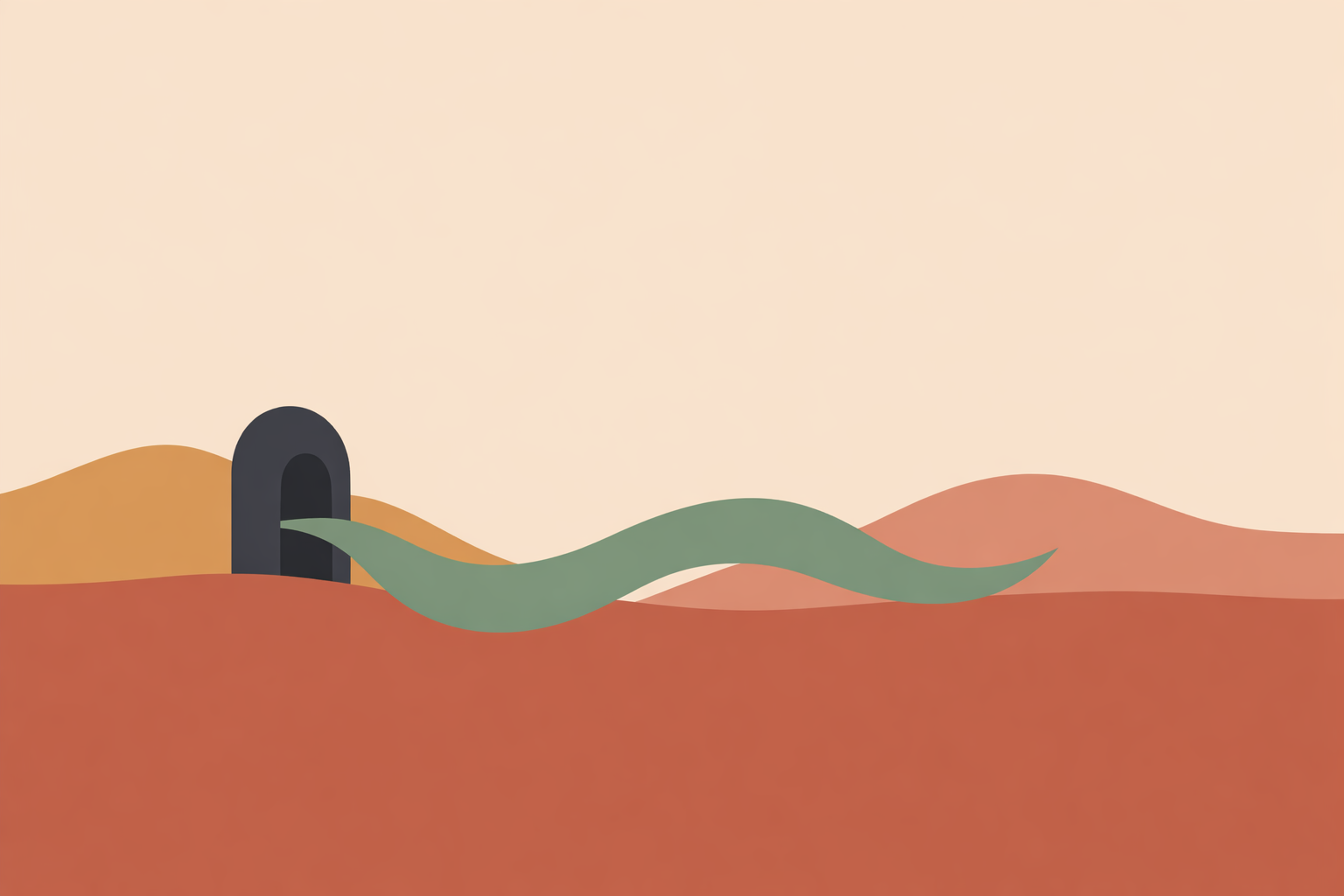
A landscape is often a kinder doorway than a direct question about feelings. Instead of asking someone to explain themselves, you invite them to show the mood as a place: a coastline, a storm, dry earth, a heavy sky, a narrow path. That small shift alone can soften the whole process.
Landscapes work well because they give shape to something diffuse. The person relates to a scene rather than wrestling the entire feeling at once, which often brings more curiosity and less self-judgment.
This approach also aligns with older ways of describing inner life through weather, land, season, and element. Used with care, it doesn’t impose meanings; it lets the person’s own symbolic language lead.
Why this prompt works well
- It externalizes a complex state into something visible.
- It creates a little space around the feeling.
- It offers metaphor when direct language feels too sharp.
- It slows the pace and gives the hands something to do.
How to guide it
- Time: 10–15 minutes of painting or drawing, then 5–7 minutes of reflection.
- Materials: paints, pastels, or colored pencils; paper; water and cloth if needed.
- Invitation: “Choose one feeling, or a mix of feelings, and imagine it as a place. What is the ground like? The sky? The weather? The horizon?”
- Pacing cue: “If you get stuck, add one small detail: a path, a stone, a cloud, a tree.”
Reflection questions
- “What part of the image catches your attention first?”
- “Where would you stand in this landscape?”
- “What is changing here, if anything?”
- “What does this place need right now?”
A client might paint a steep cliff with a thin strip of light at the edge. When asked where they would stand, they point to a ledge halfway down, then add a winding path toward the shore. Often, the image shows movement before the person has words for it.
Keep interpretation light. Color and symbol are personal, relational, and cultural. Rather than reading the image for them, ask what they notice now that it exists on the page.
Prompt 2: Let Color Speak Before Words
Once the pressure to explain eases, go even simpler. Let color, marks, and movement speak first. This is less about making a picture and more about tracking the present moment through sensation.
A short creative burst can be settling. Research suggests stress or anxiety can ease during active art-making, and creative-arts work is also associated with short-term mood changes. In sessions, this can look very ordinary: shoulders drop, breathing deepens, and the person becomes easier to reach.
How to guide it
- Time: 6–10 minutes of mark-making, then 4–6 minutes for brief reflection.
- Invitation: “Fill the page with colors, marks, shapes, or textures that match your current energy.”
- Offer options: dots, spirals, blocks, smudges, heavy pressure, light strokes, empty space.
- Keep attention on direct experience rather than interpretation.
Helpful prompts
- “Which marks feel easiest to make?”
- “Does your hand want to press, drag, tap, circle, or pause?”
- “Where do you notice tension, warmth, numbness, or restlessness?”
After the page is full enough, invite three simple lines:
- I notice …
- I feel …
- I need …
This bridge from image to language helps the person turn raw impression into something usable, without forcing a big explanation.
For example, someone may cover one side of the page in dense charcoal and the other in thin blue lines, then write: “I notice one side feels crowded and the other far away. I feel tight in my jaw and scattered in my thoughts. I need fresh air and one clear next step.” That is often enough for a meaningful shift.
If questions about color meaning come up, return to lived association rather than fixed codes. Many lineages recognize the power of color and pattern, yet meaning still belongs to the maker.
Prompt 3: Write the Unsent Letter
After image-based work, words often come more easily. The unsent letter gathers what has surfaced and shapes it into compassionate language. It’s private, honest, and not meant for performance.
This works especially well after drawing or painting because the image has already carried part of the experience. The letter can then name what matters: a boundary, a hurt, a truth, a request, or a next step. If words still feel narrow, adding a small visual element helps the page hold more.
How to guide it
- Time: 8–12 minutes of continuous writing, then 3–5 minutes to add a simple visual element.
- Choose an addressee: an emotion, a younger self, a season of life, a role, a relationship, or a difficult situation.
- Encourage steady writing without worrying about polish.
Opening lines that reduce friction
- “Dear fear, I notice you appear when …”
- “Dear sadness, you have been trying to show me …”
- “Dear younger self, you deserved …”
- “Dear anger, what you want me to protect is …”
Then add one visual element
- a border
- a color wash
- a small symbol
- a quick sketch
- a collage scrap
The visual addition can hold what the letter can’t yet fully say. This supports people who sense something clearly but don’t want to over-explain.
Reflection keeps the exercise grounded. You might ask:
- “What did this letter help you understand?”
- “What need or boundary became clearer?”
- “What would a kind response to yourself sound like now?”
- “Is there one small action that fits what you discovered?”
A letter to anger might end with, “You are here when I ignore my limits. You are asking me to stop agreeing too quickly.” A thin red border around the page may be all that’s needed to complete the message.
Look for modest shifts rather than spectacle. Sometimes one session brings clearer sensations, a steadier mood, or more self-trust. Reviews suggest creative-arts approaches are promising for short-term emotional regulation, and there is no single best medium or dose shown consistently across studies.
How to Use These Prompts in a Session
Together, these three prompts create a gentle arc. The landscape makes emotion visible, mark-making deepens sensation-first awareness, and the unsent letter turns what emerged into language that supports choice and action.
You don’t need all three every time. Use one as a stand-alone, or spread the sequence across several meetings depending on what the person has capacity for that day.
A simple structure
- 2–3 minutes to arrive: feet on the floor, choice of materials, a settling breath.
- 5–15 minutes of image-making or writing.
- 5–10 minutes of reflection: one observation, one feeling word, one need or next step.
- 1–2 minutes to close: put materials away, notice the body, name what feels different now.
Brief creative tasks can produce immediate mood shifts, which is one reason they fit so well into everyday coaching and group spaces. Even a small shift can be meaningful.
Scope, Care, and Cultural Attunement
Facilitate these exercises with clarity and humility. Offer choice often. No one needs to share their image, explain their symbols, or “reach” a breakthrough. The value is in the process, not the performance.
It also helps to name the limits of the work. These prompts support reflection, expression, and well-being within coaching, group, and educational spaces. They are not about decoding hidden meanings or pushing past someone’s boundaries.
Good practice includes
- explaining privacy expectations clearly
- offering the right to pass
- letting people choose materials, pace, and what stays private
- using grounding if emotion rises too quickly
- staying respectful around the cultural meanings of color, symbol, family, land, and spiritual references
If someone becomes overwhelmed, slow everything down. Return attention to the room: feel the chair, the floor, and the breath; name a few visible objects. Let the person reorient, then decide together whether to continue. Containment is often more supportive than intensity.
Closing Reflection
These prompts are simple, but they are not trivial. When words aren’t available, image, color, and metaphor can carry experience for a while. That alone can help someone feel less tangled and more able to hear themselves.
Start lightly and keep the container spacious. Expression doesn’t always arrive as a neat sentence first. Sometimes it arrives as weather, texture, a shoreline, or one honest line on a page, and language returns in its own time.
Train in Therapeutic Arts
Build on these prompts with deeper facilitation skills in the Therapeutic Arts Certification.
Explore Therapeutic Arts →