Growth changes the risk profile of this work. The first time an “urgent message from your dog” clip reaches thousands of views, your inbox can fill with requests to read animals you’ve never met, weigh in on physical concerns, or connect with a missing pet without the guardian present. In sessions, the edges are just as real: a family asks whether a message supports an end-of-life decision, or a barn owner wants you to “fix” a gelding while he turns away. In each case, perception is not the bottleneck. Boundaries are. Without clear standards for permission, scope, language, and sharing, good intentions can create pressure, confusion, or harm.
A living code of ethics gives animal communication the structure it now needs. Grounded in consent, faithful translation, disciplined scope, and confidentiality, it keeps the work relational and helps practitioners stay steady as visibility grows.
Key Takeaway: A living code of ethics turns private intuition into accountable animal communication. Strong ethics clarify consent, protect animals’ dignity, help practitioners name uncertainty, reduce projection, set limits around what sessions can and cannot offer, and guide how stories are shared in public. The result is work that is more trustworthy, more respectful, and more sustainable as practice expands online.
Speaking for Animals Changes the Practitioner’s Role
Once you share what you perceive with another person, your role changes. You are no longer having a private intuitive experience. You are acting as a translator, and translation carries responsibility.
Good practice is built on humility. The aim is to represent the animal’s perspective as faithfully as possible, while keeping the session positioned as supportive insight within a bigger well-being picture.
Faithful translation means staying close to what was received: an image, a sensation, a word, a mood, a felt impression. The faster a practitioner jumps from perception into a finished story, the easier it is for personal narrative to enter. Research on human-animal perception notes that unrealistic expectations can grow when humans assign intentions or needs that don’t truly belong to the animal.
Naming uncertainty is part of the craft. A clean message often sounds modest: “I received an image of a doorway,” or “I sense tension around the left side,” rather than turning impressions into declarations.
- Start with direct impressions.
- Label interpretation as interpretation.
- Name your confidence honestly.
- Skip embellishment meant to sound certain.
When practitioners hold themselves as translators rather than authorities, the work becomes steadier and easier to trust.
Consent Includes Both Guardian and Animal
Consent has two sides: the human invitation and the animal’s response. Both matter.
Clear guardian permission is foundational, especially when the animal is outside your household. It sets the intention, gives context, and defines boundaries around why contact is being sought.
Animals also need real room to accept or decline. Ethical interspecies work gives weight to when and how to interact, and many communicators reflect this by inviting engagement rather than assuming access.
Animals can communicate “no” through behavior, posture, agitation, moving away, or a marked closing of the felt connection. Attention to behavioral responses helps prevent avoidable distress and keeps the exchange respectful.
Consent works best as a simple, repeatable process.
- Receive clear permission from the guardian.
- State inwardly or aloud why you are connecting.
- Invite the animal to engage now, later, or not at all.
- Watch for behavioral or energetic signs of openness or refusal.
- Pause or stop if the answer feels like no.
That final step is where consent becomes real. A practitioner who can stop on time protects the relationship, even when curiosity or demand is high.
Discernment Prevents Projection and Overreach
Most unintended harm in animal communication doesn’t come from bad intent. It comes from blurred scope, emotional pressure, and projection that goes unnoticed.
Projection can distort what gets reported and can influence major decisions around housing, training, and end-of-life choices. Studies on anthropomorphism describe how humans can form inaccurate views of animals’ capacities and needs, leading to misunderstandings that shape how animals are handled.
Discernment keeps sessions grounded. It means staying close to what was actually received, resisting the urge to “complete the story,” and being able to say, “I’m not sure,” or “This may be symbolic.” Honest uncertainty reduces misinterpretation and protects everyone involved.
Scope matters as well. A communicator’s role is not to replace qualified animal-care professionals or to make definitive pronouncements about physical concerns. When there are signs of a health issue, encourage guardians to seek qualified support.
Ethics also protects clients in emotionally charged moments. Guarantees, fear-based statements, or telling someone what they “must” do can create harm, especially when grief, urgency, or guilt are already present.
A brief self-check after each session helps keep your practice clean:
- What felt directly received?
- What part did I interpret?
- Did any personal emotion get activated?
- Did I imply certainty where there was only possibility?
Discernment makes intuition usable. It keeps the work clear, ethical, and genuinely supportive.
Confidentiality and Public Sharing Need Strong Boundaries
Online, privacy can become porous fast. Voice notes, photos, transcripts, and emotional stories are easy to collect and even easier to share, which makes confidentiality a core duty.
Session material should stay private unless explicit permission is given. Even when names are removed, a story can still be recognizable, and “content-friendly” storytelling can break trust when details are intimate or shared for attention rather than learning.
Respectful public sharing asks for dignity, not just anonymizing. That means no ridicule, no blame, no dramatic framing designed to provoke fear, and no turning vulnerable moments into performance material.
Honest marketing belongs here, too. Many animal-service codes emphasize transparent fees and clear information. Public-facing guidance from the RSPCA similarly supports clear information over myth-driven or fear-driven messaging.
Practical safeguards can stay simple:
- Ask separately for permission to share any story.
- Let clients define limits on what may be used.
- Remove identifying details with care.
- Store recordings securely and delete them on a clear timeline.
- State fees, process, and boundaries plainly.
Trust grows when people feel confident their animals and their stories won’t be turned into content.
Tradition, Reciprocity, and Modern Animal Well-Being Can Work Together
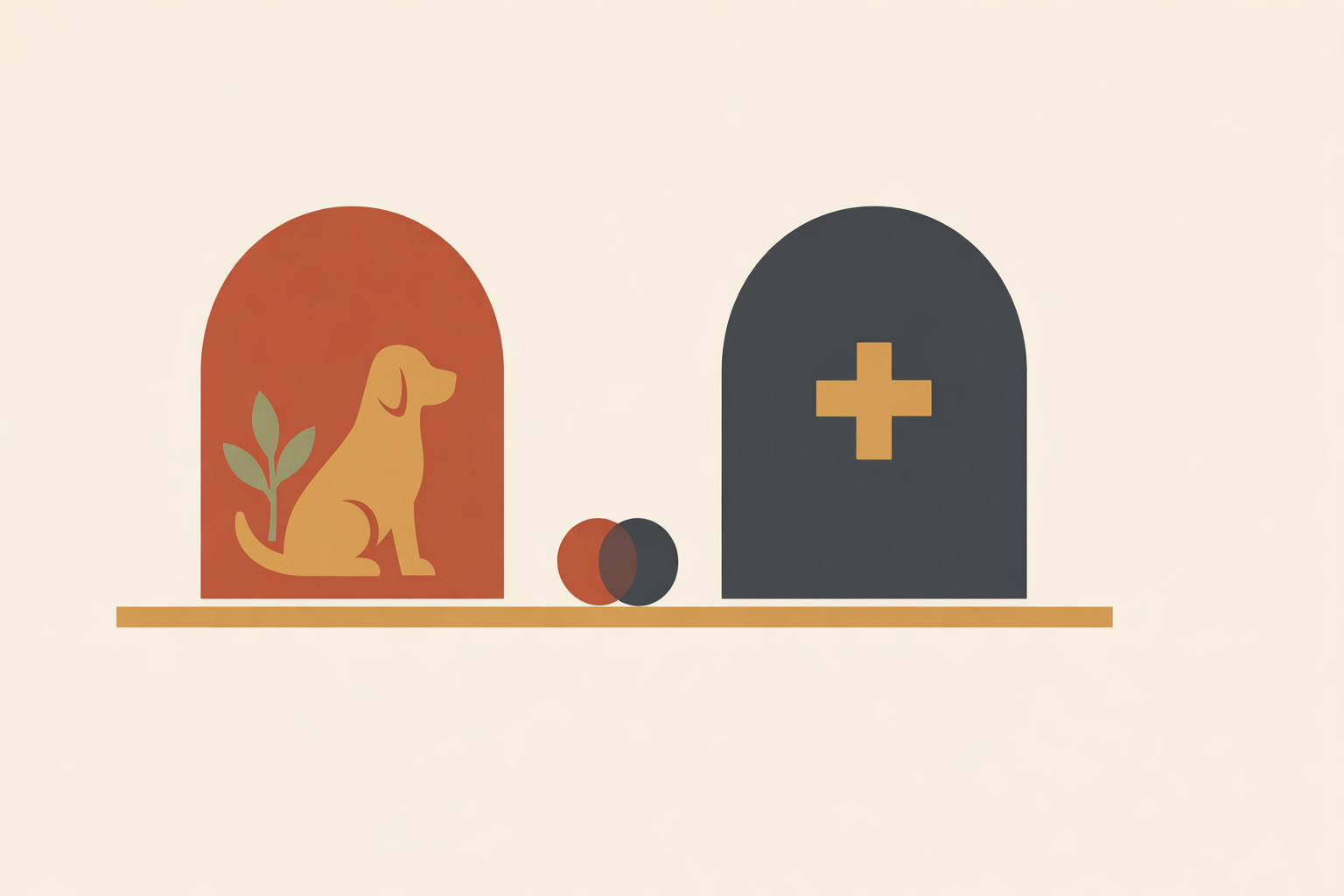
A grounded ethics for animal communication does not need to choose between ancestral ways of knowing and contemporary insight. The strongest codes draw from both.
In many traditions, interspecies exchange is rooted in relationship, reciprocity, and respect for more-than-human life. The emphasis is right relationship, not extraction. That orientation keeps practitioners honest about what connection is for, and it discourages using animals for display.
Modern thinking about animal well-being adds language that helps make respect actionable, including across animal wellness practice. Ethics literature emphasizes human responsibility because people hold more power in these relationships.
Animal welfare science also increasingly centers affective states and species-specific needs. That invites a practical question during interpretation: what kind of being are you listening to? A horse, owl, cat, or dog experiences the world differently.
The idea of a unique sensory world is helpful here. Respecting species perception tempers the habit of translating everything into human terms.
When intuitive listening is paired with species knowledge, including a clear sense of integrative pet care scope, care usually improves. Research on animal signals shows that misreading species-specific behavior can lead to inaccurate conclusions about intention and need.
Many practitioners also notice their listening gets cleaner when they settle themselves before connecting. That’s traditional wisdom with a practical edge: a steadier practitioner tends to create fewer misunderstandings and a calmer relational field.
- Seek consent before engaging.
- Listen with humility.
- Interpret through the animal’s nature, not only your own frame.
- Use your skills in service, not control.
- Leave room for mystery without turning mystery into authority.
This is what a living ethic looks like: relational, responsive, and strong enough to hold both tradition and thoughtful modern awareness.
What a Living Code of Ethics Should Actually Do
A useful code of ethics is not decorative. It should help you make decisions in real time.
At minimum, it should clarify when you will begin or decline a session, how you seek permission, how you communicate uncertainty, what sits outside your scope, how you handle privacy, and what your public sharing standards are. It should also help clients understand what your work is for: support, insight, reflection, and relationship-building.
The best codes stay alive. They evolve with experience, peer reflection, and the realities of practice as the field grows, whether you are refining a broader animal wellness framework or deepening your animal communication practice.
If you’re shaping your own framework, keep it simple and workable:
- Write a short public ethics statement.
- Create a repeatable consent protocol.
- Use language that distinguishes perception from interpretation.
- Set clear privacy and storytelling boundaries.
- Review your code regularly and refine it as you learn.
Animal communication asks for sensitivity, and ethics gives that sensitivity a steady container. As the work expands online, clear boundaries protect animals, support guardians, and help practitioners grow with integrity.
Explore Animal Communication Certification
Deepen your consent-based practice with the Animal Communication Certification, aligning intuition with clear scope and confidentiality.
Explore Animal Communication →