In many integration coaching spaces, the default is to let people “self-integrate” and offer a single debrief unless a crisis surfaces. That protects scope, yet it can leave someone carrying existential shock, dense symbolism, and value-level shifts without enough structure. Other approaches swing the opposite way by over-interpreting, encouraging irreversible changes, or drifting beyond coaching boundaries. A steadier path is available: offer the lightest effective container, keep agency with the person integrating, and scale support based on real-life impact rather than how unusual the experience sounds.
Key Takeaway: DMT integration is usually most helpful when it is relational, time-bound, and scope-clear. Some people do well with self-guided reflection and trusted community. Others benefit from structured coaching support, especially when sleep, routines, relationships, or discernment start to wobble. The goal is not to interpret the experience for someone, but to help them translate it into grounded choices, stabilizing practices, and everyday alignment.
Why DMT integration often needs support
DMT experiences can be intense, fast, and hard to fit into ordinary language. Research on inhaled N,N-DMT describes vivid imagery and frequent ego-dissolution, which helps explain why the days after can feel both significant and disorienting.
Integration often starts on the return, when someone tries to live with what they saw and felt. New questions can arise around relationships, purpose, habits, grief, or identity. Support helps the experience settle without forcing quick certainty.
Often, the most effective support stays simple:
- time to speak the experience out loud
- space to journal without rushing toward conclusions
- a few grounding practices for the days after
- one trusted person who can listen without imposing meaning
A strong early question is: What still feels true now that the intensity has passed? It keeps integration rooted in lived reality.
What integration really is
Integration is the process of making an experience usable. It is about what belongs in life afterward: a clearer value, a repaired relationship, a steadier routine, or the choice to slow down and listen more closely.
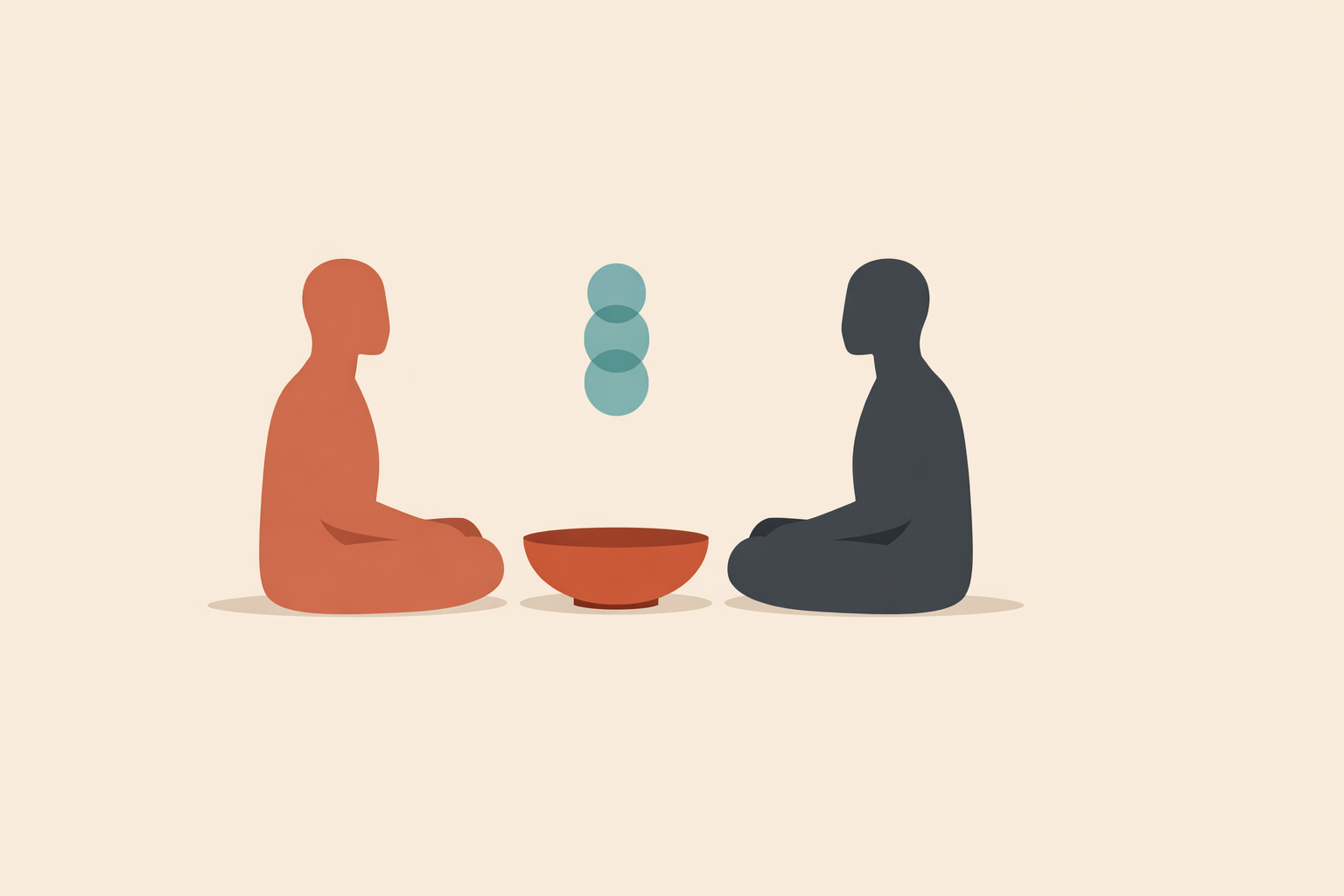
Done well, integration is relational. Even people who prefer solitude often discover that meaning ripens through conversation, community, ritual, or reflective witnessing. Traditional lineages have held this for generations, with the after-period supported by story, song, elders, prayer, land-based practice, or shared silence. Modern coaching can carry the same spirit of care without borrowing rituals out of context, including in spirituality and ritual settings.
A grounded relational frame focuses on what has energy, where the body contracts or softens, and one human-sized action that matches the person’s values. The aim is to support discernment from within.
What collaborative support includes
Collaborative support might involve a coach, a peer circle, an elder, trusted community members, or other qualified supports when needs become more complex. Collaboration starts with clarity: clear roles, clear boundaries, and clear language.
In non-clinical integration coaching, the focus stays on reflection, meaning-making, values, and next steps. That can include:
- intention review after the experience
- reflective dialogue
- values clarification
- habit and routine design
- grounding and embodied awareness
- support with pacing major decisions
Scope is part of care. A coach should not act as the authority on what a vision “really” meant, encourage reckless upheaval, or blur roles around altered-state facilitation.
Language helps protect autonomy. Ontologically neutral phrasing keeps the space respectful and steady. Rather than declaring what was objectively real, it can be wiser to say, “You encountered what felt like a wise presence,” or “That moment seemed deeply important to you.”
When self-guided integration is enough
Many people do not need an intensive container. They need time, basic stabilizers, and permission to let the meaning unfold at a natural pace.
Self-guided integration often works well when someone feels basically steady, can manage daily responsibilities, and experiences the afterglow as clarifying rather than fragmenting. Traditional and everyday practices can be more than enough:
- journaling
- prayer or contemplation
- time on the land
- art or music
- movement
- honest conversation with trusted friends or family
Survey findings suggest that longer disruption is not the norm, with about 8% reporting month-long disruption. Many after-effects settle with rest, reflection, and grounded support from ordinary life.
Preparation and context also shape the landing. Practitioners have seen for years that when people know why they are entering the experience, hold realistic expectations, and arrange support for the days after, integration tends to unfold more smoothly.
A simple self-guided plan might look like this:
- 10 minutes of quiet breathing each morning for three days
- one page of writing on what still resonates
- a walk with a trusted friend before the week ends
- one small action that honors the insight
If steadiness and clarity are improving after a week or two, that is often a sign the container fits.
Signs collaborative support is needed
Some afterglows feel tender but manageable. Others keep tugging at sleep, relationships, appetite, work, or basic orientation. When day-to-day life starts wobbling, adding support is wise.
Large survey data show that some people face extended difficulties after psychedelic experiences, especially when distress and life disruption remain active. Higher session difficulty has also been linked to longer-lasting struggles, particularly after highly challenging experiences.
Collaborative support becomes important when you notice:
- sleep or appetite staying off for more than several days
- intrusive imagery or recurring fear linked to the experience
- difficulty returning to ordinary routines after one to two weeks
- strong urges to make irreversible decisions immediately
- a growing sense of isolation or being misunderstood
- persistent overwhelm around death, reality, or identity
- any self-harm thoughts or behaviors
These signs do not make the experience meaningless. They point to a need for more structure than solo reflection can provide.
How history, culture, and context shape integration needs
No experience lands in a vacuum. Personal history, community support, economic pressure, family attitudes, and worldview all shape what “enough support” looks like.
People carrying more vulnerability beforehand often benefit from a stronger net afterward. Survey research suggests that certain baseline profiles are linked with greater odds of longer disruption. Other research found that four or more ACEs increased the likelihood that difficulties would last beyond the immediate aftermath.
This is not a verdict on strength. It is a reminder that life conditions matter. Strong relationships and spacious time can make even a rough afterglow workable. Secrecy, disapproval, financial strain, or unresolved stress often call for a more intentional structure.
Cultural fit matters too. Respectful integration support does not lift ritual forms from communities they do not belong to. It helps people draw from their own living traditions, family wisdom, spiritual language, and everyday practices while staying open-minded and humble about what can be learned from others.
For one person, that might mean church, prayer, and walks with an older relative. For another, it might mean silence, breath, poetry, and community check-ins. The right container supports grounded change without cultural performance.
What collaborative integration can look like day to day
Support does not need to be elaborate to work. Often it looks like a small, steady web: coaching conversations, trusted community, body-based grounding, and clear thresholds for bringing in additional help when needed.
A practical coaching arc might include:
- opening grounding: What is present in your body right now?
- story work: Which part of the experience still sparkles, stings, or confuses?
- meaning-making: What feels personally true, useful, or unfinished?
- values-to-action: What one or two micro-steps belong to this week?
- closing: What will help you stay steady between now and our next check-in?
Between conversations, simple stabilizers often help:
- slow breath awareness
- orienting to the room
- gentle walking or stretching
- sensory grounding
- reducing overstimulation for a few days
- delaying major decisions until the experience has settled
Peer or community spaces can also help when they are well held. Clear agreements matter, and boundaries and consent help keep that container steady:
- speak from personal experience
- no fixing or advice-giving
- confidentiality
- culturally respectful language
- the right to pass
The aim is not dependency. The aim is enough structure for insight to become practice.
How to choose the right container
A simple decision path can keep things grounded.
- First 48 to 72 hours: Ask whether you are sleeping, eating, moving, and orienting well enough. Notice what feels grounded and what still feels raw.
- If you are mostly steady: Use self-guided practices and trusted community for one to two weeks.
- If you are wobbly but functioning: Add non-clinical coaching to support reflection, pacing, and accountable next steps.
- If daily life is clearly disrupted: Bring in more structured support promptly.
- If risk rises: Prioritize immediate safety support and do not rely on self-guided integration alone.
For practitioners, the most reliable threshold is functional impact. Unusual content alone is rarely the issue. What matters is whether the person can stay oriented enough to care for themselves, relate to others, and move through ordinary life with adequate steadiness.
A grounded rule of thumb is this: choose the lightest container that truly supports stability, then add support if clarity is not improving.
Closing perspective
Good integration honors two truths at once: meaning is personal, and support matters. Most people do not need someone to explain their experience. They need witnessing, pacing, and help turning insight into lived choices.
For practitioners, this is careful craft. Keep boundaries clear, build strong referral relationships, stay culturally humble, and resist the urge to become the interpreter of someone else’s mystery, whether in general spirituality and ritual work or in more focused DMT integration coaching.
For journeyers, the path is often simpler than it first appears. Notice what helps you feel more grounded, more honest, and more able to live what mattered in the experience. If self-guided practice is enough, trust that. If the ground keeps wobbling, let support be part of the path. Integration works best when it strengthens agency rather than replacing it.
Train in DMT integration
Build scope-clear, grounded support skills with the DMT Integration Coaching Certification.
Explore DMT Integration →